
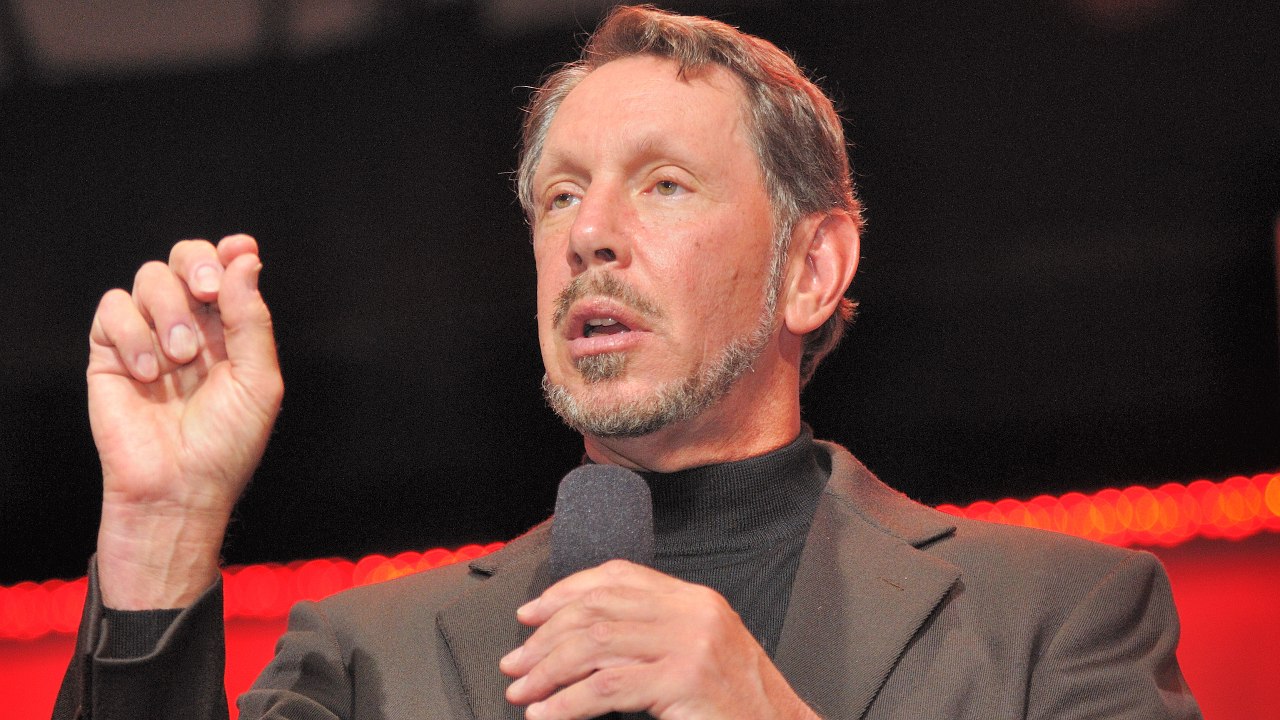
Larry Ellison has never been shy about displaying his fortune, from sprawling estates to a private island and a fleet of superyachts. Yet even for a billionaire accustomed to scrutiny, one vessel in his collection carried a humiliation so acute that he quietly erased its name. The $25 million yacht, once a symbol of status, became an object lesson in how a single word can collide with history and identity in the most uncomfortable way imaginable.
At the center of the story is a 191-foot superyacht whose original name, chosen for its mythological flair, turned out to spell “I’m a Nazi” when read backwards. For a man who has given millions to the Israeli military and is described as a close friend of the Jewish nation’s prime minister, the discovery was not just awkward, it was reputationally explosive. Faced with that realization, Ellison moved quickly to strip the name from the hull and distance himself from the unintended message.
The mythological name that turned into a nightmare
When I look at the origins of the controversy, what stands out first is how ordinary the initial choice seemed. Ellison, the Oracle billionaire known for his fascination with Japanese culture, reportedly christened one of his yachts with a name drawn from Shinto mythology, pairing it with a sister vessel named after another deity. On its face, the decision fit a familiar billionaire pattern, the blending of personal interests with nautical grandeur, and it aligned with other accounts that describe him owning multiple boats with thematically linked names.
The problem only emerged when someone noticed that the name, read in reverse, formed the phrase “I’m a Nazi.” According to reporting that revisited the episode, Ellison’s 191-foot yacht carried this title until the backward spelling was pointed out and the antisemitic implication became impossible to ignore. One account notes that the vessel had been acquired in 1999 for $25 million, which underscores how long the name sat in plain sight before its hidden message was widely recognized. Once the connection was made, the mythological reference was instantly overshadowed by the far more toxic association embedded in its letters.
A scramble to erase an antisemitic echo
From what I can piece together, Ellison’s response was swift and unambiguous once the issue was raised. According to reports that detail the episode, he “scrambled” to rename the yacht after coming to what has been described as a horrifying realization about the meaning that emerged when the name was reversed. Other coverage similarly notes that, once he became aware of the implication, Ellison moved quickly to remove the name from the yacht, treating it as a reputational emergency rather than a cosmetic tweak.
The urgency makes sense in light of his public record. Ellison has given millions to the Israeli military and is characterized as a close friend of the Jewish nation’s prime minister, which means any perceived flirtation with Nazi symbolism would cut directly against his political and philanthropic identity. Additional reporting emphasizes that the backward spelling was widely recognized as a vulgar antisemitic phrase, not a subtle or debatable reference. In that context, the renaming was less a matter of taste and more a necessary act of damage control for a billionaire whose business and political ties are deeply intertwined with Israeli and Jewish communities.
How a $100M lifestyle collided with internet culture
What fascinates me is how this story, rooted in a decision from years ago, has been revived and reframed in the age of social media. Recent coverage recounts how the yacht’s name resurfaced in online discussions, where users dissected the backward spelling and shared screenshots and anecdotes about Ellison’s fleet. One report describes how a user on Reddit highlighted the hidden phrase, prompting others to pile on with commentary that ranged from disbelief to weary resignation about yet another billionaire misstep. In a separate thread about luxury vessels, a commenter joked that a different yacht name, “Reality,” felt “too on the nose” and suggested that “we must be in a simulation,” capturing the sense that these stories now function as proof points in a broader critique of extreme wealth.
Ellison’s maritime portfolio has long been a subject of fascination, and the numbers involved only amplify that scrutiny. One account notes that, after spending tens of millions of dollars on a Florida safari park, he also acquired an enormous, 191-foot vessel, underscoring how easily nine-figure lifestyles absorb such purchases. Another report describes him as the world’s second richest man, a framing that invites readers to see the yacht saga not as an isolated embarrassment but as part of a pattern in which outsized fortunes collide with public sensibilities. In that environment, a name that accidentally spells “I’m a Nazi” backwards is not just a private faux pas, it is raw material for a viral narrative about power, carelessness, and the limits of taste.
The politics of symbolism for a billionaire benefactor
For someone in Ellison’s position, the stakes of a naming mistake are far higher than for an ordinary boat owner. I keep returning to the tension between his philanthropic profile and the unintended message on the yacht’s stern. Reports emphasize that he has given millions to the Israeli military and is regarded as a close ally of the Jewish nation’s leadership, which means his reputation is tightly bound to communities that have a direct and painful relationship with Nazi history. Against that backdrop, even an accidental echo of “I’m a Nazi” is not a trivial branding issue, it is a potential affront to people he has publicly supported.
Other accounts underline that the phrase formed by the backward spelling is widely recognized as a vulgar antisemitic slur, which strips away any plausible deniability once it has been pointed out. One detailed retelling notes that the name was explicitly called out for this reason, prompting Ellison to act. Another piece highlights his financial and political ties to Israel, reinforcing why he could not afford to appear indifferent to the symbolism. Taken together, the reporting paints a picture of a billionaire who, once confronted with the implications of his yacht’s name, had little choice but to move decisively to align his private indulgences with his public commitments.
What Ellison’s yacht saga reveals about modern wealth
Stepping back, I see the episode as a small but telling window into how modern wealth is policed by both politics and internet culture. Ellison’s decision to rename the yacht shows that even the most insulated figures are vulnerable to the meanings that others attach to their possessions, especially when those meanings intersect with charged historical and religious narratives. The fact that a 191-foot, $25 million vessel could be effectively rebranded overnight because of a backward reading illustrates how quickly symbolic missteps can force course corrections, even in the rarefied world of superyachts.
At the same time, the way the story has been revived and shared, from detailed write-ups to Reddit threads that fold it into jokes about living in a simulation, reflects a broader skepticism toward billionaire culture. One report quotes an exhausted user lamenting how tired they are of such tales, while another highlights online reactions that treat the saga as yet another data point in a long list of tone deaf decisions by the ultra rich. Ellison’s scramble to erase an accidental “I’m a Nazi” message from his yacht may have resolved the immediate problem, but the narrative now lives on as a cautionary anecdote about how, in an era of constant scrutiny, even a name on a hull can become a test of judgment, values, and the limits of luxury.
More from Fast Lane Only

Leave a Reply