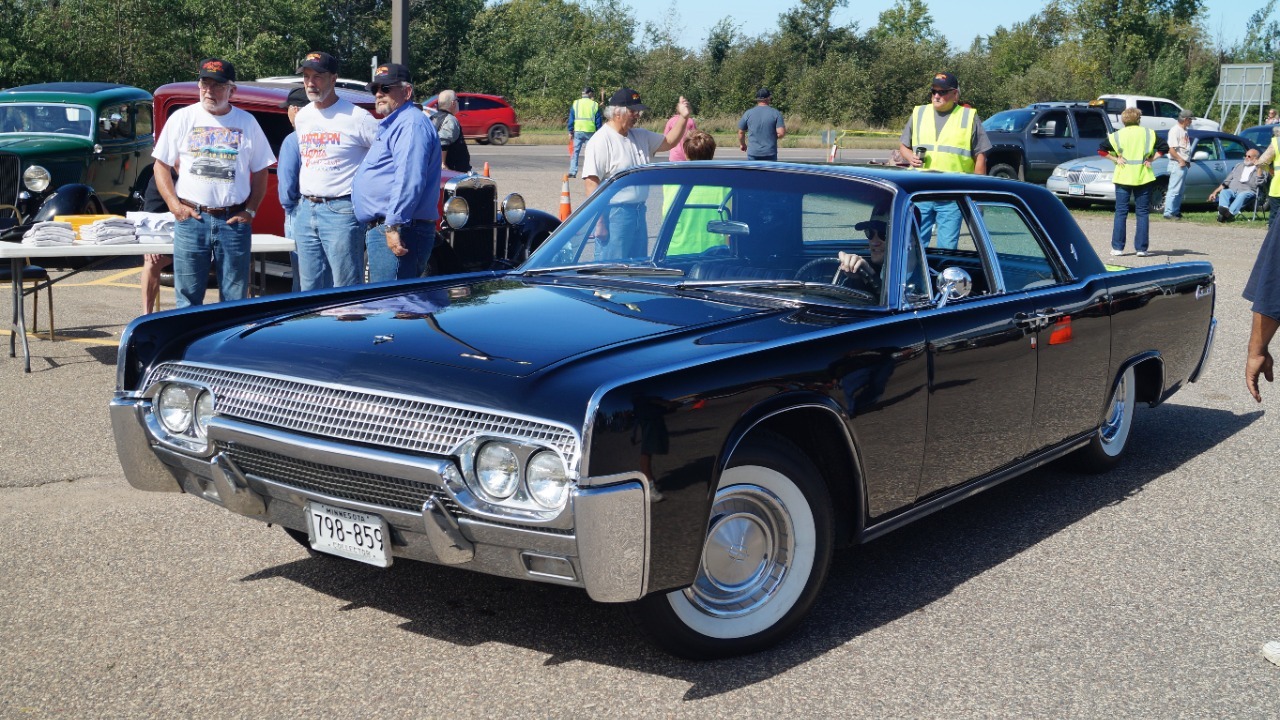
The 1961 Lincoln Continental arrived with the confidence of a car that knew exactly what it wanted to be. In a market obsessed with fins and chrome, it chose something quieter yet more theatrical: a clean, geometric body wrapped around a set of rear-hinged back doors that turned every entry into a small performance. Those so-called suicide doors did more than shock; they redefined how American luxury could look and feel.
More than six decades later, that decision still shapes how enthusiasts talk about Lincoln and about coach-built glamour in general. When the company revived the layout for a limited-run Continental earlier this century, it was not chasing nostalgia for tailfins or vinyl roofs. It was chasing the singular moment when those rear doors became the main event.
From awkward engineering to cinematic gesture
Rear-hinged doors existed long before Lincoln decided to make them glamorous. Early automobiles used them simply because carriage builders were used to that layout. As cataloged in the history of the suicide door, the layout was common on prewar sedans and touring cars where ease of access mattered more than strict safety theory.
The nickname itself hints at the darker side of that convenience. A rear-hinged door that is not fully latched can be caught by airflow and pulled open. If a passenger instinctively grabs the handle, the motion can swing the door wider rather than closed. The configuration also made it easier for someone to be pushed or to fall from a moving car. Those hazards helped give the design its stark name and eventually pushed most mass-market brands toward front-hinged doors, especially as speeds rose and safety campaigns intensified.
Yet the same geometry that worried engineers also created a striking visual. When front and rear doors open from the center, the car presents a wide, uninterrupted aperture. Passengers step in and out without threading around a B-pillar, and the cabin reads as a single, continuous lounge. That theatricality would become the Continental’s signature.
How Lincoln turned a risk into a luxury statement
By the end of the 1950s, Lincoln needed a reset. The brand had chased the fin wars and size race, only to find itself with bloated cars and muddled identity. The 1961 Lincoln Continental answered with restraint. Instead of more chrome, designers chose a crisp, rectilinear body, tight overhangs, and a wheelbase that made the car look tailored rather than oversized.
The masterstroke sat in the middle of the car. The rear doors were hinged at the back, creating a center-opening layout that instantly distinguished the sedan and the convertible. Contemporary descriptions of the Lincoln Continental Convertible emphasize exactly that pairing of clean geometry with rear-hinged doors, treating the combination as the essence of the car’s appeal.
Those doors did not simply add a styling flourish; they shaped how owners used the car. Valets could swing both doors open to reveal a full-width bench and deep rear footwell, an arrangement that made the Continental feel closer to a private railcar than a typical sedan. The effect was especially dramatic on the four-door convertible, where the absence of a fixed roof and B-pillar created a vast, open rectangle of space.
Celebrity ownership amplified the image. The car was favored by figures such as Clarke Gable, who appreciated the way the layout turned every arrival into a controlled entrance. When both doors opened from the center, the passenger did not simply exit a car; they emerged from a frame.
Why “suicide doors” stuck in the public imagination
The term suicide door may sound like a tabloid invention, yet it has deep roots in car culture. The historical overview on rear-hinged doors points out that such doors were especially popular with mobsters in the 1930s, partly because their layout made it easier to push an unwilling passenger out of a moving vehicle. That mix of danger and drama ensured the nickname would stick even as the cars themselves grew safer.
By the early 1960s, most mainstream brands had moved away from rear hinges on passenger doors, yet Lincoln leaned into them. The company integrated robust latches, heavy hinges, and solid door frames to address the worst safety concerns. At the same time, the brand quietly accepted that the outlaw aura of the term suicide doors was part of the appeal. The Continental’s design team did not use that phrase in formal brochures, but owners and enthusiasts did, and the nickname became inseparable from the car’s identity.
The contrast with other luxury makers sharpened the effect. While some European marques experimented with unusual door layouts, none in the American market matched the combination of size, elegance, and rear-hinged drama that Lincoln offered between 1961 and the end of that generation. The doors became a shorthand, a way to identify the car even in silhouette. Say “the Lincoln with suicide doors” and the image is immediate.
Coach doors, not just nostalgia
When Lincoln revived the layout for a modern Continental earlier this century, the company chose a different label. The polite term was coach doors, a phrase that connects the design to classic horse-drawn carriages and to contemporary ultra-luxury sedans. On modern cars, the configuration is most commonly associated with Rolls Royces, where the rear doors open opposite the fronts to give passengers a more graceful path into the cabin.
Lincoln’s decision to use coach door language was more than a branding tweak. It framed the 2019 limited edition as part of a lineage that stretched from formal carriages to British ultra-luxury sedans, rather than as a stunt revival of a controversial feature. At the same time, the company acknowledged that enthusiasts would still call them suicide doors. That double identity mirrored the car’s dual mission: respect safety expectations while still tapping into the rebellious glamour that had made the 1961 Continental a star.
The modern car’s layout echoed the original. Front and rear doors opened from the center, creating an expansive entry that allowed passengers to step in without twisting. Marketing materials emphasized how occupants could stretch their legs and settle into the rear seats as if boarding a lounge, not merely climbing into a sedan. The reference point was clear. The company wanted buyers to remember the classic Continental’s theatrics the moment those doors swung wide.
Recreating a 1961 moment in a very different era
Recreating that 1961 magic in a world of crash tests and side-impact standards required more than nostalgia. The new limited edition was engineered as a longer wheelbase version of the contemporary Continental, with the rear doors reconfigured to hinge at the back. Reports on the 80th anniversary model explain that the rear-hinged coach doors opened from the center of the vehicle to offer a more elegant entrance and exit, a layout that again appealed to buyers who wanted a car that felt special before it even moved.
The company framed the project as a tribute to the most iconic Continentals built from 1961 to 1969, a period when full-size sedans with center-opening doors defined the brand’s image. A separate analysis of those classic Continentals notes that the coach door design was central to their status, not an accessory.
To preserve that connection, Lincoln limited the run and priced the cars to match their positioning. The company offered exactly 80 Coach Door Edition Continentals for the first model year, a figure that aligned with the anniversary theme and signaled exclusivity. The message was clear. This was not a mass-market sedan with a quirky option. It was a collectible that used its doors as its calling card, just as the 1961 original had done.
Why the 1961 design still looks modern
Part of the reason Lincoln can keep returning to this well is that the 1961 Continental has aged unusually well. Enthusiast descriptions of the 1961 Lincoln Continental highlight its clean, geometric design and the way the suicide doors integrate into the body rather than feeling tacked on. The car’s surfaces are restrained, with minimal ornamentation and a strong shoulder line that carries from front to rear.
That restraint makes the doors stand out even more. When the car is closed, the handles and shut lines are subtle, so the silhouette reads as a single volume. When both doors open from the center, the transformation feels dramatic precisely because the rest of the design is so calm. Modern designers chasing a similar effect often talk about “quiet luxury,” an idea that the 1961 Continental embodied decades before the phrase became fashionable.
The proportions also help. The car is long, but its overhangs are relatively short, and the roofline is low and almost level. That gives the Continental a planted stance that still looks contemporary. Many modern sedans with rear-hinged doors, including those from British brands, adopt a similar balance of long wheelbase, short overhangs, and simple surfaces. The visual DNA that Lincoln established in 1961 continues to inform what buyers expect from a coach door sedan.
From mobster lore to collectible icon
The journey from early rear-hinged sedans to the Lincoln Continental’s starring role also passes through darker chapters. The historical account of rear-hinged doors notes their association with 1930s gangsters who allegedly used the layout to dispose of passengers. That lore helped cement the suicide door nickname in popular culture, where it still appears in songs, films, and enthusiast slang.
Lincoln’s 1961 decision effectively reclaimed that hardware for a different purpose. Instead of danger, the brand sold poise. Instead of a shadowy sedan in a back alley, the image became a crisp Continental pulling up to a theater or hotel, its center-opening doors framing well-dressed occupants. The same mechanical principle that once suggested menace now suggested ceremony.
That reframing has had staying power. When collectors talk about the most desirable American sedans of the era, the 1961 Continental Convertible with suicide doors sits near the top of the list. A widely shared video of the Lincoln Continental points out that the 1961 model was available as a four-door sedan featuring suicide doors and a four-door convertible, and that it was built with an attention to detail that still resonates with enthusiasts.
The modern safety tradeoff
None of this history erases the engineering challenges that come with rear-hinged doors. Modern regulators focus on side-impact protection, door retention, and occupant ejection risk, all areas where rear hinges require careful design. Lincoln’s contemporary coach door Continental addressed those issues with reinforced sills, advanced latches, and modern side-curtain airbags.
The company also limited volume. A report on the limited edition notes that the coach door version was longer than the base model and built in small numbers, with the company leaving room to expand production only if demand justified the extra complexity. That strategy kept the layout special while avoiding the cost of reengineering an entire lineup.
Other brands have made similar calculations. The modern Rolls Royce sedans that use rear-hinged doors do so in tightly controlled volumes and at price points that support extensive engineering. The layout has effectively migrated from mainstream transportation to the top tier of the market, where its theatrical benefits can justify its challenges.
More from Fast Lane Only