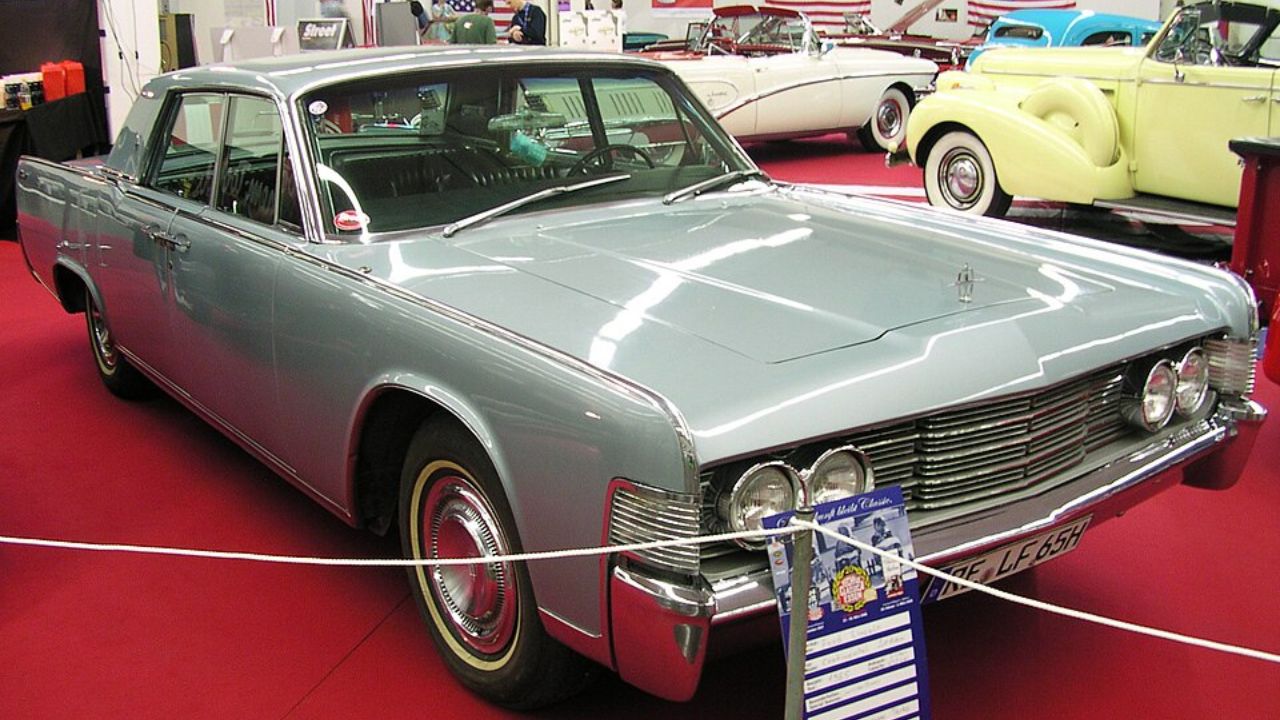
The 1965 Lincoln Continental did not shout for attention. It arrived with clean lines, quiet confidence, and a sense of proportion that made sophistication look almost casual. Six decades later, it still stands as a masterclass in how American luxury could be both dramatic and restrained at the same time.
From its signature rear-hinged doors to the smooth surge of its big V8, the Continental of that year has become a touchstone for collectors who see elegance as something built into the metal, not added on with chrome and gadgets.
The American luxury car that defined understatement
Among classic sedans, the 1965 Lincoln Continental stands out as a symbol of American luxury, with a design that enthusiasts still describe as clean, elegant, and instantly recognizable. Fans often point to its signature suicide doors as the detail that transformed a formal four door into something theatrical, turning every arrival into a small event while keeping the overall shape almost minimalist in its restraint. In an era when many domestic cars chased fins and flourishes, the Continental’s long, slab sides and nearly unbroken shoulder line gave it a calm, architectural presence that still attracts attention in traffic.
That presence did not rely on aggressive ornamentation. The front end was broad and flat, with a simple grille and quad headlamps set into a face that looked more like a tailored suit than a costume. The rear echoed that theme, with horizontal tail lamps that emphasized width rather than height. Collectors who share photos of the car in groups devoted to American luxury often highlight how the proportions alone carry the design, describing the 1965 Lincoln Continental as a car that never fails to turn heads without resorting to visual tricks. In that sense, it embodied a particular kind of mid century confidence: a belief that refinement could be as compelling as excess.
Why 1965 is the sweet spot for the fourth generation
Within the fourth generation Lincoln Continental run, many owners single out 1965 as the best balanced year. Enthusiasts of the model point to the way the car combines the earlier generation’s purity of line with subtle updates that make it feel more modern and usable without disturbing the core silhouette. Among fans of the so called slab sided era, the 1965 Lincoln Continental has become a benchmark for American luxury, celebrated for its commanding presence, its suicide rear doors, and the way its long body seems to glide rather than simply move.
Part of that appeal comes from the way the car sits on the road. The relatively low beltline and generous glass area give it an airy feel from the driver’s seat, while from the outside the roof seems to float above the body on slim pillars. When enthusiasts share images tagged with phrases like ClassicLuxury and V8Elegance, the 1965 sedan appears again and again as the archetype, often in dark colors that emphasize its length and straight body sides. For collectors, that combination of formal shape and subtle aggression has made 1965 a sought after year, especially for well preserved or sympathetically restored examples.
The convertible that turned the boulevard into a stage
If the sedan projected quiet authority, the 1965 Lincoln Continental convertible added a layer of drama. With the top down, the car’s long, uninterrupted beltline and open cabin created one of the most distinctive four door profiles of the period. The fact that Lincoln built a full size four door convertible at all still surprises newer enthusiasts, and production numbers were limited enough that surviving cars attract significant attention. Auction listings describe the 1965 Lincoln Continental convertible as one of only 3,356 convertibles made for that model year, a figure that helps explain why original cars command strong interest among collectors.
Part of the convertible’s mystique comes from the engineering theater of its power top. Contemporary walkthroughs of surviving cars show how the rear decklid lifts, the soft top folds and disappears, and the lid closes again in a carefully choreographed sequence that still fascinates viewers. In a popular video tour of a 1965 Lincoln Continental Convertible, the host promises to show exactly how the top works and invites viewers to stay through the demonstration, underscoring how this mechanical ballet remains a selling point decades after the car left the factory. That same clip, shared under the title 4-Door Drop-Top, captures the way the open car turns a simple boulevard drive into a rolling event, with the long hood, short rear deck, and open cabin combining to evoke a kind of moving terrace.
Suicide doors and the ritual of arrival
For all the attention paid to the convertible mechanism, the detail that most people remember first is the Continental’s rear hinged back doors. When open, those suicide doors frame the cabin like a portal, with the front and rear doors meeting at the center without a fixed pillar between them. Passengers step in and out through a wide, uninterrupted opening that feels more like entering a lounge than climbing into a car.
Enthusiasts describe how this arrangement turned even ordinary errands into a small ceremony. On crowded city streets, the sight of those doors swinging open against the backdrop of the car’s long, straight flanks created a kind of moving architecture that photographers still seek out. In online communities devoted to classic American cars, owners of the 1965 Lincoln Continental often share images that highlight the doors as the focal point, framing the interior’s broad bench seats and brightwork. The doors themselves, heavy and substantial, reinforced the impression that the car was built less like a consumer product and more like a piece of rolling furniture.
Under the hood, smooth power on tap
Elegance only works if the driving experience supports it, and the 1965 Lincoln Continental delivered a powertrain that matched its visual calm. Under the hood, the 1965 Lincoln Continental offered a 430-cubic-inch V8 engine that was tuned for smooth and effortless power rather than raw aggression. Period advertising and modern owner accounts alike emphasize how the big engine delivered its torque in a relaxed, almost lazy way, pushing the heavy sedan forward with a steady surge instead of a sudden lunge.
Combined with a soft riding suspension and power assisted steering, that V8 gave the Continental a character more akin to a private railcar than a sports sedan. Drivers talk about how the car seems to float over rough pavement, the long wheelbase smoothing out imperfections while the cabin remains hushed. In modern traffic, that character can feel almost surreal: while smaller, sharper cars dart around, the Lincoln glides, its engine turning slowly, the exhaust note muted to a distant murmur. For many owners, that experience is central to the car’s appeal, reinforcing the idea that true luxury is about effortlessness rather than speed alone.
A cabin built for quiet comfort
Open the door of a well preserved 1965 Lincoln Continental and the interior reveals how seriously Lincoln treated comfort at the time. Period equipment lists describe a long roster of features aimed at making long distance travel as easy as possible. Among the list of optional equipment were amenities such as a six way power seat that allowed fine tuning of the driving position, an AM radio or stereosonic tape system with power antenna, and an AM/FM radio that expanded listening choices for highway cruising. These details, documented in enthusiast writeups that compare the Continental with contemporaries like the Cadillac Sixty Special, show how the car helped define an era of American luxury design focused on convenience and quiet.
Modern collectors who share brochures and survivor cars in online groups often linger on these interior touches. The dashboard’s horizontal layout, the thin rim steering wheel, and the generous use of chrome and wood tone trim create an environment that feels formal without being stuffy. Upholstery options ranged from broadcloth to leather, and the wide, flat seats encouraged passengers to relax rather than brace themselves. A post highlighting the 1965 Lincoln Continental in one enthusiast group notes how these features signaled a transition into a new era of American luxury, with technology and comfort features serving the goal of relaxed travel rather than gadgetry for its own sake. That context helps explain why the car still appeals to drivers who value comfort and atmosphere as much as mechanical specification.
From showroom centerpiece to framed icon
The Continental’s aura of understated elegance has outlived its original production run by a wide margin. Vintage advertising for the 1965 model has become collectible in its own right, with original print pieces sold as decor. Listings for framed vintage ads describe them as an inexpensive way to bring mid century automotive glamour into a home or office, often using phrases like Framed vintage ads and calling attention to the condition of the paper and the quality of the reproduction. The fact that these ads are now treated as art objects speaks to how successfully Lincoln positioned the Continental as an emblem of tasteful luxury.
The language used in these listings mirrors the tone of the original marketing. Sellers encourage buyers to breathe easy about the condition, emphasize free returns and various promotions and perks, and provide details about the item under headings such as About this item and Condition. The focus on presentation, from the matting and frame to the clarity of the print, echoes the way the original car was sold: as a complete experience, not just a vehicle. In that sense, the Continental has made the leap from product to cultural artifact, with its image carrying much of the same aspirational weight it did when it first appeared in showrooms.
How social media keeps the Continental in the spotlight
Far from being a relic appreciated only at concours events, the 1965 Lincoln Continental has found a second life on social platforms. In one popular group devoted to classy cars, members share images and stories that present the 1965 Lincoln Continental as a symbol of classic American luxury with signature suicide doors that enhance its presence. Posts in that community often pair photos of long, low sedans with captions that celebrate their timeless style, reinforcing the idea that the car remains relevant as a design reference point.
Another enthusiast group focused on slab sided Lincolns features a post that states directly that some say the 1965 Lincoln Continental is the best year for the fourth generation, praising its slab sided design, suicide rear doors, and commanding profile as defining traits of American luxury. The discussion around that post, which carries hashtags like BlackBeauty, CruisingInStyle, and V8Elegance, shows how owners and admirers use the car as a shorthand for a particular aesthetic: long, low, and quietly imposing. By circulating images and videos of carefully restored or tastefully modified cars, these communities help keep the Continental in front of new audiences who may never have seen one in person.
More from Fast Lane Only