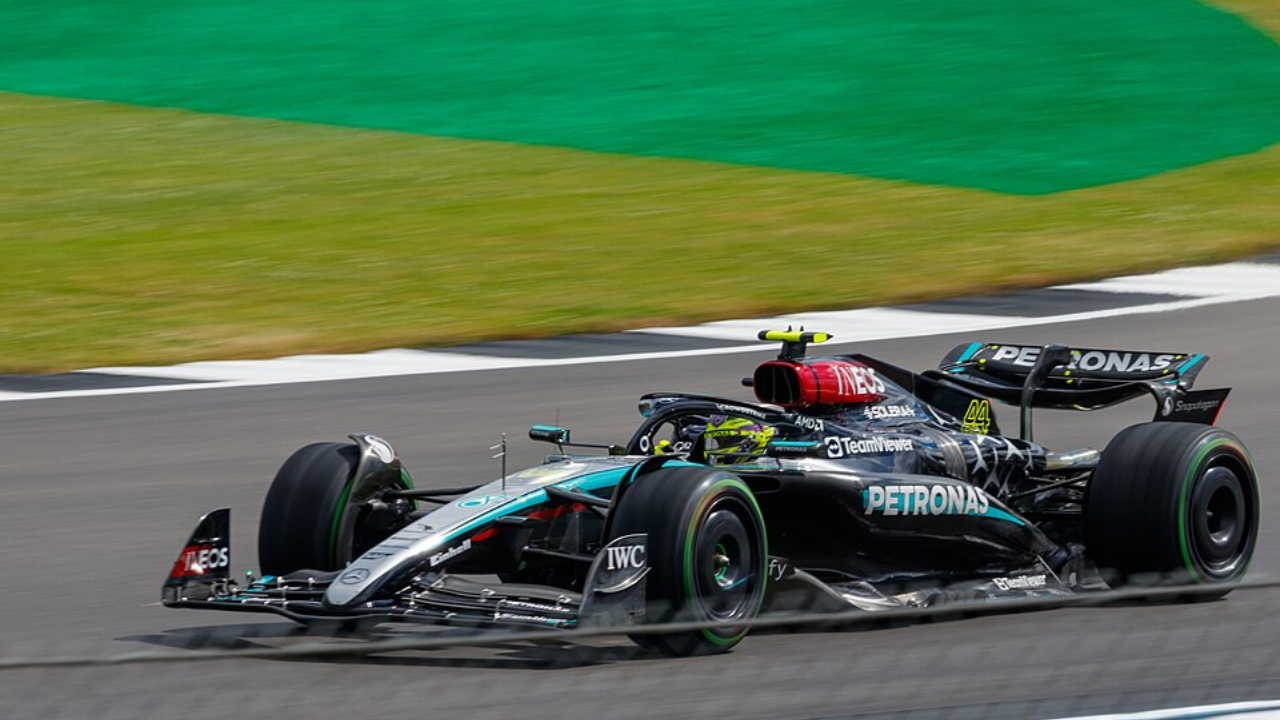
Mercedes has chosen a very modern way to launch its 2026 Formula One era, pairing the first laps of its new W17 at Silverstone with a headline technology alliance that pulls Microsoft into the heart of the team. The shakedown was more than a systems check, it was a statement that the next phase of Mercedes Formula One will be built as much on cloud computing and artificial intelligence as on carbon fibre and wind tunnels. I see that combination as a clear signal that the team wants to redefine how a grand prix operation is run, from the factory floor to the pit wall.
By tying the first on track run of the W17 to a fresh commercial and technical pact, Mercedes has effectively turned a routine filming day into a manifesto for how it plans to fight back under the 2026 rules reset. The car’s early mileage at Silverstone, paired with the arrival of Microsoft branding and infrastructure, suggests a project that is being engineered as a single ecosystem rather than a race car with sponsors stuck on the side.
The W17’s cold, wet coming out party
The first thing that stands out to me about the W17’s debut is how deliberately Mercedes leaned into real world conditions rather than a carefully staged studio moment. Racing drivers George Russell and Kimi Antonelli split the driving duties at Silverstone’s 2.979km International Circuit, logging a combined 67 laps in wet and cold weather that would expose any early reliability gremlins. That choice to run properly, rather than tiptoe through a few installation laps, underlines how keen the team is to bank data as quickly as possible under the new regulations.
From the outside, fans got their first moving glimpse of the W17 through official footage that invited them to Watch the car sweep through Silverstone Circuit, the new aero package and packaging details visible even under the spray. That video, paired with trackside images, confirmed that Mercedes is not hiding behind camouflage or secrecy at this stage, preferring instead to show sponsors, rivals and supporters that the project is real, running and already being pushed in anger.
Shakedown success and what it really tells us
It is easy to dismiss a shakedown as little more than a systems check, but the way Mercedes has framed the W17’s first serious outing suggests more substance. The team has described the run as a successful shakedown, with engineers using the laps to validate reliability, correlate simulation tools and flag early areas for improvement. That kind of language points to a car that is already behaving broadly in line with expectations, which is exactly what a top team wants at this stage of the year.
Further detail from trackside reporting backs that up, with the W17 again credited with completing 67 laps and nearly 200km without any major problems. For a brand that once set the standard in hybrid era reliability, that kind of trouble free first run is more than a box ticked, it is a reminder of the operational sharpness that helped Mercedes become the team to beat in the first place.
From Silverstone to Spain and a changing Formula One
The W17’s early mileage at Silverstone is only the opening chapter of a much longer pre season story. Mercedes has already mapped out the next phase of its programme, with the team heading to Spain for three days of running across a five day event as part of its broader Challenger Reve schedule. That extended plan underlines how seriously the team is taking the need to understand the new car before the first race, especially with fresh power unit and fuel regulations reshaping the competitive order.
Context matters here, because the 2026 rules are widely expected to transform Formula One in a way that fans have not seen before, with a heavier emphasis on electrical power and sustainable fuels. Mercedes has already teased that shift by showcasing the W17 in content that frames the car as the first real evidence of how Formula One will look under the new rules. I read that as a deliberate attempt to position the team not just as a participant in the new era, but as one of its visual and technical reference points.
Microsoft’s big switch and what it brings to Mercedes
If the W17 is the hardware, Microsoft is now being positioned as a key part of the software that will drive it. The technology giant has confirmed that it is switching its Formula One sponsorship from Alpine to Mercedes, a move that has been framed as a major new partnership for both sides. According to Sky News, the $3.4 trillion computing giant is using the deal with Microsoft and Mercedes for 2026 to deepen its presence at the front of the grid, aligning itself with a team that has not won a constructors’ title since 2021 but still carries enormous competitive potential.
The commercial and technical scope of the agreement is significant. Official communications from REDMOND, Wash and BRACKLEY describe how Microsoft Corp will supply cloud and AI tools to Mercedes, with the aim of optimising everything from design workflows to race strategy. In parallel, Microsoft is deploying its cloud and AI technology to the Mercedes F1 team from the start of the 2026 season, using its platforms to expand the team’s existing resources and push that Microsoft relationship further up the grid.
Branding, politics and the new power map in the paddock
On the surface, the Microsoft deal is about logos and livery, and there will be plenty of that. Early briefings describe how the technology company’s branding will appear on the engine cover and rear wing of The Mercedes Formula 1 car, a visibility that reflects the scale of the investment. Reporting has also highlighted how Matt Beer has framed the agreement as one of the most eye catching sponsorship switches of the current cycle, not least because it pulls a major tech player away from a midfield outfit and into a title contending environment.
Behind the paint, though, the partnership is about data and influence. Mercedes has already stressed the role of Microsoft Azure and its AI capabilities in expanding the team’s existing resources, with senior figures at Microsoft Azure and Mercedes both expressing enthusiasm about how the collaboration can accelerate development. At the same time, coverage of the deal has underlined that Microsoft now sponsors the Mercedes-AMG F1 team in a way that will see its tools used to interpret the new power units and fuel regulations, a step that Microsoft and the team clearly hope will translate into lap time.
More from Fast Lane Only