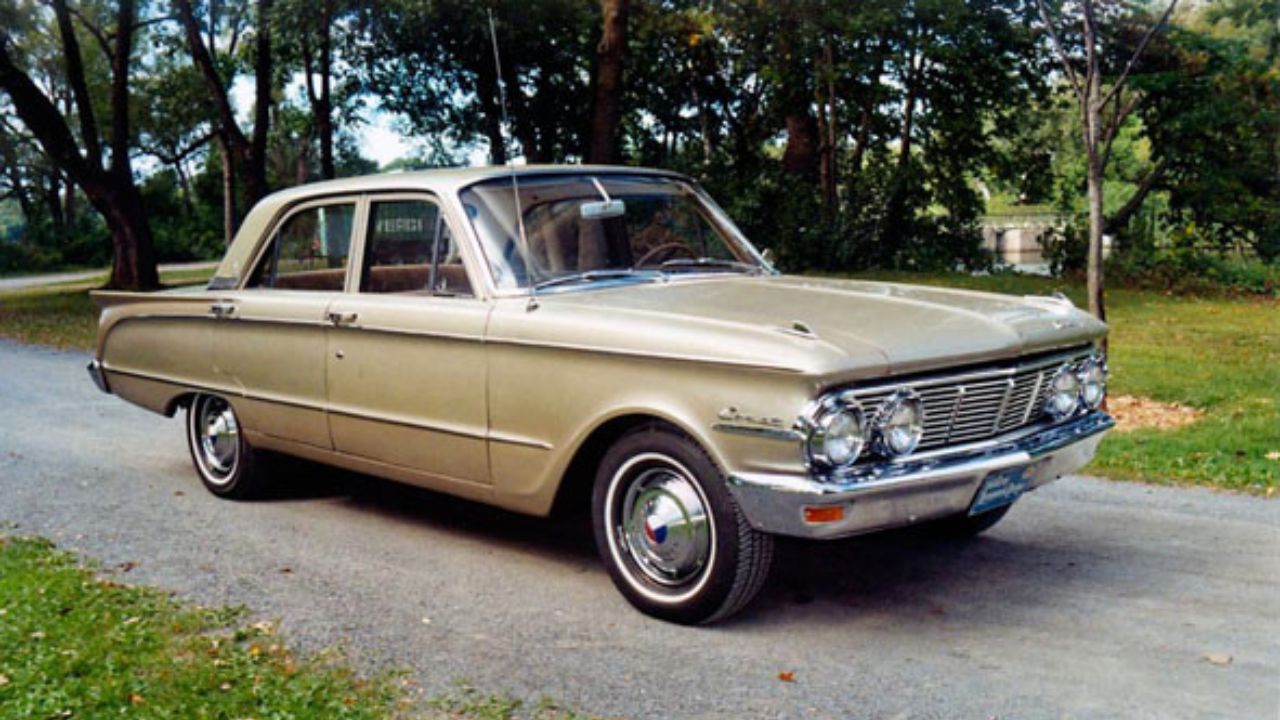
The 1963 Mercury Comet arrived as a compact that tried not to shout about itself. It wore clean lines, modest dimensions and a name that sounded more like a gentle astronomical event than a muscle car. Yet under that restraint, Mercury’s small car quietly gathered style, engineering and marketing touches that made it far more interesting than its reputation as a “plain” commuter suggests.
Seen from six decades on, the car looks like an experiment in how far a Detroit brand could go by being subtle. The Comet’s designers, marketers and engineers all seemed to aim for understatement, and they nearly got away with it until the details gave the game away.
A compact that wanted to look grown up
Within the Ford Motor Company family, the Mercury Comet was the compact that tried to act like a full-size car. Contemporary descriptions frame it as a Compact Classic The, built by Ford Motor Company from 1960 into the late 1970s. By 1963, Mercury had refined the first-generation formula into something that looked more polished than the economy cars it shared hardware with.
Period brochures describe the 1963 Mercury Comet’s body as long and sculpted, mixing elegance with a slightly assertive stance. One classic car guide highlights the exterior under a “Design and Innovation” banner and singles out the way the compact proportions worked with a stretched profile to create a small car that still had presence. The same guide’s “Engine Specifications” table lists a base 170 CID inline six in the Comet’s lineup, with “170 CID I6” spelled out in its Engine Specifications Engine entry.
Where many early 1960s compacts wore sharp creases, the Comet kept a softer shape. Enthusiast descriptions refer to a “Design and Styling Rounded Body” that gave the 1963 Comet a classic round-body look, with generous use of Chrome along the sides and around the lamps. That rounded body theme appears in multiple accounts, including one that praises the “Design and Styling Rounded Body” of the Comet and again emphasizes the role of Chrome as a visual accent for collectors who now chase these cars for restoration projects.
Sharing bones, chasing separation
The Comet’s understatement was partly structural. Under the skin, it was closely related to the Ford Falcon, which made it a compact in size and mechanical layout. A detailed comparison of Falcon vs. Comet notes that in 1963 the two cars finally had more visible differences than they would later, and that the advantage between Falcon and Comet could go either way depending on what a buyer valued. That same analysis, written under the banner “Falcon vs. Comet Thankfully,” argues that the Mercury version leaned harder into trim and image.
Mercury’s own mid-size Meteor sat just above the Comet in the showroom. A period review of the 1963 Mercury Meteor points out that The Comet was almost as much car as the Meteor, which rode on a 116.5 inch wheelbase, only one inch longer than the Fairlane. The writer notes that The Comet, Meteor and Fairlane were so closely stacked that the gap between them sometimes blurred, which forced Mercury to remember where The Comet came from and keep it grounded as a compact rather than a junior full-size.
Lincoln-Mercury widens the net
For 1963, Lincoln-Mercury expanded the Comet’s market reach in a deliberate way. One detailed retrospective explains that for 1963, Lincoln-Mercury expanded the Comet’s market reach and introduced the first convertible. That same account notes that The Corvair Monza had demonstrated how far a compact could go upmarket if it offered style and performance, and Mercury clearly took that lesson to heart.
The new Custom Convertible gave the Comet a dose of glamour. A feature on the car refers to the “Small, Bright, Fast Object” character of the 1963 Mercury Comet and highlights the Custom Convertible as a key part of that identity. In that telling, the Custom Convertible became the halo for the line, signaling that buyers could have open-air driving without stepping up to a big car. The same story, presented under the title “Small, Bright, Fast Object,” positions the Mercury Comet as a compact that punched above its class in image and equipment.
Alongside the convertible, Lincoln-Mercury rolled out Sportster hardtops at mid-year. In the same breath, the company introduced a 260 cubic inch V8. A period description puts it plainly: Along with the rollout of the Sportster hardtops at mid-year came the introduction of a 260 cubic inch V8, the very same 164 hp Challenger engine used in the Falcon Sprint and Fairlane. That 260 and its 164 rated horsepower turned the Comet from a modest runabout into a car that could take a more lively turn, particularly when paired with the sportier body styles.
Engines from thrifty to lively
Under the hood, the 1963 Mercury Comet covered a broad range of personalities. At the entry level, a six-cylinder engine with modest output defined the car’s economy mission. One enthusiast video paints the scene: picture a Mercury showroom in 1963 with a compact car carrying a six-cylinder that made about 75 horsepower and relied on a column shift. The narrator, speaking under a January “Jan Mercury” tag, uses that 75 HP figure to underline how basic the base Comet could be.
The catalog from MMP that lists Engine Specifications confirms that the starting point was a 170 CID inline six. That 170 CID engine, paired with simple transmissions, aligned the Comet with the Falcon and other entry compacts that sold on thrift. Yet Mercury did not stop there. As noted earlier, the mid-year introduction of the 260 cubic inch V8 with 164 horsepower gave the Comet a credible performance option, especially in Sportster and Custom Convertible form. A detailed technical write-up on the Comet’s performance variants notes that this 260 V8 was the same Challenger engine used in the Falcon Sprint and Fairlane, which meant parts commonality and straightforward upgrades for enthusiasts.
Factory literature also leaned on low maintenance as a selling point. One original brochure for the 1963 Mercury Comet asks “How?” and then answers that question with “With service-saving features that normally mean maintenance only twice-a-year or every 6,000 miles.” The same brochure highlights a “1,000-mile new car check” as part of the ownership experience, a reassurance that the compact would not demand constant attention.
Comfort, corrosion protection and quiet quality
Inside, Mercury tried to move the Comet away from the bare-bones feel of some rivals. A period specification sheet for the 1963 Mercury Comet lists interiors that received carpeting, a cigarette lighter, rear-seat armrests and ashtrays, a front door dome light switch and bright horizontal trim on the instrument panel. Buyers could also order a push-button radio, which added to the sense that this was a small car that still offered the feel of a larger Mercury.
On the body side, another Mercury document emphasizes a “Rust-resistant body” that protects itself against corrosion. It details how the body sheetmetal is zinc-phosphate coated and how galvanized steel rocker panels help fight rust. That “Rust” focused pitch shows how Mercury tried to reassure buyers that a compact could be durable in harsh climates, not just cheap to buy.
Contemporary owners and restorers often come back to the same visual themes. Enthusiast groups on social media repeatedly describe the 1963 Comet’s “Design and Styling Rounded Body” and Chrome trim as key reasons the car now appeals to collectors. One such post calls the Comet’s rounded body and Chrome accents a strong draw for restoration projects, echoing the language of the earlier round-body descriptions and reinforcing that the styling has aged better than some contemporaries.
Marketing a modest car with big promises
Mercury’s advertising for the Comet walked a fine line between modesty and sales bravado. In one television spot, the announcer remarks that “maybe you’ve noticed the way owners show a special kind of respect for their new Mercury Comets,” then explains that the car does not scrimp on features. The same commercial leans heavily on the idea of “Highest Resale Value” to suggest that Mercury Comets would hold their worth better than rivals. That pitch framed the Comet as a sensible choice that still carried a hint of pride.
Another version of the same advertisement, preserved in a slightly different upload, repeats the Mercury Comets message and again ties owner respect to the car’s perceived quality and resale performance. The repetition of “Mercury Comets” in that campaign helped cement the name in buyers’ minds, even if the car itself was not as flashy as some competitors.
Elsewhere in the Ford Motor Company universe, a Mercury Meteor commercial from the same era used the phrase “the look the sound. the feel of quality” and praised the ease of maintenance on Ford Motor Company cars. That shared corporate language suggests that Mercury wanted the Comet to borrow some of the full-line prestige, presenting even its compact as part of a quality-focused family.
From plain to prized among enthusiasts
At the time, some observers considered the Mercury comet plain in its segment. A later enthusiast discussion titled “Mercury comet – considered plain in its time” opens its “Design and Styling Rounded Body” section by acknowledging that the 1963 Comet wore a classic round body design that looked typical of the early 1960s. That same discussion points out the Chrome trim and the way the car’s modest looks made it a blank canvas for collectors and restoration projects.
Another enthusiast write-up on a V8-powered Comet, shared under the heading “The Hall V8–powered Comet is one of those rare combinations,” repeats the “Design and Styling Rounded Body” description and again emphasizes Chrome as part of the appeal. In that context, the Comet’s once-ordinary styling becomes a virtue, because it lets the mechanical upgrades and paintwork stand out without fighting heavy factory ornamentation.
Curbside observers have also warmed to the Comet’s convertible variants. One profile of a 1963 Mercury Comet S-22 Convertible carries the subtitle “Five-Card Stud or Texas Hold-Em?” and notes that the S-22 package gave the car bucket seats and sportier trim. The writer, operating under an “Oct Curbside Classic Mercury Comet Convertible Five Card Stud” label, suggests that the S-22 Convertible balanced subtle looks with enough flair to feel special without being ostentatious.
The Comet in the Ford family orbit
Within the broader Ford Motor Company structure, the Comet had to find its place between Falcon, Fairlane and Meteor. The earlier comparison of Falcon vs. Comet Thankfully framed the Mercury as a slightly more upscale alternative to the Falcon, with extra trim and a more polished interior. The Meteor comparison, which highlighted the 116.5 inch wheelbase and the narrow difference to Fairlane, showed how close Mercury’s compact and intermediate models sat in size and mission.
More from Fast Lane Only