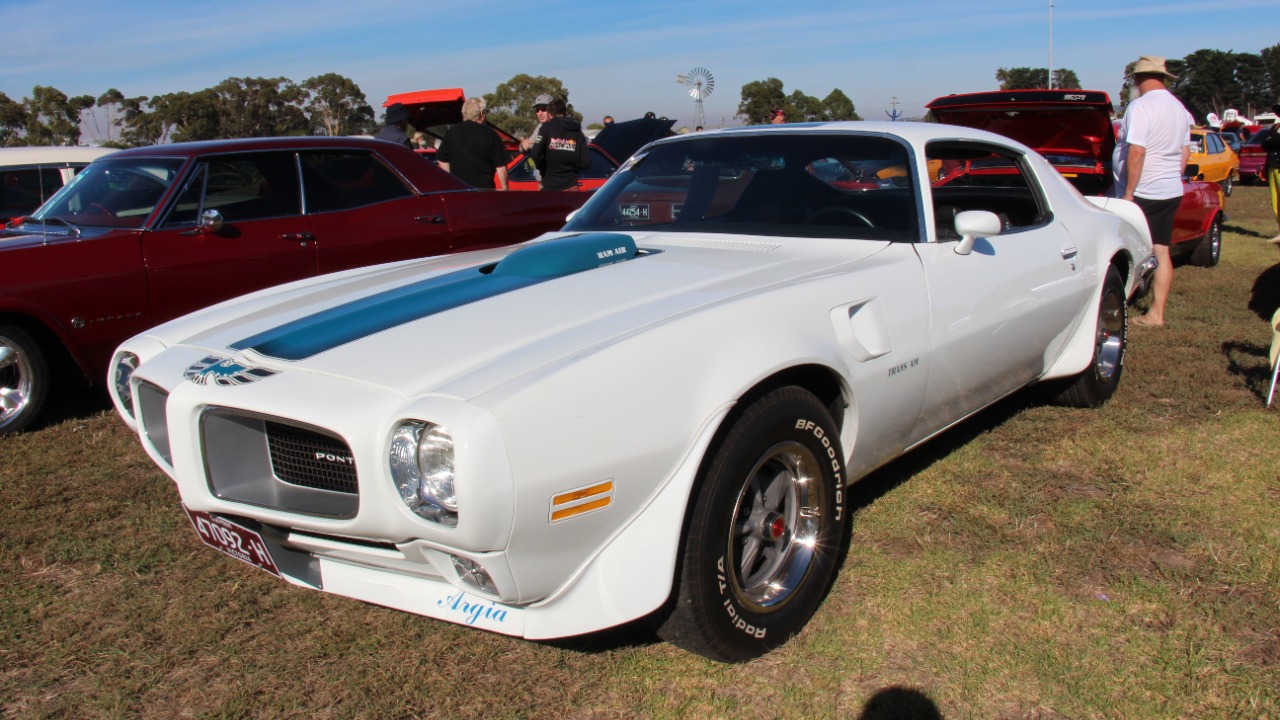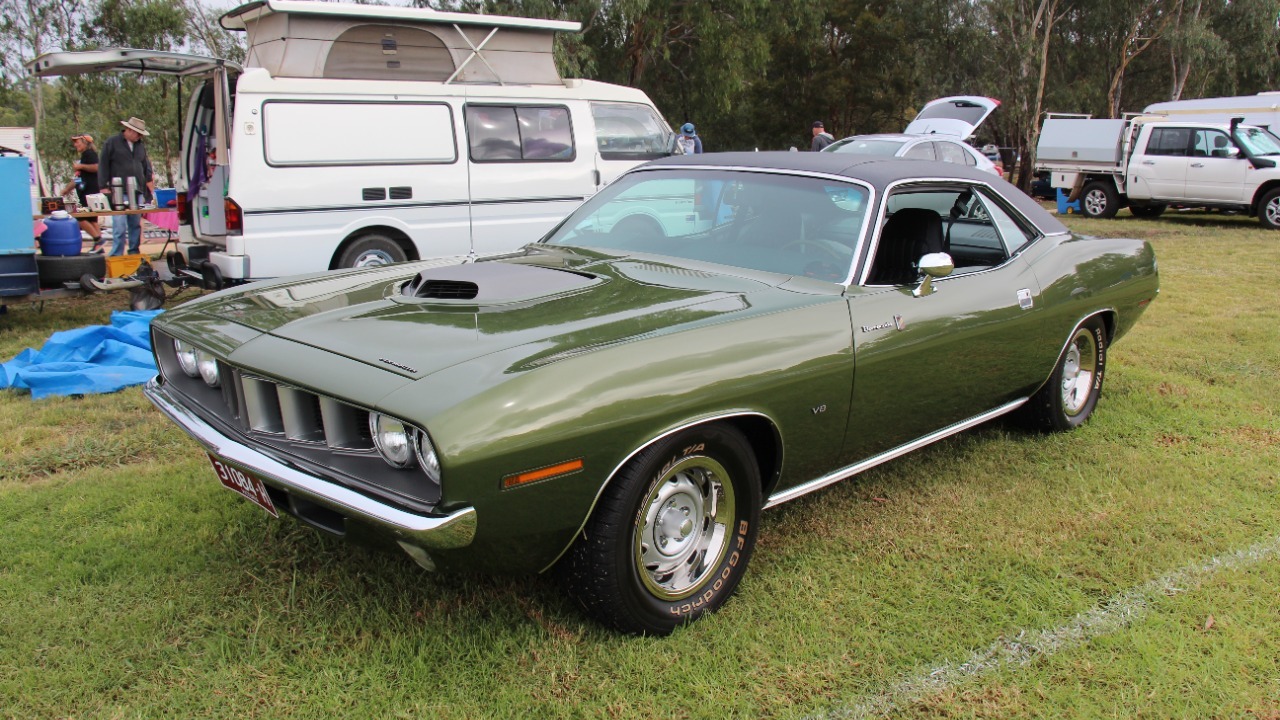
The 1971 Hemi ’Cuda arrived just as the muscle car era began to unravel. Built in tiny numbers almost by accident rather than as a planned limited edition, it went from showroom slow seller to blue-chip collectible as regulations, insurance, and corporate strategy pulled the plug on Chrysler’s wildest big-blocks.
Only a handful of these Plymouths left the factory before the rules changed and the market turned. That short production run, combined with the mystique of the 426 Hemi and the final-year status for Chrysler’s high-compression big-blocks, explains why a car that once struggled to find buyers now commands multi-million dollar bids and near-mythical status.
The last, loud gasp of Chrysler’s big-block era
By 1971, Plymouth Hemi ’Cuda production was already in steep decline. Earlier in the cycle, Plymouth had moved hundreds of Hemi-powered E-bodies. In 1971, output collapsed from 666 cars to just 114, a figure that includes both hardtops and convertibles, as documented in coverage of the 114 cars built.
The collapse was not because the Hemi suddenly lost its edge. The 426 Hemi remained a brutal piece of hardware, with hemispherical combustion chambers, huge valves, and massive ports that made it a legend in NASCAR and on drag strips. Technical breakdowns of the engine highlight the 426 cubic inch displacement, a bore of 4.25-inch and a short stroke that let it rev hard for a big-block.
Instead, the market moved. Insurance companies targeted high-compression, high-horsepower engines with steep surcharges, and buyers who had happily optioned a Hemi a year or two earlier suddenly balked. Auction descriptions of surviving cars point out that increased insurance surcharges hit the marketplace so hard that 1971 effectively became the Hemi Cuda’s swan song as the model year wound down, with the Hemi Cuda remembered as a short-lived high point in Plymouth’s performance history.
On top of that, 1971 marked the final year for Chrysler’s high-compression big-block V8 engines, including the mighty 426. Enthusiast accounts of the Plymouth Hemi ’Cuda stress that this was the last season before compression ratios and advertised horsepower figures were cut to meet emissions and fuel requirements, which turned the 1971 cars into a natural bookend for the most aggressive factory Hemis.
Mass-produced Plymouths that suddenly looked obsolete
The rarity of the 1971 Hemi ’Cuda can be misleading. These were not hand-built exotics or deliberately capped specials. They were regular-production Plymouths that simply did not sell well. A detailed look at the 1971 model year notes that Plymouth produced 6,228 ’Cuda models in total, but only a microscopic fraction carried the Hemi engine, and only a dozen of those were convertibles. Coverage of the 6,228 cars built explains that these were mass-produced Plymouths that struggled to move off lots once insurance and fuel concerns took hold.
Dealers who had once used Hemi cars as showroom bait now watched them sit. Buyers who still wanted performance could pick lower-compression big-blocks or small-blocks that cost less to insure. The Hemi option, already expensive, became a tough sell in an environment where monthly premiums suddenly mattered as much as quarter-mile times.
The result is a paradox that defines the Hemi ’Cuda legend. The cars were built on a standard assembly line, with the same basic bodies and interiors as lesser models, but the combination of high price, rising insurance costs, and looming regulation cut production to levels usually associated with coachbuilt machinery.
How few is “few” for a Hemi ’Cuda
Within that already tiny pool of 114 cars, the breakdown gets even more extreme. Reports on the only known export example state that just 48 of those 1971 Hemi Cudas were hardtops with manual transmissions, a configuration that appeals strongly to collectors who want the most direct connection between driver and drivetrain.
The convertibles are even more extreme. Detailed production research and auction records align on a figure of only twelve Hemi Cuda Convertibles built worldwide for 1971. A social media post from Mecum describes one featured car as the FIRST of only twelve Hemi Cuda Convertibles produced in 1971, and notes that in that model year, only 108 Hemi Cudas of all body styles were sold, a tiny number in the context of American muscle cars. That description of the First convertible underlines just how small the production run was.
Specialist overviews of the 1970 and 1971 Hemi ’Cuda convertibles describe them as the “unicorns” of Auburn Hills and confirm that only 12 examples were built worldwide, split between automatic and four-speed cars. Those same accounts point out that only a Few machines occupy the very top tier of American muscle car desirability, and that the Hemi Cuda Convertibles sit at that summit because they combined low production, peak performance specification, and open-air body style.
Even among hardtops, sub-variants matter. One featured 1971 Plymouth Hemi Cuda is described as 1 of 59 produced with a factory 4-speed, with the Black Shaker scoop protruding through the hood as part of the N96 fresh air system feeding the 426 cubic inch Hemi V-8. That detail about the Black Shaker highlights how collectors now parse production numbers into ever-smaller slices, each with its own value curve.
The Hemi hardware that made the legend
Underneath those statistics sits the mechanical reason anyone cares. The 426 Hemi was not simply another big engine. Its hemispherical combustion chambers, large valves, and straight, high-flow ports gave it a reputation for making far more power than its official ratings suggested. Factory literature and later technical write-ups emphasize that this hemi engine under the hood was engineered for racing first, then adapted to street use, which is why descriptions of the hemi engine under still read like competition manuals.
In the Hemi ’Cuda, that engine sat in an E-body platform that had been sharpened for performance duty. The ’Cuda was the performance variant of the Plymouth Barracuda line, with more aggressive styling and options tailored to quarter-mile work. Contemporary and retrospective reviews alike note that looks were only part of the story. The Hemi cars were the performance ’Cuda variant, with drivetrains and suspension tuned for high speed rather than boulevard posing, as summarized in coverage of The Elusive Hemi Cuda Convertible that reminds readers what Rare Really Means for this model.
Even so, the 1971 cars already showed signs of the coming shift. Styling changes such as the more complex six-inlet grille and revised taillights gave the Plymouth Hemi Cuda a distinctive face, but under the skin, the company was preparing to transition away from high-compression big-blocks. Later commentary makes clear that 1971 was the last year before lower compression and net horsepower ratings reshaped the spec sheets.
From slow seller to seven-figure unicorn
If the production numbers and hardware explain the foundation of the Hemi ’Cuda mystique, modern auction results show how far the market has run with it. A video clip from Mecum shows a 1971 Plymouth Hemi Cuda Convertible described as the first of only twelve Hemi Cuda Convertibles produced in 1971, driving past the block as bidding reaches $3.3 m, with the caption highlighting a $3.3 million drive-by for the car. That $3.3 million figure is a stark contrast to the original window sticker prices, which were high for the era but nowhere near exotic territory.
High-profile sales like that have cemented the Hemi ’Cuda as a benchmark for American muscle car values. Articles that profile the rarest examples argue that the car resets expectations of what “rare” really means, especially when compared with other limited production models that still number in the hundreds. The Elusive Hemi Cuda Convertible, for instance, is held up as a case study in how a handful of cars can define an entire segment’s top end.
At the same time, more obscure variants keep surfacing. One report on a Rare 1971 Plymouth Cuda Four Speed Ragtop Hides Hemi Surprise in Plain Sight describes a 1-of-1 specification car, a Plymouth Cuda Four Speed Ragtop Hides Hemi Surprise in Plain Sight that combines options in a way no other known example does, reinforcing the idea that the numbers tell the story for these cars. That account of the Cuda Four underscores how thin the production slices can become.
Design tweaks, secret shipments, and changing names
The 1971 Hemi ’Cuda did not exist in a vacuum. It was part of a broader moment when Detroit’s wildest creations were colliding with public pressure and corporate caution. Commentaries on the period point out that this was the same era when the Dodge Demon nameplate was changed to Dart Sport to avoid controversy, a reminder that marketing departments were suddenly as concerned with image as engineers were with horsepower.
Design-wise, the 1971 Plymouth Cuda Convertible Changes for the Plymouth Hemi Cuda were described as minimal but meaningful. The car adopted a more intricate grille with six inlets and saw subtle trim revisions that now help experts authenticate surviving examples. Enthusiast posts about the Plymouth Cuda Convertible 1971 model stress that collectors scrutinize these cues closely, since the values involved reward accurate documentation.
Some stories add to the mystique. A video feature on 1971 Plymouth Hemi ’Cuda facts mentions that only 12 convertibles were ever built and refers to a mysterious midnight delivery to Paris that Plymouth tried to keep quiet, a detail that captures how secrecy and mythology now swirl around these cars. That reference to Paris fits with the broader sense that the Hemi ’Cuda story is as much about legend as it is about metal and numbers.
From Auburn Hills to the wider muscle car universe
The focus on the 1971 Hemi ’Cuda sometimes obscures how it fits into the broader American performance car ecosystem. Parts specialists who support restorations of these cars place them alongside other icons, listing components for models such as Camaro, Nova, Impala, and various truck lines. Their catalogs, which sit behind landing pages for Camaro, Nova, Impala, and truck parts, show how The Unicorns of Auburn Hills, the Hemi Cuda Convertibles, share garage space and restoration budgets with a wider field of classic American muscle.
Coverage of the Hemi Cuda Convertibles frames them as Few among a sea of American performance cars, but also as part of a continuum that includes big-block Chevrolets, high-compression small-blocks, and later emissions-era machines. That context matters because it explains why the Hemi ’Cuda commands such a premium. It is not only rare, but it is also rare within a category that already prizes scarcity and performance.
Media channels that focus on muscle cars reinforce that hierarchy. HotCars, for example, distributes its content about The Rarest Hemi Cuda Reminds Us What Rare Really Means across platforms like Google News, Flipboard, and Facebook, underscoring how the story of the Hemi ’Cuda has crossed from niche forums into mainstream car culture. Links that trace back to The Rarest Hemi, Cuda Reminds Us What Rare Really Means show how a single model year can anchor an entire narrative about rarity and value.
More from Fast Lane Only