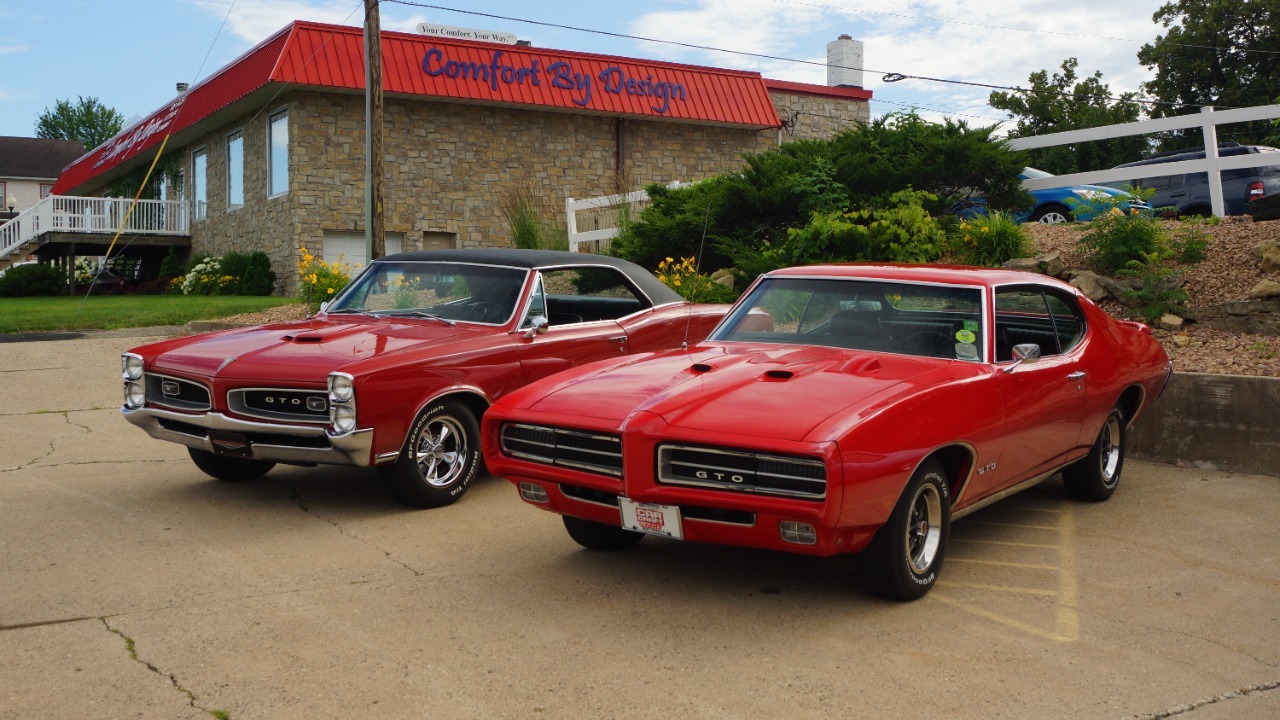
Pontiac did not set out to launch a new performance legend. The division was supposed to follow General Motors’ rules, avoid racing headlines, and keep engine sizes in line with corporate policy. Instead, a small group of engineers and marketers quietly slipped a big V8 into a mid-size coupe and turned it into the Pontiac GTO, a car that would redefine American performance.
How that happened was less about a grand corporate plan and more about one calculated act of defiance. A single option package, approved almost as an afterthought, created a template that competitors in Detroit rushed to copy and helped light the fuse on the muscle car era.
The corporate rulebook that said “no.”
In the early 1960s, General Motors was trying to look responsible in front of regulators and safety advocates. Internal policy limited mid-size cars to smaller-displacement engines and discouraged anything that looked like factory-backed speed. After GM issued its famous racing ban, Pontiac faced a serious identity problem. The division had built its reputation on power and performance, and executives worried about how to keep that image alive when official racing programs were off the table.
Accounts of the period describe how, after GM’s infamous 1963 ban on racing, Pontiac leadership looked for ways to stay visible to enthusiasts without openly defying the corporation. According to one explanation of how Pontiac managed to bypass those rules, the ban removed the traditional path of track success that had fed showroom sales, which left the brand searching for a new strategy to protect its high-performance image and sales success after GM.
At the same time, wider industry pressure was building. Commentators later connected GM’s retreat from racing to a broader American Auto Industry “safety program” that had already pushed manufacturers to tone down overt performance claims, with some rivals such as Ford taking a more aggressive stance against those limits on the American Auto Industry. Within that climate, Pontiac was expected to fall in line.
John Z. DeLorean spots a loophole
Inside Pontiac, the person who saw a way around the rulebook was the division’s young chief engineer. That man, John Z. DeLorean, was, at the time, the chief engineer of Pontiac, and he wanted a mid-size car that did not just look sporty but was also a blast to drive. Corporate policy restricted engine size in mid-size models, but it said nothing about what could be offered as an option package.
DeLorean had already built a reputation as a creative, sometimes rebellious engineer. Biographical profiles describe how he mixed technical skill with a flair for marketing and personal style, which helped him climb quickly through the Pontiac ranks john. That mix of engineering discipline and showmanship would prove central to what came next.
He also understood that Pontiac’s future depended on staying relevant to younger buyers. Another reference to his career emphasizes how DeLorean combined engineering leadership with a knack for reading the market, which made him unusually willing to push against GM convention. The loophole he identified was simple: if a large engine could not be standard in a mid-size car, perhaps it could be bundled in a special equipment package that looked, on paper, like just another option line.
The Skunkworks mid-size hot rod
With that logic in place, Pontiac engineers went to work. The core idea was to take the division’s mid-size platform and fit it with a full-size performance engine, creating a car that felt like a street racer straight from the factory. The 1964 GTO was created by engineers Russ Gee and Bill Collins working under DeLorean. They combined the mid-size chassis with Pontiac’s big V8 and wrapped it in relatively understated styling, which helped the car pass as a simple option package inside GM’s paperwork, Russ Gee and.
Period descriptions of early cars highlight how effective that formula was. One account of a Pontiac GTO from the very first year of production, 1964, notes that the car could be factory fitted with both the 389 cubic inch engine and a rated output of 348 brake horsepower, a combination that gave a mid-size coupe the power of a full-size performance car 389. That specific pairing of 389 and 348 helped make the GTO feel far more muscular than its modest exterior suggested.
The car was not just about straight-line performance either. Engineering choices around suspension tuning, gearing, and braking turned the mid-size Pontiac into a balanced package that enthusiasts could drive every day and still take to the drag strip on the weekend. Inside Pontiac, the project remained low profile enough that it did not trigger immediate corporate alarm. On spec sheets, the GTO appeared as an option code attached to an existing model rather than a standalone performance car.
From quiet option to showroom sensation
Once the 1964 Pontiac GTO hit showrooms, the plan to keep it under the radar did not last long. Pontiac originally tried to limit exposure by capping production. Internal expectations reportedly set an initial run of about 5,000 units, in part to avoid drawing too much attention from GM leadership to a car that technically skirted policy.
Reality moved faster. When the 1964 Pontiac GTO hit showroom floors, it caught dealers and customers by surprise with its mix of affordability and performance. Within weeks, demand surged, and by the time Pontiac fully grasped the reaction, 5,000 orders had been placed, blowing past the cautious internal target.
Marketing support followed. Pontiac’s advertising team, which included Pontiac chief marketing manager Jim Wangers working through the division’s contract agency, recognized that the GTO could become a halo product. In his autobiography Glory Days, Wangers later described how the GTO disregarded GM’s policy on engine size in mid-size cars and how Pontiac tried to contain risk by limiting initial production to 5,000 cars, a number that quickly proved too low once demand became obvious.
By the mid-1960s, the GTO had become a fixture in Pontiac showrooms and advertising, no longer just a quiet option package but a central part of the brand’s identity. The bold move that had started as a workaround now defined Pontiac’s public image.
The car that lit the muscle car wars
Automotive historians widely describe the Pontiac GTO as the first true muscle car. Background summaries explain that, though there were performance-oriented cars before it, the Pontiac GTO is widely considered the first muscle car because it combined a relatively affordable mid-size body with a large, high-output V8 and was marketed directly to younger performance buyers. That formula quickly became the standard across Detroit.
One detailed history describes how the Pontiac GTO was the match that ignited the muscle car wars and forced every manufacturer in Detroit to either keep up or get left behind. The 1964 foundation set the pattern, with a mid-size platform, a big V8, and a four-speed manual that became the enthusiast’s choice, the Pontiac GTO. Competitors responded with their own big-engine mid-size models, turning showrooms into battlegrounds for horsepower and quarter-mile bragging rights.
Later analyses of the 1964 Pontiac GTO’s impact describe how the car helped create a 1960s supercar war, with muscle cars emerging as one of the most competitive and visible segments in the American market. Muscle cars became a defining part of car culture, with a few key models, including the GTO, serving as reference points for enthusiasts and journalists who wanted to be at the forefront of the most important automotive news.
Pontiac’s image problem becomes an advantage
The irony of Pontiac’s situation is that the same corporate clampdown that threatened its performance image also created the conditions for the GTO. After GM’s racing ban, Pontiac could no longer lean on track victories to sell cars. The division had to find another way to signal speed and excitement to buyers who followed drag strips and car magazines.
By turning a mid-size car into a street-ready performance machine, Pontiac gave enthusiasts something they could own and drive every day, not just watch on a racetrack. The GTO’s success showed that there was a large audience for this kind of car, one that wanted full-size power in a more compact, more affordable package. That insight reshaped Pontiac’s lineup and encouraged rivals to rethink their own product plans.
Inside GM, the GTO also demonstrated the value of calculated risk. Pontiac’s leadership had technically stayed within the letter of corporate policy by presenting the car as an option package, but everyone involved understood that the spirit of the rules had been stretched. Once sales figures came in, the corporation had little incentive to shut the project down.
How a single option changed Detroit
The path from a quiet engineering experiment to a full-blown segment shows how quickly the industry could move when a new idea resonated with buyers. At first, Pontiac treated the GTO as a limited proposition. The option code lets dealers order a performance package without forcing GM to advertise a policy-breaking car.
As orders piled up, the GTO became proof that enthusiasts would pay for performance even in the face of growing safety and regulatory pressure. Other divisions inside GM and rival companies in Detroit soon followed the same template, pairing big engines with mid-size bodies and giving those cars aggressive names and marketing campaigns. The original Pontiac GTO had, in effect, written the rulebook for a new class of American performance car.
Later retrospectives on Pontiac GTO Through The Years describe how the model evolved, with power levels rising and styling becoming more aggressive as the muscle car wars intensified. Yet the essential idea remained the same as the one DeLorean and his team had sketched at the start: take a mainstream car and give it the heart of a racer.
A legacy built on a rule broken in spirit
Looking back, the Pontiac GTO’s origin story reads less like a carefully plotted corporate initiative and more like a moment when a few individuals decided to take a chance. The car existed because John Z. DeLorean and his colleagues believed that performance was worth bending internal rules. They trusted that if they could get the car into showrooms, customers would do the rest.
The outcome validated that gamble. The GTO became a reference point for what a muscle car should be, and its influence still shapes how enthusiasts and manufacturers think about performance models. Later descriptions of a 1964 Pontiac GTO emphasize how Pontiac revolutionized the muscle car market with that first-year car and created a legacy that still resonates today.
The corporate rulebook had said no. A single bold decision to treat a big-engine mid-size as just another option line turned that no into one of the most influential yeses in American automotive history.
More from Fast Lane Only