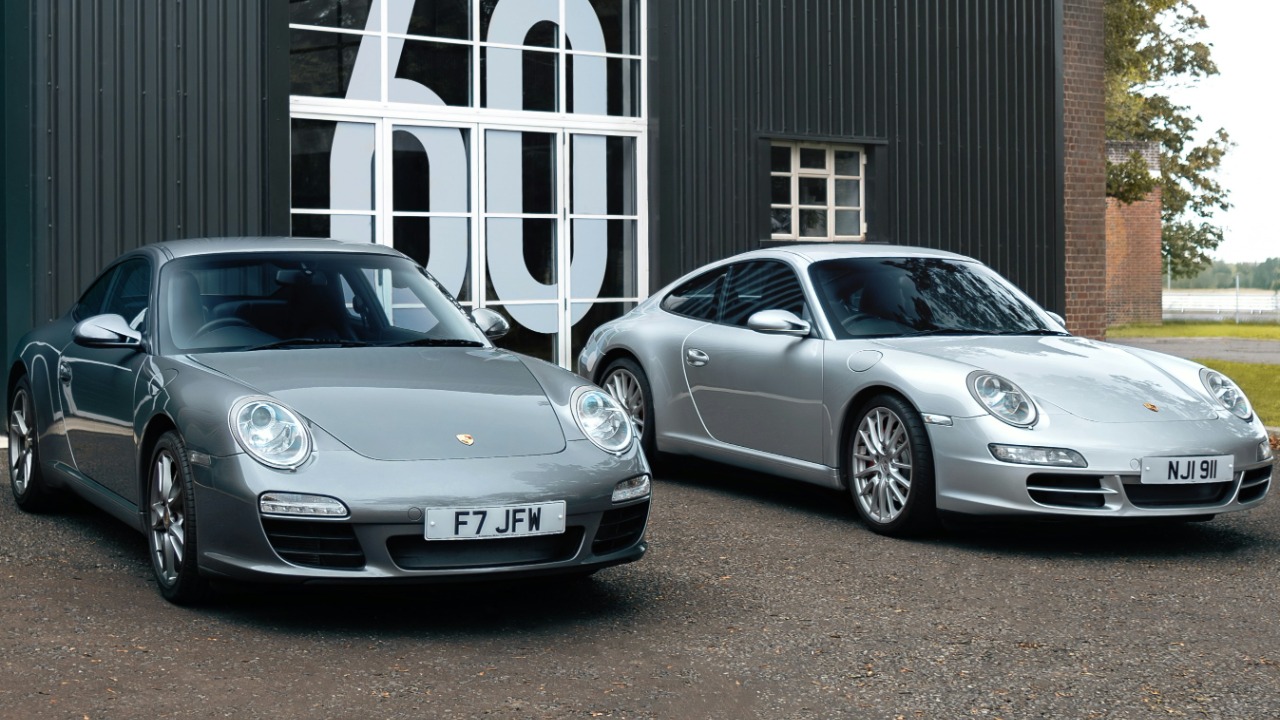
The Porsche 997 Carrera occupies a rare middle ground between classic charm and modern usability, which is why enthusiasts increasingly regard it as a modern classic in waiting. It blends the compact proportions and analogue feel associated with earlier generations with performance, safety and comfort that suit daily use. That balance has turned the 997 into a reference point for drivers who want a 911 that feels special without demanding the compromises of a museum piece.
As values of older air-cooled 911 models continue to climb, attention has shifted to the 997 as a more accessible way into the heritage of the badge. Owners find that the car’s character, variety of specifications and growing institutional support position it squarely in the sweet spot between nostalgia and contemporary expectations. Together, these factors have created a model that increasingly defines what a modern classic Porsche should be.
From controversial successor to “New Classic”
When the 997 generation arrived, it had a specific mission: to reconnect the 911 with its traditional silhouette and driving feel while retaining the gains in refinement and performance that water cooling had brought. Official material describes the Technology offensive behind the car, noting that with the design of the type 997, Porsche made the 911 even more dynamic and distinctive. The combination of a familiar profile with sharper detailing, wider tracks and a more focused chassis meant the car felt both recognisably traditional and convincingly modern.
Enthusiast commentary has since elevated the 997 to what some describe as a New Classic. In that assessment, the 997 is widely considered the Goldilocks 911, a car that sits perfectly between the rawness of earlier models and the size and complexity of later generations. The same analysis notes that it is Absolutely worth buying, reflecting a consensus that the car has crossed from used performance car into collectible territory without losing its usability on real roads.
Why the 997 Carrera feels like the “Goldilocks” 911
Part of the 997 Carrera’s appeal lies in its dimensions and driving position, which many enthusiasts see as a sweet spot between agility and stability. Owners comparing a 997 to newer models such as the 992 often report that as a fun driver’s car, they prefer the 997, arguing that despite performance differences, it offers more character and feedback. That sense of connection is reinforced by the availability of hydraulic steering, naturally aspirated flat-six engines and manual transmissions that encourage the driver to work with the car rather than simply point and squirt.
The 997 lineup context is central to the car’s reputation. Detailed buyer guidance explains how the 997 generation is split into two distinct phases, which affects performance, reliability and driving feel. Early 997.1 cars retain mechanical character and an analogue interior, while later 997.2 versions add direct fuel injection and updated electronics for improved efficiency and refinement. This clear division allows buyers to tailor their choice, whether they prioritise the raw edge of the earlier cars or the more polished experience of the later ones.
Why enthusiasts target the Carrera and Carrera S
Within the broad 997 family, the standard Carrera and Carrera S have emerged as the most convincing expression of modern classic status. Enthusiasts often highlight the 997.1 Carrera as a strong Porsche 911 buy, noting that nearly two decades after its debut, it delivers contemporary performance while avoiding the complexity and cost of turbocharged or GT variants. That same perspective frames the Carrera as the point where Is the Porsche 997.1 Carrera S the ultimate “sweet spot” 911 becomes a serious question for anyone weighing character, cost and usability.
Market data reinforces that positioning. Pricing analysis of the 997 Generation Porsche 911 Market Value & Pricing indicates that Fully Sorted Enthusiast Examples of the Carrera models typically sit in the $55,000 to $90,000 range, a bracket that reflects rising demand without yet matching the stratospheric figures of older air-cooled cars. From an ownership perspective, that balance of value and performance makes the 997 G and 911 M variants accessible to serious drivers who want to use their cars regularly while still participating in a maturing collector market.
Factory support and the road to official classic status
The factory’s attitude has also shifted in a way that strengthens the 997’s position as a modern classic. Corporate storytelling now frames the 997 as a model that highlights design purity, variety, and enduring everyday usability. That narrative has been backed by institutional action: Porsche Classic has formally assumed responsibility for the 997, which means a growing supply of official parts and accessories that will help these cars continue to age really well. When a manufacturer publicly commits to supporting a model in this way, it sends a clear signal to the market about long-term significance.
Broader classic-car platforms have responded in kind. Marketplaces such as classic.com track values and transactions for the 911 and 997, which in turn shapes buyer and seller expectations. Specialist finance and buyer services echo the view that, in many respects, the 997 represents a bridge between older and newer Porsche eras, with the Carrera models at the centre of that story. As the cars age, the combination of factory support, documented market data, and an engaged enthusiast base suggests that the 997 Carrera sits in the sweet spot of modern classic status and is likely to define the category for 911 fans for years.
More from Fast Lane Only