
Ram’s decision to bring Hemi V8 power back to its half-ton pickups has created a problem most automakers would love to have: more buyers than engines. Demand for the revived Hemi options in the latest Ram 1500 is running ahead of what Stellantis can build, forcing the company to juggle production plans, supplier capacity, and a customer base that is not ready to give up big-displacement power. The scramble to satisfy those buyers is reshaping how Ram positions V8s alongside its newer turbocharged sixes and electrified options.
What looks on the surface like a simple case of “just build more Hemis” is, in reality, a complex industrial and strategic puzzle. Stellantis is trying to restart and expand V8 output while it simultaneously pushes the Hurricane family of downsized engines and prepares for more electrification across its truck lineup. The result is a tug-of-war between what the market is asking for right now and where the company wants its powertrains to be in the next decade.
Hemi demand surges as Ram reopens the V8 tap
The clearest sign that Ram underestimated appetite for V8 power is how quickly the refreshed 2026 Ram 1500 has become a hit in Hemi form. Internal sales data for the updated truck show that Hemi-equipped trims are outperforming expectations, with Stellantis acknowledging “strong demand” for the V8 versions of the 2026 Ram 1500 as soon as they reached showrooms. That surge is particularly striking given how heavily the company had been promoting its newer turbocharged six-cylinder alternatives in the run-up to the refresh.
Part of the draw is the return of a familiar specification that many Ram loyalists consider non-negotiable. Ram has officially confirmed that the 2026 Ram 1500 will again offer the 5.7-Litre Hemi V8, rated at 395 horsepower, after a model-year gap in which the truck relied on six-cylinder engines. That brief absence appears to have sharpened demand rather than dulled it, with buyers who sat out the Hemi-free year now lining up to secure V8 trucks as quickly as dealers can get them allocated.
Inside Stellantis’ bottleneck: why building more Hemis is not simple
From the outside, it might seem like Stellantis could simply crank up the assembly lines and flood the market with Hemi V8s. Internal accounts of the program to reintroduce the Hemi to Ram make clear that the reality is more complicated. Engineers and manufacturing planners describe a painstaking process of restarting V8 production, validating every step, and ensuring that the revived engines integrate cleanly with updated truck platforms and electronics. As one insider framed it, the idea of just dropping the engines into new bodies sounded easy, but the answer was “Not so fast. Literally
That caution has real consequences for how quickly Ram can match supply to demand. Stellantis is preparing to start fresh V8 production at its Dundee Engine Plant in Michigan, with internal briefings indicating that the facility will build the 5.7-liter Hemi, the 6.4-liter V8, and related high-output variants like Hellcat and the other performance engines. According to internal reporting cited by Now and Mopar Insiders, that ramp-up is scheduled to begin in August, which means the current shortfall will persist until the new capacity comes online and stabilizes.
How Dodge’s Durango decision kept the Hemi flame alive

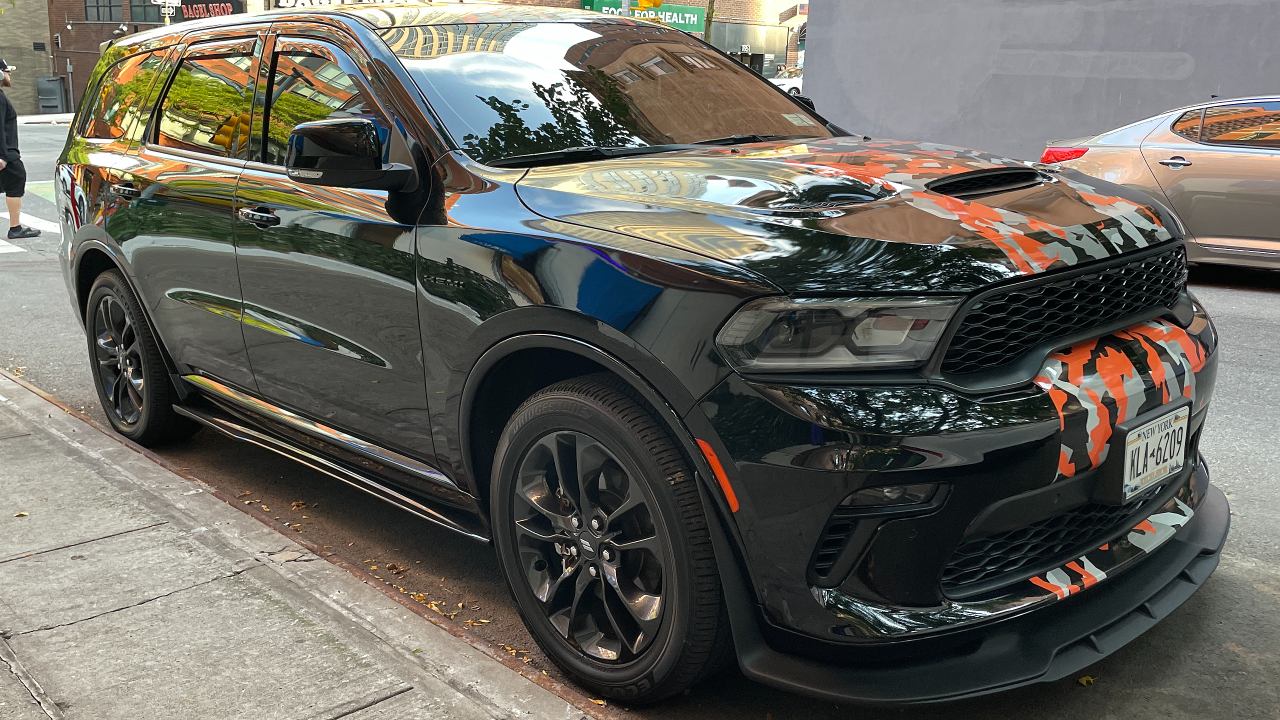
Ram’s current crunch is easier to understand in light of how Dodge handled the Hemi V8 in its own lineup. As Stellantis moved to wind down Hemi production, Dodge initially positioned the three-row Durango SUV as the last holdout for the classic V8. Then, facing persistent customer pressure, Dodge reversed course and confirmed that Hemi V8 production would be extended specifically for the Durango. That pivot, described as coming Against the odds, effectively kept the Hemi tooling warm and the supply chain intact.
By late the following year, Dodge again underscored how strong that demand remained. Company executives acknowledged that, due in part to customer feedback and ongoing interest in the existing Durango, they would keep building Hemi V8s into 2025. Dodge framed the move as a direct response to buyers who were not ready to trade their V8s for smaller engines, and it explicitly tied the extension to continued production of HEMI-powered Durango models. That decision did not solve Ram’s later supply gap, but it did mean Stellantis never fully shut the door on Hemi manufacturing, making the current restart challenging rather than impossible.
Hurricane vs Hemi: Ram’s two-track engine strategy
Even as Ram leans back into V8 power, Stellantis is not abandoning its plan to shift more trucks to downsized, turbocharged engines. The company has invested heavily in the Hurricane family of inline-sixes, which are designed to deliver V8-like performance with better efficiency and lower emissions. In Ram 1500 applications, those engines are pitched as the modern, future-proof choice, especially for buyers who prioritize fuel economy or tow within moderate limits rather than maxing out every capability metric.
At the same time, Stellantis has quietly acknowledged that the Hemi name still carries unique weight with truck shoppers. Product information for the latest Ram 1500 confirms that buyers can pair the Hurricane engines with a range of trims, but it also notes that it will be possible to equip the RAM 1500 with a Hemi V8 that incorporates a mild hybrid system and eTorque-style assistance. That combination of a familiar big-displacement engine with electrified support reflects Stellantis’ attempt to bridge the gap between tradition and regulation, and internal product notes explicitly state that Ram brought the Hemi back “due to strong demand,” a rare admission that customer sentiment overruled earlier powertrain plans.
What the Hemi backlog means for Ram buyers and Stellantis’ future
For customers, the immediate impact of Hemi demand outpacing production is felt in allocation and timing. Dealers report that Hemi-equipped 2026 Ram 1500 trucks are harder to secure than comparable Hurricane models, and that some buyers are either stretching their budgets to move up to in-stock trims with V8s or reluctantly switching to six-cylinder builds to avoid long waits. Stellantis has not publicly detailed its allocation formulas, but the combination of limited early V8 output and strong orders means that the most desirable Hemi configurations are likely to remain constrained until the Dundee facility reaches steady-state production.
For Stellantis, the episode is a strategic warning shot. The company spent years signaling a pivot away from big V8s, only to find that its core truck and SUV customers were not ready to follow at the pace it had planned. Internal reporting on the 2026 Ram 1500 refresh notes that Stellantis is now openly talking about “strong demand” for Hemi-powered trucks even as it continues to promote a broader shift toward smaller, more efficient powertrains. That tension will define Ram’s engine strategy for the rest of the decade: the company must keep feeding the Hemi habit, at least in limited volumes, while steadily nudging more buyers toward Hurricane and electrified options that better align with regulatory and corporate emissions targets.
In practice, that likely means the Hemi will evolve into a premium, scarcity-driven choice rather than the default engine it once was. With production centralized at Dundee En and shared across Ram, Dodge, and performance applications, Stellantis will have every incentive to reserve V8s for higher-margin trims and special editions. The current backlog is a sign that the company misjudged how quickly it could pivot away from the Hemi, but it is also a reminder that scarcity can be a powerful marketing tool. As long as buyers are willing to wait and pay for that distinctive V8 experience, Ram will have a reason to keep the Hemi alive, even if it never again becomes the volume workhorse it once was.

Leave a Reply