
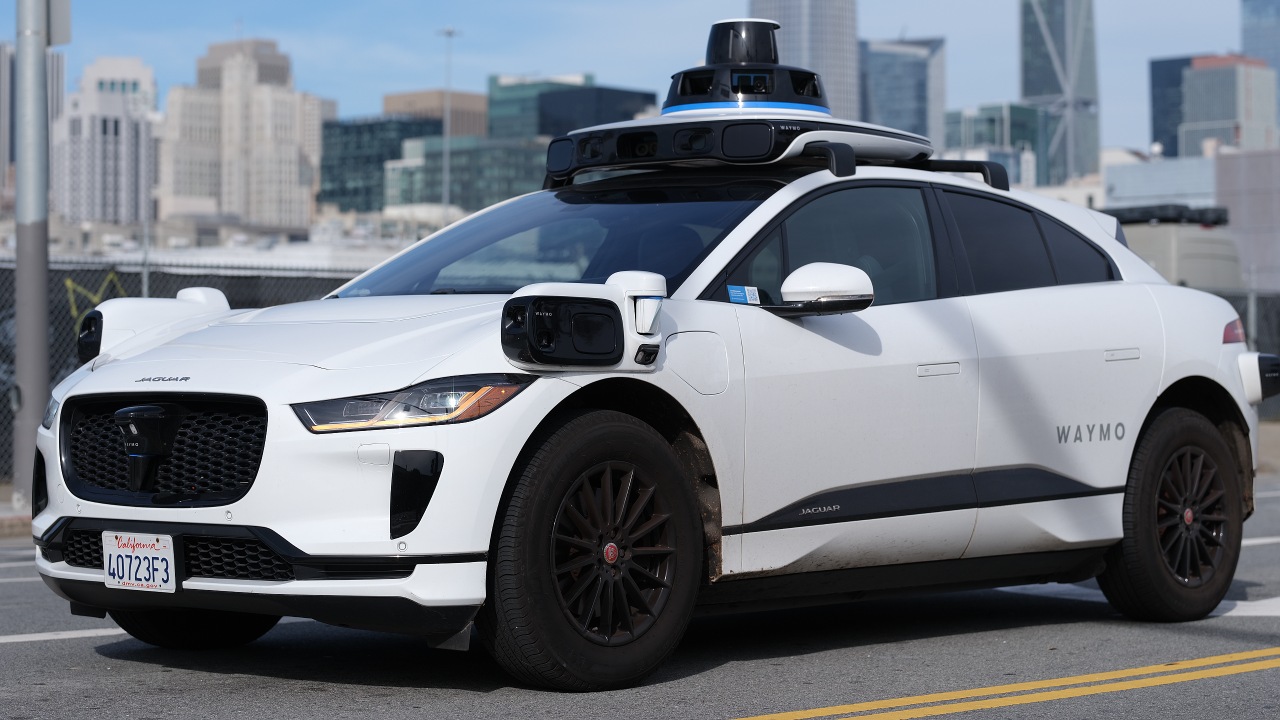
Robotaxis have spent years learning to navigate downtown grids and suburban cul-de-sacs. Their next test is far more chaotic: the curbside crush, looping roadways, and security rules of major airports. With autonomous fleets now cleared to pick up and drop off passengers at some of the busiest hubs in the United States, airports are becoming a decisive arena for whether driverless ride hailing can move from novelty to infrastructure.
The shift is not theoretical. Waymo is now running commercial service at San Francisco International Airport and Phoenix Sky Harbor, with permits in hand for San José Mineta International Airport and expansion plans tied to new markets like Miami. The stakes are high for travelers, airport authorities, and human drivers whose livelihoods depend on lucrative curbside fares.
From downtown novelty to airport proving ground
For years, robotaxis were framed as an experiment confined to select neighborhoods, but airport access signals that autonomous fleets are being treated more like public transport than pilot project. Waymo’s move into San Francisco International Airport followed lengthy negotiations with the airport operator and local officials, reflecting how sensitive curbside access is in a region where ride hailing is already deeply embedded in daily life. The company is now allowed to pick up and drop off passengers at designated locations at San Francisco International Airport, with riders connecting to the terminals via the AirTrain system, a structure that mirrors how traditional shuttles and off-site parking services are managed.
The same pattern is visible in Phoenix, where Phoenix Sky Harbor became the first major airport to host a rider-only autonomous vehicle service. There, Waymo One initially connected the airport’s 44th Street PHX Sky Train Station to a broad swath of the downtown area, before expanding to curbside pickup at Phoenix Sky Harbor itself. Local leaders, including Director of Aviation Services Chad Makovsky and Phoenix Mayor Kate Gallego, publicly backed the deployment, framing it as both an innovation milestone and a practical extension of the region’s transportation network. Their support underlined a key point: once airports open their curbs to driverless fleets, robotaxis stop being a tech curiosity and start functioning as part of the core mobility infrastructure for entire metro areas.
Why airports are such a hard test for autonomy
Airports are among the most complex driving environments in any city, which is precisely why they are emerging as a critical benchmark for autonomous systems. The looping access roads around hubs like San Francisco, Los Angeles, and Phoenix combine high-speed freeway segments, tight merges, and sudden lane changes as drivers jockey for position near terminals. Waymo has already secured approval to operate robotaxis on freeways in San Francisco, Los Angeles, Phoenix, and Austin, and has begun offering freeway segments in cities such as Los Angeles and San Francisco for riders who opt in through the Waymo app. That freeway experience is a prerequisite for reliable airport service, since many hubs are only reachable via multi-lane highways that demand confident lane selection and merging behavior.
Once vehicles leave the freeway, the challenge intensifies. Airport curbs are dense with pedestrians, luggage carts, buses, and ride-hail drivers, all operating under strict security and traffic rules. Industry analyses describe Airports as environments with demanding and unique operational challenges, where technology must adapt to constantly changing flows of people and vehicles. Research on service robots in aviation settings notes that Airports have already become havens for disinfection and sterilization robots, which operate in controlled interior spaces. Extending automation to the open, highly variable curbside environment is a much harder problem, involving not only perception and navigation but also compliance with local regulations that can differ sharply from one hub to another.
Waymo’s expanding airport footprint
Waymo’s airport strategy is emerging as a multi-city network rather than a one-off experiment. At Phoenix Sky Harbor, the company began with rider-only trips between the 44th Street PHX Sky Train Station and downtown, then expanded to 24/7 curbside pickup at Phoenix Sky Harbor itself. Reporting on that expansion highlighted that Google’s robotaxi company Waymo now offers round-the-clock service at the airport, complementing its operations in Los Angeles and San Francisco. In Phoenix, the company has also tested direct terminal access during off-peak hours, with Waymo One robotaxis driving to Phoenix Sky Harbor Airport terminals when traffic volumes are lower, a phased approach that lets the system learn the most complex parts of the airport environment under more controlled conditions.
In the Bay Area, Waymo has secured a permit to operate at San Jos Mineta International Airport, also known as SJC, with the deployment planned in stages. That approval makes San José the first city in California to formally authorize Waymo services at its airport, and it comes alongside the launch of commercial robotaxi service at San Francisco International Airport. At San Francisco International Airport, Waymo began operating after extended negotiations and a series of initiatives designed to address safety and congestion concerns, and it now offers commercial robotaxi service that connects riders to the terminals via AirTrain. The company’s broader expansion into Miami, where Waymo has launched a driverless robotaxi service that extends its U.S. lead in autonomous ride hailing, suggests that airport access in that region may follow as regulators and airport authorities gain confidence from the western deployments.
Economic stakes for drivers and airports
Airport rides are among the most valuable trips in the ride-hailing economy, which is why robotaxis entering this space carry significant economic implications. Analyses of Waymo One’s business model note that its robotaxis could threaten the earnings of Uber and Lyft drivers if they gain broad access to airports, since Airport rides typically command higher fares and more consistent demand than neighborhood trips. A separate assessment of Waymo robotaxis at airports warned that the company’s expansion could hurt the earnings of human drivers, particularly if autonomous fleets secure curbside access at multiple major hubs and operate around the clock without the constraints of driver shifts or surge pricing incentives.
For airports, the calculus is more nuanced. Airport Services Market research points out that strict rules and regulations by government and airport authorities can hinder new services, but also that coordinated cooperation is essential to help the aviation industry recover and modernize. Airports are not interchangeable; academic work on Airports as urban narratives emphasizes that each hub reflects its city’s spatial and economic transformations, and that local politics and planning priorities shape how new mobility services are integrated. In Phoenix, political leaders embraced Waymo as a symbol of innovation and a way to improve access between Phoenix Sky Harbor and the downtown core. In the Bay Area, San Francisco International Airport’s decision to allow Waymo Launches Robotaxi Service after extended negotiations shows how airport operators are weighing congestion, labor concerns, and passenger expectations before opening the curb to driverless fleets.
What airport robotaxis signal about the next phase of autonomy
The arrival of robotaxis at major airports signals a shift from isolated pilots to integrated urban systems. Waymo’s presence at Phoenix Sky Harbor, San Francisco International Airport, and soon San Jos Mineta International Airport, combined with its freeway-capable service in San Francisco, Los Angeles, Phoenix, and Austin, suggests that the company is building a network where travelers can land at a hub, summon a driverless car, and ride directly onto high-speed roads without a human behind the wheel. Its expansion into Miami, where Waymo Brings Driverless Robotaxis to Miami and Pulls Further Ahead of Tesla, underscores that the competitive race is no longer about proving that a robotaxi can complete a single ride, but about stitching together city centers, suburbs, and airports into a seamless autonomous corridor.
More from Fast Lane Only




Leave a Reply