
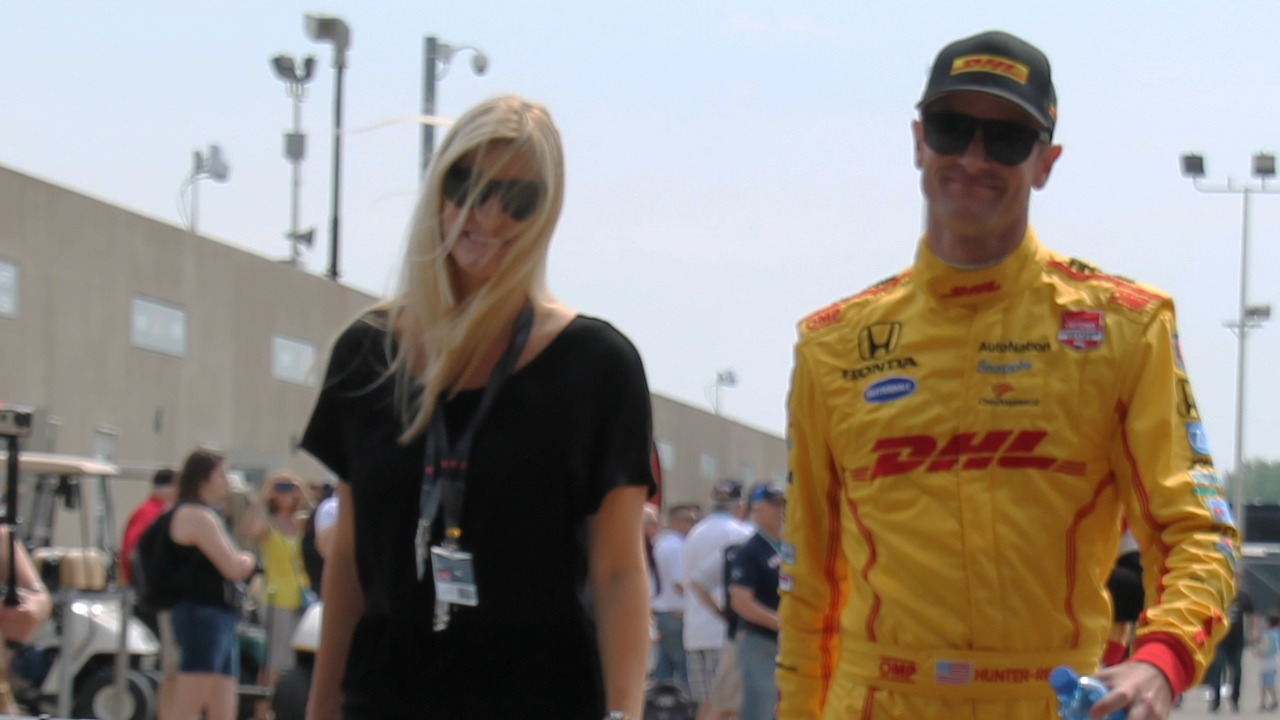
Ryan Hunter-Reay did not claim his IndyCar crown with the fastest car or the safest path. He won it by repeatedly choosing the hard line, absorbing setbacks that would have broken other drivers, and turning pressure into a weapon. His 2012 title run was less about dominance and more about stubborn resilience, the kind of grit that keeps a driver attacking even when the odds and the timing stand against him.
To understand how that championship came together, I have to trace the arc of a career built on persistence, from early uncertainty to a season-long duel that demanded nerve at every turn. The story of that year is really the story of a driver who refused to accept that talent alone would be enough, and who kept finding ways to fight back when the series, the machinery, and the math all seemed to say no.
From overlooked prospect to hardened contender
Before he was a champion, Ryan Hunter-Reay was a driver who had to scrap just to stay on the grid. He bounced through partial programs and short-term deals, including a limited schedule with Rahal Letterman Racing where, despite the uncertainty, he still managed to earn Rookie of the Year honors. That early stretch set the tone: nothing about his path suggested a guaranteed future, let alone a title, and the only constant was his willingness to keep showing up and performing when his seat was never fully secure.
That persistence eventually carried him into the heart of the INDYCAR paddock as one of the most successful American open-wheel drivers of his era, a status built on wins, awards, and a reputation for relentless racecraft. Born as Ryan Christopher Hunter in Dallas, Texas, he grew into the rare American who could carry the series’ banner at home and abroad while still grinding through the same contract worries and performance demands as everyone else. That combination of national spotlight and personal uncertainty hardened him long before the 2012 points battle ever began.
Building a champion’s season one fight at a time
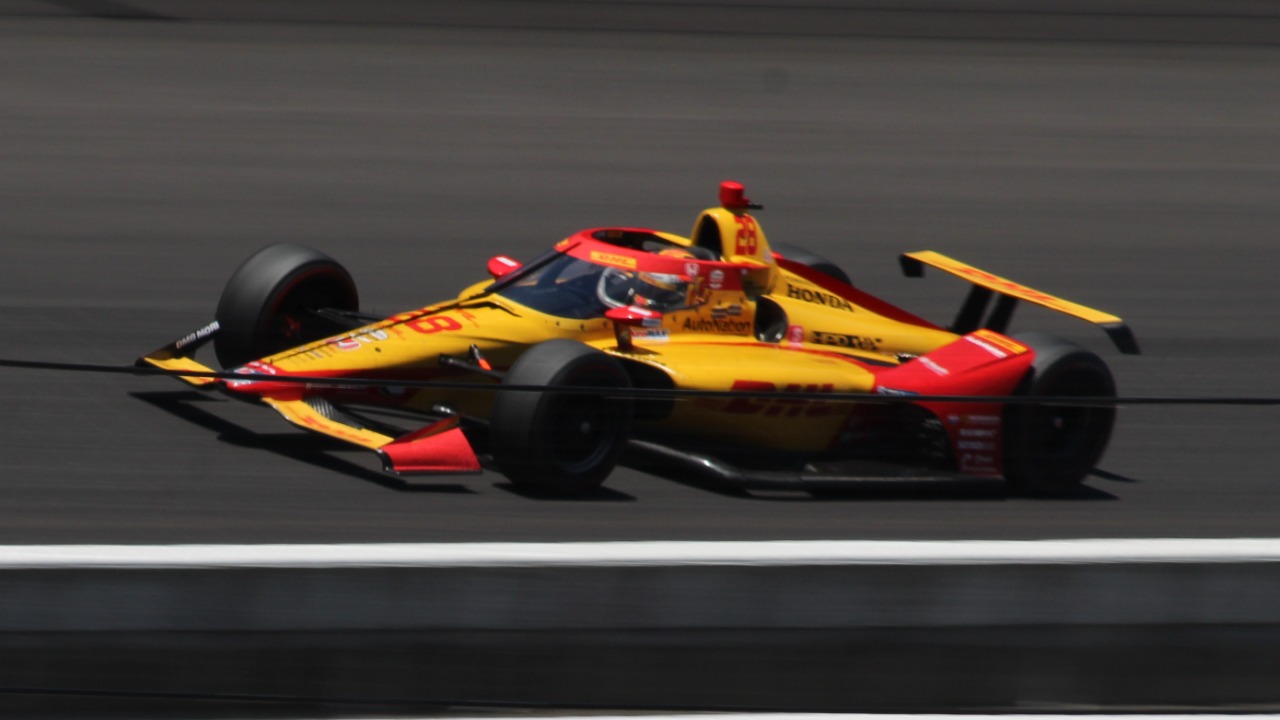
The 2012 campaign did not unfold like a coronation for Hunter-Reay, it unfolded like a series of tests. Across the 15-race IZOD IndyCar Series schedule, he had to stack results methodically, turning mid-pack days into damage limitation and capitalizing ruthlessly when the car and conditions aligned. The numbers from that year show a driver who kept himself in the fight through consistency as much as outright speed, converting opportunities into podiums and wins rather than letting them slip away.
That discipline was especially clear in the middle of the season, when Hunter-Reay surged with a run of victories that transformed him from outsider to serious threat. At the Milwaukee Mile, he delivered a complete performance, starting from pole, setting the fastest lap, and controlling the race in a way that signaled he was more than just a survivor. That win fed directly into a second consecutive short-track triumph in NEWTON, Iowa, where Dave Lewandowski chronicled how Ryan Hunter kept his composure in a hard, clean fight to the flag. Those back-to-back statements were the backbone of his title push.
Grit under pressure: penalties, gambles and the Baltimore turning point
Even as the results improved, the season kept throwing obstacles at Hunter-Reay that demanded resilience rather than raw pace. When he vaulted into the points lead, he was immediately hit with a grid penalty for taking a sixth engine, a setback that meant starting deeper in the field for a crucial 75-lap event. Instead of treating the sanction as a psychological blow, he approached it as another problem to solve, leaning on race craft and strategy to limit the damage and keep his championship hopes intact.
The defining example of that mindset came in Baltimore, where Hunter-Reay and his team chose aggression when caution would have been easier. In mixed conditions at the Grand Prix of Baltimore, Ryan Hunter, Reay and Andretti Autosport rolled the dice on tires and timing, a gamble that turned a chaotic race into a crucial victory and tightened the title fight. That willingness to embrace risk under pressure, rather than simply protect what he already had, was a clear expression of the grit that defined his season.
The Fontana showdown and a champion’s composure
By the time the series reached Fontana, the championship narrative had sharpened into a duel between Hunter-Reay and Will Power. Meanwhile, two-time championship runner up Will Power was still chasing his first title, and heading into the final race he held the advantage on paper. The pressure on Hunter-Reay was simple and brutal: he needed to finish high enough to overturn that deficit, on a high-speed oval where small mistakes carry big consequences.
The race itself demanded every ounce of his mental toughness. Early on, Hunter-Reay and Power were running together in the pack until, on lap 56, Power spun in Turn 2 and slammed the wall, suddenly flipping the title equation. Hunter-Reay still had to nurse his own car through the remaining distance, balancing the need to stay out of trouble with the obligation to finish high enough to seal the championship. In the closing stages, a full-course caution triggered by the No. 26 Team Dr Pepper Ten car of Marco Andretti reshuffled the field and added another layer of tension, but Hunter-Reay kept his composure and brought the car home in the position he needed.
That night in FONTANA, Calif, the title had been widely framed as Power’s to lose, a point underscored in coverage by Dave Lewandowski that captured how quickly the script flipped once the race began. Hunter-Reay did not simply inherit the championship from misfortune ahead of him, he had to manage his own car, his nerves, and the strategic chaos of late cautions to convert opportunity into a title. In doing so, he delivered on the season-long pattern of finding a way to put his car exactly where it needed to be when it mattered most.
Why his 2012 title still resonates
Hunter-Reay’s championship mattered on more than just a personal level. He became the first American driver since Sam to win the IndyCar title, a breakthrough that carried symbolic weight in a series eager for a homegrown star. He did it without the statistical dominance that often defines champions, proving instead that a driver can win a modern title through resilience, opportunism, and an ability to thrive when the margins are razor thin.
That season also helped cement his broader legacy. Later recognition, including topping The IZOD IndyCar Series-based awards for 2012, reflected how peers and observers saw his campaign as one of the standout performances across multiple disciplines. Even years later, he has continued to be recognized as a veteran presence, with Ryan joining new teams with 395 INDYCAR SERIES starts and a proven championship pedigree that traces directly back to the grit he showed that year.
A career still defined by the same stubborn edge
The qualities that delivered Hunter-Reay his title did not vanish once the trophy was secured. In the years that followed, he continued to grind through difficult stretches, including times when Her Andretti Autosport team struggled to find speed and even saw regulars miss the Indianapolis 500 while a teammate actually qualified for rival A.J. Foyt Racing, a reality captured in reporting on Her Andretti Autosport. Even in those leaner periods, he kept finding ways to salvage results, like his gritty eighth-place finish in Texas after a difficult qualifying turnaround, a night where Hunter, Reay, Ryan Hunter described the frustration and the fight it took just to climb back through the field.
Off the track, his profile has grown beyond the box score. As Quick facts for kids note, Ryan Hunter, Reay has used his platform to support cancer awareness, adding a layer of purpose to a career already defined by perseverance. He has also spoken candidly about how his 2012 title was sometimes overshadowed by the Indianapolis 500, yet he remains proud to be an IndyCar American star who had to fight for every opportunity. That honesty reinforces what the record already shows: the championship was not a lucky break, it was the culmination of years spent refusing to give in.
Seen in full, the arc of his career makes the 2012 title feel less like a single-season spike and more like the inevitable reward for a driver who kept pushing when the sport gave him every reason to back off. From the early days as Ryan Hunter, Reay scraping for rides, to the polished veteran recognized as one of the leading American champions of his generation, the throughline is the same. He did not always have the best car, but he drove it to the position he had to have, and in doing so he earned a championship that still stands as one of IndyCar’s clearest examples of what grit can deliver.


Leave a Reply