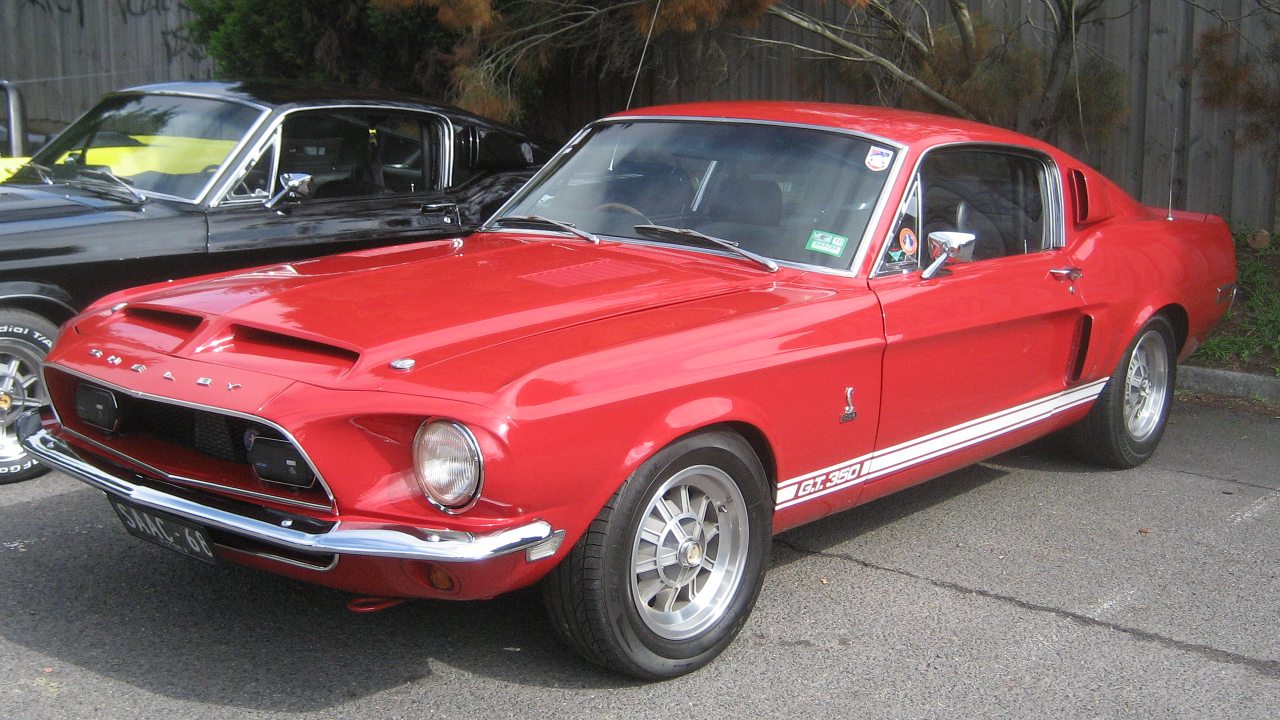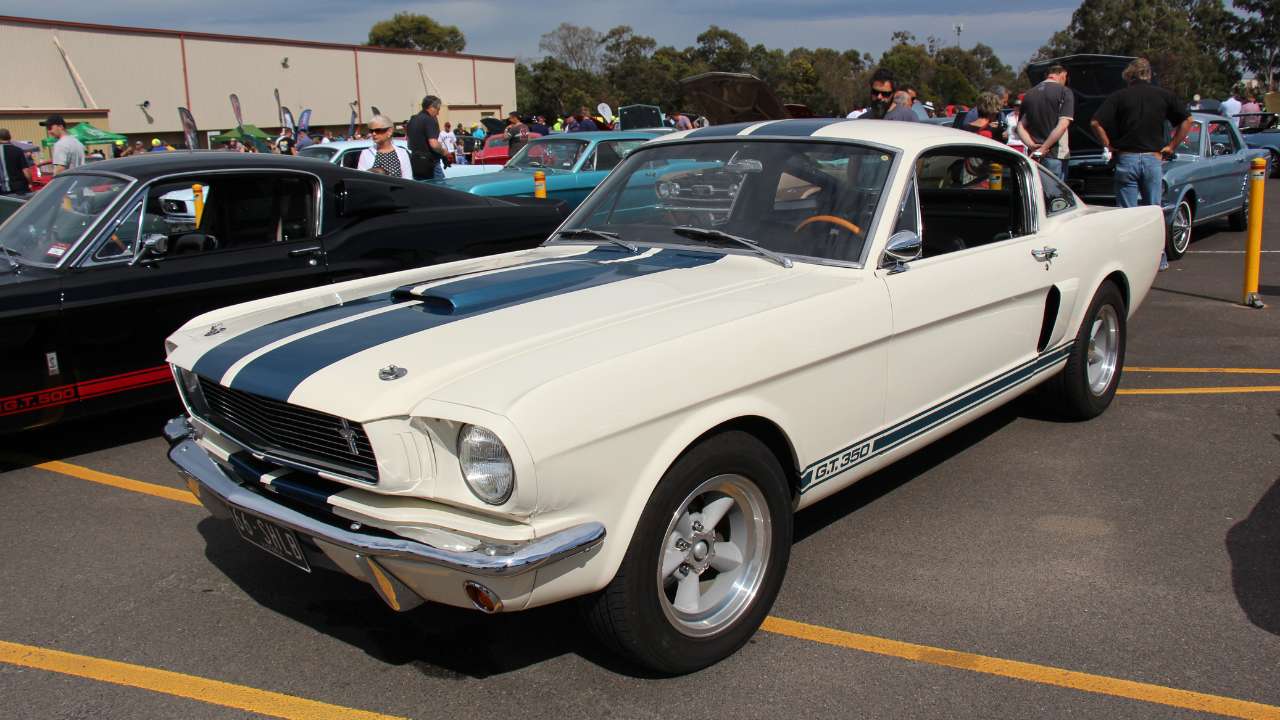
The 1966 Shelby GT350 does not wait to reveal its character. From the first clutch engagement and the first turn of the wheel, it feels like a car tuned first for the grid and only second for the street. What began as a Ford Mustang became something sharper and more single-minded, and that transformation is obvious in every control input.
Carroll Shelby and his team treated the GT350 as a competition tool that happened to wear plates. The result is a machine that still feels like a race car with lights, one that makes modern performance cars seem filtered and distant by comparison.
The Mustang that went to boot camp
The starting point was a regular Mustang fastback, but Shelby and his crew did not see it as a finished product. They saw it as raw material. Period descriptions of the 1966 Shelby GT350 call it a performance-bred machine that was more than just a Mustang, a sentiment echoed in enthusiast histories that describe it as The Street Legal Racecar that redefined what a pony car could be.
Under the hood, the car used Ford’s new HiPo V8. Contemporary technical guides state that the ENGINE and TRANSMISSION package was based on Ford’s high-performance small block, with Engines built around the 289 cubic inch architecture and tuned well beyond standard Mustang output. The same material specifies that the 289 unit produced a respectable 271 bhp in stock form, and that Shelby’s changes pushed both power and responsiveness for track work, details preserved in the Ford Shelby Mustang Guide.
From there, Shelby American stripped, reinforced, and reimagined the Mustang chassis. The 1966 Shelby GT350 Fastback followed an already successful 1965 program, and period accounts explain that after the strong first year, Shelby American updated the Fastback formula with detail changes while keeping the core race-tuned suspension and braking hardware, a progression described in contemporary coverage of the 1966 Shelby GT350.
Built to satisfy SCCA, not just showrooms
What separates the GT350 from ordinary muscle cars is that it was engineered to satisfy sanctioning bodies before it satisfied dealers. In compliance with SCCA rules, the GT350 had to be sold as a production car, but its real purpose was to dominate B production racing classes. Technical retrospectives on the model make clear that Performance Specifications were shaped by competition needs rather than quarter-mile bragging rights, and that straight line pull was not the GT350’s claim to fame. Instead, the car was tuned to corner, stop, and change direction on tight road courses, a focus detailed in modern analyses of its Performance Specifications.
This racing priority affected everything from spring rates to gear ratios. The steering was quick and heavy, designed to give precise feedback at triple-digit speeds. The suspension geometry favored grip and stability on track, even if that meant a restless ride on broken city pavement. The braking system used competition-style linings that worked best once warmed, again a sign that the car’s natural habitat was a circuit, not a boulevard.
Inside, the cabin mixed basic Mustang architecture with purposeful upgrades. Period documentation of the Fastback mentions specific details such as competition-style belts and minimal trim that saved weight and kept the driver focused. The result was an environment that felt more like a pit lane tool than a luxury product.
The Street Legal Racecar on real roads
Owners and historians often describe the 1966 Shelby GT350 as The Street Legal Racecar The that could commute during the week and attack a track on the weekend. Enthusiast write-ups of the 1966 Shelby GT350 muscle car history emphasize that the car was more than just a Mustang and that Shelby created a street-legal racecar that brought competition tuning to public roads, a theme that runs through community discussions of the 1966 Shelby GT350.
Another period description of the 1966 Shelby GT350 Fastback repeats this idea, calling it a street-legal race car that turned heads in Newyork and elsewhere. That account stresses that the 1966 Shelby GT350 Fastback was more than just a Mustang, again labeling it The Street Legal Racecar The and highlighting how the Mustang base became a sharper, more focused machine, as seen in enthusiast coverage of the 1966 Shelby GT350.
On public roads, that dual identity is obvious. The car idles with a busy, cammy lope that hints at its high compression internals. The clutch is heavier than most modern drivers expect, and the gearbox prefers deliberate, mechanical shifts. At low speeds, it can feel impatient, as if the whole drivetrain is waiting for the chance to stretch its legs.
What the driving experience really feels like
Modern track ride impressions of original cars underline how much of the GT350’s personality comes from its tuning. A recent track ride in a 1966 example describes it as a 1966 Classic American Icon that still behaves like a Performance Legend rather than a relaxed cruiser. The same account notes that Carroll Shelby created a car that weekend racers and daily drivers could both enjoy, but that its natural rhythm is found at speed, a point captured in a community post about a 1966 Shelby Mustang.
On track, the car comes alive. The steering that felt heavy in a parking lot becomes talkative through fast corners. The suspension that seemed harsh over potholes now keeps the body flat and composed. The brakes gain bite as they warm, and the 289 engine pulls harder as revs climb, delivering power in a linear, urgent wave.
Drivers often comment on how analog the experience feels. There are no electronic aids to filter feedback or correct mistakes. Every weight transfer, every throttle adjustment, every steering correction is direct. That honesty is part of what makes the GT350 feel like a race car from the first lap.
Shelbies, Shelbies, and the mystique of the name
The Shelby name carries its own gravitational pull, and the 1966 GT350 sits near the center of that gravity. Collectors and presenters who handle these cars regularly speak about them in almost reverent terms. In one comparison of two 1966 cars, the host remarks that there were hardly any people around to see these two Shelbys together, then adds that now everybody knows about Shelbys and their significance to American performance culture, a sentiment captured in a video that brings two Shelbys side by.
A separate feature on a white 1966 car with blue stripes reinforces how instantly recognizable the model has become. The presenter notes that the car on display is available right now and that it is an authentic period piece rather than a replica, underscoring how a properly documented GT350 is seen as an investment as much as a driving machine, a point made in a walkaround of an iconic white GT350.
Collectors also highlight the limited production of specific subgroups. One auction description celebrates a 1966 Shelby GT350 as one of 252 carryover cars and describes it as a classic American muscle car and a key piece of automotive history. That same description reminds readers that it was created by famed automotive designer Carroll Shelby and that it remains highly sought after by collectors and enthusiasts alike, details that frame the car’s status as a blue-chip collectible in a feature about Shelby history.
From the Ford showroom to the Shelby workshop
The GT350 story also illustrates how a major manufacturer and an independent tuner can collaborate. Ford supplied the base Mustang, the Hi Po 289 engine, and the basic structure. Shelby American provided the racing knowledge, the suspension tuning, and the competition focus. Official corporate material from Ford still celebrates the Mustang lineage and the way special projects expanded its reach, a relationship that can be traced in brand histories on Ford‘s own channels.
The partnership required coordination across engineering, marketing, and motorsport. The Mustang had to remain a mass market product, while the Shelby variants could target enthusiasts willing to accept a harder edge. That balance between showroom appeal and track credibility is part of what made the GT350 so influential.
How the GT350 changed expectations
Analysts who look back on the GT350 often argue that it transformed the way drivers thought about American performance cars. Instead of focusing purely on straight-line acceleration, it proved that a domestic coupe could handle and stop with European rivals. Retrospectives on how the Original Shelby GT350 and GT350R Transformed the Mustang into a track icon emphasize that the car’s success in SCCA competition forced other manufacturers to take road course performance seriously, a theme that appears in several discussions of how the Original Shelby Transformed the pony car formula, including social sharing links that promote that story on How the Original story.
Legal pages associated with that coverage, including terms of use and privacy notices, reinforce how widely the story of the GT350 is shared and republished. Those documents, such as the US magazines terms of use and the privacy notice, appear as part of a digital footprint that reflects how the Original Shelby Transformed the Mustang narrative has spread across platforms, including references in US magazines terms and related privacy documentation.
The car’s influence also shows up in enthusiast communities. Groups dedicated to Vintage performance, American muscle, and classic racing cars frequently highlight the GT350 as a benchmark. Posts that label it an AmericanIcon or PerformanceLegend are not just nostalgia; they are recognition that the car reset expectations for what a factory-backed performance program could deliver.
Why does it still feel different from modern performance cars
Compared with current sports cars, the 1966 Shelby GT350 feels raw but also remarkably coherent. There are no driving modes to soften its character. The steering ratio is fixed, the suspension tune is uncompromising, and the engine calibration is focused on response rather than fuel economy.
On a modern track day, a well-maintained GT350 can still embarrass newer cars in the hands of a skilled driver. Its relatively lightweight, communicative chassis and linear power delivery reward smooth inputs. The absence of driver aids means that the person behind the wheel must manage grip and balance directly, which is exactly how race cars of the period behaved.
That directness explains why the car feels special the moment it moves. Even at 30 miles per hour, the steering loads up in a way that hints at the grip available at higher speeds. The gear lever moves through a short, mechanical path that encourages precise shifts. The brakes require a firm push, but respond with a solid, predictable bite. Every sensation tells the driver that this machine was tuned with competition in mind.
More from Fast Lane Only