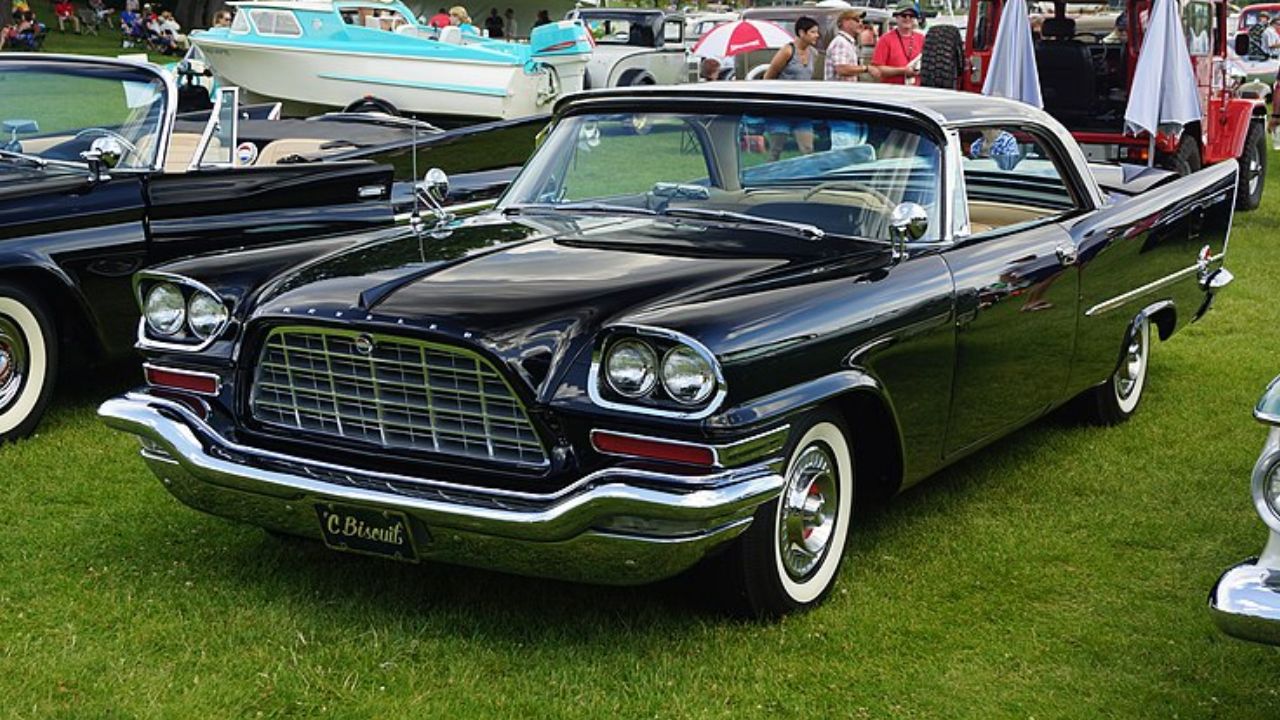
The 1957 Chrysler 300C arrived at a moment when American cars were growing longer, lower, and louder, yet few managed to fuse genuine luxury with outright excess as completely as this one. It wrapped serious performance in tailored sheet metal and a plush cabin, then added the sort of visual drama that turned every boulevard into a stage. Sitting somewhere between tasteful opulence and unapologetic overkill, the 300C simply chose both.
The letter car that chased trophies and status
The story of the 1957 Chrysler 300C starts two years earlier with the C-300, a car Chrysler created so it could go racing. In 1955, the company debuted the original 300 as a high-compression brute, developed for NASCAR while still trimmed like an executive express. That mix of competition intent and comfort set the template for what became known as the Letter Series, a run of increasingly powerful 300 models that would continue until the 300K.
By the time the 300C arrived, the formula was clear. Chrysler wanted a grand tourer that could dominate stock car grids on Sunday and look at home in front of the best hotels on Monday. The result was a car that enthusiasts now routinely describe as part of a prestigious Letter Series, a line that treated horsepower and leather as equally nonnegotiable.
“The Beautiful Brute” and “The King of the Road”
Few cars of the period carried nicknames as evocative as the 1957 Chrysler 300C. Enthusiasts have long called it the Beautiful Brute, a phrase that captures the car’s split personality. The body was clean and low, with restrained chrome compared with some Detroit rivals, yet the overall stance and power hinted at something more aggressive lurking beneath the surface.
Another fan description, King of the, underlines how the 300C functioned as a rolling status symbol. This was not a stripped racer with number plates. It was a top shelf American performance car that broadcast success even before the engine turned over.
Those nicknames did more than flatter owners. They framed the 300C as a cultural object, an American idea of power and beauty that still resonates in enthusiast circles and on social media feeds that celebrate high-performance classics.
Styling that stretched luxury to its limits
Visually, the 1957 Chrysler 300C walked a tightrope between restraint and spectacle. The body sat long and low, with a profile that reviewers later compared to European exotics. One period evaluation even suggested the car was big enough to be considered an eight seater and noted that its length reached 219 inches, a figure that underlines just how vast this coupe really was.
Photographs from period advertising and later archives show a confident use of fins and a sweeping rear deck that caught the light in dramatic ways. Promotional images of the Chrysler 300C emphasize the car’s low roof and wide stance, while other period artwork, such as a convertible ad, leans into the glamour of open air motoring.
Compared with more flamboyant contemporaries, the 300C’s chrome usage stayed relatively measured. The drama came from proportion, from the way the nose seemed to stretch forward and the tailfins framed the rear glass. It was an exercise in pushing late fifties excess to the edge while stopping just shy of caricature.
HEMI power and the “Beautiful Brute” personality
The styling would have meant little without the engine to back it up. Under the hood sat a 392-cubic inch HEMI V8, a configuration that enthusiasts still regard as one of the defining powerplants of its era. Descriptions of the 392-cubic HEMI emphasize how it turned the 300C into a powerhouse grand tourer, matching high speed capability with long distance comfort.
Enthusiasts also highlight that the 1957 Chrysler 300C was nicknamed the Beautiful Brute specifically because of this combination of stylish bodywork, powerful HEMI engine, and luxury oriented interior. It was not simply quick for its time. It was one of the standout performance vehicles in America, with straight line pace that matched its imposing presence.
Corporate retrospectives go even further and describe the 1957 Chrysler 300C as the most powerful production car built in America in its day, with Inside the cabin engineered to match that performance with comfort. That claim helps explain why the model still sits near the top of collector wish lists.
A cabin that treated speed like a first class ticket
Open the door of a 1957 Chrysler 300C and the priorities become clear. The interior was laid out as a proper luxury car, with supportive seating, extensive trim, and instrument panels that signaled both speed and sophistication. Corporate descriptions of Inside the 300C emphasize how luxury and performance blended seamlessly, presenting the driver with an upscale environment rather than a stripped cockpit.
Enthusiast accounts describe the car as the undisputed king of the boulevard, a majestic blend of brute force and elegant design. That phrase applies as much to the cabin as to the exterior. Passengers were surrounded by materials and detailing that justified the car’s premium price, while the driver faced gauges and controls that made high speed travel feel controlled and deliberate rather than frantic.
Modern video walkarounds of carefully preserved examples, such as a convertible tour shared by collectors, reinforce how well this interior philosophy has aged. Even when the upholstery shows its years, the overall layout still communicates a clear message: this was a car built for serious miles at serious speeds, with comfort treated as a core part of the performance brief.
Road trip royalty and grand touring intent
Corporate nostalgia pieces now refer to the 1957 Chrysler 300C as a car that redefined road trip royalty, a phrase that captures how the car functioned in real use. Owners could cross states at high speed, helped by the muscular HEMI and long gearing, while passengers enjoyed a ride tuned for comfort rather than punishing stiffness.
That dual character placed the 300C squarely in grand touring territory. It was not a lightweight sports car that demanded constant attention. Instead, it was a big American GT that could devour distance with minimal effort from the driver, a role that suited the country’s expanding highway network and appetite for long distance travel.
Enthusiasts who compare the 1957 Chrysler 300C with contemporary rivals like the Buick Roadmaster often highlight this difference in philosophy. One fan discussion of the Chrysler and Buick notes that both cars blended luxury and performance, yet the 300C leaned harder into raw power and a more assertive image. That distinction helped cement its legend among drivers who wanted their comfort served with a side of intimidation.
From showroom star to museum piece
Today, the 1957 Chrysler 300C has moved from new car lots to curated collections. At the California Automobile Museum in Sacramento California, docent John Tennyson walks viewers around a 1957 Chrysler 300 C Convertible as part of a display that includes more than 150 vehicles. His tour underscores how the car now functions as a teaching tool, illustrating the height of American luxury performance in the fifties.
Other surviving examples live in specialist dealerships and private collections. A video from Atomic Motors in Las Vegas features Stephanie from Magnesium introducing a 1957 Chrysler 300 that she describes in breathless terms, reinforcing how the car still has the power to leave viewers speechless almost seven decades on.
Online communities have also taken on the role of informal archives. Enthusiast groups share period photography through pools such as the curbsideclassic collection, where the 300C appears alongside other midcentury machines. These images, combined with surviving print ads like a vintage promotion, help modern audiences understand how Chrysler positioned the car when it was new.
Why collectors still chase the 300C
Several factors keep the 1957 Chrysler 300C near the top of serious collectors’ lists. Rarity plays a role, as production numbers were limited compared with mass market sedans. So does the car’s position within the Letter Series, which gives it built in historical significance as part of a clearly defined performance lineage that began with the C-300 and continued through later models.
Enthusiast commentary often compares the 300C to legendary prewar exotics. One period style review from SCI described the Chrysler as a kind of modern Duesenberg, a label that speaks to both its presence and its performance. When a car earns that kind of comparison, its long term place as an American classic is effectively guaranteed.
Modern owners echo those sentiments, describing the 300C as one of the most iconic and desirable cars for collectors and enthusiasts alike. The combination of a 392-cubic inch HEMI, tailored styling, and a reputation as The King of the Road gives the model a halo effect that extends well beyond traditional Mopar circles.
Luxury, excess, and the American idea of “enough”
Looking back, the 1957 Chrysler 300C reads like a rolling argument about how much is enough. The car offered serious performance for its time, yet wrapped that capability in an interior that would not have looked out of place in a top tier luxury sedan. It was big enough that a contemporary review could suggest it might be considered an eight seater, yet it wore that size with a kind of athletic grace.
In that sense, the 300C did not choose between luxury and excess. It treated them as complementary. The plush cabin justified the price and made long journeys appealing. The HEMI engine and competition heritage satisfied drivers who cared about speed and status. The styling split the difference between tasteful and outrageous, with fins and length pushed as far as they could go without tipping into parody.
That balance explains why the 1957 Chrysler 300C still commands attention in museums, videos, and enthusiast feeds. It is a car that embodies a particular American moment, when power, comfort, and spectacle were not competing priorities but parts of the same ambitious package. For anyone trying to understand how luxury and excess came to coexist so easily in the automotive world, the Beautiful Brute remains a definitive case study.
More from Fast Lane Only