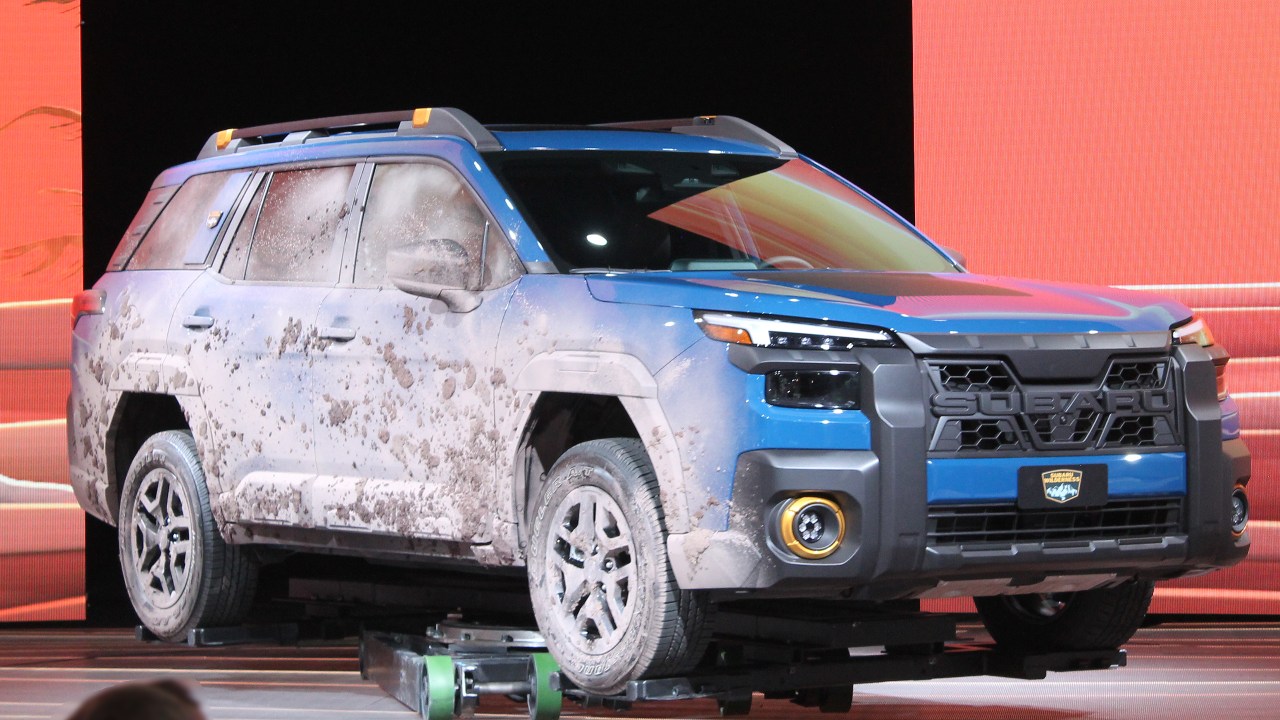
Compact SUVs with plastic body cladding and “adventure” badges are everywhere. Most of them never leave pavement. The 2026 Subaru Forester Wilderness is one of the few that actually earns its trail-rated reputation, pairing real mechanical upgrades with the everyday livability families need from a daily driver.
Priced from $38,385, the Forester Wilderness returns for 2026 with subtle refinements to a formula Subaru introduced in the previous generation. It is not a rock-crawling machine, and it does not pretend to be one. Instead, it targets the buyer who wants a single vehicle for weekday commutes and weekend fire roads, and it delivers on that promise more convincingly than most of its competitors.
What makes the Wilderness more than a sticker package
The core appeal starts underneath. Subaru lifts the Wilderness suspension to provide 9.3 inches of ground clearance, a figure that tops the standard Forester by nearly a full inch and exceeds what you get from a Honda CR-V or base Toyota RAV4. Longer coil springs and retuned shock absorbers handle the extra height, and the factory fits 225/60R-17 all-terrain tires from Yokohama that bite into loose gravel and mud far better than the highway rubber on lesser trims.
The enhanced dual-function X-MODE system is the other key differentiator. In its Snow/Dirt setting, the system modulates throttle and braking to maintain traction on slippery surfaces. Switch to Deep Snow/Mud, and the thresholds loosen, allowing more wheel spin so the tires can dig through soft terrain rather than being choked by overzealous stability control. It is a simple two-mode setup, but in practice it covers the conditions most owners will actually encounter.
Skid plates protect the undercarriage, and front and rear recovery points are integrated into the bumpers. Functional roof rails with raised crossbars add cargo versatility for kayaks, bikes, or rooftop tents. None of this is cosmetic; each piece serves a purpose on the trail.
The powertrain: adequate, not thrilling
Under the hood sits Subaru’s familiar 2.5-liter horizontally opposed four-cylinder engine, producing 180 horsepower and 178 lb-ft of torque. Power routes through a Lineartronic CVT to the symmetrical all-wheel-drive system that remains standard across the Forester lineup.
These are not exciting numbers. The RAV4 TRD Off-Road makes 203 horsepower, and turbocharged options from Mazda and Hyundai push well past 200. But the Subaru’s flat-four is smooth, proven, and fuel-efficient. The EPA rates the 2026 Forester Wilderness at an estimated 25 mpg city, 28 mpg highway, and 26 mpg combined, respectable figures for a lifted SUV wearing knobby tires. Buyers who want more grunt will have to look elsewhere; Subaru does not currently offer a turbo or hybrid option for the Wilderness trim.
The CVT deserves honest mention. Under hard acceleration it drones in a way that can feel disconnected, a trait common to continuously variable transmissions. Around town and at highway speeds, though, it fades into the background. Most Forester Wilderness buyers will spend far more time cruising at 70 mph than flooring it on a merge ramp, and in that context the transmission does its job without complaint.
On the road and off it
Early drive impressions of the 2026 model, including a first-drive report from MotorTrend, suggest the Wilderness rides with more composure than its aggressive looks imply. The retuned suspension soaks up broken pavement and gravel roads without the harsh jouncing you might expect from an off-road-oriented setup. Body roll is present but controlled, and the steering, while light, tracks predictably on winding two-lane highways.
Off pavement, the combination of clearance, all-terrain tires, and X-MODE gives the Forester Wilderness genuine confidence on moderate trails. Rutted forest service roads, muddy campsite access tracks, and rocky fire roads in the kind of terrain common across the American West are well within its abilities. Steep, technical rock crawling is not; the approach and departure angles, while improved over the standard Forester, still limit what the vehicle can tackle without risking bumper contact.
Winter testing has also been favorable. Reviewers who evaluated the Wilderness in heavy snow noted surefooted behavior on icy roads and packed surfaces, with the all-terrain tires and AWD system working together to maintain traction even when visibility and road conditions deteriorated significantly.
How it stacks up against the competition
The Forester Wilderness occupies a specific niche: affordable, genuinely capable off-road crossover that does not sacrifice daily comfort. Its closest competitors are the Toyota RAV4 TRD Off-Road and, to a lesser extent, the Jeep Compass Trailhawk.
Against the RAV4 TRD Off-Road, the Subaru wins on ground clearance (9.3 inches vs. 8.6) and offers a more sophisticated AWD system for mixed-surface driving. The Toyota counters with more horsepower and an available hybrid powertrain, which gives it a significant fuel economy advantage for buyers who prioritize efficiency over trail reach.
The Jeep Compass Trailhawk brings legitimate off-road heritage and a low-range transfer case equivalent through its Selec-Terrain system, but its interior quality and reliability reputation have lagged behind both the Subaru and Toyota in recent owner satisfaction surveys from J.D. Power.
The Honda CR-V, while an excellent all-around crossover, does not offer a true off-road variant. Its available AWD system is competent in rain and light snow but not designed for the kind of unpaved terrain the Wilderness targets.
Family-ready practicality in a trail-focused package
The Forester’s boxy greenhouse and low beltline pay dividends inside. Visibility is excellent in every direction, a genuine safety advantage when navigating tight trails or crowded parking lots. The rear seat offers generous legroom for adults, and the wide-opening rear doors make installing child seats less of a contortion act than in some competitors.
Cargo space behind the rear seats measures 28.3 cubic feet, expanding to 74.2 cubic feet with the rear seats folded. That is competitive with the RAV4 and notably more than the Compass. The cargo floor sits at a practical height, and the rear gate opens to reveal a flat load area without a high liftover lip.
Inside, the Wilderness trim adds its own visual touches: starrise pattern upholstery with water-repellent seat fabric, copper-tone accent stitching, and rubberized cargo area trim that can handle wet gear without staining. The infotainment system runs Subaru’s 11.6-inch vertical touchscreen with wireless Apple CarPlay and Android Auto, and the EyeSight driver-assistance suite comes standard with adaptive cruise control, lane centering, and pre-collision braking.
At $38,385 before destination, the Forester Wilderness is not cheap for a compact SUV, but it includes a level of standard equipment that would require option packages on many rivals. For families who genuinely use their weekends to get outdoors, the value proposition is strong.
Why the Wilderness formula works
The Subaru Forester Wilderness succeeds because it resists the temptation to be everything. It does not chase the Wrangler crowd with removable doors and locking differentials. It does not try to out-luxury the CR-V with premium leather and noise-canceling cabins. Instead, it focuses on a clearly defined mission: take a practical, well-built compact SUV and give it the hardware to go meaningfully farther off pavement than the standard version.
That restraint is its greatest strength. The 2026 updates are evolutionary rather than revolutionary, refining ride quality and technology without abandoning the mechanical upgrades that give the Wilderness its identity. For buyers who want a single vehicle that handles school drop-offs on Monday and forest service roads on Saturday, the Forester Wilderness remains one of the most honest options in the compact SUV class.
More from Fast Lane Only
- Unboxing the WWII Jeep in a Crate
- 15 rare Chevys collectors are quietly buying
- 10 underrated V8s still worth hunting down
- Police notice this before you even roll window down
*Research for this article included AI assistance, with all final content reviewed by human editors.