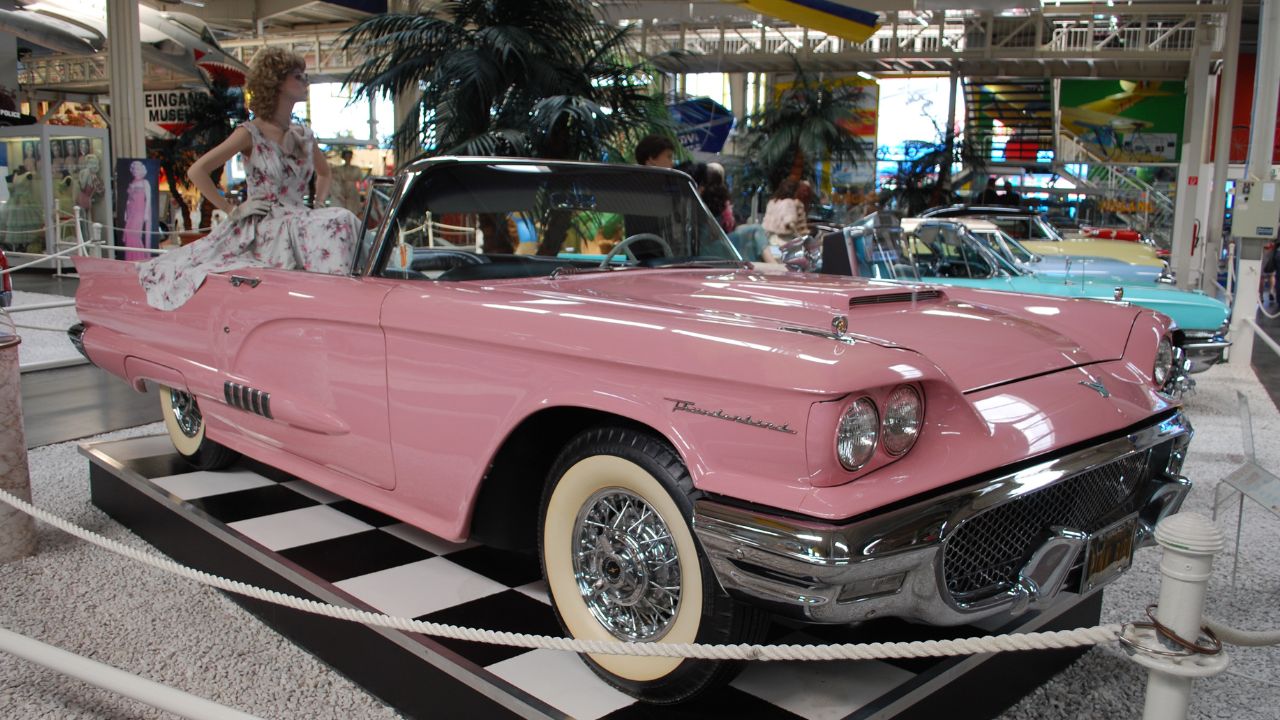
The 1958 Ford Thunderbird did more than add a back seat. It stretched its wheelbase, reinvented its structure, and turned a two-seat sports car into one of Detroit’s first true personal luxury coupes. In the process, it split opinion among purists while quietly setting the template for a new kind of American status car.
What looked like a squared-off styling exercise hid a radical shift in packaging and engineering. The so-called Square Bird traded lithe proportions for a longer, lower body, a new unibody structure, and a cabin that reflected changing postwar tastes as much as it did Ford’s ambitions in the late 50s.
From sports car darling to four-seat mandate
The original Thunderbird arrived as a two-seat answer to imported sports cars, but by the end of the 50s that formula no longer matched the market. But tastes were shifting. People were looking for more luxurious cars with distinctive exterior designs and stylish rear seats, and the Thunderbird’s small cockpit and limited practicality left sales potential on the table.
Inside Ford, the decision was blunt. One of the mandates for the new 1958 Ford T-Bird was to make it a four-seater. The new One of the most important internal goals was to reposition the Bird as a personal car that could carry friends or family without giving up its upscale image. The Bird could no longer live as a niche toy; it had to earn its keep as a higher-volume image leader.
That mandate explains why the 1958 car is remembered as the Square Bird. The nickname reflected both the more formal styling and the shift from a lithe roadster to a squared-off, substantial coupe. The new Square Bird was built using unibody construction, and that structural choice intertwined directly with the dramatic stretch in wheelbase and overall length.
Stretching the wheelbase and the silhouette
The most literal way the 1958 Thunderbird stretched expectations was in its dimensions. The Square Bird’s wheelbase was 11 inches longer than the 1957 and stretched more than 20 inches longer overall. In metric terms, sources describe the increase as 279 m in wheelbase and 510 m in overall length, figures that capture just how far the design moved from the compact original. That growth created the space for a genuine rear seat and a trunk that fit the lifestyle of buyers who wanted both style and practicality.
Ford did not simply bolt a longer body onto an existing frame. The second generation Thunderbird used a unitized body without a separate frame, a choice that demanded a large central tunnel to maintain rigidity. As one account of the design notes, the unit body, not having any frame, required a large driveline tunnel to provide rigidity to the body structure. So Ford designers had to work that bulky tunnel into the interior layout, using it to visually divide the cabin and reinforce the car’s cockpit-like feel front and rear.
The stretch in wheelbase also changed the Thunderbird’s stance. The longer distance between the axles allowed a lower roofline without sacrificing headroom, and it pushed the wheels toward the corners for a more planted look. The result was a car that read as lower and more sophisticated than the typical full-size sedan, even though its footprint was not far off.
The first Thunderbird with a back seat
For buyers, the most obvious change was inside. The 1958 Ford Thunderbird was the first year of the backseat, a shift that transformed the car from a two-person indulgence into a four-passenger statement. A period walkaround of a surviving example highlights how the rear bench is sculpted into two individual buckets, separated by that prominent tunnel that runs from the dashboard to the rear bulkhead. A detailed video on the 1958 Ford Thunderbird, shows how the rear compartment mirrors the front, with padded side panels, bright trim, and armrests that make it feel like a lounge for two.
The back seat did not just add capacity. It redefined the Thunderbird’s mission. The car officially went on sale in late January 1958, and by mid March Ford announced that it was producing its new four-passenger Thunderbird with thousands of advance orders already on record. That early demand confirmed that the gamble on a larger, more usable Bird was paying off.
In the broader context of the late 50s, the addition of rear seating aligned with changing expectations for upscale cars. Couples who might once have bought a two-seat convertible now wanted to bring friends along, or to use their stylish coupe for weekend trips without juggling a second family car. The Thunderbird’s new layout met that need while still signaling exclusivity.
Unibody construction and the engineering gamble
The structural shift was almost as dramatic as the change in seating. Along with the 1958 Lincolns, the 1958 Thunderbird was the first Ford Motor Company vehicle designed with unibody construction. Along with those Lincolns, the new Thunderbird abandoned the traditional body-on-frame approach that dominated Detroit at the time.
In theory, a unibody could save weight and increase stiffness. In practice, the larger Thunderbird did not come out lighter than a comparable framed car. One detailed analysis points out that the use of unibody construction did not make the larger Thunderbird any lighter as compared to a hypothetical body-on-frame version. Apr design notes describe how the structure still required heavy gauge steel and extensive bracing, especially around the cowl and rear quarters.
The engineering team had to reconcile the need for rigidity with the marketing push for a low roof and a sleek silhouette. That is where the oversized driveline tunnel came in. It functioned as a structural spine, tying the front and rear of the car together. From a design perspective, it also provided a natural location for console-style trim and storage, so the engineering compromise became a visual feature.
Styling: hip to be square
Visually, the Square Bird was a sharp break from the rounded forms of the original. The 1958 to 1960 cars wore slab sides, a formal roofline, and a front end that mixed quad headlamps with a wide, low grille. The surface development was restrained compared with some of Detroit’s wilder fins, yet the rear quarters still carried pronounced creases and tail lamps that signaled the era’s fascination with jet-age themes.
The same design history that explains the unibody also argues that the Thunderbird was truly a design trailblazer. The unit body, the long hood and short deck proportions, and the carefully detailed interior all anticipated the personal luxury segment that would later include cars like the Buick Riviera and Oldsmobile Toronado. The Square Bird’s squared-off roof and thick C-pillars created a semi-formal profile that looked at home in front of country clubs as well as drive-ins.
Inside, the theme continued. The dashboard wrapped around the driver with a deep instrument binnacle and brightwork that extended into the doors. The rear seats echoed the front buckets, separated by that structural tunnel, so every passenger felt like they had a defined space. Small touches, from chrome trim rings to padded surfaces, reinforced the impression that this was not just a dressed-up sedan.
From sports car to personal luxury icon
The second-generation Ford Thunderbird was produced from 1958 to 1960 and marked a major shift from the original two-seat design to a more luxurious four-passenger configuration. One detailed owners’ summary notes that the Ford Thunderbird of this era helped define the personal luxury car segment, with an emphasis on comfort, style, and individual expression rather than pure performance. A discussion of the Ford Thunderbird in enthusiast circles makes clear that the car’s mission had shifted from sports car rival to upscale cruiser.
Ford’s own positioning reflected that change. Marketing materials leaned into the idea of a personal car of distinction, something that sat above a typical family sedan yet below the price and ostentation of a full luxury flagship. The four-seat layout, the stretched wheelbase, and the rich trim all served that message.
Enthusiast commentary today often frames the 1958 Thunderbird as a turning point. Some lament the loss of the pure two-seat formula, while others praise the Square Bird for creating a new niche that competitors rushed to copy. The car’s sales success suggests that Ford read the market correctly, even if a subset of early fans felt left behind.
Why Ford redesigned so quickly
One recurring question is why Ford completely redesigned their most successful sports car after just three years. A detailed breakdown of the 1958 Thunderbird’s quirks and trivia notes that most people think the original two-seater was a runaway hit, but the numbers told a more complicated story. A video titled 1958 Ford Thunderbird: explains how internal projections, production costs, and competitive pressure pushed Ford toward a car that could command higher prices and broader appeal.
The redesign was not simply cosmetic. It reflected a strategic decision to chase a segment where Ford could lead rather than follow. By stretching the wheelbase and adding a back seat, the company moved the Thunderbird away from direct comparison with small European sports cars and into a space that domestic rivals had not yet fully defined.
That strategy also aligned with broader corporate milestones. As a matter of record, the fifty-millionth car produced by the Ford Motor Company in its fifty-five year history was a green Thunderbird. A period feature on the Dec celebration notes that the company chose a Thun example to mark that production milestone, a symbolic nod to the model’s importance in Ford’s lineup.
Market reception and legacy
The market responded quickly. The car officially went on sale in late January 1958, and by mid March Ford was already highlighting strong advance orders for the new four-passenger configuration. That early demand validated the decision to prioritize comfort and style over pure sportiness.
Enthusiast communities today still debate the merits of the Square Bird, but few dispute its influence. A social media discussion framed around the 1958 Ford Thunderbird describes the yellow 58 as a significant shift, introducing the second generation Square Bird with four seats and a convertible option. One enthusiast post even cites the figure 58 m to emphasize how far the car moved from its predecessor in overall character, if not literally in length.
The car’s cultural footprint extended beyond the showroom. Around the same period, public attention was also captured by feats like Edmund Hillary’s Commonwealth Trans Antarctic Expedition, which completed its third overland journey to the South Pole. A period video that walks through a preserved Mar era Thunderbird casually references that expedition, a reminder that the car shared its moment with other symbols of ambition and exploration.
Details, trivia, and the Square Bird mystique
Part of the 1958 Thunderbird’s enduring appeal lies in its details. Enthusiasts swap stories about unusual options, color combinations, and production quirks. A green Thun used as a milestone car for Ford Motor Company production is one such anecdote. Another is the way the unibody required specific assembly techniques that differed from the body-on-frame Fords built alongside it.
More from Fast Lane Only