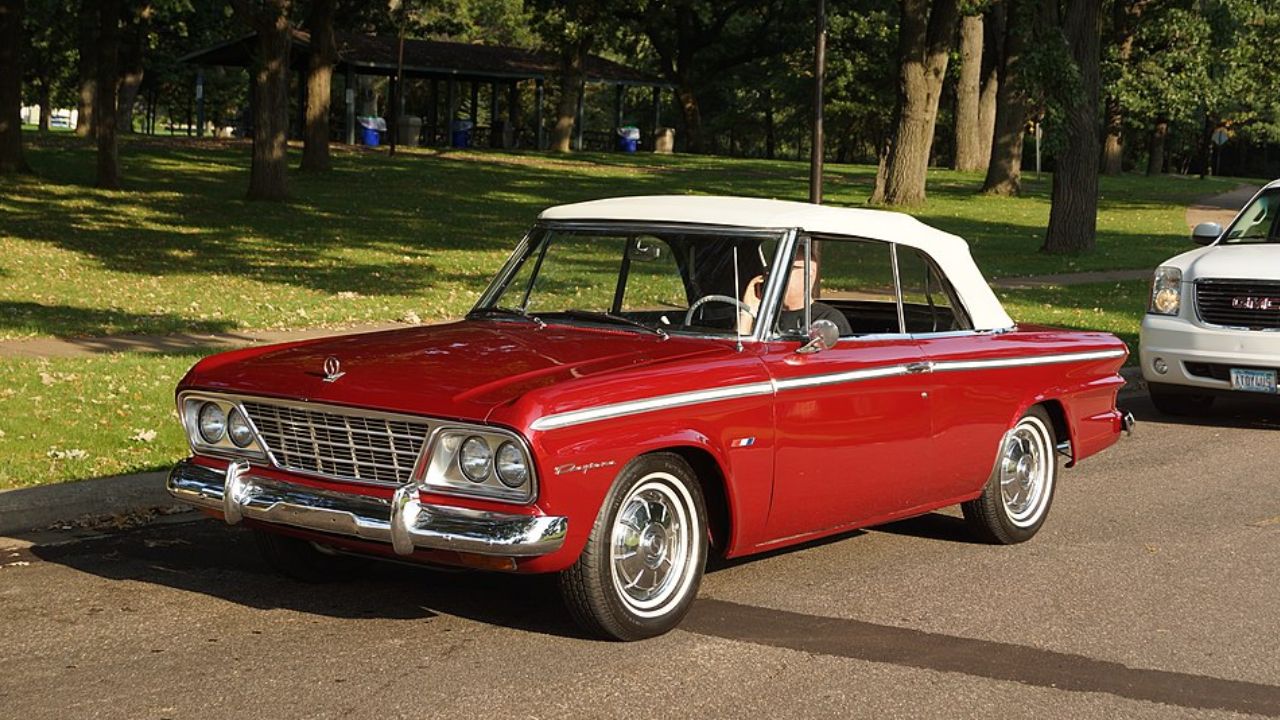
The 1964 Studebaker Daytona arrived in showrooms just as its maker was running out of time. The company was closing plants and trimming models, yet this compact hardtop and convertible carried crisp new sheet metal, clever engineering and a streak of quiet defiance. In an era when Detroit dictated taste, the Daytona proved that style and substance did not need permission from the Big Three.
Studebaker’s last fresh breath
By the early 1960s Studebaker was fighting for survival against compact offerings from Detroit, which had flooded the market with their own small cars and eaten into the independent brand’s sales. The company responded by heavily reworking the existing compact line that had started as the Studebaker Lark, a model created to counter the new competition from Detroit compacts. For 1964 the body received a sharp, modern reskin that tried to disguise the aging platform underneath.
Fans quickly noticed how much effort went into the new look. One enthusiast described having a kind of fetish for the 1964 Studebaker, noting that the car represented the company’s last genuine burst of fresh air even if styling alone could not guarantee success. That affection is often focused on the Studebaker Daytona, the upscale trim that wore the clean lines particularly well, especially in convertible form. Period images show how the low beltline, squared-off fenders and tidy tail lamps gave the car a contemporary stance that belied its origins.
The Daytona name itself had appeared earlier on sportier Lark variants, but in 1964 it became the spearhead of Studebaker’s compact range. The company leaned on brightwork, bucket seats and tasteful badging to position the model as a stylish alternative to more common Detroit iron. The result was a car that looked thoroughly modern parked next to rivals, even as the corporation behind it struggled with mounting costs and shrinking volume.
Performance that punched above its weight
Under the skin, the 1964 Studebaker Daytona backed its looks with real performance. In V8 form, its acceleration was strong enough that contemporary observers compared it directly with the new Pontiac GTO. One detailed account notes that its performance was rivaled only by the Pontiac GTO, a remarkable claim for a compact from a struggling independent. That capability, wrapped in relatively understated styling, has helped cement the Daytona’s reputation as a genuine sleeper.
Studebaker’s engineering team had long experience squeezing speed from modest hardware. Earlier in the decade the company created the Super Lark, a high performance package that previewed what was possible. By 1964 those lessons filtered into the Daytona range. Buyers could select strong V8 engines and heavy duty components that turned the tidy two door into a surprisingly quick machine, especially in lighter hardtop form.
The most dramatic expression of that engineering was the R2 configuration, which added a belt driven blower to the 289 cubic inch V8. Modern footage of a Studebaker Daytona R2 in Blue on My Car Story captures the distinctive whine and easy torque that supercharging delivered. The 289 worked smoothly with Studebaker’s manual or automatic transmissions, giving the car both brisk acceleration and relaxed cruising manners.
Another video presentation, introduced with the line “i am Lou with another episode of My Car Story and today we’re at the greatest muscle car show in the planet the Muscle Car and Cor,” shows a 1964 Studebaker Daytona surrounded by big block icons. Host Lou treats the compact Studebaker as a peer among heavyweight muscle cars, which underlines how far the little Daytona’s performance credentials have risen in enthusiast circles.
Design that refused to blend in
Visually, the 1964 Studebaker Daytona walked a fine line between restraint and character. Observers often describe the body as short and somewhat stubby, but also unusual and distinctive. A later commentary on a Supercharged 1964 Studebaker Daytona R2 praises that compact, almost truncated proportion as part of the car’s charm, suggesting that the design feels like the last expression of Studebaker’s clever packaging instincts.
Photos from period-inspired galleries, including images of a Bordeaux Red convertible and earlier President hardtops, show how the company evolved its themes. The 1958 and 1959 two doors carried more chrome and curves, while the 1964 Studebaker Daytona Convertible in those same collections sits lower and cleaner, with a more squared off roofline and simplified trim. The progression reveals how Studebaker tried to keep pace with changing tastes using careful reskins rather than all new bodies.
In convertible form the Daytona’s lines are especially striking. With the top down, the long deck and relatively upright windshield give the car a poised profile that looks ready for a coastal highway. The interior, with bucket seats and a driver focused dashboard, reinforces the impression of a compact grand tourer rather than a basic economy car. That combination of modest size and upscale detail helped the Daytona stand apart from more conventional domestic compacts.
Built for fun, even as the lights dimmed
For all the sophistication baked into the 1964 Studebaker Daytona, the corporate context was grim. Everybody knows that Studebaker ended production at the mother ship in South Bend in December of 1963, a decision that closed an era of American manufacturing at the historic plant. Later analysis of the Studebaker South Bend notes that subsequent cars came equipped with engines sourced from GM, underscoring how far the company had retreated from full line manufacturer status.
Within that shrinking footprint the Daytona convertible occupied a special niche. A video feature that invites viewers to Join for a vacation adventure in the 1964 Studebaker Daytona Convertible, described as Built for Fun, captures the car rolling along country roads with the top folded. The host frames the car as a low volume indulgence that still delivered simple driving pleasure, even as production numbers dwindled. Another related clip on the same platform refers to the Studebaker Class of 1964 and treats the Daytona as the standout among that final generation.
Later commentary has pointed out that the low volume convertible was dropped after 64, along with the Hawk, Avanti and trucks. A feature on the Studebaker Daytona Convertible notes that the company had gone to Canada for final assembly and that the open car did not survive the rationalization of the lineup. The timing gives the 1964 drop top particular poignancy, since it represents both the peak and the end of Studebaker’s in house convertible tradition.
A rare time capsule of an Era Studebaker tried to save
The rarity of surviving 1964 Studebaker Daytonas today owes much to those corporate struggles. Production was modest even when new, and the brand’s retreat from the United States market reduced long term support. A modern feature on a preserved example describes how Studebaker Daytona Is a Rare Time Capsule That Marked the End of an Era Studebaker, highlighting how the car encapsulates the company’s final attempt to compete as a domestic performance and style leader.
That same account connects the Daytona to the earlier Super Lark, framing the compact as a bridge between Studebaker’s experimental high performance sedans and the broader muscle car wave that followed. In this reading the Daytona is not just a curiosity from a defunct brand, but a missing chapter in the story of American speed, one where an independent manufacturer briefly matched the giants on their own terms.
The idea of the Daytona as a time capsule appears again in enthusiast listings and museum style presentations. One description of a well preserved car calls it an excellent example of the 1964 Studebaker Daytona, well kept and restored to a nice condition, and notes that There is little wrong with this car. That same overview stresses that the model’s engineering and innovations live on in the memories of enthusiasts, even if the factory that built it has long since gone quiet.
From showroom underdog to collector sleeper
When new, the Daytona struggled for attention beside higher profile rivals. Today that relative obscurity has become an asset. Collectors now talk about the car as a real sleeper, a machine whose understated lines and compact footprint hide serious performance potential. The earlier comparison with the Pontiac GTO has aged well, since it places the Studebaker in direct conversation with one of the founding names in muscle car history.
Modern coverage of the model’s performance heritage emphasizes how few people realize what the car can do. One feature on the Daytona sleeper status points out that its acceleration and handling still surprise drivers who expect a slow, dated compact. With the right gearing and the R2 Supercharged 289 setup, the car can keep up with far newer performance coupes while looking like a tidy mid sixties family car.
That underdog appeal extends to the restoration scene. In one enthusiast group, a post titled 1964 Studebaker Daytona 4-Dr for Sale in NC from Wayne Elks in a community called Studebakers For Sale chronicles a partial restoration that has already seen the car repainted and mechanically refreshed. The Studebaker Daytona Dr listing treats the sedan as a worthy project despite its four door layout, which reflects how interest has spread beyond the traditional hardtop and convertible body styles.
Online marketplaces and club newsletters echo that enthusiasm. Dedicated feeds that highlight Studebaker Daytona projects and sales, along with social media pages linked to Old Cars Weekly, show a steady trickle of survivors trading hands. The presence of the model in these spaces indicates that the Daytona has moved from forgotten used car to recognised collectible, especially in higher specification trims.
Captured on camera, preserved in pixels
The digital age has given the 1964 Studebaker Daytona a second spotlight. Enthusiast photographers contribute images of the car to curated pools, including a collection that features multiple shots of a Studebaker Daytona Convertible parked in summer light. The curbside classic pool includes close ups of trim details, dashboard layouts and color combinations that help modern viewers appreciate the design subtleties.
High resolution images hosted on enthusiast sites show a Bordeaux Red convertible with its top down, chrome glinting and the Studebaker script standing proud on the decklid. Other photos compare the 1964 body to earlier 1958 and 1959 hardtops, using original color data sheets to highlight how the palette evolved. These visual records are invaluable, since they document factory correct finishes and trim arrangements that restorers rely on today.
Video content plays a similar role. Clips that follow a 1964 Studebaker Daytona Convertible through small towns and along rural highways capture the car in motion, which reveals how its proportions work in real traffic. The low cowl, thin pillars and compact footprint stand out against modern vehicles, yet the car does not look fragile or out of place. Instead it appears tidy and purposeful, a reminder that compact did not always mean anonymous.
Why the 1964 Daytona still matters
The 1964 Studebaker Daytona occupies a narrow slice of automotive history, yet its story carries broader lessons. It shows how a smaller manufacturer, pressured by Detroit and constrained by aging tooling, still found room to create something stylish, quick and engaging. The model’s combination of sharp design, serious performance and relative rarity makes it more than a footnote.
More from Fast Lane Only