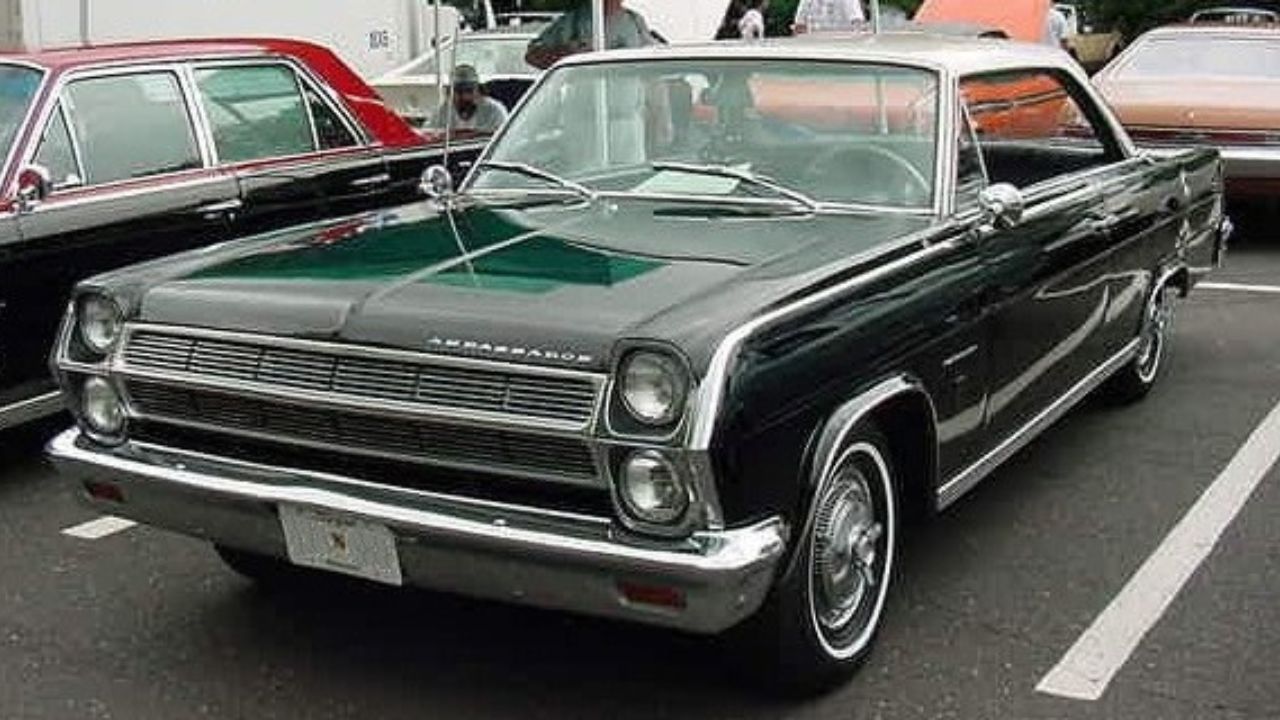
The 1965 AMC Ambassador arrived as a calculated break from convention. Rather than chasing every styling fad and horsepower war, it aimed to be longer, cleaner and more comfortable while staying true to the brand’s reputation for practicality. That refusal to fully follow the crowd did not hold it back; it helped turn the Ambassador into a confident, upmarket statement for American Motors.
Abernethy’s upscale gamble
Inside American Motors, the 1965 Ambassador was not just another facelift. It was central to a new strategy by CEO Roy Abernethy to move the company upmarket and compete model for model against larger rivals. Abernethy wanted a car that could stand beside the big offerings from Detroit and look like it belonged there, without losing the thrift and common sense that had defined Rambler.
That tension shaped almost every decision. The Ambassador name carried history, yet the car itself needed to feel like a clean break from the compact image that had limited American Motors. The company leaned into the Ambassador as its flagship, positioning it as the car that would prove Abernethy was on the right track with moving the Ambassador upscale to compete with other manufacturers, as later analysis of the Ambassador suggests.
Stretching into the big-car league
To make that move credible, AMC could not simply add chrome. Designers led by Richard Teague stretched the wheelbase to 116 inches, a figure that put the car squarely in full-size territory. Contemporary coverage notes that this stretch was deliberate, intended to let the Ambassador compete head on with the Chevrolet Impala and, two of the era’s benchmark family cars.
Factory literature backed that up with hard numbers. The official brochure listed a wheelbase of 116 inches and a length of 200 inches for sedans and convertibles, with wagons at 197 inches. Loaded height was given as 55 inches for the sedan and convertible, 55.4 inches on the station wagon and 53.9 inches on the hardtop, figures that underlined how low and sleek the car sat compared with many rivals. Those dimensions, preserved in period documents, show how deliberately AMC pushed the Ambassador into visual parity with the bigger players.
“Sensible Spectaculars” and a new identity
Marketing language made the shift explicit. AMC billed its entire 1965 Rambler line as Sensible Spectaculars, a phrase that tried to merge rational value with a touch of glamour. Within that campaign, the Ambassador was hyped as the longest and most luxurious Rambler yet, an attempt to reassure loyal buyers while signaling that this car aimed higher than before.
Period advertising leaned heavily on that dual message. One television spot opened with the line “this is no dream. this is real. this is Ambassador with the most sweeping change in automobiles,” insisting that the transformation was both dramatic and grounded. The same ad framed the car as one of three new sensib models, linking the upscale push to the broader Rambler identity. That blend of practicality and theater gave the Ambassador a personality distinct from the more flamboyant full-size cars from Detroit.
Design that avoided gimmicks
The sheetmetal followed the same philosophy. The 1965 Rambler Ambassador wore clean, straight body sides and a restrained use of brightwork, a noticeable contrast to some competitors that relied on stacked lamps and ornate trim. Contemporary descriptions of the 1965 to 1966 Rambler Ambassador point to several grille treatments, including a flat design with seven or eight horizontal ribs and another that featured bridgework that might have been inspired by Chrysler’s 1963 experimental Turbine car. Yet even with those variations, the overall effect remained tidy rather than flashy, a look that fit the company’s budget conscious image.
Inside, the car offered touches that aligned with its new flagship role. The 1965 Rambler Ambassador 990 hardtop, for example, featured a pillarless profile so that when the windows were down, there was no B pillar obstructing the view, giving it a sleek, airy look. That detail, highlighted in later enthusiast commentary, showed how Teague and his team used relatively modest tooling changes to create a sense of openness and style without resorting to costly structural overhauls.
Engines, safety and the “sensible” side
Under the hood, the Ambassador combined new engineering with familiar hardware. AMC had introduced a 232 CID six earlier, and by 1965 that engine gave the Ambassador a modern overhead valve base powerplant. The company also continued to offer V8 options that carried over from earlier years, so buyers could choose between economy and stronger performance without leaving the showroom. Specifications compiled for Ambassador Specifications list displacements and dimensions that confirm how AMC mixed its existing V8 family with the newer six.
Safety features reinforced the “sensible” half of the marketing promise. Brochures for the 1965 Rambler Ambassador 990 Four Door Sedan touted Double Safety protection of separate hydraulic systems as standard, a feature that split the braking circuits to reduce the risk of total failure. The same material boasted of NEW Eagle claw door locks that keep doors safely closed, language that showed how AMC tried to turn engineering details into showroom talking points. In an era when many buyers still prioritized chrome and cubic inches, the Ambassador quietly made a case for thoughtful safety upgrades.
Sales, status and the 990 halo
The market response suggests that the strategy connected. Sales of the reformulated 1965 Ambassador reflected the car’s more important status in the AMC hierarchy, with the model achieving what later accounts describe as its high water mark for the decade. One advertisement from the 1965 model year, cited in coverage of Car of the, pushed the top trim 990 hardtop as the aspirational choice, pairing the longest wheelbase with the richest interior.
The 990 designation quickly became shorthand for the Ambassador at its most confident. Later social media posts from enthusiasts describe a 1965 Rambler Ambassador 990 as a car that marked a significant turning point, with the combination of pillarless hardtop styling and upscale trim capturing the spirit of Abernethy’s push. Other posts tied to Car of the promotions for the Ambassador 990 keep that halo alive, treating the model as the one that best represents the upmarket ambition.
How not following the crowd paid off
What makes the 1965 Ambassador stand out today is how deliberately it avoided some of the era’s louder trends. While the Big Three chased ever more elaborate ornamentation, American Motors leaned into a cleaner look and a quietly stretched footprint. Analysts who revisited the period argue that the evidence suggests Abernethy was on the right track with moving the Ambassador upscale, and that the approach helped lift sales into the mid 60s before broader company challenges intervened.
That perspective also shapes later debates about whether the 1965 to 1966 AMC Ambassador sold better when it had a unique body. In the Story Ideas Bank, James Duvall asked Indie Auto to explore if the decision to give the Ambassador its own sheetmetal in 1965, rather than sharing everything with lower Ramblers, turned into a problem child or a smart investment. The resulting analysis of the 1965 to 66 acknowledges the financial strain but also credits the car with elevating the brand’s image.
Legacy among enthusiasts
Enthusiast circles now treat the 1965 Ambassador as a turning point rather than a footnote. Commenters who revisit the 65 Amby describe it as all new, or at least as new as continually strapped American Motors could manage, and praise the way the design distinguished the car from lower priced Ramblers. That same commentary notes how the 65 lineup evolved into a more profitable Ambassador 990 range, confirming that buyers were willing to pay for the added space and style.
More from Fast Lane Only