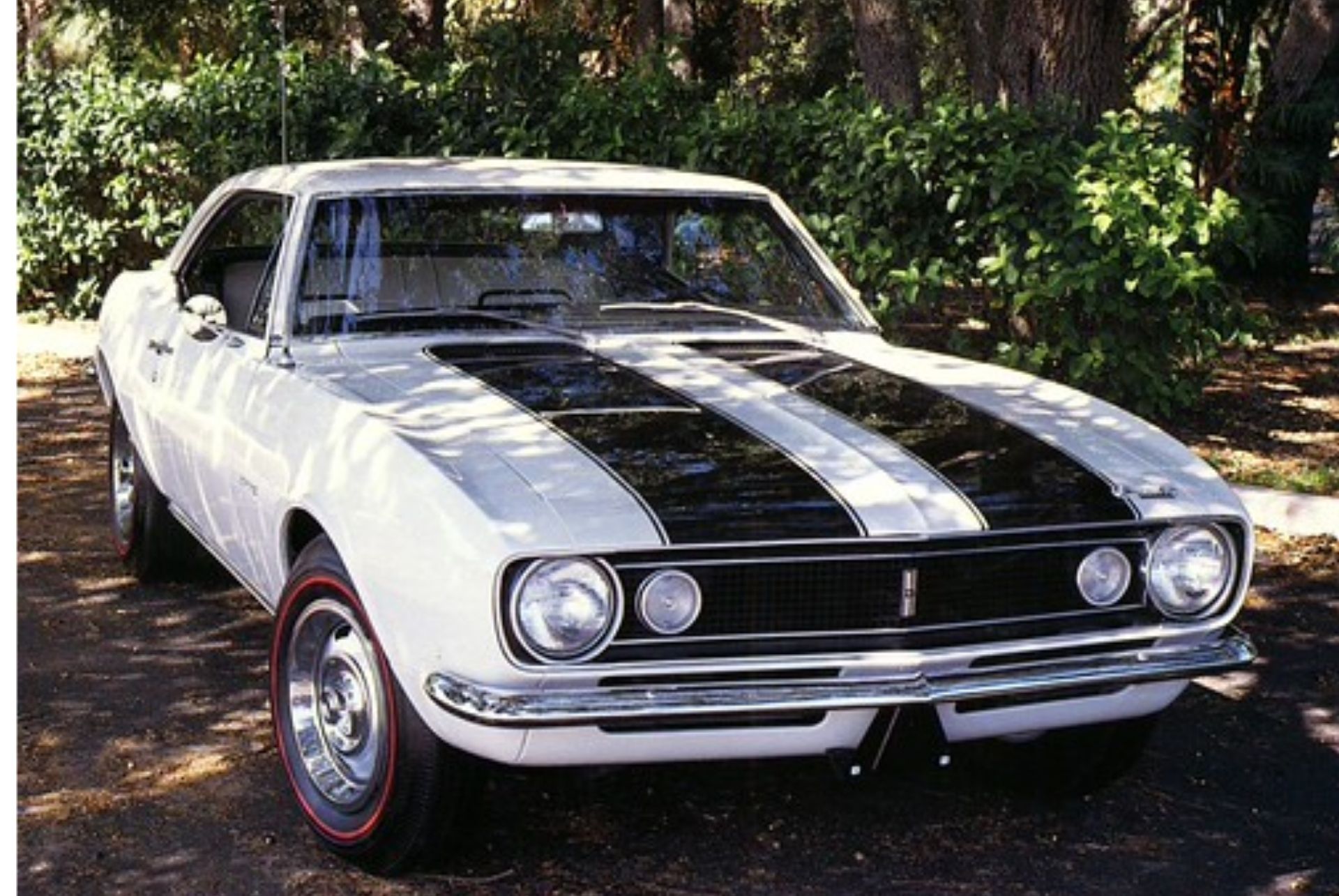
The 1967 Camaro Z/28 was not conceived as a boulevard bruiser or a dealership sales leader. It existed because Chevrolet needed a weapon for a very specific battlefield, the Sports Car Club of America’s Trans‑Am series, and the rulebook dictated everything from engine size to production volume. What emerged was a homologation special that just happened to wear license plates.
On paper, it looked like another compact pony car option code. In practice, the original Z/28 turned the new Camaro into a road‑race tool, engineered from crankshaft to suspension bushings for a 5‑liter class where winning on Sunday required building a street‑legal version for Monday.
Trans‑Am rules that forced Chevrolet’s hand
The SCCA’s Trans‑Am series set the stage. To compete in the under‑5‑liter class, manufacturers had to build cars that matched strict dimensions and displacement caps. The rulebook limited Wheelbase to 116 inches and engines to five liters, listed as 305.1 cubic inches, and it required that these configurations be offered as regular production models, not one‑off race specials.
Chevrolet had just introduced the Camaro to counter Ford’s Mustang, but the early lineup was aimed at street buyers, not race teams. Big‑block power and SS badges made for strong showroom appeal, yet none of those combinations fit the 5‑liter Trans‑Am box. To run with Ford and Mercury in that series, Chevrolet needed a small‑displacement V8 that could spin hard, breathe freely, and survive the punishment of long road races, all while being sold through normal dealerships in sufficient numbers.
The solution was not to detune an existing engine but to build a new one that sat precisely inside the SCCA envelope. That requirement, more than any marketing brainstorm, is what created the Z/28 option.
How a rulebook birthed the 302.4‑inch engine
Chevrolet engineers started in the parts bin. They took the 3‑inch‑stroke crankshaft from the 283 and combined it with the 4‑inch bore of the 327, creating a hybrid 302.4‑inch small‑block. As one period account notes, this 283 and 327 delivered a 302.4‑inch engine that was ideal for high‑revving road‑race duty and sat safely under the 305.1‑cubic‑inch cap.
On the street, Chevrolet officially rated this 302 at just 290 horsepower, a figure that kept insurance companies calm and fit corporate guidelines. Contemporary testing and later analysis, however, describe a far more potent reality. With a forged‑steel crankshaft and aggressive internals, the engine was happy at 7,500 rpm, and while the factory rating sat at 290 hp, period racers and later dyno figures describe output that pushed well beyond that number.
The key was not peak horsepower but how that 302 behaved at race pace. Short stroke, big bore, and a solid‑lifter valvetrain meant the engine could live at high revs where a road‑race car spent most of its time. The design was less about stoplight sprints and more about holding 7,000 rpm through a long straight, lap after lap.
The Z/28 package is a homologation tool
The engine alone did not make a Trans‑Am contender. The SCCA required that the race hardware be rooted in production parts. Chevrolet responded with a bundle of chassis, brake, and appearance pieces grouped under a single code: Z28, later written as Z/28 in marketing material. Internally, it was simply an RPO, a Regular Production Option that happened to be a race car in disguise.
Period histories explain that the Z/28 package was created specifically to homologate a race. The parts chosen for the option were built to a higher spec than typical Camaro components, from suspension tuning to heavy‑duty brakes, because they had to survive competition and still be legal for street sale. The result was a car that sat at the intersection of production rules and racing needs.
Unlike the SS, which was splashed across ads and showroom windows, the Z/28 arrived with almost no marketing push. It did not appear in early brochures and was often unknown to casual buyers. That low profile was by design. Chevrolet needed to build enough examples to satisfy the SCCA, not to outsell every other Camaro variant.
Hidden from brochures, aimed at pit lanes
Chevrolet’s approach to selling the first Z/28 underscores how little it cared about mass‑market appeal. Contemporary accounts describe how the company developed the Camaro, with the Z/28 as a more aggressive variant that was not initially listed in brochures or mainstream advertising. One detailed video history explains that Chevrolet kept the largely hidden, even as it quietly filtered into select dealerships where performance‑minded customers or racers knew to ask for it.
That secrecy was not incompetence but a reflection of priorities. For Chevrolet, the Z/28’s primary audience in 1967 was not the average commuter but the race teams and hard‑core enthusiasts who followed Trans‑Am standings. The car’s purpose was to appear on entry lists at circuits like Riverside and Sebring, not to dominate suburban parking lots.
Evidence of that focus shows up in production numbers. Enthusiast registries and club records note that only a small run of 1967 Z/28 units left the factory. One Camaro club discussion explains that Today, it remains one of the most collectible first‑generation Camaros, valued precisely because of its rarity and purpose‑built nature.
What Z/28 actually meant
There has always been mystique around the Z/28 name itself. Some enthusiasts have tried to attach exotic meanings to the letters, but period documentation shows a more prosaic origin. Z28 was simply the next unused line in Chevrolet’s internal Regular Production Option catalog. As later analysis of the code explains, RPO Z28 was just a sequence entry, not an acronym for “Zora 28” or any other legend.
That bureaucratic label, however, came to signify a very specific philosophy. Within the Camaro lineup, Z/28 meant a car shaped more by sanctioning‑body rules than by marketing departments. Where SS leaned on cubic inches and straight‑line punch, Z/28 meant balanced handling, high‑revving power, and equipment chosen to win a particular kind of race.
Chassis, brakes, and the feel of a race car
The rest of the package reinforced that identity. The Z/28 received suspension tuning that favored cornering grip over ride comfort, quick steering, and heavy‑duty components intended to survive the loads of slick tires and aggressive driving. Contemporary technical write‑ups describe stiffer springs, performance shocks, and thicker anti‑roll hardware that made the car feel more like a touring car than a typical pony car.
Brakes were upgraded as well, since Trans‑Am racing punished rotors and pads at every braking zone. The Z/28’s disc‑brake setup, paired with its relatively light small‑block engine, gave it an advantage in repeated high‑speed stops compared with big‑block street machines that faded under similar abuse.
Inside, the car remained relatively spartan. The focus was on function rather than luxury, a reflection of its intended life on pit lanes and road courses. Buyers who wanted plush interiors and automatic transmissions usually gravitated to other Camaro trims. Those who ordered a Z/28 were often willing to trade comfort for control.
Why the 1967 Z/28 was not built for Main Street
All of these choices made the 1967 Z/28 a demanding street companion. The solid‑lifter 302 liked to idle poorly and wake up only when revved. The gearing that helped it leap out of corners on track made highway cruising buzzy and loud. Fuel economy was an afterthought. So was the ease of use in traffic.
Enthusiast retrospectives describe the original Z/28 as a car that came alive only when driven hard, ideally on a circuit. One analysis of the Camaro’s competition heritage notes that the Z28 package turned the new Camaro into a car built solely for access to the racetrack. That description fits the 1967 model perfectly. It was street legal, but its habits and hardware were tuned for a different environment.
Compared with more relaxed V8 Camaros, the Z/28 demanded commitment. Owners accepted valve lash adjustments, higher maintenance, and a peaky powerband because those traits paid dividends on track days and at club events. The car’s reason for being was to chase lap times, not to sip fuel on long commutes.
How other Camaros stayed “street” while Z/28 went racing
Context from broader Camaro history highlights how singular the Z/28’s mission was. Period overviews of the 1967 lineup point out that both big blocks offered in early Camaros were installed by dealers rather than built as official production models, precisely because race regulations dictated engine capacity and made those large engines irrelevant for Trans‑Am.
Those big‑block cars, along with RS and SS trims, were aimed squarely at street buyers who wanted style and straight‑line performance. They delivered effortless torque, relatively smooth manners, and plenty of visual drama. The Z/28, by contrast, was a low‑profile option that sacrificed some of that easygoing character to meet the under‑5‑liter rule and to deliver balance on twisty circuits.
In that sense, the 1967 Z/28 prefigured later homologation specials from other brands, cars that existed primarily so a manufacturer could exploit a series rulebook. It was the Camaro that owed its existence to the SCCA, not to market research.
From obscure option to coveted classic
What began as a quiet RPO has since become one of the most sought‑after first‑generation Camaros. Collector interest has been fueled by the car’s rarity, racing pedigree, and unique mechanical specifications. Enthusiast groups emphasize how few 1967 Z/28 cars were built and how their survival rate drives values upward.
Modern retrospectives trace that desirability back to the car’s original purpose. The Z/28 came about as a way to make the new Chevy Camaro what it needed to be to satisfy SCCA production requirements. That origin story, tied directly to the 116‑inch wheelbase and 305.1‑cubic‑inch cap, gives surviving cars a direct link to one of the most competitive eras of American road racing.
Individual examples of the earliest Z/28s have become minor celebrities. One video profile follows the first 1967 Camaro Z28 produced by Chevrolet, filmed at the Muscle Car and Corvette National in Rosemont, Illinois, where host Lou interviews owner John Mil about the car’s unique features and build history. That segment, available through archival footage, underlines how much storytelling now surrounds these once‑obscure option‑code cars.
The Z/28 legacy inside and beyond Trans‑Am
The 1967 Z/28 did its job. It gave Chevrolet a competitive platform in Trans‑Am, where the Camaro quickly became a front‑running entry. Over the next several seasons, Z/28‑based race cars battled Mustangs and other rivals in one of the most fiercely contested touring‑car series of the era.
That success fed back into the streetcar’s reputation. As the Z/28 name continued through later model years, it evolved and sometimes drifted from the original formula, but the core idea of a track‑biased Camaro remained part of its identity. Modern discussions of the badge often circle back to the first‑year car and its 302.4‑inch engine as the purest expression of the concept.
Even gear‑review platforms that focus on contemporary performance hardware still reference the original Z/28 when discussing track‑focused machinery. The car appears in performance comparisons and historical sidebars as an example of how racing rules can produce some of the most engaging road cars.
More from Fast Lane Only