The 1967 Dodge Charger arrived at the height of the muscle car era with a silhouette and stance that demanded attention. Long, low and dramatic, it projected an authority that went beyond raw horsepower, helped by a fastback roofline, hidden headlights and a cockpit that felt closer to a fighter jet than a family coupe. Nearly six decades later, that presence still resonates, even as the first-generation Charger often lives in the shadow of the later icons that followed.
A fastback that looked fast standing still
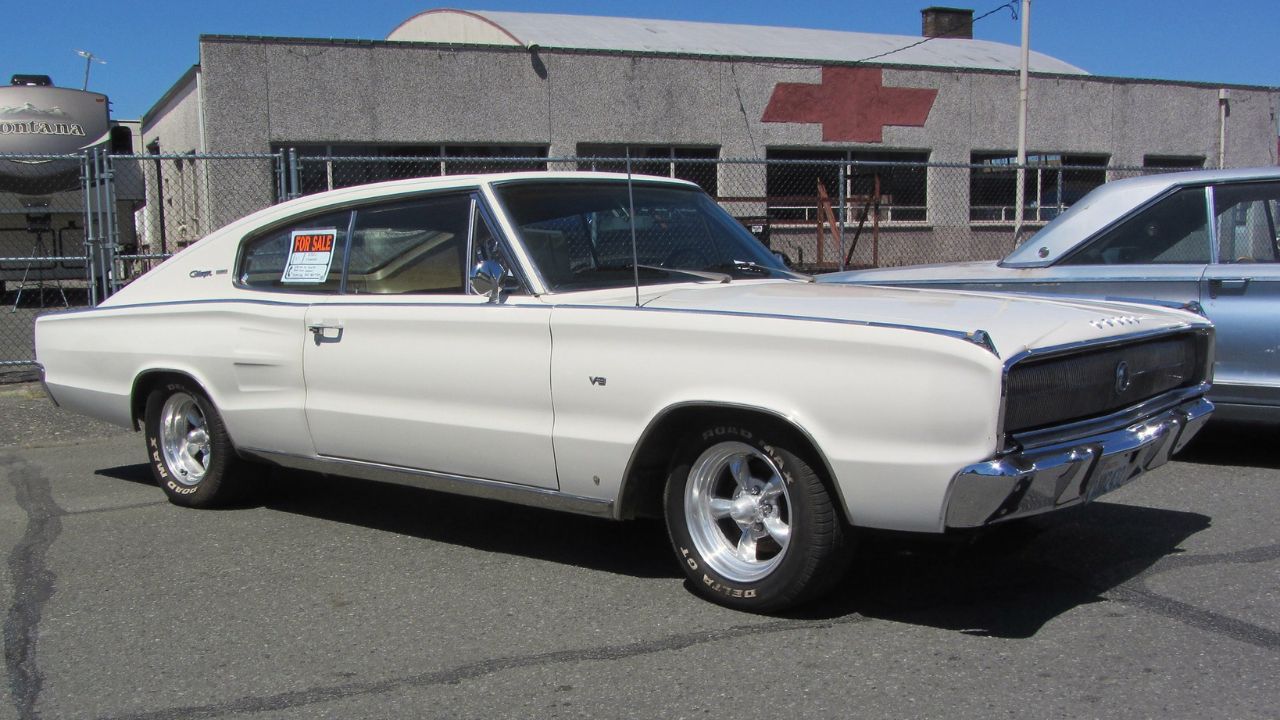
The second-year Dodge Charger Fastback sharpened the original formula into a car that seemed to move even when parked. Contemporary descriptions of the 1967 Dodge Charger Fastback highlight its dramatic proportions, with a long hood and sweeping roof that gave the profile a unified, almost concept-car look, a shape that still defines the way many enthusiasts picture the early Charger today. That fastback line flowed into a full-width rear panel and integrated taillights, so the car read as a single sculpted form rather than a collection of separate styling cues.
Seen from the side, the nose sat low and pointed, the beltline ran clean and almost unbroken, and the rear glass dropped deep into the deck. The result was a big American coupe that carried itself with the confidence of a show car. Even in period, the Charger was often described as a bold design, and the 1967 model refined that attitude with cleaner detailing and slightly crisper surfacing than the debut year. The overall effect was a car that could share a parking lot with European grand tourers yet still look unmistakably American in scale and swagger.
First-generation finale and a bridge to legend
The 1967 Dodge Charger represents the final year of the model’s first generation, a closing chapter before Dodge shifted to the better-known second-generation body that would dominate late-1960s street and track lore. Enthusiast accounts describe that last first-gen Charger as a car that blended the boldness of muscle car performance with a distinctive fastback style, a combination that gave it a unique place in the muscle hierarchy. It was not simply a stopgap before the famous 1968 redesign, but a bridge between the early experiment and the full-bore muscle icon that followed.
That sense of transition is part of the car’s appeal today. The 1967 Dodge Charger is often described as a sleek and underrated classic that combined muscle car power with fastback style, and it closed out the original body while hinting at the more aggressive image Dodge would soon embrace. In that sense, the 1967 car works as both a historical endpoint and a preview of what the Charger name would become in the Mopar performance universe.
Muscle car power with Mopar attitude
Under the sheet metal, the Charger was every bit a Mopar muscle machine. The 1967 Dodge Charger launched one of Mopar’s most celebrated muscle cars by pairing aggressive styling with potent performance options, including big-block V8s that gave the car serious straight-line pace. Dodge positioned the Charger as more than a cosmetic package and backed the look with engines that could match the visual drama.
Period and modern writeups of the 1967 Dodge Charger emphasize that it is a classic American muscle car that combines bold styling with impressive performance. That combination, American size and presence paired with real power, is central to why the car still commands attention at shows and in online communities. Even when equipped with engines below the top-tier Hemi, the Charger delivered the kind of torque-heavy acceleration buyers expected from a serious performance coupe in the late 1960s.
Powertrain stories around the 1967 model also highlight rarity and intrigue. One report on a 1967 Dodge Charger Was Born With a Rare Engine, but It’s All Bad News Under the Hood points out that Dodge began offering the 440-cubic-inch RB engine in the Charger, a displacement figure that has become shorthand among Mopar fans for big-block authority. The presence of that 440-cubic-inch option, even when paired with later mechanical troubles in individual survivor cars, reinforces how seriously Dodge took performance in the Charger package.
A cockpit that felt like a jet
If the exterior gave the Charger its street presence, the interior completed the sense of drama. Enthusiasts often point to the fighter jet cockpit feel of the 1967 Dodge Charger, with a driver-centric dash that wrapped around the pilot and bucket seats that ran front and rear. A later description of the 1967 Dodge Charger highlights hidden headlights, a full-width taillight panel and a fighter jet cockpit, a trio of features that made the car equal parts showstopper and dragstrip contender.
The dash itself had a party trick that set the Charger apart from many rivals. A period-correct explanation of the 1966 and 1967 Charger dash notes that its electroluminescent gauges work off 230 volts alternating current or AC not 12 volts DC, which meant the panel glowed with a uniform, futuristic light instead of relying on conventional bulbs. That detail might seem minor, but it added to the sense that the driver was sitting in something engineered, not just styled, for effect.
Combined with the long center console and four individual seats, the cabin created an atmosphere closer to a personal luxury coupe than a stripped-down drag racer. Yet the view over the hood and the knowledge of the engines available under it kept the Charger firmly in muscle territory. The interior, like the exterior, projected a confidence that matched the headline numbers.
Fastback flair and hidden lamps
The Charger stood apart visually from its Dodge siblings. Contemporary commentary on the first-generation Charger often notes that the car was effectively a dressed-up Coronet, but that the transformation on paper and in metal was significant. The fastback roof, hidden headlamps and full-width taillight panel turned a sensible mid-size platform into something dramatic.
Descriptions of the 1967 Dodge Charger Fastback styling emphasize that the second-year car featured a long hood and sweeping roof that defined its presence, with the fastback line giving the car a sleek, almost fastback muscle-car profile that contrasted with the more formal rooflines of many rivals. At the front, the hidden headlights allowed a clean, almost menacing grille when the lamps were closed, an effect that reinforced the Charger’s image as a serious performance machine even when idling at the curb.
At the rear, the full-width taillight panel and integrated backup lights created a signature nighttime look. Enthusiast posts about the 1967 Dodge Charger often highlight that full-width taillight panel as part of what makes the car equal parts showstopper and dragstrip dominator, a reminder that Dodge understood the impact of lighting and graphics on a car’s perceived speed and power.
Underrated, often overshadowed, but never anonymous
For all its visual drama, the first-generation Charger has long been described as Often Overshadowed by the second-generation cars that followed in 1968 and 1969. Those later models, with their Coke-bottle sides and racing success, captured the broader public imagination and became the face of the Charger name in popular culture.
Market analyses of the 1966 and 1967 Charger point out that the car was effectively a dressed-up Coronet, and that while the strategy made sense on paper, it left the first-generation cars in a tricky position. They offered serious performance and distinctive styling, yet they lacked the motorsport pedigree and pop culture exposure that later Chargers enjoyed. As a result, the early cars often sold for less in the collector market, even when equipped with similar or identical engines.
That relative obscurity does not mean the 1967 Charger blended into traffic. On the contrary, the car carried a presence that was hard to ignore precisely because it looked different from the more common Chevelles, GTOs and Mustangs of its era. Modern enthusiasts frequently describe the 1967 Dodge Charger as sleek and underrated, a car that blended muscle car power with fastback style and that deserves more credit than it typically receives.
The darkest hour and the survivor mystique
Sales history adds another layer to the Charger’s story. One detailed look at a long-abandoned example notes that 1967 is probably the darkest hour in the glorious history of the Dodge Charger, as sales dropped to almost half of the previous year’s numbers. That plunge reflected both intense competition in the muscle car market and consumer anticipation for new shapes and features.
The result today is a pool of relatively scarce survivors. When a 34-year abandoned 1967 Dodge Charger turns up, it is described as a survivor, not the kind enthusiasts usually think about, with rust, mechanical neglect and missing parts. Yet even in that state, the basic lines of the car still read clearly, and the sight of a Charger shell in a field or barn can spark strong reactions among Mopar fans who know how rare it is to see one in the wild.
Those survivor stories also underline the durability of the Charger’s design. Even after decades of exposure and neglect, the fastback profile, the recessed grille and the taillight panel still signal what the car is. That kind of visual resilience helps explain why project cars draw attention at auctions and online, even when the mechanical news is, as one report put it, all bad under the hood.
Engines that did not need a 426 Hemi
When people think of Mopar muscle, the 426 Hemi often dominates the conversation. Yet coverage of individual restorations makes clear that a 1967 Dodge Charger does not need a 426 Hemi to shine. Accounts of restored cars without Hemi power emphasize that the absence of call-out badges on the front fenders can even add a bit of mystery, leaving observers to guess what might be lurking under the hood.
Other features and options contributed to the Charger’s appeal. One detailed feature on a first-gen ’67 Charger highlights a car equipped with a 383 cubic inch engine, interesting color combinations and period-correct options, showing how varied the first-generation cars could be. Another video walkaround of a 67 Dodge Charger 440 captures a long-term owner’s pride and notes that the 66s and 67s are very well regarded among enthusiasts who appreciate their unique styling and driving character.
That range of engines, from small-block V8s to the 440-cubic-inch RB and the legendary Hemi, gave buyers a spectrum of performance. It also means that modern collectors can find cars that suit different tastes and budgets, from relatively mild cruisers to full-bore dragstrip builds, all wrapped in the same distinctive fastback body.
From Hank’s Garage to online groups: a living icon
The Charger’s enduring presence is not confined to car shows and auctions. Modern enthusiast spaces keep the 1967 car in regular circulation, both digitally and in person. One video spotlight from Hank’s Garage Venue introduces a Bad Ass Car of the Day 1967 Dodge Charger and frames it as the place Where Muscle Car Legends Begin The, a tagline that underlines how central the Charger remains to the Mopar legend.
More from Fast Lane Only