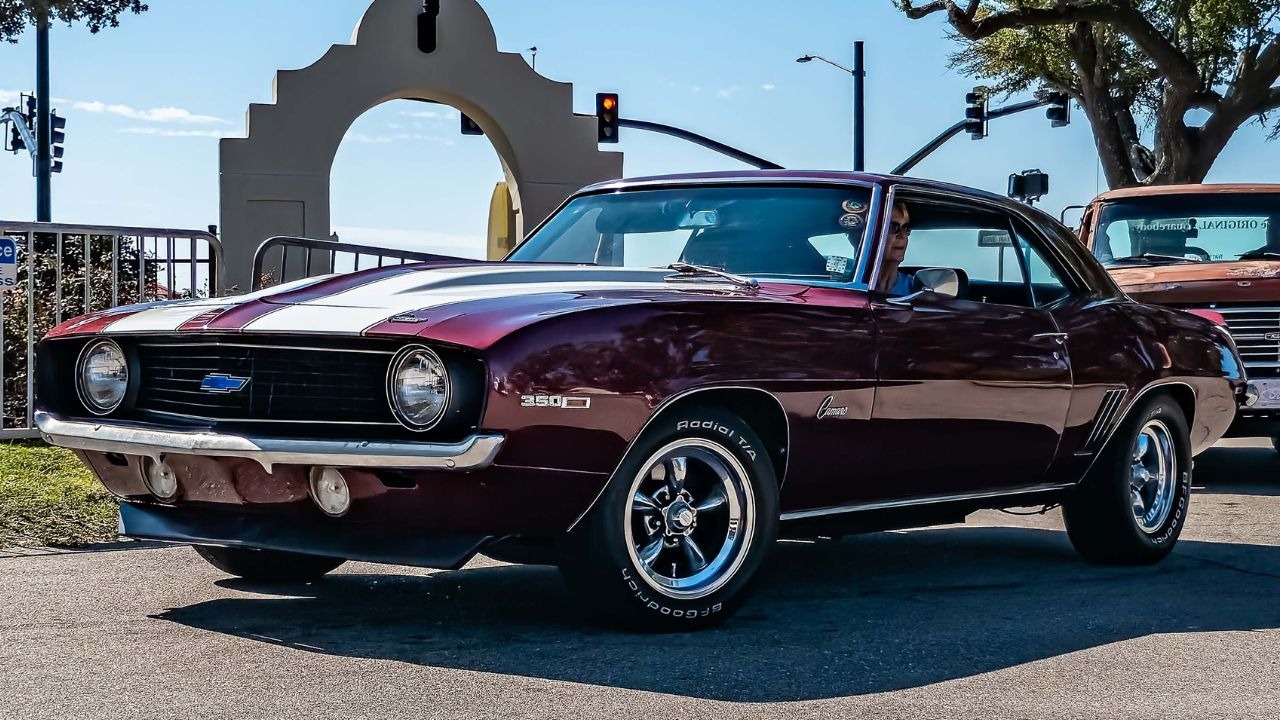
The 1969 Camaro RS has been studied, restored, and collected for decades, yet owners still uncover details that feel almost hidden in plain sight. From subtle trim quirks to under-the-skin engineering choices, the Rally Sport package rewards anyone willing to look closer than the iconic grille. The surprises are not just cosmetic; they reach into how the car was rated, optioned, and even how its headlights move.
The RS package that was more than a grille
On paper, the RS package, coded as RPO Z22, was marketed as a cosmetic group. Period guides describe the RS as an appearance upgrade that could be ordered across the variant range of first-generation Camaro models, rather than as a standalone performance model. It wrapped a standard Camaro in a distinct front end, with hidden headlamps, unique parking lamps, and specific trim that separated it from base cars and SS or Z/28 variants. Contemporary breakdowns of the 1967 to 1969 cars explain that RPO Z22 could be paired with multiple drivetrains and that the RS identity was defined by its grille and wiring differences rather than a single engine specification, a structure that still confuses new owners who expect RS to mean performance first.
That split personality is one of the first surprises for modern buyers. A car advertised as a 1969 Chevrolet Camaro RS might carry anything from a mild small-block to a serious big-block or Z/28 hardware beneath the skin. Enthusiast guides that walk through the Chevrolet Camaro RS history, specs, and guide material make clear that the Rally Sport label sat on top of other packages, which is why survivors can be RS-only, RS/SS, or RS/Z/28. Many owners only discover after decoding tags that their car was ordered as an appearance car first, then optionally layered with performance.
Hidden headlights and the vacuum puzzle
The signature feature of the 1969 Chevrolet Camaro RS is the hidden headlamp system that sealed the front end behind doors. The RS grille carried vacuum-operated doors that opened when the lights were switched on and closed to present a clean face when parked. That system is elegant on paper but surprisingly complex in practice, with hoses, actuators, and wiring that can baffle owners who are used to simple sealed-beam setups. Guides that map out the 1967 to 1969 Chevrolet Camaro RS front end explain that the RS cars can be identified by their grille and headlamp wiring, a distinction that has become critical for restorers trying to return cars to original specification.
Many owners only appreciate how intricate the system is when something stops working. A detailed repair walkthrough on a 69 Camaro RS Z28 shows a restorer cleaning everything under the front end, checking that all the bushings are new, and confirming that the isolator for the rear leaf and other suspension pieces have been refreshed before turning attention to the vacuum hardware that runs the hideaway headlights. The narrator in that Nov video points out how much has already been touched, yet the headlamp doors still demand careful adjustment and diagnosis. That level of effort surprises new RS owners who assumed the doors were driven electrically or mechanically rather than by a network of vacuum lines.
The complexity has created a small industry of upgrades. Companies such as Detroit Speed sell an RS Headlight Door Kit for the 1969 Camaro RS that replaces the original vacuum-based system with electric motors. The Detroit Speed Headlight Door Kit is marketed as a way to improve reliability and also makes it easier to integrate modern wiring or upgraded lighting. For owners who want the RS look without the original vacuum headaches, that conversion is often the first modification on the list.
Why the RS look is still copied
The RS front end has become so iconic that many standard-front cars are converted to mimic it. Enthusiasts love the design of a 1969 Chevrolet Camaro RS, and sellers regularly highlight the Rally Sport hidden headlights and associated trim on cars that did not leave the factory that way. One listing that celebrates the first-generation Rally Sport points to the special feeling that comes from seeing the grille slide open, and that emotion drives both authentic restorations and conversions.
Owners of non-RS cars who want that look can buy a headlamp conversion kit marketed specifically for 1969 models. An OER Authorized kit is framed as the solution for anyone with a standard front end Camaro and who wants to add the Rally Sport hidden headlamp package. The product descriptions explain that figuring out all the brackets, doors, actuators, and wiring can be difficult when pieced together from used parts, so the kit bundles everything required to replicate the RS appearance. The fact that such kits exist, and sell, underscores how the RS identity has become a visual benchmark in the Camaro world, even when the underlying car is not an original RPO Z22 example.
Sandbagged power and the RS connection
The RS package itself did not dictate engine output, but some of the most interesting powertrain stories sit in RS-badged cars. The 1969 Chevrolet Camaro Z/28 is a prime example. A widely shared breakdown of that model points out that the 1969 Chevrolet Camaro Z28 was sandbagged with a 290 horsepower rating when it actually made well over 300. The figures 290 and 300 appear side by side in that discussion to highlight how Chevrolet Camaro marketing and insurance realities shaped the official numbers.
Owners of RS/Z/28 cars often discover this discrepancy only after digging into period dyno tests or modern recreations. The understated rating was not unique to the RS, yet it becomes part of the myth when an RS front end hides a Z/28 heart. Enthusiast videos that analyze the Z/28 package explain that Chevrolet would not publish the higher true output because it would have pushed the car into a different insurance bracket and potentially complicated racing homologation. For RS owners, the revelation that their apparently cosmetic package might conceal a significantly stronger engine than advertised adds another layer of surprise.
One-year-only details that separate 1969
Although the RS package ran from 1967 through 1969, the final year carried several one-year-only details that even long-time owners miss. A short feature on 1969 Camaro SS RS cars opens on some vintage items, including a Firestone F7014 wide oval tire, and uses that as a springboard to talk about small production quirks. The host in that Sep clip notes that certain trim combinations and stripes only appeared together for 1969, and that some of those details were tied to specific option mixes like SS RS.
Other content focused on big-block 1969 Camaros points out surprising secrets around side stripes and restoration accuracy. A Dec video that walks around a recently restored big-block car starts with the side stripes and how they were applied from the factory, then moves into other small tells such as emblem placement. Those details matter for RS cars because the Rally Sport package often intersected with high-performance engines, and the combination of RS trim, big-block hardware, and year-specific graphics can create a car that is visually subtle but extremely rare. Owners sometimes only realize how unusual their configuration is when they compare photos to factory literature or expert guides.
Those shark gills and other body cues
One of the easiest ways to spot a 1969 Camaro is to look for the three slashes on the rear quarter panel, often called shark gills. A popular clip that starts with the phrase One of the easiest ways to spot a 1969 Camaro emphasizes those three iconic slashes and shows how they instantly separate a 1969 body from earlier years. Another widely shared explanation on social media teaches viewers how to tell the difference between a 1969 Camaro and a 68 model. That Oct video repeats the comparison between 68 and 69 and calls the gills rear quarter panel vents, cementing them as a quick visual test.
These cues matter for RS owners because the Rally Sport package can distract from the rest of the body. The hidden headlights pull the eye to the front, yet the shark gills on the quarter panels and the overall fender shape are what confirm that the car is a 1969 shell and not a converted earlier model. In the collector market, buyers are increasingly alert to cars that wear RS front clips on non-1969 bodies, and the gills are often the first clue that something does not line up.
Different headlights on RS and Z/28 cars
Even within the 1969 lineup, not all front ends were created equal. A short feature on a Fathom Green 69 Z28 highlights that the car is an X33 from the factory, which means it carried an RS front end and associated trim. The host in that Jul video points out that the 69 Camaro Z/28 could have different headlights depending on whether it was ordered with the RS package or not. The RS cars received the hidden headlamp doors and specific grille, while non-RS Z/28 models kept exposed round lamps with their own trim rings.
Owners who discover that their car is an X33 or similar RS-coded Z/28 often learn that some of the parts they assumed were interchangeable are in fact unique. The headlamp buckets, grille surround, and even the wiring harness can differ between RS and non-RS front ends. That complexity explains why some restorations mix parts from different cars, and why experts stress the importance of matching the correct RS hardware to the build sheet.
The RS interior and subtle Rally Sport touches
Beyond the front end, the RS package sprinkled small cues throughout the car. Enthusiast groups that celebrate the 1969 Chevrolet Camaro RS describe the Rally Sport as a blend of style, performance, and American automotive passion. In addition to the headlamp doors, RS cars often carried specific badging, bright trim around the windows, and unique taillights that continued the hidden theme. These touches are easy to overlook compared with the dramatic grille, yet they are part of what makes an authentic RS feel different from a base Camaro with a swapped front clip.
Some of these details are documented in option and trim code breakdowns. A widely cited guide that explains 1969 Camaro options and trim codes walks through rare options such as the late 1969 front Endura body-colored bumper and the factory cross-ram intake for high performance engines. The piece highlights how rare options like the Endura bumper intersected with RS and other packages, creating combinations that are exceptionally hard to find today. Owners who decode their trim tags sometimes discover that their car left the factory with a mix of RS, SS, Z/28, and rare appearance parts that they never realized were original.
More from Fast Lane Only