The 1970 Chrysler 300 Hurst Edition arrived at the height of the muscle car wars yet refused to shout. While rivals leaned on stripes and spoilers, this big Chrysler mixed brute force with boardroom polish, turning excess into something quietly commanding.
More than half a century later, that balance of restraint and swagger is what makes the 300 Hurst feel so distinct. It stood apart without trying, not by hiding its power, but by wrapping it in a kind of luxury that most muscle cars never attempted.
The idea: muscle in a tailored suit
By 1970, Detroit performance had become a contest of louder graphics and higher redlines. Chrysler had a different idea. Instead of another stripped street racer, the company took its full-size 300 and asked what would happen if raw power was dressed in elegance.
The answer was the Chrysler 300 Hurst Edition, a collaboration with Hurst Performance that turned a big personal luxury coupe into a limited-run showcase. The project followed a familiar Hurst formula of special trim, upgraded hardware, and a signature shifter, but applied it to a car that already leaned toward executive comfort rather than bare-knuckle drag racing.
That philosophy still resonates in modern clips where enthusiasts describe how Chrysler wanted muscle that could also pass for a company car, a point driven home in short videos that frame the 300 Hurst as what happens when power meets class.
How rare is rare?
Production numbers are part of the car’s mystique, and the figures vary slightly depending on who is counting. One detailed feature on a survivor car notes that Chrysler only built 485 Hurst examples, while a dedicated owner group describes the 1970 Chrysler 300 Hurst Edition as 1 of 485 produced in 1970 and mentions that about 500 units were produced overall.
Other enthusiasts put the total slightly higher, pointing out that only 501 of the 1970 Chrysler Hurst 300 were ever made, with two convertibles thought to be used for promotion. Short-form videos echo the low-volume story, calling it one of just 485 special editions and highlighting how that figure makes it the rarest Hurst performance-built Mopar many viewers have never heard of.
Even with the small discrepancy between 485 and 501, every source agrees on one point. Whether the true number sits in the high four hundreds or just over 501, the 300 Hurst is a scarce car, especially compared with mass-market muscle of the era that often ran into the tens of thousands.
The Hurst partnership
The car existed because Chrysler partnered with Hurst Performance, a name already etched into muscle lore through shifters and special editions. One enthusiast summary describes how 1970 Chrysler 300 Hurst models were a limited-edition, high-performance luxury coupe built in collaboration with Hurst Performance, calling the result an ultra-rare milestone in Chrysler’s muscle-luxury history.
Hurst brought its branding, its shifter, and its marketing aura. Chrysler provided the platform, the big block power, and the upscale interior. The result was not a pure Hurst product or a simple trim package, but a joint statement about what a top-of-the-line 300 could be.
Even in fan videos where Tom from Rocket Restorations walks around a 1970 Chrysler 300 Hurst, the emphasis falls on how the partnership created something that feels distinct from both standard 300 models and other Hurst specials. It is a Mopar, but a very particular one.
Power: a 440 that did the talking
Under the hood, the Chrysler 300 Hurst did not rely on exotic hardware. Instead, it used the company’s proven 440 cubic inch big block in a high-output configuration often referred to as the TNT or similar performance tune. Enthusiast writeups describe how the 1970 Chrysler Hurst 300 performance variant was built around this 440 and stress that many automobile historians do not believe any left the factory equipped with a 426 Hemi, despite occasional myths to the contrary, a point that is clarified in detailed performance variant details.
One enthusiast listing of a low-mileage example notes that this engine could produce up to 375 horsepower, which gave the car serious speed on both highways and open roads. That 375 figure put the big Chrysler in the same conversation as smaller, lighter muscle cars that are far more famous today.
The Hurst shifter, a signature piece of hardware, completed the powertrain story. It gave drivers a direct connection to the TorqueFlite automatic and reinforced that this was not just a plush cruiser. In period, the combination of a 440 good for up to 375 horsepower and the Hurst hardware meant that a driver could glide in near silence or drop the hammer and surprise plenty of Camaros and Mustangs.
Size as a feature, not a flaw
Where most muscle cars traded on compact or mid-size proportions, the Chrysler 300 Hurst leaned into its full-size footprint. Contemporary and modern descriptions alike call it supersize muscle, a phrase that captures both the physical scale and the intent.
From the side, the car presents long, crisp lines that enthusiasts describe as imposing and even sporty rather than soft. A community discussion of the Chrysler 300 from 1969 to 1971 notes that the Hurst models kept the basic 1970 Chrysler 300 profile but sharpened it visually through color and trim, so the big body reads as purposeful instead of bloated.
That size also delivered a different kind of presence. Parked next to a typical A-body or F-body, the 300 Hurst looks like it belongs to a different class entirely. It is more personal luxury coupe than street brawler, yet the stance and the details make clear it can move.
Styling that whispered “special”
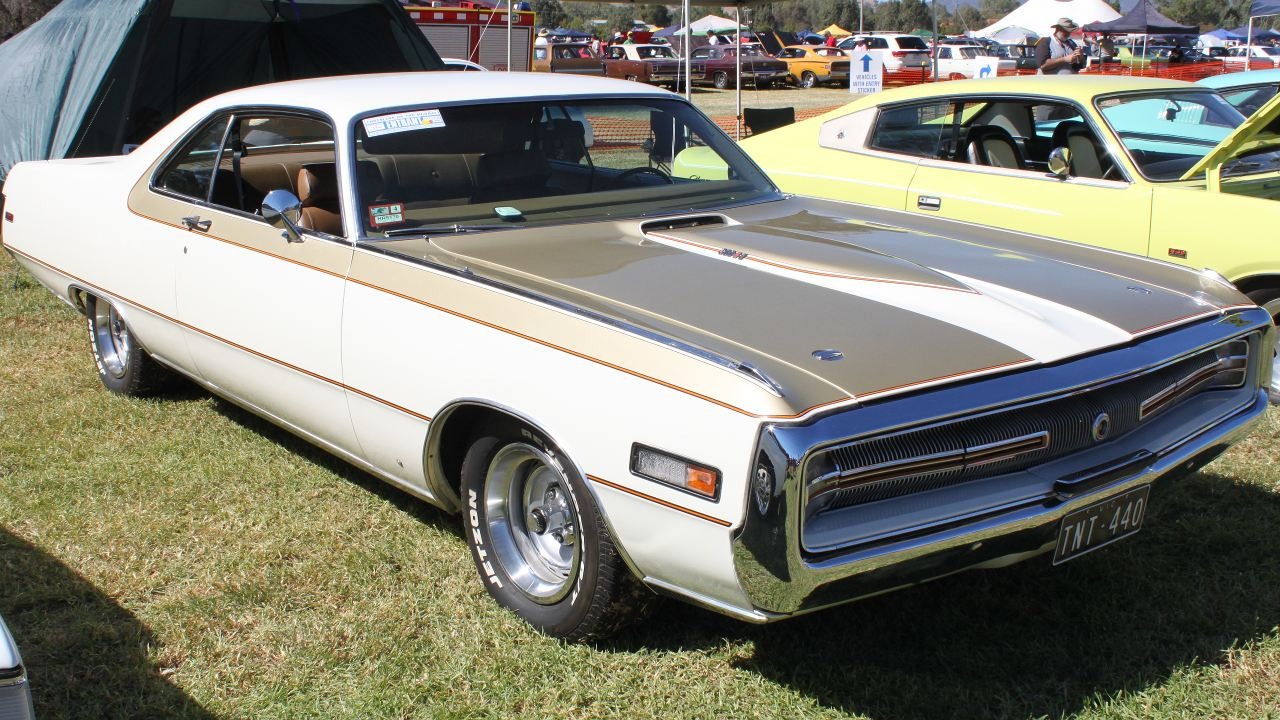
Hurst editions across the industry tended to follow a pattern: white paint, gold accents, and unique badges. The Chrysler 300 Hurst followed that template but applied it with relative restraint.
Enthusiast coverage of the car’s exterior points out that the Hurst edition received distinctive exterior identification and trim that set it apart from standard Chrysler 300 models. That meant special badging, a fiberglass hood with a scoop, and a unique rear deck treatment that extended into a built-in spoiler. The combination gave the car a custom look without sliding into cartoon territory.
Short-form clips and fan posts emphasize how the color scheme and the long, low body make the car look massive and powerful even when it is just idling at the curb. The gold accents highlight the character lines, the hood scoop hints at the 440 beneath, and the Hurst callouts remind onlookers that this is not just another big Chrysler.
Compared with many period muscle cars that wore stripes like war paint, the 300 Hurst looks almost formal. It is bold, but not loud. That subtlety is a key part of why it still feels fresh.
Imperial comfort inside
If the exterior projected quiet authority, the interior delivered outright luxury. Several sources note that the cabin was pulled largely from the top-of-the-line Imperial, Chrysler’s flagship. One enthusiast forum puts it plainly, explaining that the interior of the Hurst models was largely pulled from the top-of-the-line Imperial and that this gave the 1970 Chrysler 300 a cabin that felt imposing and even sporty, rather than soft.
Social clips echo that description, with one reel pointing out that step inside and you would find pure luxury. The cabin was ripped straight from the top-of-the-line Imperial, complete with giant executive seats and upscale trim. In a short video dedicated to the 1970 Chrysler 300 Hurst, the narrator highlights how this interior could rival many contemporary luxury cars while the drivetrain could still smoke many muscle cars at the stoplight.
That blend of big-block power and Imperial-grade comfort is what separates the 300 Hurst from most other Hurst specials. Where some Hurst cars leaned toward track or drag strip use, this one felt like it was built for high-speed interstate runs in air-conditioned comfort.
Driving character: the gentleman bruiser
Accounts from owners and restorers paint a consistent picture of how the 300 Hurst behaves on the road. One long-term owner profiled in a feature on a survivor car used his Chrysler extensively over subsequent decades, convinced of the car’s reliability and the way it could cover serious distance without drama.
With its 440 and 375 horsepower capability, the car has no trouble moving its substantial mass. Yet the suspension tuning and the long wheelbase give it a composed, almost serene ride at highway speeds. It is not a nimble canyon carver, but it was never meant to be.
In walkaround videos, Tom from Rocket Restorations points to this dual nature. He describes how the 300 Hurst can cruise quietly, the big block barely above idle, then surge forward with surprising urgency when prodded. The Hurst shifter adds a tactile element, reminding the driver that this is not just a luxury car with a big engine, but a performance machine with manners.
The convertible outlier
Almost all Chrysler 300 Hurst cars were hardtop coupes. That is what makes the surviving convertible example so fascinating. Coverage of that car explains that it was obviously developed in cooperation with Hurst Performance and that the model was officially restricted to the two-door hardtop body style, with the convertible serving as a special relations car at the time.
Other enthusiast posts point out that two convertibles were thought to be built for promotional use, and modern video clips play up the fact that only one is believed to exist in the world today. That single drop-top 300 Hurst has become a rolling piece of corporate and muscle car history, a one-off that underscores how limited the entire program was.
From forgotten to cult favorite
For years, the Chrysler 300 Hurst lived in the shadow of more famous Mopar names like Road Runner, Charger, and Challenger. It lacked the racing pedigree and the movie roles that keep those cars in constant circulation.
Recently, though, the 300 Hurst has gained recognition as a kind of forgotten 1970s luxury muscle that could outpower many Camaros. Enthusiast analyses stress how the Hurst edition’s distinctive exterior identification and luxury interior visually separated it from standard Chrysler 300 models, while the 440 and 375 horsepower capability gave it performance that matched or exceeded some better-known rivals.
Short videos now introduce it to new audiences as the rarest Hurst performance-built Mopar, a one of just 485 style statement that could still win stoplight sprints. Auction listings describe the Hurst Edition as boulevard royalty and the king amongst kings among Chrysler 300 variants, language that would have sounded exaggerated a decade ago but now reflects rising appreciation.
Why it still feels different
Part of the 300 Hurst’s appeal today lies in how out of step it was with the typical muscle formula. It did not chase the youth market directly. It did not strip out comfort in the name of speed. Instead, it assumed there was a buyer who wanted a car that could run with the pack, yet arrive at the country club without looking like a street racer.
More from Fast Lane Only