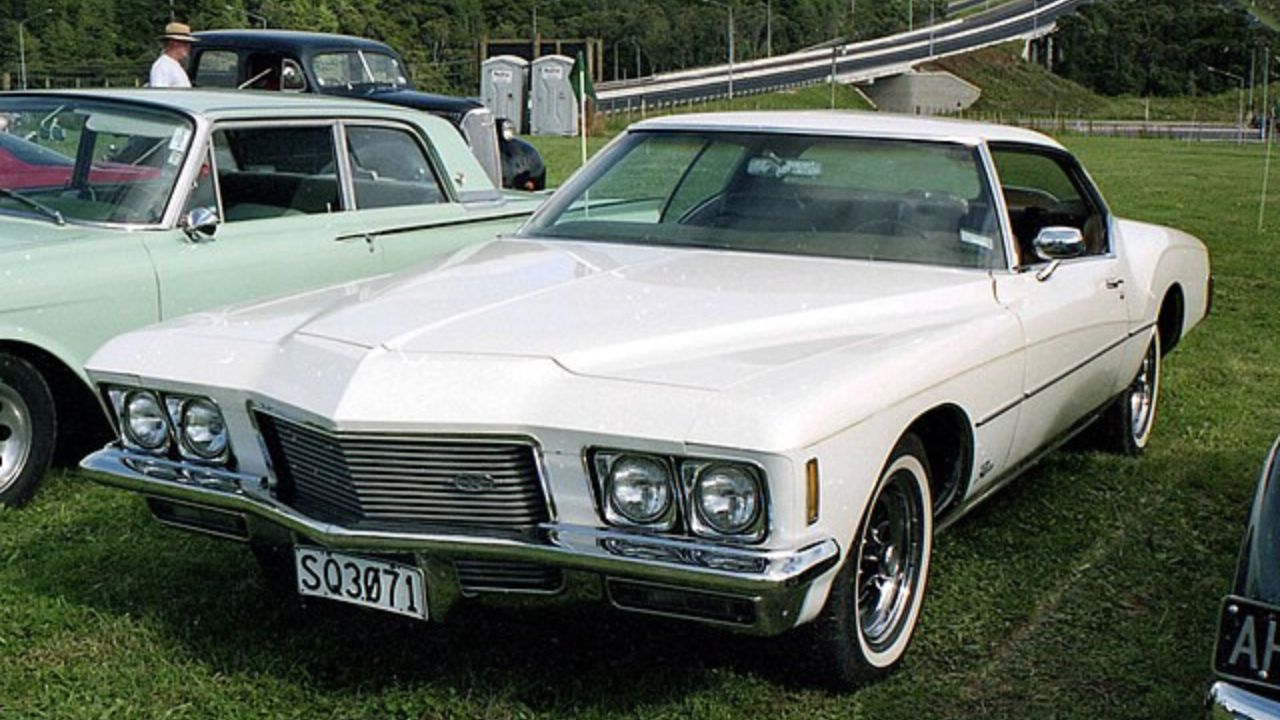
The 1971 Buick Riviera arrived with a shape that refused to fade into the background. Its “boat-tail” rear end, tapering like the hull of a speedboat, turned a comfortable personal luxury coupe into one of the most instantly recognizable American cars ever built. The design was meant to trigger a reaction on sight, and decades later it still does exactly that.
The moment Buick stopped playing it safe
By the early 1970s, American showrooms were full of long-hood, short-deck coupes, but most of them followed the same safe formula. The 1971 Buick Riviera broke from that pattern with a pointed rear window, a dramatic taper, and a fastback roofline that made the car look like a land yacht poised to slice through water. Contemporary and modern enthusiasts describe the 71 Buick Riviera Boat Tail as a representation of daring automotive creativity, a car whose rear view is as unforgettable as its nose, as one discussion in the classiccars101 group puts it.
The Riviera had always been Buick’s style flagship, but this generation pushed that mission to an extreme. Its long hood and sharp body lines framed a wide, low stance that broadcast power, while the boat-tail rear pulled the eye to a single vanishing point. That combination of front muscle and rear theater made the car look in motion even when parked.
Bill Mitchell and a brief for drama
Behind that shape was General Motors styling boss Bill Mitchell, a designer who liked his cars with a heavy dose of drama. Accounts of the program describe Mitchell’s burning desire to create a magnificent and aggressive design statement, and the team that worked under him said they inherited both the basic model and his insistence on something visually forceful. One insider summary recalls that “We inherited the model and Mitchell’s burning desire to create a magnificent and aggressive design statement. Our first effort” had to satisfy that push, a sentiment preserved in a detailed recollection of Who Designed the.
Mitchell’s approach favored long, flowing forms and bold graphics over subtlety. Under his direction, GM styling had already delivered cars like the split-window Corvette and knife-edged Cadillacs. The 1971 Riviera fit that lineage but took it in a different direction, one that merged luxury cues with almost concept-car exuberance. Its rear glass and deck were sculpted to recall classic Auburn and Cord speedsters and the stern of a wooden runabout, a deliberate nod to prewar glamour expressed in a modern, full-size shell.
From sketchpad to “boat-tail” reality
The boat-tail did not appear by accident. Designers experimented with an unusual A/E package and several full-size models before settling on the final profile. The rear section needed to satisfy Mitchell’s demand for an aggressive statement while still packaging a usable trunk and rear seat. The design team, as described in period recollections, worked through multiple iterations before the taper and glass angle felt right for both aesthetics and practicality.
Enthusiast histories describe how the 71 program blended cues from classic cars and speedboats into a single, continuous line that started at the nose and flowed unbroken to the pointed tail. Later summaries of the 1971 Buick Riviera note that the car debuted a radical boat-tail design inspired by classic cars and speedboats, created under Bill Mitchell’s direction as a bold statement in American automotive styling, a characterization echoed in a retrospective on the Buick Riviera boat-tail.
The result was a car that looked almost impossibly long from some angles, yet visually compact at the rear. The glass fastback, recessed rear bumper, and inward-curving fenders framed a center peak that made the car seem to arrow forward even when viewed from behind.
Muscle meets luxury
Styling alone did not define the 1971 Buick Riviera. The car was engineered as a personal luxury coupe with serious power, a blend that contemporary enthusiasts still emphasize. One widely shared description calls the 1971 Buick Riviera the bold debut of the legendary Boat Tail design, one of the most distinctive and dramatic shapes in American automotive history, and notes that the long hood, sharp body lines, and muscular stance made it look aggressive and elegant all at once, as highlighted in a profile of the Buick Riviera Boat.
That dual character set the Riviera apart from straight-line muscle cars of the period. It signaled that a driver could have comfort, wood trim, and quiet cruising along with a shape that looked ready for a custom car show. Later video essays argue that the 1971 Buick Boattail Riviera showed that Detroit could think about aerodynamics, about the future, and about design as art rather than only as a way to sell horsepower, a point made explicitly in a discussion of how the 1971 Buick Boattail became America’s most distinctive personal coupe.
The rear end that split opinion
From the moment it rolled into showrooms, the boat-tail rear end polarized buyers. Some shoppers loved the theatrical taper and speedboat imagery. Others found it strange or excessive compared with more conservative rivals. One enthusiast account calls it the most polarizing rear end ever put on an American car and notes that when the design team sketched the back of the car, they were chasing a visual punch that would make people stop and stare, a story retold in a discussion of the design story of.
That polarizing quality is exactly what keeps the car in conversations today. In a market crowded with lookalike coupes, the Riviera’s rear view made it impossible to confuse with anything else. The pointed glass, recessed license plate, and sculpted bumper created a signature that enthusiasts can identify instantly from a distant photo or a quick glimpse in traffic.
Detroit’s most theatrical machine
Modern commentators often describe the 1971 Riviera in superlatives. One video calls it the most theatrical machine Detroit ever unleashed, a car so dramatic that designers shaped the rear like a luxury yacht just to make a point about style, as seen in a short focused on why the 1971 Buick Riviera. Another clip repeats that idea, describing it as the most theatrical machine to ever roll out of Detroit, a car so outrageously styled that the trunk tapered like a boat hull, language used in a separate look at the Boattail that broke.
Those descriptions may sound hyperbolic, but they reflect how the car photographs and how it feels in person. The rear deck seems to stretch on and then suddenly converge to a point, while the side sculpting catches light in a way that emphasizes the car’s width and length. At night, the slender taillights and chrome frame the center peak like a stage set.
Muscle, aerodynamics, and the future
The 1971 Buick Riviera arrived in an era when straight-line performance still defined much of Detroit’s output. Yet the boat-tail shape hinted at a different set of priorities. Commentators looking back on the car argue that it proved Detroit could think about aerodynamics, about the future, and about design as art, not just as a wrapper for big engines. That perspective appears in a long-form examination of why the 1971 Buick Boattail became America’s most distinctive personal coupe.
While the Riviera was not a wind tunnel special in the modern sense, its fastback roof and tapered tail reflected an interest in airflow and visual speed. The design suggested motion and efficiency even if the underlying engineering was still rooted in body-on-frame construction and traditional V8 power. That tension between futuristic styling and conventional hardware is part of what makes the car fascinating in hindsight.
Inside the design studio
Recollections from the styling team give a glimpse into how the car took shape. Designers working under Bill Mitchell describe inheriting a scale model and his firm expectation that the final product would be magnificent and aggressive. The unusual A/E package, which dictated proportions and interior space, forced creative solutions for the rear glass and trunk area. The team’s first effort under that package had to satisfy Mitchell while still meeting engineering and manufacturing constraints, as detailed in the account preserved in Who Designed the.
Those same recollections point to clay models with even more extreme tapers and exaggerated fins that did not survive the production cut. What remained was still radical compared with rival coupes, but it represented a compromise between show-car fantasy and showroom reality.
How enthusiasts remember it now
Today, the 1971 Buick Riviera is often grouped with the 1972 and 1973 models that shared the basic boat-tail theme, but the first year remains the purest expression. Enthusiast groups describe the 71 Buick Riviera Boat Tail as a dramatic fusion of muscle and luxury that turned heads and sparked debate, and they emphasize how the styling created a sense of speed and elegance even at a standstill, as captured in a discussion of the dramatic 1971 Riviera.
Owners and fans often focus on small details that photographs can miss: the way the rear glass curves into the sail panels, the subtle crease that runs from the front fender to the tip of the tail, or the interplay of chrome and painted surfaces around the rear bumper. These touches reinforce the sense that the car was designed to be experienced in three dimensions, not just as a flat profile.
From controversial to collectible
The market trajectory of the boat-tail Riviera reflects how tastes change. What some buyers dismissed as excessive in period has become a selling point for collectors who want something unmistakable at a show or cruise night. Modern videos that introduce the car to new audiences often open with the same hook: have you ever seen a car with a rear end that looks like the hull of a boat, not a concept car or custom build but a mass produced American coupe, a question posed directly in a feature on the Boattail Riviera 1971.
As interest has grown, more detailed histories and image archives have appeared. Sites dedicated to the model, such as Buick Riviera 71, collect period photographs, design sketches, and production details that help explain how the car moved from drawing board to assembly line.
A design that still teaches lessons
For modern designers and enthusiasts, the 1971 Buick Riviera offers several lessons. It shows how a single bold gesture, in this case the boat-tail rear, can define an entire car and its legacy. It illustrates the risks and rewards of pushing a mainstream brand into avant-garde territory. And it demonstrates how polarizing design can age into classic status once the shock wears off and the underlying proportions and detailing can be appreciated on their own terms.
The car also underscores the influence of strong leadership in a design studio. Bill Mitchell’s insistence on a magnificent and aggressive statement forced his team to stretch beyond safe choices. Recollections archived through projects like Who Designed the and design portfolios such as Simpson Design 71 keep those internal struggles and breakthroughs visible for new generations.
More from Fast Lane Only