The rivalry between Fernando Alonso and Lewis Hamilton has lasted longer than some drivers’ entire careers, a thread that keeps tugging at the sport every time they share a piece of tarmac or a TV camera shot. What began as a raw power struggle inside one of Formula 1’s most coveted seats has evolved into a complex mix of respect, resentment and competitive pride that still flares in radio messages and press pen barbs. The tension has never fully dissolved, it has simply changed shape as both men have grown older and the championship picture around them has shifted.
Today, with both still on the grid and still central to the narrative of every season, their dynamic remains one of the defining storylines in Formula 1. I see it less as a simple feud and more as a running commentary on what happens when two generational talents collide in the same garage, then spend almost two decades measuring themselves against each other from opposite sides of the paddock.
The combustible origins at McLaren
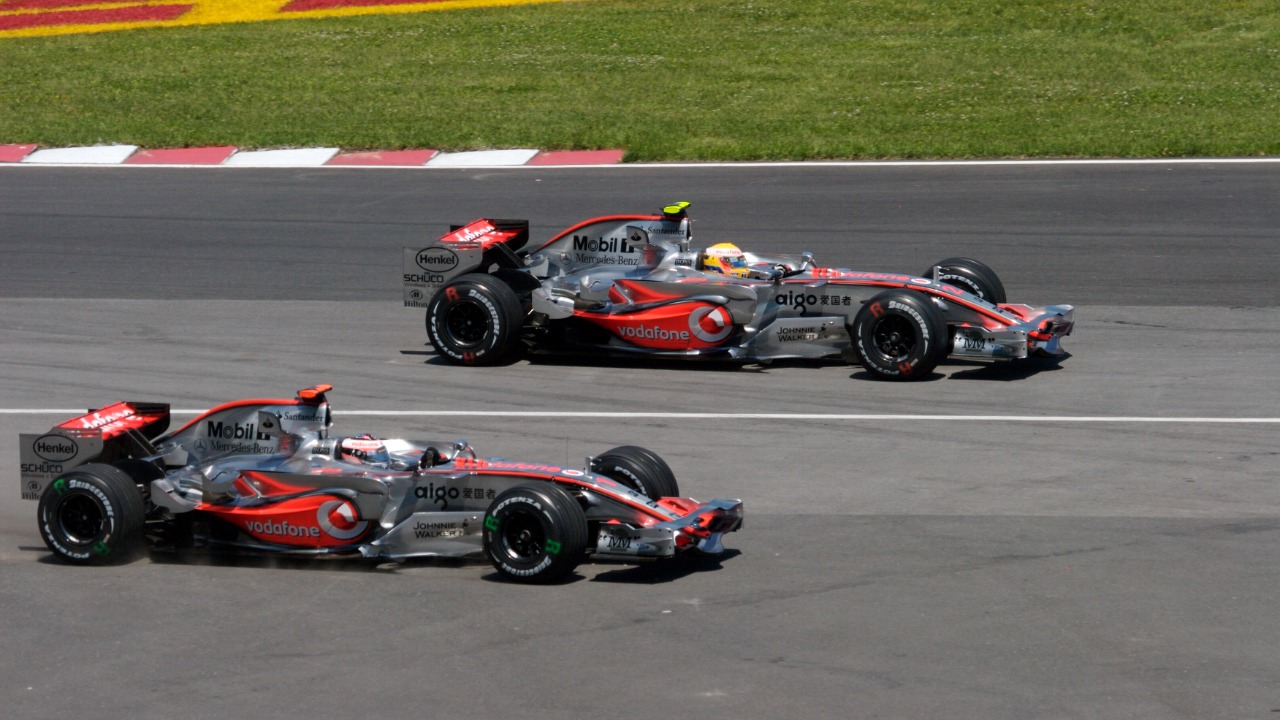
The roots of the Alonso and Hamilton tension lie in a single, high-pressure experiment: putting a reigning double world champion alongside a rookie who refused to behave like one. McLaren’s decision to pair Hamilton and Alonso created what Pedro de la Rosa later described as the Hamilton and Alonso line-up as the strongest there had ever been, a pairing that pushed both drivers to the limit. That strength was also the problem, because it left no room for hierarchy, and the internal battle quickly spilled into the open as each tried to assert control over strategy, qualifying position and psychological ground.
The flashpoint that still defines that season came in qualifying for the Hungarian Grand Prix, when a Controversy erupted after Hamilton failed to honour an agreement to let Alonso past on track, leaving Alonso sitting in the pit box long enough to deny Hamilton a final run. That incident crystallised the sense that Hamilton and Alonso were no longer simply teammates but rivals locked in a zero-sum fight for status inside McLaren. From that moment, every debrief, every strategy call and every offhand comment felt like part of a larger battle neither was willing to lose.
How the 2007 feud set the tone
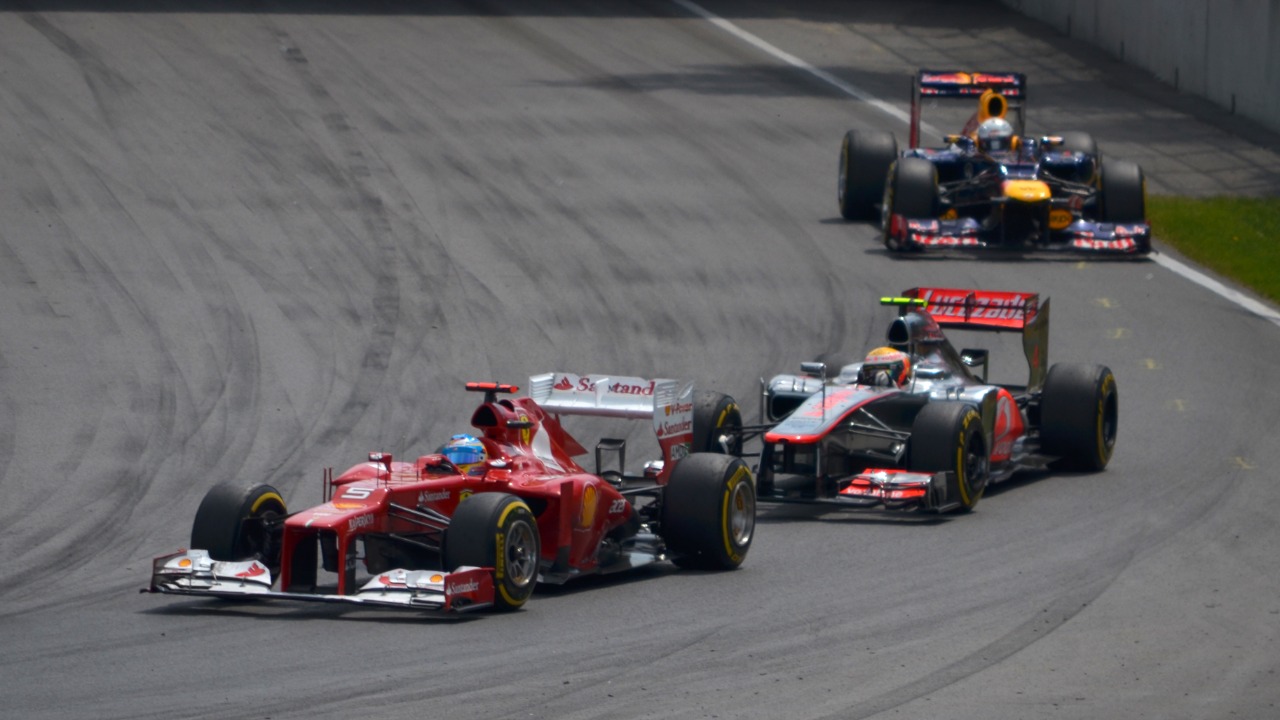
The emotional fallout from that first season together shaped everything that followed between them. Accounts of How the feud erupted describe a young Lewis bristling at any suggestion he should be grateful for second place, even in Monaco, and a Fernando who expected the deference usually afforded to a multiple champion. When Lewis was asked how he felt about finishing second in Monaco and responded with visible frustration, it signalled that he was not content to play apprentice, and that attitude clashed directly with Alonso’s sense of seniority.
From the outside, it looked like a simple personality clash, but insiders have argued there was a deeper miscalculation. David Coulthard, Appearing on the Red Flags podcast, suggested that Alonso and Hamilton fell out quickly because the World Ch champion underestimated just how fast Hamilton would be and how little tolerance there would be for a clear number one. In that reading, the real error was strategic rather than emotional, a misjudgment that turned what could have been a dynasty into a one-year experiment that left scars on both sides.
Decades of duel: rivalry that outlived the team
Once they left McLaren, the Alonso and Hamilton story did not fade, it simply moved to different colours of overalls and different corners of the grid. Their careers became a kind of parallel narrative, with each new chapter of Hamilton’s title runs and Alonso’s team switches interpreted through the lens of that original split. A detailed look at the Decades of Duel between them notes that at 39 Hamilton was still fighting at the front while Alonso, also deep into his thirties and beyond, kept finding ways back into competitive machinery, underlining how their rivalry has stretched across eras and regulations.
What makes this particular duel unusual is its longevity and the way it has survived long gaps without direct title fights. The Clash of Titans Turned Mutual Respect framing captures how Alonso and Hamilton have oscillated between open rivalry and public respect, with Their shared history often resurfacing whenever one is asked to comment on the other’s form. Even when they are not fighting for the same championship, every on-track overtake or strategic clash between them feels loaded with the weight of everything that has gone before.
Radio rants, Singapore flashpoints and the modern edge
In recent seasons, the tension has found a new outlet in the raw immediacy of team radio and social media. Fernando Alonso’s willingness to speak his mind has produced some of the most replayed soundbites, including an Fernando Alonso radio rant over Lewis Hamilton’s brake issues that captured his disbelief at how race control and rivals were handling incidents. That kind of outburst is not just about one braking problem, it reflects a deeper frustration that Hamilton still seems to attract the pivotal moments and steward attention that can swing a race.
The Singapore Grand Prix has become a particular flashpoint in this modern phase of their rivalry. A recent clip highlighted how Lewis shared his experience with the Singapore Grand Prix in a way that fans interpreted as a subtle response to Alonso’s complaints, while another video showed how Lewis Hamilton Hits Back At Alonso after a radio outrage following the Singapore GP. Around the same weekend, Fernando Alonso took aim at Formula 1 itself, with reports noting how Fernando Alonso lashed out at Formula over the Singapore weekend that saw him clash with Singapore officials and Lewis Hamil in a swirl of penalties and procedural anger.
The sense of grievance is not one-sided. Hamilton has had his own frustrations in the current era, particularly with Ferrari’s form and operational missteps. One rival admitted he could not believe how Hamilton had been driving in 2025 given the circumstances, pointing to a 40-year-old managing ride height issues and Ferrari errors while still delivering sharp radio messages that revealed his dissatisfaction. In that context, Alonso’s barbs and Hamilton’s responses feel like two veterans venting not only at each other but at a sport that keeps finding new ways to test their patience.
Respect in public, rivalry in private
For all the flashpoints, there is also a clear thread of mutual recognition that neither can quite suppress. Alonso has at times gone out of his way to defend Hamilton’s legacy, arguing that he does not need to prove anything to anyone and that their shared past should be seen as part of a broader story of elite competition. That sentiment was captured in a profile that described how Alonso and Hamilton moved from a Clash of Titans Turned Mutual Respect, suggesting that time and perspective have buried some of the rawest edges of the rivalry even if the competitive fire remains.
Hamilton, for his part, has long shown he can compartmentalise intense rivalries without seeking friendship, a pattern visible in his stance toward former teammate Nico Rosberg. In one account of Lewis Hamilton and Mercedes teammate Nico Rosberg, Hamilton made it clear he had no need to be friends with a rival while they fought for championships, accepting a frosty relationship as the price of peak performance. It is not hard to imagine a similar internal logic applying to Alonso, where respect for the driver coexists with a deliberate emotional distance that keeps the competitive edge sharp.
Why this rivalry still matters to Formula 1
What keeps the Alonso and Hamilton tension relevant is not just nostalgia, it is the way their story mirrors the evolution of Formula 1 itself. They have spanned eras of refuelling and hybrid power units, of V8s and ground-effect floors, and through it all their paths have kept crossing at critical moments. A long-form look at the Exploring the Legendary Formula rivalry between them notes how their shared races rival those of other iconic pairings, underlining that this is not a brief flare-up but a structural part of the modern championship narrative.
Even now, new chapters keep being added. Earlier this year, Alonso, who once declared that he and Hamilton would never be close, sounded a more conciliatory note when reflecting on Hamilton’s move to Ferrari and the shifting balance inside the grid. He acknowledged that Back when the Mercedes was difficult to drive, George Mercedes teammate Russell was more comfortable, but suggested that he and Hamilton now have many things in common as veterans navigating late-career moves. At the same time, Alonso’s animated criticism of race direction and Hamilton’s pointed replies, captured in videos such as Alonso GOES NUTS on the FIA and Hamilton after a shocking call, show that the competitive friction is still very much alive.
That is why, whenever they line up on the same row of the grid, the atmosphere feels different. Their history is not just a backdrop, it is an active ingredient in how fans interpret every move, every strategy call and every radio message. The rivalry between Lewi and Alonso may have softened at the edges, but as long as both are still capable of influencing championships and stirring emotions, it will remain one of the sport’s most compelling through-lines, a reminder that in Formula 1, some stories never really end, they just find new ways to ignite.