
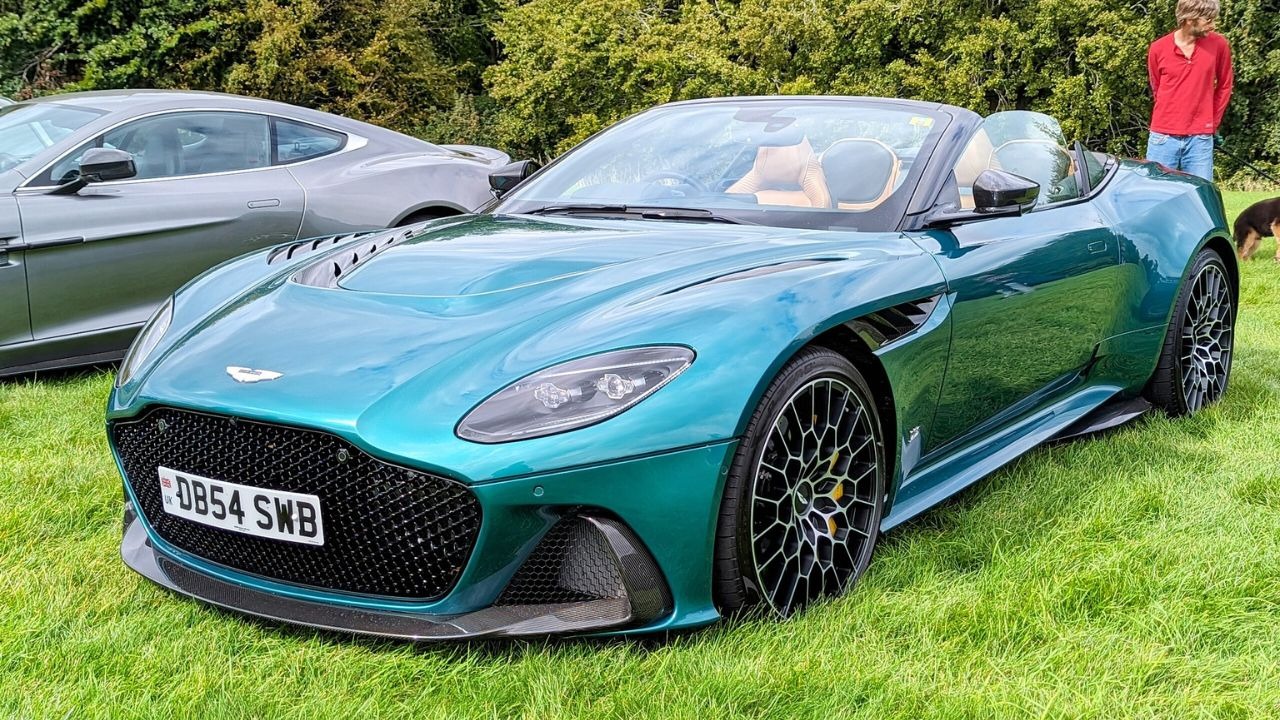
The Aston Martin DBS has never been just another fast British coupe. It is the car that arrives on screen and instantly signals that the stakes have gone up, that the driver is operating with a level of composure most of us only associate with a tuxedoed agent and a Walther PPK. That aura has been carefully built over decades, from the original grand tourer to the modern DBS Superleggera, and it still shapes how I think about what “Bond-level confidence” looks like on the road.
What makes the DBS different is not only its speed, but the way it has been woven into the James Bond universe as a shorthand for poise under pressure. Across multiple eras of the films and several generations of the car, the DBS has evolved from a muscular 1960s coupe into a carbon clad Super GT, yet it keeps returning to the same idea: a machine that lets its driver move through chaos as if everything is under control.
The original DBS and the birth of Bond’s bruiser
The relationship between the Aston Martin DBS and James Bond began in the late 1960s, when the franchise needed a car that looked tougher and more modern than the earlier DB5. The production team chose a green, six cylinder DBS for On Her Majesty’s Secret Service, pairing it with James Bond as played by George Lazenby. That decision shifted the on screen Aston from delicate gentleman’s express to broader shouldered enforcer, a car that looked ready to shoulder aside Alpine traffic as easily as it carried its driver to a wedding.
Off screen, the same generation of DBS has been documented as the Aston Martin used by James Bond, with the green car driven by George Lazenby in that film. Later retrospectives on the model’s history underline that this 1967–1972 DBS laid the groundwork for the car’s recurring role in the franchise, with references noting that, for the 1967–1972 DBS, the connection to Bond car status is now part of its identity. From that point on, the DBS was not just an Aston Martin, it was the Aston that could carry the emotional weight of Bond’s most vulnerable moments without losing its cool.
Casino Royale, Quantum of Solace and the modern DBS reboot
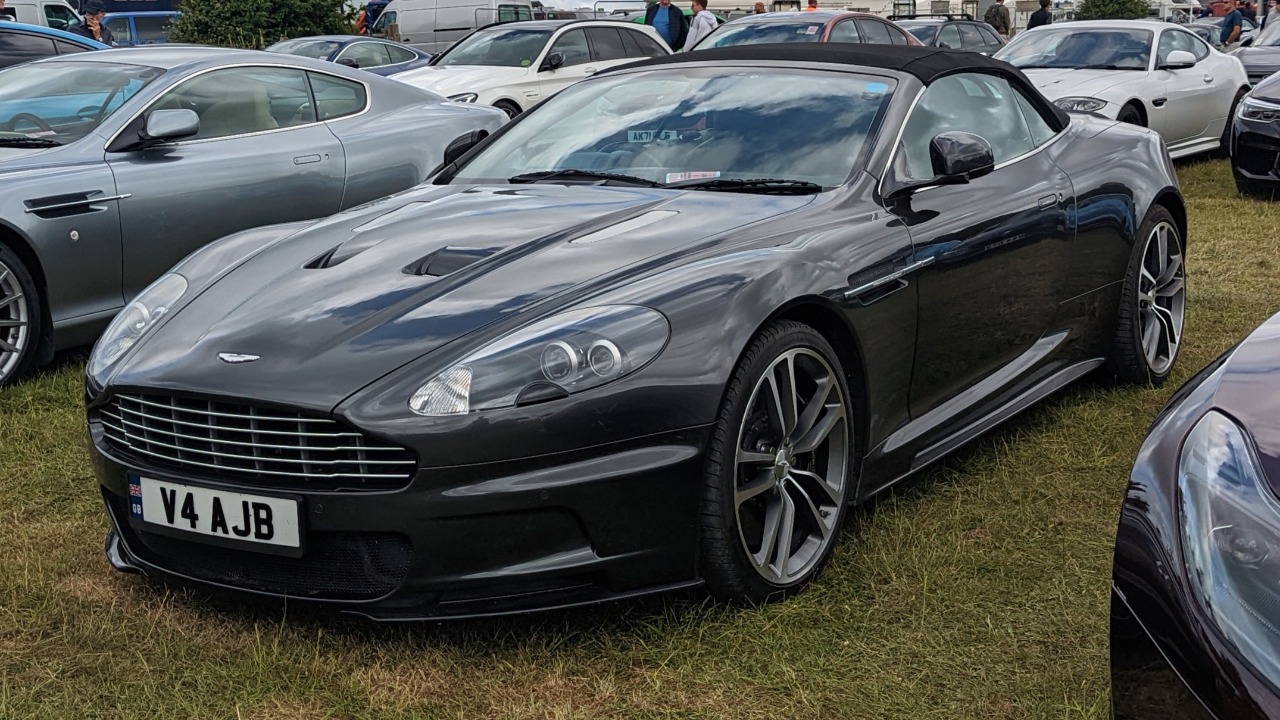
When the producers rebooted the series with Daniel Craig, they again turned to the DBS to signal a harder edged, more physical Bond. Before the road car even reached customers, the DBS appeared as James Bond’s car of choice in Casino Royale, Daniel Craig’s debut in the role. Aston Martin’s own model history notes that, before entering production, the DBS was already on screen with Craig in Casino Royale, a reminder that this car was engineered with cinematic heroics in mind as much as real world performance, and that the “Special Owner” in its story was always going to be James Bond.
The same generation of DBS then returned in Casino Royale tie in material and in Quantum of Solace, where it opened the film in a brutal chase that treated the car as both weapon and shield. Franchise focused sources describe the Aston Martin DBS as a recurring Bond car across Casino Royale, Quantum of Solace and Spectre, and even list it in the context of the game “007: First Light,” which underlines how deeply this model is embedded in the character’s modern image. That continuity helps explain why the DBS feels like more than a prop: it is the through line that connects Bond’s parkour chases and rooftop fights to the quiet moment when he simply walks to a car and drives away as if nothing can touch him.
From DBS to DBS Superleggera, a Super GT built for composure
The latest chapter in this story belongs to the DBS Superleggera, a car Aston Martin explicitly positions as a “Super GT” that takes the fight to the world’s most powerful grand tourers. In its own description of the model, the company says that, in the new DBS Superleggera, Aston Martin has a Super GT that is a breed apart, one that draws on much loved flagships from the past while pushing performance forward. That positioning is backed up by engineering details such as a lightweight bonded aluminium structure clad with carbon fibre body panels and an all alloy quad overhead camshaft V12, elements highlighted in the DBS Superleggera launch material.
A separate technical attachment on the same car underscores that lightweight focus, listing the bonded aluminium structure and carbon fibre panels as key to the DBS Superleggera’s character, and describing the all alloy components that help it deliver huge power without feeling blunt. That combination of structure and engine is not just about straight line speed, it is about the kind of stability that lets a driver place the car precisely at high velocity, the mechanical foundation for the calm that viewers associate with Bond level driving. When I look at those specifications in the Attachment, I see a manufacturer trying to engineer the same unflappable attitude that the films dramatise.
No Time To Die, Nomi and the DBS Superleggera on screen
The DBS Superleggera’s on screen moment arrived in No Time To Die, but in a twist that reflects the franchise’s evolution, it is not James Bond who spends the most time behind its wheel. Instead, the car is driven by fellow British secret agent Nomi, played by Lashana Lynch, who is introduced as a new “00” operating alongside Bond. Bond focused lifestyle reporting notes that Nomi drives a 2018 Aston Martin DBS Superleggera in No Time To Die, a casting choice for both actor and car that signals how the DBS has become shorthand for elite status within the fictional MI6 world.
The film itself, No Time to Die, leans on that symbolism by giving the DBS Superleggera some of its most striking modern screen time, even as the classic DB5 returns for nostalgia. At the same time, dealership level commentary on the car’s cabin points out that this model has earned a starring role alongside Daniel Craig in the latest Bond film and that the DBS Superleggera interior offers another world of highlights, from materials to technology, that support long distance confidence. Reading that description of the Superleggera interior, it is clear that the car’s real world luxury is part of the same equation that lets it look so composed when the script calls for a high speed extraction.
Confidence in motion: how the DBS actually drives
On paper, the DBS Superleggera’s performance figures are intimidating, but the way owners and retailers talk about it focuses on reassurance as much as raw numbers. One Canadian retailer describes the DBS Superleggera Volante with the phrase “Confidence in Motion, Safety in Abundance,” and notes that, while a bit heftier than the DB11 and DBS Superleggera due to its convertible structure, it still uses a 5.2 litre Twin Turbo V12 engine to deliver immense power. That framing in the Confidence overview is telling, because it treats the car’s speed as something that should feel secure and predictable, not wild.
That same balance between drama and control is what made earlier DBS models so effective on screen. Technical retrospectives on the Bond era DBS point out that it was the kind of engineering sophistication that separated Aston Martin from manufacturers that simply bolted big engines into their cars, and that this approach helped lift the DBS from merely excellent to genuinely iconic. When I read that assessment of engineering sophistication, it reinforces the idea that Bond level confidence is not a cinematic trick, but the natural byproduct of a chassis and drivetrain that were designed to keep their composure even when the driver is not easing off.
Investment, mythology and the cost of cool
The DBS’s Bond connection has also had a measurable impact on how the car is valued and discussed in the collector market. One detailed look at the model’s financial trajectory describes how James Bond’s Aston Martin DBS became the deal of the century, arguing that the investment potential of well chosen movie hero cars has turned some examples into automotive bargains of the century compared with their cultural impact. In that analysis of How James Bond, the DBS is treated not just as a fast car, but as an asset whose value is inseparable from the image of Bond stepping into it without breaking stride.
There is a darker side to that mythology, which surfaces in stories about the cars that did not survive filming. Bond lifestyle reporting recalls that, not only in the film, but also during the filming of Quantum of Solace, a driver wrecked a DBS by driving it into Lake Garda by accident while just delivering the car to the set. That anecdote about a DBS ending up in Lake Garda is a reminder that the serene image we see on screen is the product of real risk and real money, and that the confidence the car projects is hard won, both in engineering terms and in the logistics of putting it in front of a camera.
Why the DBS still feels like the ultimate Bond statement
Looking across the franchise, what stands out is how consistently the DBS has been used at moments when the filmmakers wanted to say something specific about Bond’s state of mind. In On Her Majesty’s Secret Service, the original DBS is there when Bond lets his guard down, and its presence in that final scene has become part of the car’s emotional baggage. Decades later, the DBS in Casino Royale and Quantum of Solace is the car of a more ruthless agent, but it still functions as a visual shorthand for a man who believes he can control any situation simply by stepping on the throttle.
By the time we reach No Time to Die, that confidence has been partially handed to Nomi, whose DBS Superleggera signals that she operates at the same rarefied level as Bond himself. The continuity from the 1969 DBS through the Daniel Craig era, and into the Super GT that now carries a new agent, explains why the DBS still feels like the ultimate Bond statement. It is not just the car he drives, it is the car that tells you, before a word of dialogue, that whoever is at the wheel believes they are going to get out alive.

Leave a Reply