
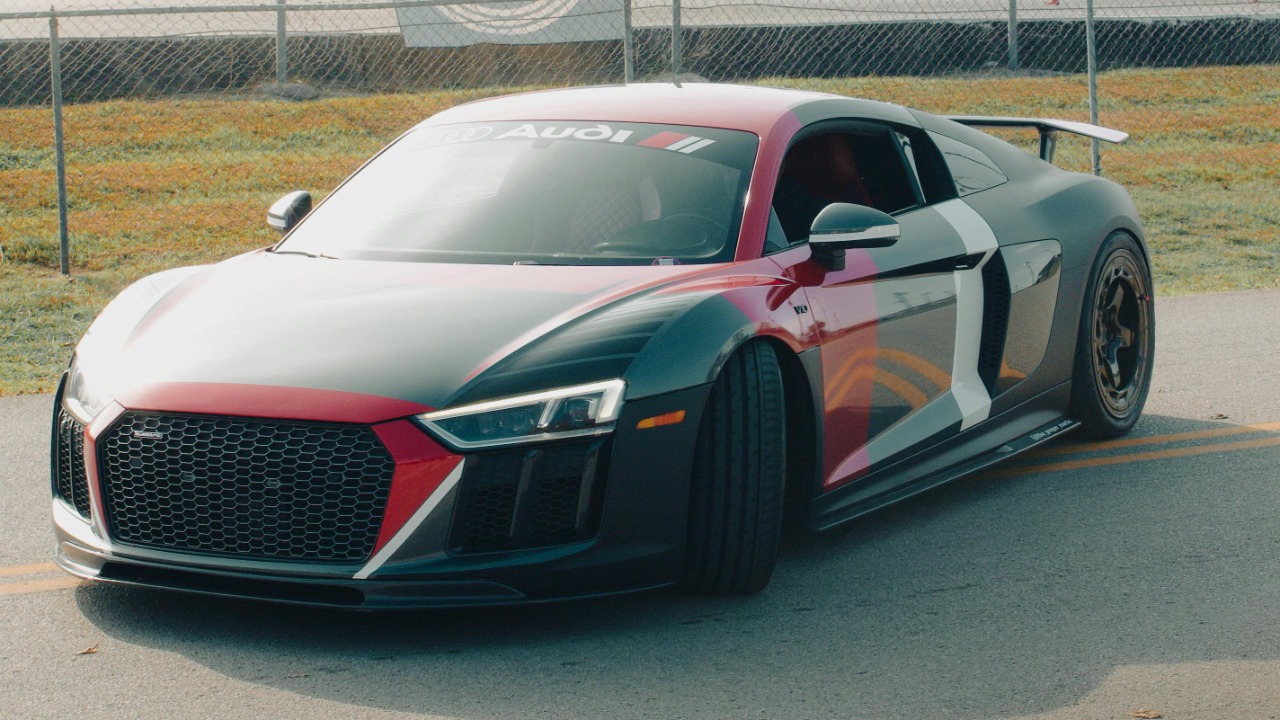
The Audi R8 V10 has always sounded like it was built to wake up a sleepy cul‑de‑sac, and that is exactly why it still matters in a supercar world drifting toward silence. Its naturally aspirated howl, paired with serious performance numbers, turns every tunnel and on‑ramp into a reminder of what an old‑school exotic is supposed to feel like. I want to unpack why this car’s voice, as much as its speed, has made it one of the defining performance machines of its era.
Underneath the drama, the R8’s V10 is a carefully engineered piece of hardware that connects road drivers to racing technology and to Audi’s own Le Mans history. That mix of everyday usability and race‑bred sound is what lets the R8 V10 scream like a supercar should without becoming a toy that only makes sense on a track.
The V10 that defines the R8’s character
At the heart of the R8’s appeal is a 5.2‑liter V10 that refuses to hide behind turbos or artificial soundtracks. Earlier V10 versions delivered 525 horsepower and spun to an 8,700 rpm redline, with the engine mounted in the middle of the car for optimal weight distribution, a layout that Audi itself highlights in its heritage overview of the R8’s FSI V10. That configuration is not just about lap times, it is about letting the engine’s voice sit right behind the driver’s head, turning every throttle input into a physical sensation.
Later R8s kept the same basic recipe but turned up the volume on performance. All R8 models in one key generation used a 5.2-liter V10, with 540 horsepower in the standard versions and 610 horsepower in the more aggressive trims, figures that underline how the engine evolved from strong to genuinely ferocious in both Coupe and Spyder form. That power, combined with the high‑revving nature of the unit, is what gives the R8 its signature crescendo, a sound that builds cleanly rather than exploding in one turbocharged rush.
From Le Mans DNA to everyday supercar
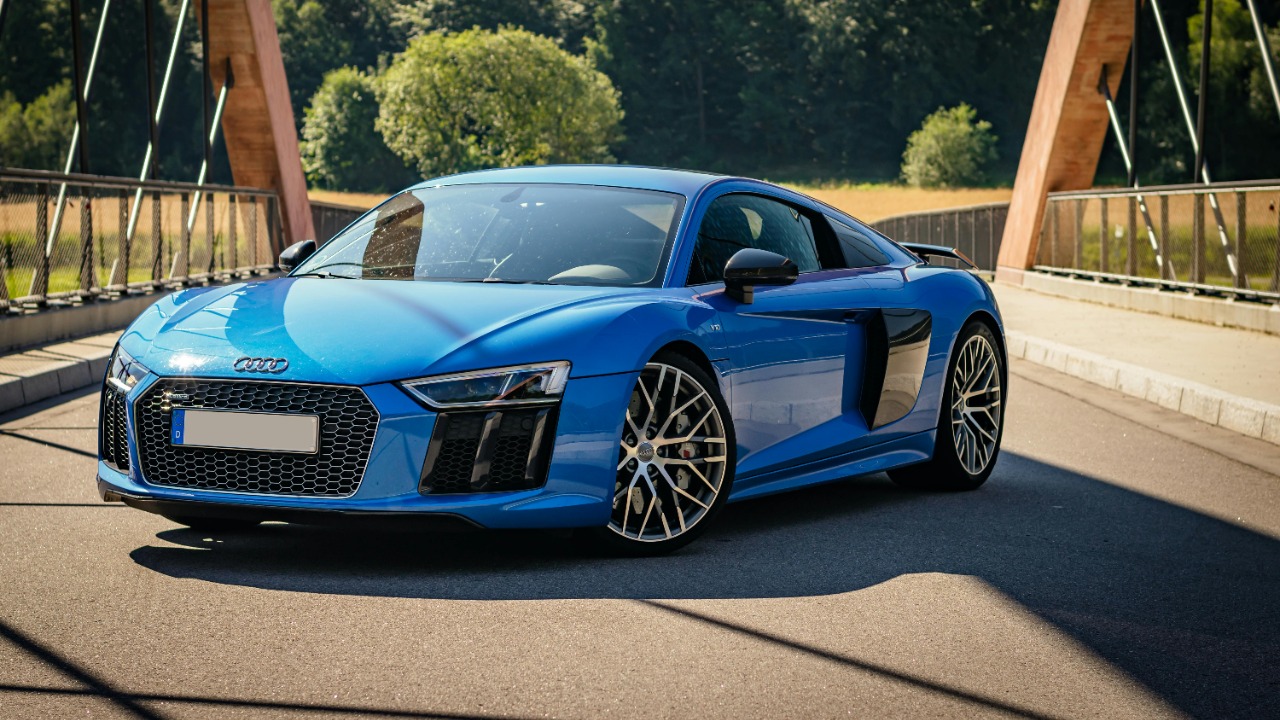
The R8 did not appear out of nowhere; it arrived as a road‑going expression of Audi’s long run of endurance racing success. When the first R8 was introduced in 2006, it brought a mid‑engine layout and Quattro all‑wheel drive that were explicitly linked to the brand’s Le Mans racing DNA, a connection that is spelled out in detail in an Audi Le Mans DNA explainer. That heritage matters because it explains why the car feels so composed when you lean on it, even as the V10 is shouting behind you.
Over time, the R8’s platform relationship with Lamborghini only deepened that motorsport‑infused character. Fast forward two generations and the R8 shared its basic architecture with the Lamborghini Huracan, a pairing that one track‑focused review describes as a natural evolution of the original concept, with the R8 still positioned as the more usable but no less thrilling sibling to the Lamborghini Huracan. That shared DNA helps explain why the R8’s steering, balance, and braking can keep up with its soundtrack, turning the noise into a promise the chassis can actually keep.
Numbers that back up the noise
For all the talk about emotion, the R8 V10’s performance figures are as serious as its soundtrack suggests. In one widely cited configuration, the 5.2L V10 delivers 600 horsepower, with the car sprinting from 0 to 60 in 3.6 seconds and running on to a 204 mph top speed, numbers that are laid out clearly in an Audi Performance breakdown. Those metrics put the R8 squarely in supercar territory, not just in terms of acceleration but also in sustained high‑speed capability.
Earlier in the car’s life, a 5.2-litre V10 with around 518 bhp was already enough to move the R8 up the credibility rankings, with one detailed supercar survey noting how that engine transformed the car’s image and delivered its power with a lightly silenced, nasally whoop that felt distinct from anything else in the segment, a point underscored in an Audi R8 V10 profile. When you combine those numbers with the mid‑engine balance and all‑wheel drive traction, the result is a car that can deploy its voice and its speed in equal measure.
The sound: from cold start to full scream
What sets the R8 V10 apart is how it sounds across the entire rev range, not just at full throttle. On cold start, the engine erupts into a sharp, metallic bark that quickly settles into a deep idle, a moment captured vividly in a clip that describes the Audi V10 as a V10 ENGINE that unleashes a symphony of power and precision, with a roaring redline and unmistakable growl that define its 10‑cylinder character, as highlighted in an Audi Unleashing ENGINE reel. That initial flare is not just theater; it sets the tone for how the car communicates every time you twist the key or press the starter button.
Out on the road, the R8’s voice becomes more layered. A detailed car‑of‑the‑year assessment described the R8’s howling V10 as the key to its appeal, calling it a shining beacon of an atmo engine at its best and noting how the exhaust button unlocks an extra layer of crackles and hard‑edged noises that make the car feel alive, a description that captures the essence of the Key Audi experience. That combination of mechanical whine, intake roar, and exhaust thunder is what turns a simple acceleration run into something that feels like a small‑scale track session.
Why the V10 still matters in a turbo world
In an era dominated by turbocharged and electrified performance cars, Audi’s persistence in sticking with a large capacity, naturally aspirated V10 gave the R8 a clear point of differentiation. One influential review framed this as a deliberate choice that set the car apart from its rivals, describing the V10 as a hands‑down stunning engine that anchors the entire driving experience, a sentiment that captures why the Jun Audi perspective matters. By refusing to chase low‑rpm torque at the expense of character, the R8 kept alive a style of performance that is rapidly disappearing.
That decision also shaped how the car is perceived among enthusiasts. A deep‑dive exploration of the model’s place in the market described the Audi R8 as an underrated supercar that blends exotic looks with real‑world usability, arguing that its V10 and all‑wheel drive system make it one of the most approachable ways to enter the supercar market, a point that reinforces the idea of the The Allure of the Audi. In other words, the R8’s engine is not just a party trick; it is central to how the car balances drama with day‑to‑day livability.
Living with a screaming V10
For owners, the question is not only whether the R8 V10 sounds good, but whether that drama works in real life. In one detailed Comments Section discussion, a very happy owner of a post‑facelift Gen1 V10 from 2014 with a DCT gearbox describes using the car for fun weekend drives and emphasizes how the engine’s character makes every outing feel special, a perspective that shows how the Nov Comments Section DCT experience translates beyond spec sheets. That kind of testimony underlines the point that the R8’s sound is not just impressive in isolation; it is something owners build rituals around.
Official specifications back up that sense of usability. Technical data for the 2023 R8 Coupe, including the updated R8 and the limited R8 V10 Decennium, show how Audi has continued to refine the package with incremental changes to power delivery, gearing, and chassis tuning, all while keeping the core V10 layout intact, details that are laid out in the Technical Specifications Audi Updated Decennium. That continuity means the R8 can be driven to work during the week and still feel like a full‑blown supercar when the road opens up.
How the aftermarket turns the volume up
For some drivers, the factory soundtrack is only the starting point. The aftermarket has responded with exhaust systems that promise to unlock even more of the V10’s voice, including stainless steel valved catback setups for pre‑facelift R8 V10 models that are marketed as delivering the best sound in the market and giving the car the voice it deserves, as one detailed Item Audi description puts it. These systems typically add more volume, sharper crackles on overrun, and a more aggressive tone at high rpm.
Track‑focused experiences have also leaned into the R8’s sound as a selling point. One program that puts drivers behind the wheel of the latest R8 V10 Performance in controlled environments highlights how the car, still based on the Lamborghini Huracan platform, delivers an all‑wheel‑drive launch and high‑rpm scream that few Lamborghinis can claim to match in terms of accessibility, a point that reinforces the Oct Fast Lamborghini Huracan From the narrative. For many drivers, those sessions are the first and only time they will experience a V10 at full song, which only adds to the engine’s mystique.
Marketing a supercar with sound alone
Automakers have not been shy about using the R8’s voice as a marketing tool. One campaign leaned on the idea that the car could be sold with sound alone, emphasizing how the mid‑engine layout, Quattro system, and Le Mans racing DNA all converge in the R8’s exhaust note, a story that is laid out in detail in an Nov Audi Le Mans DNA Quattro feature. The message is simple: hear this car once, and you will not forget it.
That approach aligns with broader descriptions of the R8 as a masterpiece of automotive engineering, where the V10 engine dynamics are said to deliver a visceral experience that rivals those of Formula One cars, a comparison that appears in a detailed Nov Engine Dynam overview. By framing the R8’s sound as a kind of accessible motorsport, Audi has turned the car’s voice into a brand asset in its own right.
Why the R8 V10’s scream still resonates
After spending time with the R8 V10 in different contexts, from road drives to track sessions, I keep coming back to how coherently its sound matches its mission. A detailed exploration of the model’s evolution describes The Audi R8 as a comprehensive blend of powerful engine, innovative design, and everyday usability, arguing that this mix is what makes The Allure of the Audi so enduring in a crowded supercar field, a point that is captured in the Nov The Allure of the Audi Comprehensive Exploration The Audi analysis. The V10’s scream is not an add‑on; it is the organizing principle around which the rest of the car is built.
That is why, even as the industry moves toward quieter, more efficient powertrains, the R8 V10 still feels relevant. Whether it is being introduced to new audiences in beautiful Vancouver Canada and featured as the star of a 2020 Audi R8 V10 Performance review, or celebrated in short clips that focus purely on its cold starts and fly‑bys, the car continues to be presented as a sensory experience first and a spec sheet second, a pattern that shows up clearly in a widely shared Vancouver Canada and Audi video. In a world where performance is increasingly measured in silence, the R8 V10’s willingness to raise its voice might be its most enduring legacy.

Leave a Reply