The Ferrari 812 Superfast arrives with a name that sounds like marketing bravado, yet the car itself feels almost conservative compared with what it can actually do. It is a front-engined grand tourer that behaves like a track weapon, a luxury coupe that still worships at the altar of a naturally aspirated V12, and one of the few modern supercars that genuinely lives up to every promise implied by its badge.
In an era of downsizing and electrification, the 812 is not just fast, it is defiantly old school in all the right ways. From its towering power figures to its unconventional controls and ferocious soundtrack, it delivers the kind of drama that spec sheets hint at but rarely capture, and it does so with a level of polish that keeps it usable on real roads as well as on perfect tarmac.
The last great front‑engined V12 feels inevitable, not fragile
The core of the Ferrari 812 Superfast experience is its engine, a 6,496 cc (6.5 L) F140 GA V12 that builds on the 6.3-litre unit from the F12berlinetta and turns it into something even more unfiltered. On paper, that displacement and layout sound like a throwback, but in practice the way this V12 revs, responds and keeps pulling deep into the tachometer makes it feel like the logical endpoint of decades of Ferrari powertrain development rather than a nostalgic detour, a point underscored by the detailed specifications of the Superfast.
From behind the wheel, that engine does not just dominate the car, it defines its character, with throttle response that feels instant and a crescendo that encourages you to chase the redline instead of short-shifting. Drivers of the 812 Superfast are drawn to this powerplant as its coolest feature, and the way it delivers performance without forced induction is exactly why enthusiasts still gravitate to this naturally aspirated layout.
A soundtrack that makes the performance feel even more surreal
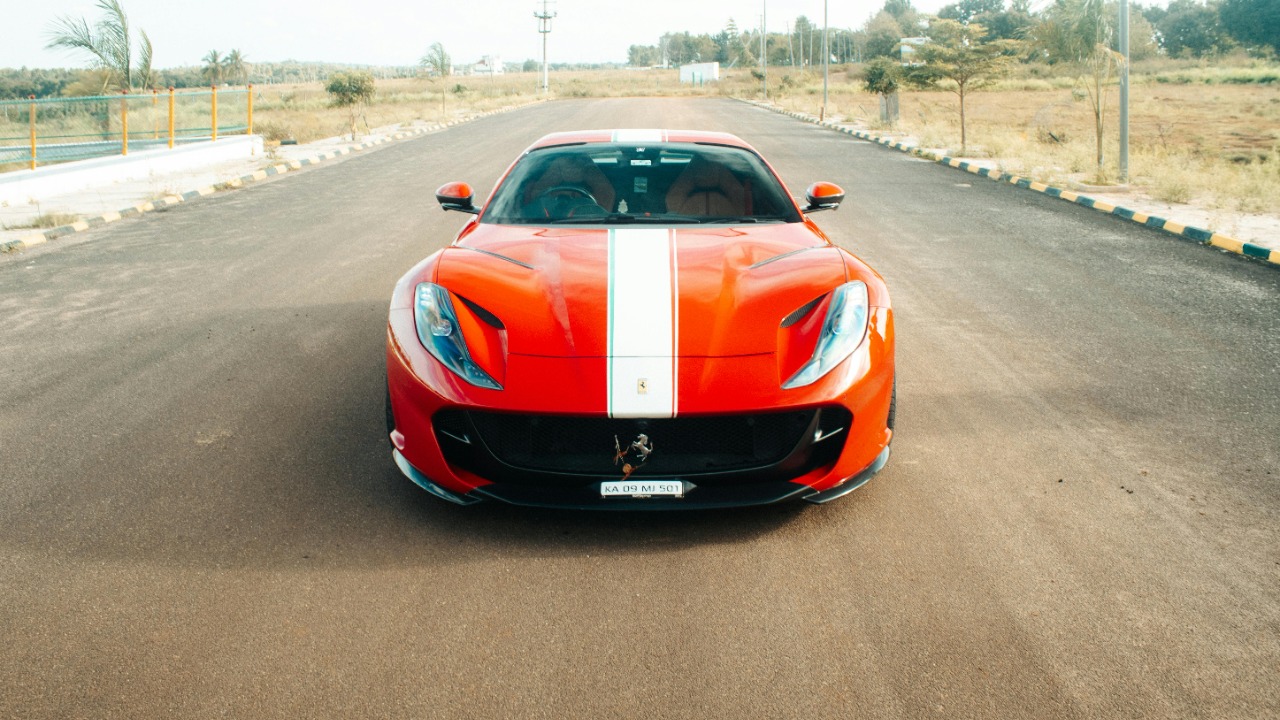
Numbers only tell part of the story, because the 812’s V12 is as much an instrument as it is an engine. Under load it produces a layered sound that starts with a deep bass note and climbs into a metallic wail, and that progression is what turns a simple straight-line run into an event. Testers who have pushed the car hard describe it as both a warning and an invitation, a soundtrack that constantly reminds you how quickly you are covering ground in a car that is approaching two tons, a balance captured in detailed impressions of the 6.5-liter V12.
That sound matters even more because the 812 sits in a shrinking group of cars that still rely on big, naturally aspirated engines instead of turbochargers or electric assistance. In a world marching toward silence and sustainability, the Ferrari 812 Superfast is already being framed as one of the last of a dying breed, a car whose noise and character are part of its cultural value as much as its performance, a status reflected in enthusiasts’ descriptions of The Ferrari 812 Superfast as a symbol of that fading era.
Unconventional controls that reward commitment
Living with the 812 reveals a cockpit that refuses to copy the minimalist, screen-heavy layouts of newer rivals. The steering wheel is crowded with switches, the indicator controls are not where most drivers expect them to be, and the learning curve is steeper than in many other grand tourers. Yet once I adapt, those quirks become part of the appeal, because they make the car feel like a focused tool rather than a generic luxury product, a view that aligns with assessments that list “The Controls Are Unconventional But Fun” among the reasons Here is Why The Ferrari 812 Is The Best Ferrari On The Road Today.
That same philosophy extends to the way the chassis electronics are tuned, with systems that step in to support you rather than smother the experience. The electric power steering, rear-wheel steering and stability controls are calibrated so that the car feels agile and alive without becoming nervous, and when I lean on them, the 812 shrinks around me instead of feeling like a big GT that is out of its depth. This balance between assistance and involvement is a key reason the 812 is often singled out as one of the most stunning models ever seen in its segment, and it helps explain why its unconventional interface ends up feeling intuitive once you commit to it.
Performance that matches the nameplate, lap after lap
On a fast road or circuit, the 812 backs up its dramatic name with relentless pace that does not fade when the novelty wears off. Independent testing has shown that the car accelerates with a ferocity that puts it among the quickest front-engined machines ever built, and that it can repeat those efforts without feeling strained or fragile. One early evaluation even nicknamed it the 812 Stoopidfast, a nod to how completely it delivers on its promise of speed, with tester Chris Walton using that phrase to capture how the car behaves when pushed to its limits, as detailed in a first test that dubbed it the 812 Stoopidfast.
What stands out in those hard-driving scenarios is not just the raw acceleration but the way the 812 keeps its composure as speeds climb. The aerodynamics, suspension tuning and electronic aids work together so that the car feels planted even when the V12 is deep into its power band, and the brakes and gearbox are clearly engineered to cope with repeated high-speed use. That consistency is why the 812 is often described as exactly what it claims to be, a machine that can turn its headline figures into real-world performance without drama, provided the driver respects the pace it can generate.
A grand tourer that still feels like a thoroughbred
Despite its track-ready performance, the 812 is still a front-engined GT at heart, which means it has to cover distance as convincingly as it demolishes straights. The cabin offers real space for two adults and their luggage, the ride is firm but not punishing in its softer modes, and the car can settle into a relaxed cruise when the road and mood demand it. That dual personality is central to its appeal, and it is why detailed model overviews present the Ferrari 812 Superfast as a car that can serve as both long-distance companion and weekend toy.
At the same time, the 812 does not pretend to be a detached luxury coupe, and that honesty is part of what makes it compelling. Over a long day, the steering weight, engine noise and constant sense of potential can be tiring, but they also remind you that you are driving something closer to a race car than a limousine. That trade-off is reflected in more focused drive reports that describe the 812 as one of the best engines of all time wrapped in a package that still demands attention from its driver, a combination that keeps it from ever feeling anonymous or generic.
How it stacks up against a new generation of supercars
The 812 does not exist in a vacuum, and its relevance becomes even clearer when you set it alongside the latest wave of mid-engined and hybrid rivals. Cars like the McLaren 750S, Lamborghini Revuelto and Aston Martin DB12 lean heavily on turbocharging or electrification to deliver their numbers, while the Ferrari sticks with displacement and revs, a contrast that is highlighted in comparisons that list these models as direct Rivals to the 812 Superfast.
From behind the wheel, that difference in philosophy is obvious. The newer hybrid flagships deliver instant torque and staggering acceleration, but they often filter the experience through layers of sound insulation and electric assistance, while the 812 feels more mechanical and transparent in how it communicates grip and power. That is why some commentators argue that the 812 is still the best Ferrari on the road today, and why its mix of naturally aspirated power, rear-wheel drive and front-engined balance continues to resonate even as the rest of the segment moves toward complex drivetrains and heavier curb weights.
A swan song that still feels very much alive
There is an unavoidable sense of finality around the 812, because it arrives at a time when big-capacity, naturally aspirated engines are being phased out in favor of cleaner, more efficient solutions. Yet when I drive it, the car itself does not feel like a museum piece or a farewell tour, it feels current, sharp and fully capable of standing up to modern expectations of speed and usability. That tension between its likely status as a swan song and its very real everyday competence is captured in long-term impressions that describe it as the sweetest-sounding expression of a layout that may not return, a theme explored in a detailed engine test drive.
Even as the industry pivots, the 812 continues to be evaluated and refined, with updates and special versions keeping it in the conversation among current supercars rather than relegating it to instant-classic status. Enthusiast reviews still frame it as a benchmark for naturally aspirated performance, and broader analyses of the model family underline how it remains a core part of Ferrari’s identity alongside newer, more complex offerings, a position reinforced by ongoing coverage of the 789 bhp GT and its place in the brand’s modern lineup.