

The race for future auto market share is no longer a simple contest of who can sell the most sedans or pickups. It is a high‑stakes reshuffle driven by electric platforms, software, and supply chains that look more like consumer electronics than old‑line manufacturing. Looking ahead to 2026, I see a small group of automakers positioned to convert today’s investments into meaningful share gains while many rivals are still wrestling with legacy costs and uneven demand.
Based on current product pipelines, capital spending, and regional momentum, four names stand out as the most likely to grow their slice of the global market: Tesla, BYD, Hyundai Motor Group (Hyundai and Kia), and Stellantis. Each is approaching the transition from a different angle, but all four have credible paths to add volume and pricing power as the industry leans harder into electrification and software‑defined vehicles.
Tesla: Software margins and a lean cost base
Tesla enters the 2026 window with a structural advantage that many incumbents are still trying to copy: a cost base and software stack built from the ground up for electric vehicles. The company has already shown that it can use price cuts tactically to defend volume while still generating double‑digit operating margins in strong quarters, a flexibility that matters as EV demand swings between surges and plateaus. With a global manufacturing footprint that includes large plants in the United States, China, and Europe, Tesla can shift output between regions and models more quickly than rivals that are still ramping their first dedicated EV platforms.
That operating model is increasingly tied to software and services, from its in‑house infotainment system to driver‑assistance features that can be unlocked over the air. As more of the fleet becomes capable of receiving paid upgrades, Tesla has the potential to layer recurring revenue on top of vehicle sales, a dynamic that can support aggressive pricing without sacrificing profitability. The company’s continued investment in its proprietary charging network and in‑house battery technology further reinforces its ecosystem, making it harder for customers to switch once they are in the fold and giving Tesla a credible path to defend and expand its market share as EV penetration rises.
BYD: Vertical integration and emerging‑market scale
BYD is the clearest example of how vertical integration can turn into market share in a world where batteries are the new combustion engines. The company designs and manufactures its own battery cells, power electronics, and many core components, which allows it to control costs and reduce exposure to external supply shocks. That structure has already enabled BYD to offer a wide range of plug‑in hybrids and battery‑electric models at price points that undercut many global rivals, particularly in compact and mid‑size segments where affordability is critical.
BYD’s growth is no longer confined to China. The company has been pushing into Europe, Latin America, and parts of Asia with models tailored to local tastes, often pairing competitive pricing with generous equipment levels. Its ability to ship complete vehicles and, in some cases, consider local assembly gives it flexibility as trade policies and tariffs evolve. If BYD can maintain its cost advantage while navigating regulatory scrutiny in key export markets, its combination of scale at home and expansion abroad positions it to capture additional global share by 2026, especially in markets where established brands have been slow to bring compelling EVs below the premium price tier.
Hyundai and Kia: Fast‑moving challengers with global reach
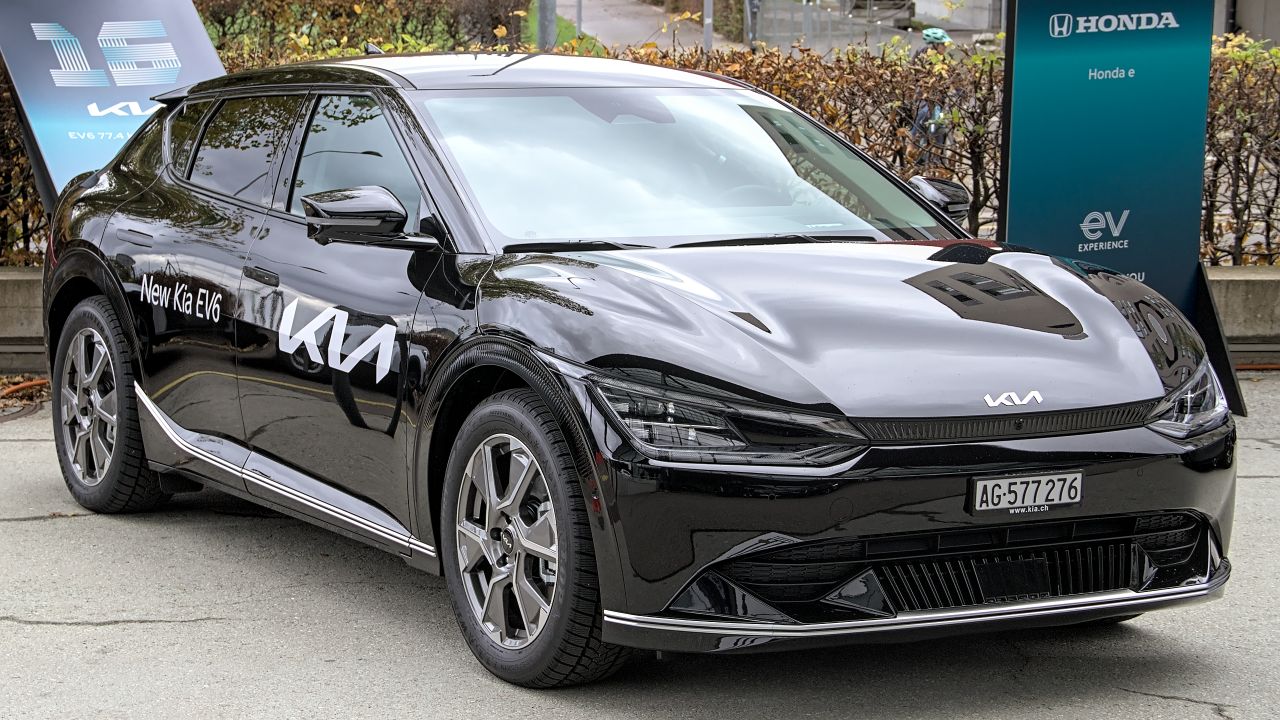
Hyundai Motor Group, which includes Hyundai and Kia, has quietly built one of the most competitive EV lineups outside of the pure‑play manufacturers. Its E‑GMP platform underpins vehicles like the Hyundai Ioniq 5 and Kia EV6, which have earned strong reviews for efficiency, charging speed, and design. Because the group can spread development costs across multiple brands and body styles, it can move quickly into new segments, from crossovers to performance‑oriented models, without starting from scratch each time.
At the same time, Hyundai and Kia have not abandoned the bread‑and‑butter internal combustion and hybrid segments that still account for the majority of global sales. Instead, they are using those volumes to fund a rapid EV rollout while maintaining dealer relationships and brand recognition in markets such as the United States, Europe, and India. That dual‑track strategy, combined with a reputation for value and long warranties, gives the group a realistic path to win share from slower‑moving Japanese rivals and from Western incumbents that are more concentrated in premium price bands. By 2026, I expect Hyundai and Kia to be among the most visible “bridge” brands for buyers moving from gasoline to electric for the first time.
Stellantis: Aggressive electrification and brand portfolio leverage
Stellantis, the parent of brands such as Jeep, Peugeot, Fiat, and Ram, is often perceived as a latecomer to electrification, but its recent strategy suggests it could be one of the more surprising share gainers by 2026. The company has committed significant capital to dedicated EV platforms that can be shared across multiple brands and regions, allowing it to update lineups quickly without bespoke engineering for each nameplate. In Europe, where emissions rules are tightening, Stellantis has already begun rolling out electric versions of core models under brands like Peugeot and Opel, positioning itself to retain customers who might otherwise defect to newer EV‑focused entrants.
In North America, Stellantis is leaning on its strength in trucks and SUVs, preparing electric and plug‑in variants of high‑volume models under the Jeep and Ram badges. If those vehicles can deliver credible towing, range, and charging performance while tapping into existing brand loyalty, Stellantis has a chance to defend its base and pick up share from competitors that are slower to electrify their utility and pickup portfolios. The company’s broad geographic footprint, from Europe to Latin America, gives it additional levers to balance demand and allocate production as different regions move toward electrification at different speeds.
Why these four are better positioned than the rest
What unites Tesla, BYD, Hyundai Motor Group, and Stellantis is not a single technology or business model, but a shared willingness to commit early and heavily to the transition while keeping a tight grip on costs. Each has either built or is rapidly scaling dedicated EV platforms, secured access to batteries, and invested in software capabilities that turn cars into updatable products rather than static hardware. That combination is critical as the industry moves into a phase where EV adoption will depend less on early adopters and more on mainstream buyers who expect competitive pricing, reliability, and a smooth ownership experience.
By contrast, several other large automakers are still straddling the line between legacy architectures and future platforms, which can dilute capital and slow decision‑making. Some are heavily exposed to segments or regions where regulatory pressure is rising faster than their product plans, while others face internal constraints from labor costs or underutilized factories. None of that rules out a late surge from a rival, but based on current trajectories, I see Tesla, BYD, Hyundai and Kia, and Stellantis as the four manufacturers with the clearest, most actionable paths to expand their global market presence by 2026.


Leave a Reply