
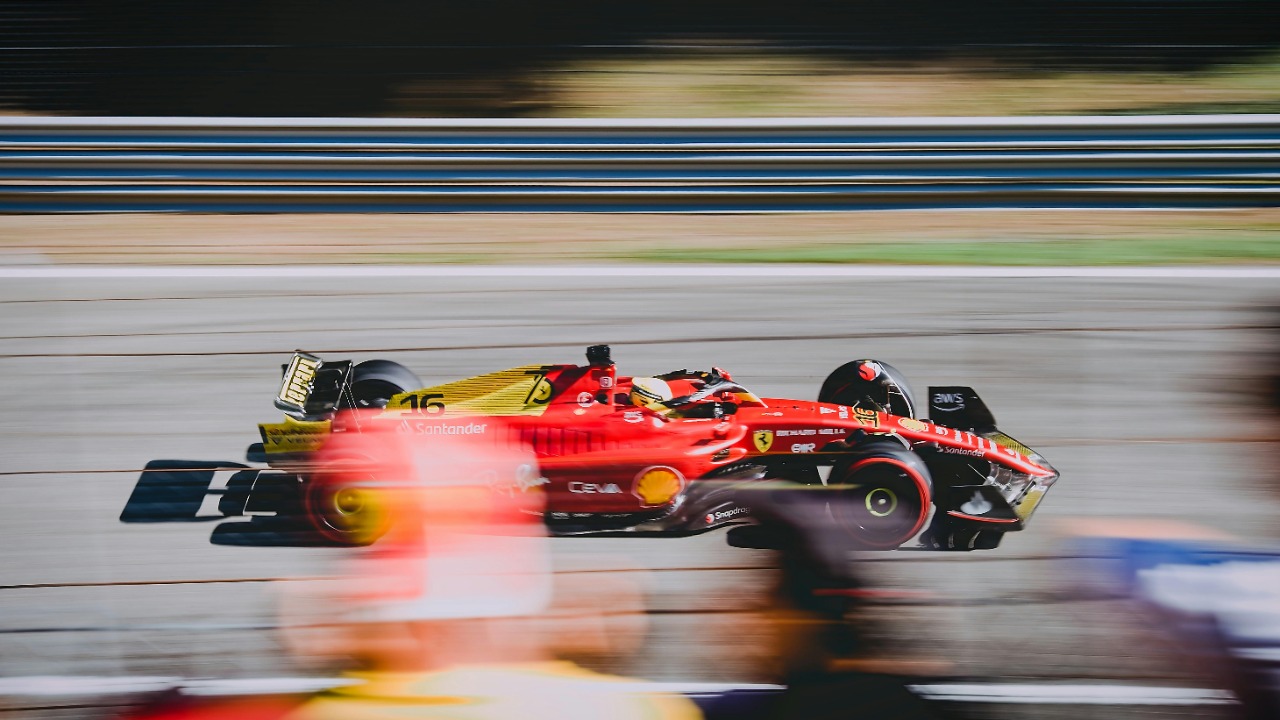
The collision of eras between Lewis Hamilton and Max Verstappen did more than decide a Formula 1 title. It carved a fault line through the sport, forcing fans, teams and officials to pick sides on what racing at the limit should really look like. The fallout from that season-long confrontation still shapes how every hard move, steward decision and championship narrative is judged today.
At its core, the split came from two drivers with contrasting styles and legacies colliding in a year when the margins were microscopic and the stakes could not have been higher. One was a multiple world champion chasing history, the other a rising force determined to rip that history out of his hands, and the way their fight escalated turned a sporting rivalry into a cultural divide inside the paddock and beyond.
The respectful duel that hardened into a generational clash
The story of Hamilton versus Verstappen did not begin with animosity. Early in 2021, their wheel-to-wheel fights in Bahrain and Imola looked like the purest expression of elite racecraft, with Max Verstappen and Lewis Hamilton trading wins and setting the tone for a season that felt like a passing of the torch without open hostility. The opening rounds in Bahrain and Imola framed a narrative of mutual respect, as the new regulations loomed and both drivers appeared focused on performance rather than politics, a balance captured in detailed breakdowns of How Hamilton and Verstappen.
That tone shifted as the year progressed and the stakes sharpened. What began as a respectful duel evolved into what many saw as a generational battle, with Hamilton’s established dominance challenged by Verstappen’s uncompromising aggression, a dynamic that analysts argued gave their rivalry the potential to be one of the greatest in the sport’s history. The pair battled on track repeatedly, often deciding races in direct combat, and their contrasting approaches to risk and racecraft fed the idea that this was not just another title fight but a clash of eras, a view underlined in assessments of HAMILTON VS VERSTAPPEN.
Flashpoints that turned a rivalry into a feud
The turning point from rivalry to feud came through a series of violent flashpoints that forced everyone watching to decide where they stood. Silverstone was the first major fracture, when Hamilton and Verstappen collided at high speed as they fought for the lead, sending the Red Bull into the barriers and to hospital checks while Hamilton recovered to win, an escalation that many saw as the moment the relationship truly soured and that was later described as Where the rivalry really ignited. The debate over who was at fault became a proxy war over whether Hamilton’s move was a legitimate attempt at a pass or an unacceptable risk against a title rival, a question that analysts explored in depth when asking Who was to blame.
Monza then flipped the script, with Verstappen’s car ending up on top of Hamilton’s Mercedes after both refused to yield at the chicane, a clash that led stewards to conclude that Max Verstappen was predominantly at fault and to issue a grid penalty, a decision dissected in explanations of Why the stewards blamed Max Verstappen over Lewis Hamilton. By the time the title fight reached Saudi Arabia, the pattern of collisions and near-misses had hardened perceptions, and when Max Verstappen was told to let Lewis Hamilton past and then slowed in front of him, leading to Hamilton hitting the back of the Red Bull, the subsequent penalty for Verstappen only deepened the sense that every incident was now a referendum on driving standards, a controversy captured in coverage of how Max Verstappen was penalised for causing Lewis Hamilton a collision.
Abu Dhabi and the night the sport tore itself in two
All of that history fed into Abu Dhabi, where Hamilton and Verstappen arrived level on points and the season came down to a single race that should have been a straightforward coronation but instead became one of the most chaotic and controversial finales in Formula 1 history. Hamilton controlled the race until a late Safety Car and a contentious restart procedure allowed Verstappen, on fresher tyres, to attack on the final lap, a sequence that left many arguing over whether the rules had been applied consistently and that has been dissected in detail in efforts at EXPLAINED Understanding one of the most chaotic, controversial title showdowns in F1 history. The image of Max Verstappen passing Lewis Hamilton on that final lap to become champion, with the Mercedes camp stunned and the Red Bull garage erupting, instantly became a symbol of the split, a moment relived in accounts of how Max Verstappen passes Lewis Hamilton in Abu Dhabi.
What followed was not just sporting disappointment but institutional fallout. With neither driver wanting to back down in their on-track fights, the season had already pushed the limits of what stewards would tolerate, and Abu Dhabi’s decisions triggered formal protests and an unsuccessful appeal by Mercedes, a process that highlighted how the governing body’s choices could decide not only races but reputations, as detailed in analysis of how the FIA and Mercedes appealed unsuccessfully. For Verstappen supporters, the finale confirmed a season of supreme performances that justified his title, while Hamilton’s fans saw a champion denied by procedural chaos, a divide that was reinforced by video breakdowns of the Formula 1 title win in Abu Dhabi that referred to Maxwell Stappen and Lewis Hami in recounting the controversy.
Driving styles, stewarding and the ethics of hard racing
Beneath the headlines, the feud exposed a deeper argument about what constitutes fair aggression in modern Formula 1. Verstappen’s approach, often described as uncompromising and rooted in late-braking, elbows-out moves, forced Hamilton and the stewards to respond, and several key incidents led officials to conclude that Max Verstappen had overstepped the line, including the Monza clash where his car was judged to have been predominantly to blame, a reasoning unpacked in detailed explanations of Why did Verstappen get a penalty. At the same time, Hamilton’s willingness to hold his ground at high speed, as at Silverstone, raised its own questions about how much risk a champion should accept when racing a rival who rarely yields, a tension that was central to the debate over whether he was really to blame for their British Grand Prix collision, a debate captured in the analysis of was forced to back out.
Stewards found themselves refereeing not just isolated incidents but a season-long pattern, and their calls fed the perception that the rulebook was being stretched in real time to contain a rivalry that kept testing its limits. Later reflections on the 2021 campaign have described how Hamilton and Verstappen collided three times in that title fight and clashed in a number of other flashpoints, a record that shaped how officials and rivals viewed Verstappen’s subsequent moves, including criticism that he overstepped in Mexico, as noted in reviews of how Hamilton and Verstappen had already set a combative template. For many fans, the pattern of penalties, warnings and investigations became as much a part of the story as the racing itself, and the sense that stewarding decisions could tilt the balance only deepened the emotional investment on both sides.
A rivalry that still defines how F1 sees itself
Even as the competitive balance has shifted since 2021, the Hamilton and Verstappen saga continues to frame how Formula 1 understands its own identity. Analysts have argued that their duel showcased supreme performances from both drivers, with Hamilton delivering some of his finest drives under pressure and Verstappen rising to the occasion with relentless pace and racecraft, a level of excellence that underpins arguments about why their contest ranks among the sport’s all-time great rivalries, as explored in reflections that begin with However the stewards found Verstappen predominantly to blame in one key clash. The sense that this was a generational confrontation, with HAMILTON and VERSTAPPEN trading roles as hunter and hunted, has led many to suggest that their rivalry has the potential to stand alongside the sport’s most storied duels, a view reinforced in commentary on At times, Verstappen and Hamilton swapping predator and prey.
The numbers from that season tell their own story of how relentlessly the fight ebbed and flowed. Verstappen nailed the first triple-header to build a points lead, only for Hamilton to respond in the closing stretch, leaving them level heading into Abu Dhabi after a year in which every mistake and steward decision felt magnified, a swing captured in statistical reviews that note how Verstappen’s tally compared with Hamilton’s 177 points at one stage of the campaign, as set out in the section on how Verstappen nailed the first triple. Later season reviews have revisited those statistics and storylines to argue that the year was as much about psychology and momentum as raw speed, a perspective echoed in the 2021 F1 Season Review that framed Hamilton v Verstappen as the defining narrative of that era.
Looking back now, I see the feud not as a single explosion in Abu Dhabi but as the cumulative result of a season where every marginal call, every defensive move and every steward’s note layered tension on top of tension. The way the sport still revisits Silverstone, Monza, Saudi Arabia and Abu Dhabi, through detailed explainers, stewarding analyses and long-form season retrospectives, shows how deeply the Hamilton and Verstappen battle cut into Formula 1’s sense of fairness and spectacle. It remains the benchmark against which new rivalries are measured, a reminder that when two drivers of that calibre collide, they do not just fight for a title, they reshape the sport around them, a reality captured in the many attempts to explain Why the stewards blamed Max Verstappen over Lewis Hamilton and in the continuing debate over how hard is too hard when everything is on the line.




Leave a Reply