The Lotus Esprit Turbo arrived in an era dominated by big-displacement Italian exotics, yet it relied on lightness, sharp engineering and a stubbornly individual character to compete far above its spec sheet. Rather than chasing cylinder counts, it proved that a focused chassis and a clever turbocharged four could trouble the establishment and turn a niche British coupe into a cult supercar. I see the Esprit Turbo as the clearest expression of how a small manufacturer could out-think, rather than out-muscle, its rivals.
The lightweight philosophy that shaped a giant killer
The Esprit Turbo’s ability to challenge heavier, more powerful rivals starts with the philosophy that shaped Lotus itself. Colin Chapman built the company on a simple idea, “Simplify, then add lightness,” and that mindset filtered into every major model that followed. Instead of treating weight as an unavoidable consequence of performance, Chapman treated it as the enemy, and the Esprit Turbo inherited that obsession with low mass and agility. That is why the car could deliver supercar pace and drama without the huge engines that defined its contemporaries.
Chapman’s approach to engineering, which guided Lotus (Lotus cars) from its earliest days, prioritized minimal mass, razor sharp handling and an unfiltered driving feel, a combination that still defines the brand in modern cars like the Emeya R that are explicitly rooted in the same “Simplify, then add lightness” mantra from Colin Chapman. By the time the Esprit Turbo matured in the late 1980s, that philosophy meant the car could rely on a turbocharged four cylinder and still feel every bit as intense as the multi cylinder supercars it lined up against. The result was a machine that did not need headline power figures to feel special, because its core engineering made every input count.
Design that looked like the future and drove like a weapon
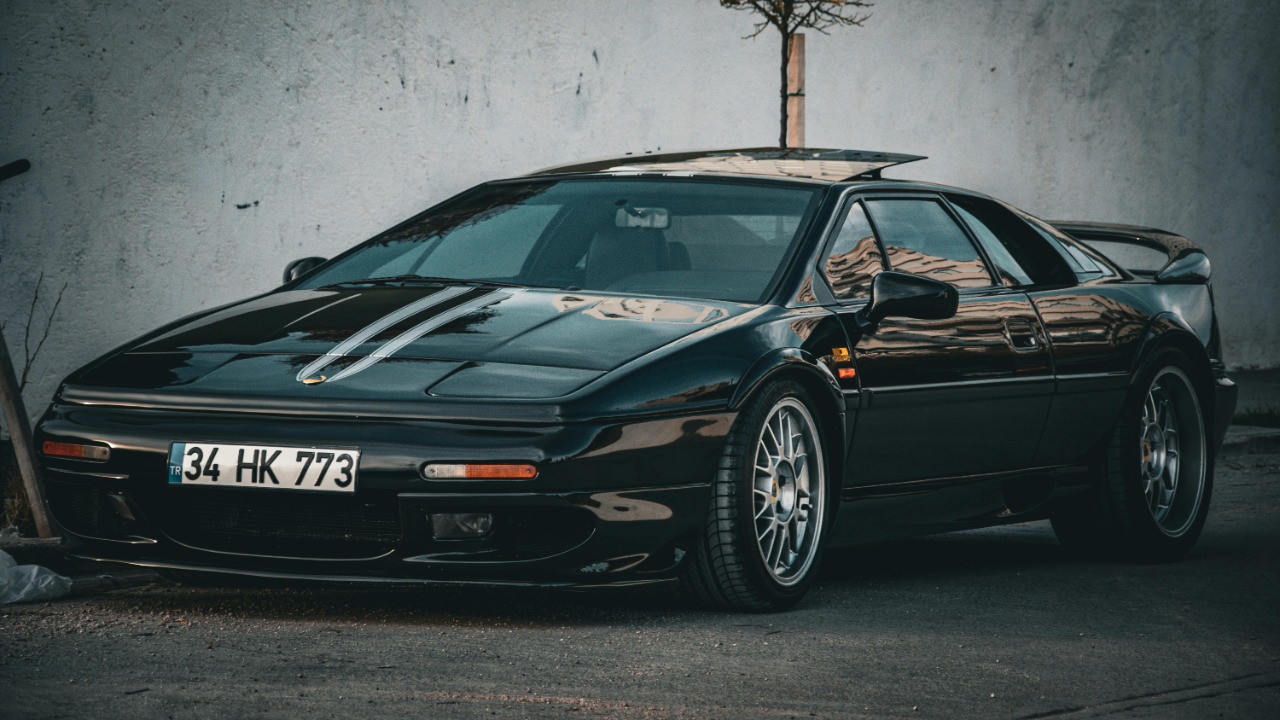
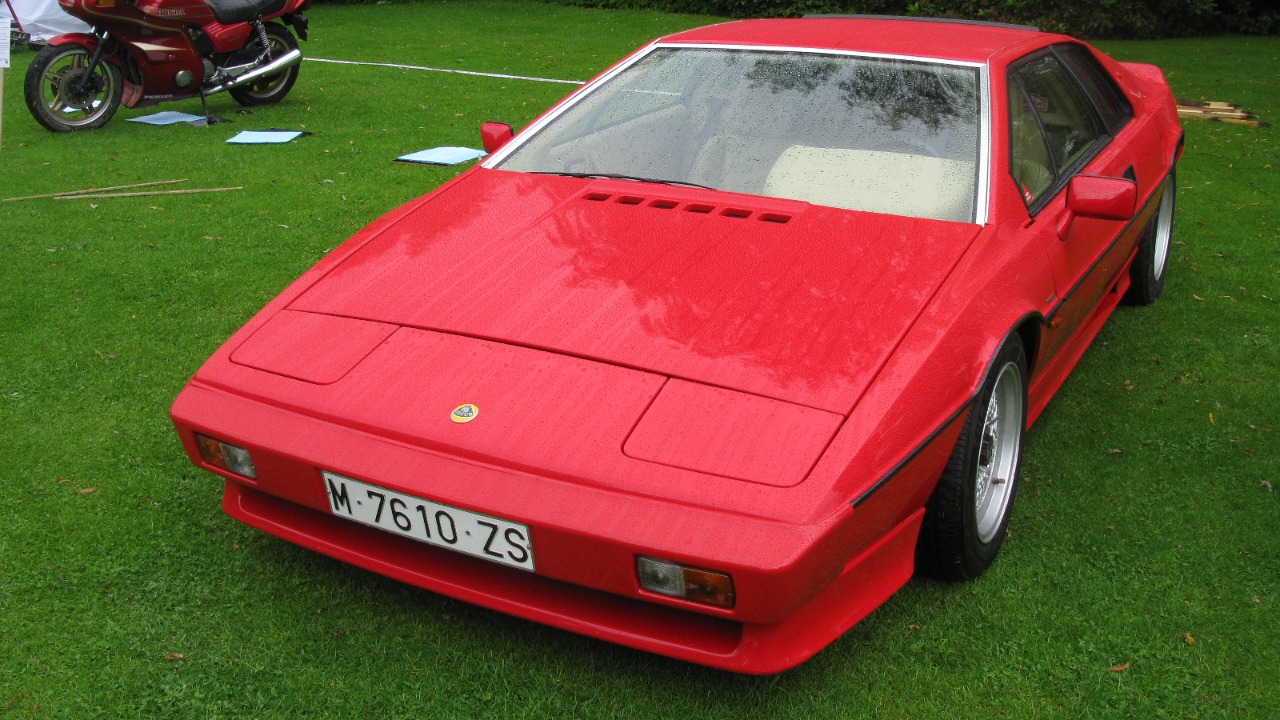
Long before the Esprit Turbo’s performance numbers were debated, its styling announced that this was not just another sports car. Its angular design, penned by Giorgetto Giugiaro, turned the wedge into a rolling piece of futurism, with sharp lines that made the car look like a concept that had somehow escaped onto public roads. That shape did more than attract attention, it visually underlined the car’s focus on aerodynamics and low drag, key ingredients in making modest power feel mighty at speed.
The most dramatic expression of that look came in the early turbocharged variants, where the bodywork and graphics leaned into the car’s motorsport links. Its Lotus Esprit Turbo profile, with its crisp edges and low stance, captured the futuristic spirit of the time, while the association with Formula 1 efforts added a layer of exclusivity that rivals could not easily copy. Even today, that Giugiaro wedge reads as a bold statement rather than a period curiosity, which is why enthusiasts still gravitate to these cars as much for their presence as for their performance.
How the 1987 Esprit Turbo HCI outdrove its spec sheet
The 1987 Lotus Esprit Turbo HCI is the clearest example of how this car outperformed expectations. On paper, it arrived with fewer cylinders and less outright power than many of the supercars it was measured against, a potential disadvantage in an era obsessed with displacement. Yet once on the road, the balance of its mid engine layout, the responsiveness of its turbocharged four and the discipline of its chassis combined to deliver a driving experience that felt anything but underpowered.
Contemporary impressions of the Lotus Esprit Turbo HCI For nearly 30 years of production consistently highlighted how composed and involving the car felt at speed. And for good reason, because despite having less power and fewer cylinders than many of its Lotus Esprit contemporaries, it was still regarded as one of the best handling and most exciting supercars ever made. That contrast between modest numbers and vivid real world pace is exactly how the Esprit Turbo managed to compete with, and often embarrass, more powerful machinery.
A cult hero in the real world, not just on posters
For many enthusiasts, the Esprit Turbo lived first as a bedroom poster or a movie prop, but its real legacy rests on how it feels from behind the wheel. When a 1987 example was revisited decades later, the writer admitted to a long standing curiosity about whether the car’s reputation could survive modern scrutiny. Driving that 1987 Lotus (car Lotus) Esprit Turbo revealed a machine that still felt special, with a blend of turbo surge, steering feel and compact dimensions that modern cars rarely match, confirming that the legend was not just nostalgia.
That experience led to the conclusion that a Lotus Esprit Turbo Is a Lovely Thing precisely because it delivers on the promise of its looks. The car’s cult status is not just about rarity or styling, it is about the way the chassis communicates and the turbocharged engine rewards commitment, characteristics that make it feel alive in a way that many more powerful but more isolated modern cars do not. In that sense, the Esprit Turbo’s real world charm is the final proof that it truly did perform beyond its weight class.
From TV auctions to buyer’s guides, the Esprit Turbo’s second life
The Esprit Turbo’s enduring appeal is also visible in how it continues to surface in popular culture and the classic car market. On television, the Series three Lotus Espri Turbo has been treated as a star in its own right, with presenters warning viewers to “Never meet your heroes” before admitting that, in this case, the car does not disappoint. That kind of on screen validation reinforces the idea that the Esprit Turbo is more than a period curiosity, it is a car that still delivers drama and satisfaction when driven in anger.
When a classic car show follows Mathewsons Classic Cars picking up a Series example and describes how NeverPeter Stevens update, the Esprit (Lotus Esprit) could undercut rivals on price and beat them on performance, which has helped sustain demand among enthusiasts who want something different from the usual Italian choices.
Why the Esprit still defines Lotus ambition
Even as Lotus has moved into new segments and technologies, the Esprit remains a touchstone for what the brand represents. When the company showed a new Lotus Esprit concept at the Paris Motor Show, it was described as arguably the most important model to diehard fans, because it grounded the British maker’s future ambitions in its history of making uncompromising lightweight, high handling sports cars. That reaction underlined how closely the Esprit name is tied to the idea of a focused driver’s car rather than a mere styling exercise.
The concept’s significance lay in how it connected modern aspirations to the original Lotus Esprit, reminding enthusiasts that Lotus, as a British brand, built its reputation on agility and purity rather than brute force. That is why, even in an era of electric hyper sedans and SUVs, the Esprit Turbo’s legacy still looms large. It showed that a car could be both exotic and rational, dramatic yet disciplined, and in doing so it set a benchmark that continues to shape what I expect from any car that claims to be a driver’s machine.