
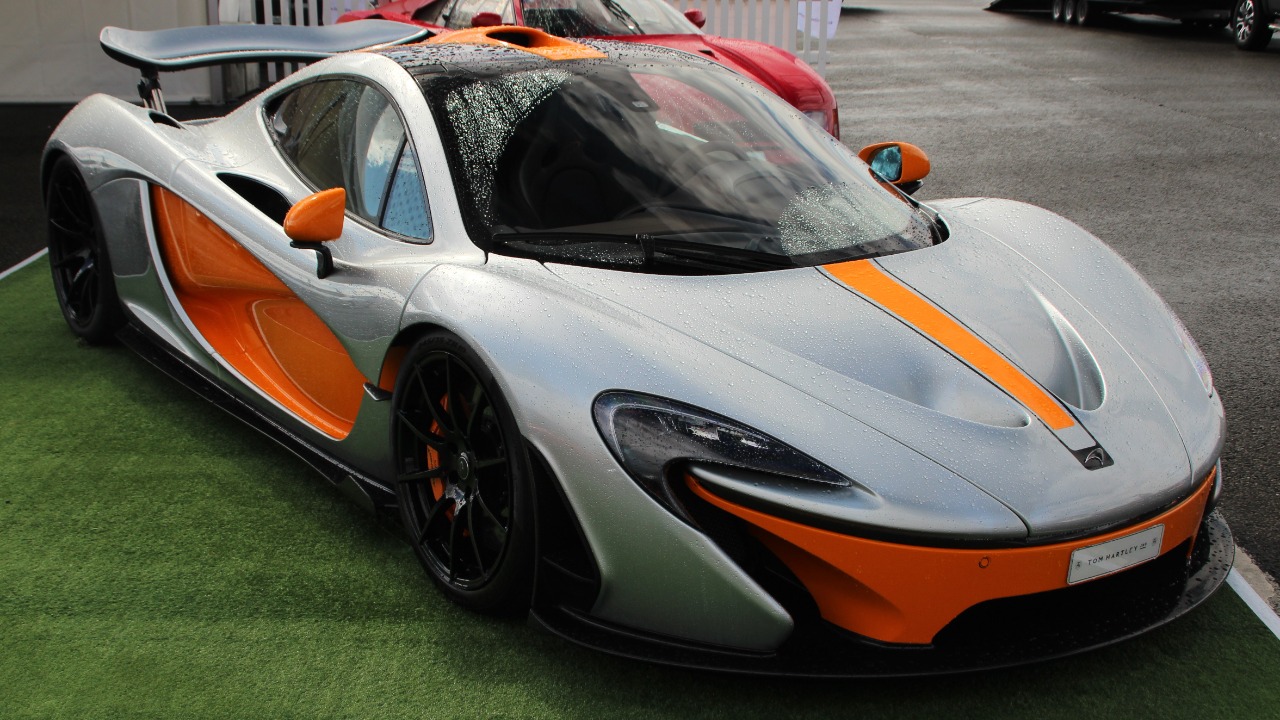
The McLaren P1 arrived at a moment when supercar makers were still treating hybrid hardware as ballast, not a weapon, then turned electricity into a core part of the performance arms race. A decade on, its mix of brutal acceleration, obsessive aerodynamics and everyday usability still defines how I judge any electrified hypercar that claims to be the future of speed.
By fusing a downsized turbo V8 with a powerful e-motor in a carbon shell that looked shrink-wrapped around its purpose, the P1 did more than headline a new generation of exotics, it reset expectations for what a road‑legal car could do on track and in the so‑called real world.
The carbon-fibre statement that rewrote hypercar priorities
From the outset, the McLaren P1 was engineered as a manifesto for efficiency in the service of speed, not as a styling exercise with tech bolted on later. The body was carved from carbon fibre and shaped to guide air exactly where it was needed, effectively allowing the surface to shrink-wrap itself around the drivetrain and cooling demands, a philosophy that turned the car into a rolling demonstration of how aero and structure could be one and the same, as detailed in contemporary coverage of its game-changing design. That approach meant the P1 did not chase drama for its own sake, it chased lap time, stability and repeatable performance, even when the battery was hot and the turbos were working hard.
McLaren treated the P1 as a halo project but also as a test bed for how carbon-intensive engineering could filter down to more attainable models. The car’s monocoque and bodywork showed how a lightweight, stiff structure could support extreme aerodynamic loads without resorting to crude add-ons, a lesson that later influenced the brand’s broader range of hybrid and non-hybrid supercars. When the company looked back on the car’s debut at the Geneva Motor Show and its role in the brand’s 60-year story, it framed the P1 as a pivotal moment where composite know‑how and electrification finally met in a single, coherent product.
Hybrid power as a weapon, not a compromise
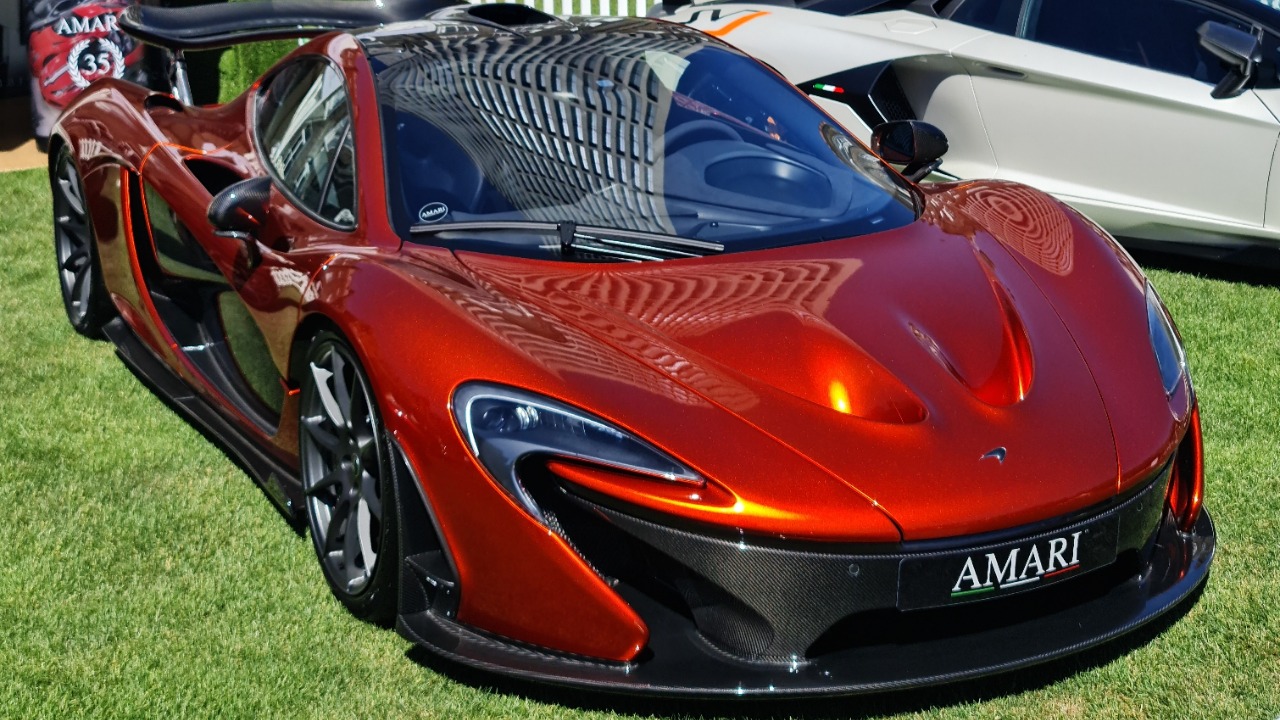
The P1’s real punch came from the way it used hybrid power as an accelerant rather than a conscience‑soothing add‑on. Its twin‑turbo V8 worked in concert with an electric motor to deliver instant torque fill, erasing lag and turning throttle inputs into immediate, violent forward motion that made traditional naturally aspirated exotics feel blunt. That philosophy was echoed in the track‑focused McLaren P1 GTR, which retained the same 3.8-litre V‑8 with twin turbo chargers running at 2.4 bar, aided by an electric motor that continued to provide shove when the turbos were off boost or spooling. In both road and GTR form, the hybrid system was calibrated to make the car feel more responsive, not more frugal.
On paper, the numbers backed up the philosophy. Official figures described Performance that was mind‑boggling, with 0‑62 mph in under three seconds, 0‑124 mph in under seven seconds and 0‑186 mph in less than 17 seconds, benchmarks that pushed rivals to rethink how they deployed electric assistance. Crucially, the P1 could also run in pure electric mode for short distances, giving owners a taste of silent, emissions‑free driving without diluting the car’s core mission as a track weapon, a duality that McLaren highlighted when it celebrated the car’s role in its evolving plug‑in and electric vehicle driving capability.
From Geneva halo to production benchmark
When the P1 was unveiled at the Paris Motor Show as a concept and then refined for its Geneva Motor Show debut, it was positioned as the “Holy Grail of Hybrid Hypercars” and as a spiritual successor to the McLaren F1 rather than a simple replacement. That framing mattered, because it signaled that McLaren saw hybridization as the only way to surpass its own 1990s icon on road and track, not as a side project to satisfy regulators. The production run that followed, spanning the 2013 to 2015 window, turned that concept into a limited but fully realized series car that owners could drive hard and service like any other flagship model.
Looking back, the production timeline underlined how quickly McLaren moved from show stand to customer delivery. Reports on When the McLaren P1 was made describe it as an iconic hybrid hypercar that rolled off the line in that early‑2010s period, cementing its place as a reference point for later electrified flagships. By the time McLaren marked Ten years since its Geneva Motor Show appearance, the company was already using the P1’s legacy to frame its future electrification plans, treating the car as proof that hybrid systems could survive a decade of use while still feeling cutting edge.
The Hybrid Trinity and the new rules of the power race
In the broader hypercar ecosystem, the P1 did not exist in isolation, it formed part of what enthusiasts now call The Hybrid Trinity and helped define a New Definition of what a hypercar had to be. Analyses of The Hybrid Trinity and its impact argue that Speed was still king in the 2010s, but the story broadened to include technology, energy recovery and clever packaging, with the P1 standing out for how ruthlessly it prioritized lap time over top‑speed bragging rights. That shift in emphasis forced rivals to think less about headline numbers and more about how quickly a car could circulate a circuit, how often it could repeat that feat and how much driver confidence it could generate in the process.
McLaren’s own messaging around the P1 reinforced that change in priorities. The company described the car as the “Holy Grail of Hybrid Hypercars” in its own Holy Grail of Hybrid Hypercars guide, emphasizing that the goal was to be the best driver’s car on both road and track rather than the fastest in a straight line. That stance helped normalize the idea that a flagship could be judged on its breadth of ability, including its ability to run quietly in electric mode through city centers, without sacrificing the raw, aggressive character that buyers expected when they switched everything to maximum attack.
Aerodynamics, upgrades and a lasting legacy
Underneath the headline power figures, the P1’s aerodynamics were arguably its most radical contribution to the power race. McLaren prioritized airflow from the outset, using active elements and a tightly packaged body to generate huge downforce while keeping drag in check, a philosophy that later retrospectives summed up under phrases like Outstanding and Aerodynamic performance. The development team leaned on computational fluid dynamics and wind tunnel work to ensure that every surface did a job, from cooling the hybrid system to stabilizing the car under heavy braking, and that focus allowed the P1 to deliver its extreme acceleration figures without feeling nervous or unpredictable at the limit.
The story did not end when the last car left the factory. McLaren continued to refine and support the P1 long after initial deliveries, offering hardware and software updates that kept early cars aligned with the latest thinking, a practice highlighted in reports on how the McLaren P1 remained a rolling laboratory. That willingness to keep upgrading customer cars signaled that the company saw the P1 not just as a collectible but as a living platform, one that could evolve as battery management, control software and aero understanding improved.
How earlier experiments and future echoes frame the P1
To understand why the P1’s hybrid punch landed so hard, it helps to remember that the idea of an electrified supercar was not entirely new. Toyota had already experimented with The Volta, a concept that previewed an F1‑like hybrid supercar and hinted at a Legacy of Hybrid Power In Sports Cars And Supercars, even if it never reached production. Analyses of that project note that Although the Volta did not immediately trigger a wave of copycats, it planted the seed that high‑performance hybrids could be credible, a seed that later flourished when McLaren, Ferrari and Porsche committed to building road‑going hybrid flagships, as chronicled in coverage of The Volta and its aftermath.
The P1’s influence also runs forward into how we think about hybrid and electric performance today. When McLaren marked the car’s tenth anniversary and its place in the brand’s Ten year journey since Geneva, it framed the car as a bridge between pure combustion icons and the fully electric models that are now on the horizon. The P1 stands as a reminder that hybridization can be about sharpening a car’s character rather than softening it, a lesson that continues to shape how manufacturers approach the balance between outright power, efficiency and the kind of visceral engagement that made the original P1 feel like a genuine hybrid punch in the power race.

Leave a Reply