
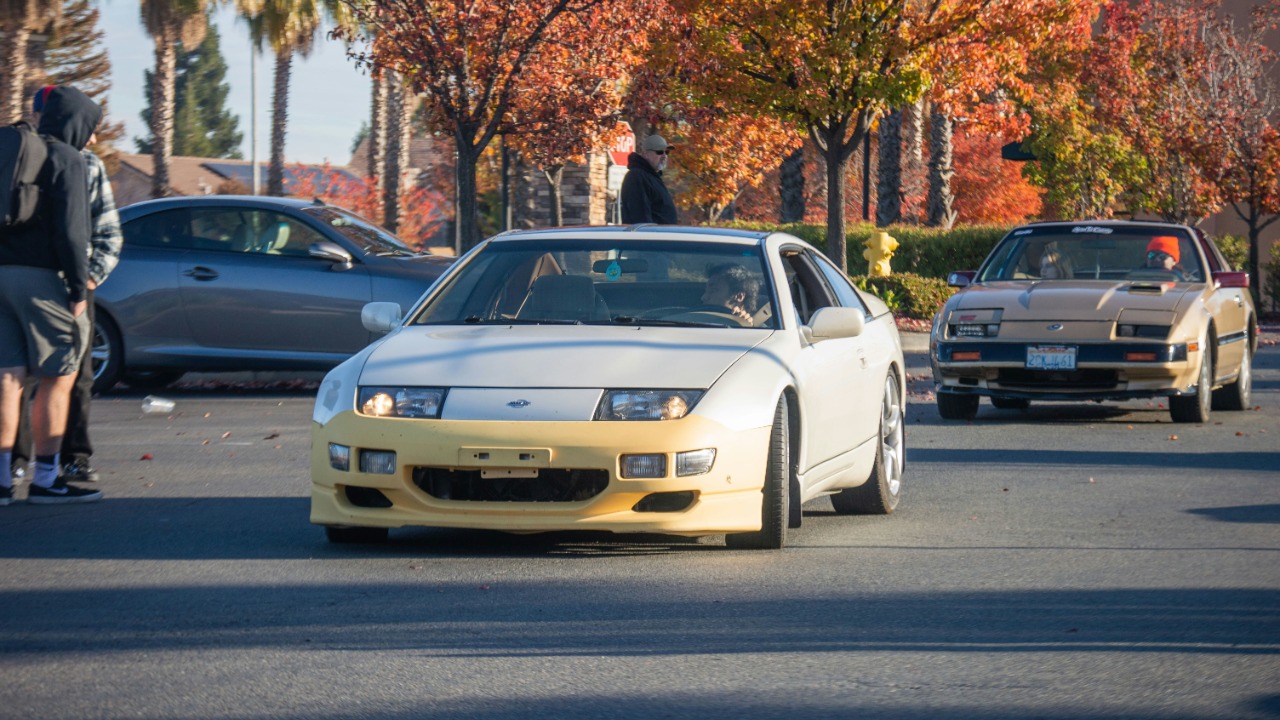
The Nissan 300ZX Twin Turbo arrived at the start of the 1990s with the kind of speed and sophistication that forced the rest of the performance world to recalibrate. It was not just another quick Japanese coupe, it was a technological flagship that could run with contemporary European icons while reshaping expectations for what a daily drivable sports car could do. In the decades since, its blend of power, design and innovation has turned it into a defining reference point for that era of speed.
Looking back now, I see the 300ZX Twin Turbo as the car that proved Japanese engineering could deliver supercar-level pace, luxury-grade refinement and mass-market reliability in one package. Its influence still echoes through modern performance cars that chase the same formula of turbocharged power, electronic chassis tricks and sculpted, wind-tunnel-tested styling.
The Z32 moment that redefined Japanese performance
By the time the Z32-generation Nissan 300ZX arrived, the brand’s Z lineage already carried serious weight, but the Twin Turbo variant pushed it into a new league. Few cars captured the golden age of Japanese performance quite as completely, and I see this model as a cornerstone in how enthusiasts came to view Japan as a peer to Europe and America in the sports-car hierarchy. Contemporary accounts describe how Few cars define that era as clearly as this Nissan, which is why its reputation has only grown.
The Z32 did not appear in a vacuum, it followed the earlier Z31, but it represented such a leap that enthusiasts often treat it as a clean break. The first generation 300ZX, classified as the Z31, set the stage after its initial release in 1983, yet the later car’s sharper focus and more advanced engineering made it feel like a different species. Reporting on the model’s evolution highlights how Two distinct Generations, Z31 and Z32, frame the story, with the Twin Turbo Z32 emerging as the definitive expression of Nissan’s performance ambitions.
Powertrain engineering that punched above its weight
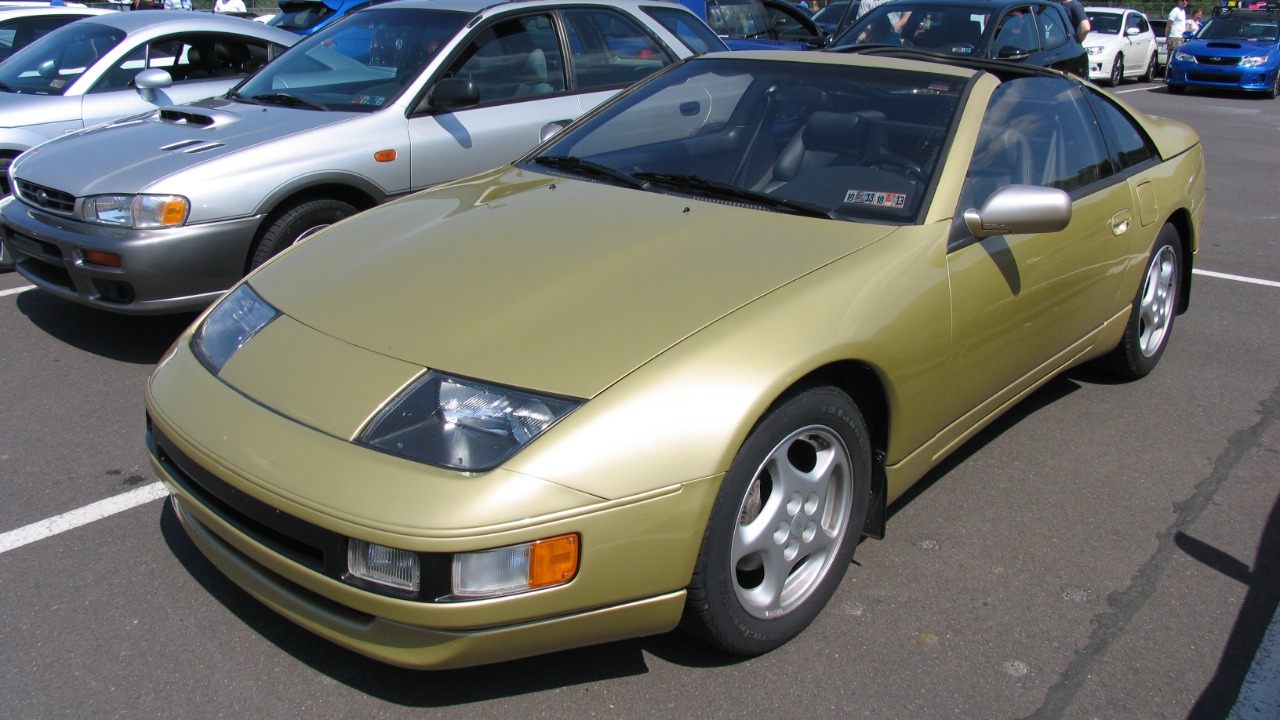
The heart of the 300ZX Twin Turbo’s impact was its compact, overachieving V6. Nissan’s VG30DE(TT) engine, fitted to the 1990 to 1996 cars, was a 3.0 liter unit with a 60 degree V-angle that balanced smoothness with packaging efficiency. In stock form it delivered the kind of output that let the car trade blows with more expensive rivals, and technical documentation on the VG30DE(TT) underscores how carefully Nissan engineered that 60 degree layout to meet its original development goals.
On paper, the numbers told a clear story. In Japan, the Twin Turbo was officially rated at 276 horsepower to comply with the domestic gentleman’s agreement, yet period testing and later analysis point to roughly 300 horsepower under the hood in real-world trim. That output gave the car more power than some contemporary European benchmarks and helped it outrun established sports cars through most of the 1990s. Coverage of this roughly 300 horsepower figure, alongside the 276 rating in Japan, captures how the car quietly exceeded its official spec sheet.
From base Z32 to Twin Turbo: a performance ladder
Part of what made the 300ZX story so compelling was the way Nissan built a clear ladder from accessible performance to genuine high speed. When the base-model Z32 first arrived, it carried a naturally aspirated 3.0 liter V6 producing 222 horsepower, a healthy figure that already gave the car strong response in the lower rev range. That starting point is documented in buyer’s guides that note how When the base car launched with 222 hp, it set expectations that the turbocharged version would have to significantly raise the bar.
The Twin Turbo did exactly that. The most noteworthy upgrade was the addition of twin turbochargers and intercoolers, which allowed the 300ZX Turbo to wring 300 horsepower from the same basic displacement and sprint to 60 miles per hour in fewer than six seconds. That jump transformed the car from a quick grand tourer into a genuine high-performance machine, and period valuations still highlight how the Most noteworthy aspect of the Turbo model was that 300 hp figure and its sub-six-second acceleration.
Chassis tech: Super HICAS, tight packaging and race-bred hardware
Raw power alone did not define the 300ZX Twin Turbo’s character, the chassis technology around it was just as influential. Nissan used the car to debut its Super HICAS system in the United States, a Super High Capacity Actively Controlled rear steering setup that could subtly steer the back wheels to improve stability and agility. Contemporary technical features explain how the Turbo model marked the U.S. introduction of Nissan’s Super HICAS, short for Super High Capacity Actively Controlled Steering, which actively steers the rear wheels appropriately.
That sophistication extended beyond electronics to the way the car was packaged and built. The Twin Turbocharged V6 sat tightly in the engine bay, which made service more complex but also contributed to the car’s dense, purposeful feel. Technical rundowns of the Z32 point out that the Twin Turbocharged layout, Unlike the earlier Z31’s V6, was packed more tightly and delivered stronger performance than the Z31 300ZX Turbo, reinforcing the sense that this was a serious driver’s car rather than a simple evolution.
Racing programs reinforced that message. One notable 1989 Nissan 300ZX race car, identified as chassis 002, received extensive upgrades including a water cooled brake system to handle the rigors of competition. With the upgrades, chassis With the number 002 scored four wins between 1990 and 1995, a record that underlined how the road car’s fundamentals could be sharpened into a formidable race machine.
Design, heritage and the Fairlady Z identity
Visually, the 300ZX Twin Turbo captured the early 1990s fascination with smooth, almost architectural forms. The car’s low, wide stance and fixed headlights gave it a futuristic edge that still looks striking today, and enthusiasts often single it out as one of the decade’s most enduring shapes. Coverage of 1990s icons notes that the Nissan 300ZX (Z32) stands out among Nissan’s Z cars for that futuristic edge, which still looks stunning today.
That design was not just about aesthetics, it was tied to the car’s identity as part of the Fairlady Z family in Japan. The fourth generation Fairlady Z, also known globally as the 300ZX, appeared in configurations such as the FairladyZ 2by2 300ZX Twin Turbo with the internal code GCZ32. Nissan’s own heritage material describes the FairladyZ 2by2 300ZX Twin Turbo (1989: GCZ32) as part of its official collection, underscoring how central this model is to the brand’s own story.
From Datsun roots to 1990s tech showcase
The 300ZX Twin Turbo also carried the weight of history. The classic lines, look and feel of the Z car family dated back to the days when the car wore Datsun badges, and the Z32 had to honor that heritage while pushing into a far more high tech era. Analyses of the model’s lineage emphasize how the Nissan Z-Car family traces back to the Car that once came under the Datsun name, making the Twin Turbo a bridge between analog roots and digital sophistication.
Technologies like all wheel steering, turbocharging and advanced electronics turned the 300ZX into a rolling showcase of what Japanese engineering could deliver at scale. Even without leaning on nostalgia, it was obvious from the hardware that this was a serious effort. Enthusiast retrospectives point out that Even without Scott Fisher’s famous racing exploits, it would have been obvious just by looking at the car, which employed Super HICAS four wheel steering and a smooth, fixed light design that set it apart from its predecessors.
Corvette killer, daily driver and future classic
On the road, the 300ZX Twin Turbo earned a reputation as a Japanese Corvette rival that could deliver similar performance with a different flavor of refinement. Period comparisons note that it often outran contemporary Corvettes despite having two fewer cylinders, a testament to the efficiency of its turbocharged V6. Modern market analysis even frames it as The Nissan 300ZX, a Japanese Corvette Killer That is Now Cheaper Than a Camry, highlighting how its performance once outpaced Corvettes while today it can cost less than a new Camry.
At the same time, the car was engineered to be livable, which is a big part of why it has aged so well. The combination of its powerful engine, precise handling and advanced technology made the 1991 Nissan 300ZX Twin Turbo feel like a complete package rather than a fragile exotic. Insurance specialists now describe how the Nissan 300ZX Twin Turbo’s blend of power and tech keeps its desirability high even after many years have passed, which is why owners increasingly treat it as a classic worth protecting.
Why the 300ZX Twin Turbo still matters
Three decades on, the 300ZX Twin Turbo remains a touchstone for how to balance speed, usability and style. It showed that a Japanese manufacturer could build a car that was as fast as European rivals, as comfortable as a grand tourer and as reliable as a commuter, all while introducing advanced systems like Super HICAS and tightly packaged twin turbocharging. That formula has influenced everything from later Z cars to modern turbocharged sports coupes that chase the same mix of everyday usability and serious pace.
Its cultural footprint is just as enduring. Enthusiast communities still celebrate the Z32 as a car that deserves a comeback, and it continues to anchor conversations about 1990s performance icons. Lists of 1990s cars that should return routinely single out the Nissan 300ZX (Z32) as a model whose futuristic edge still looks stunning today, a reminder that the Twin Turbo did more than shape 1990s speed, it helped define what modern performance cars aspire to be.

Leave a Reply