The original Pontiac GTO was never supposed to exist. It began as a quiet act of defiance inside General Motors, a workaround that slipped through corporate rules and nearly got buried before it reached showrooms. That renegade option package did more than bend policy; it rewrote American performance culture and turned a loophole into legend.
The corporate rule that tried to stop the GTO
In the early 1960s, General Motors imposed a strict internal cap on performance. Company policy limited engines in midsize cars to a maximum of 330 cubic inches, an attempt to keep family cars from turning into street terrors and to maintain a corporate image of restraint. Pontiac, which had been moving steadily toward performance through the late 1950s, suddenly found itself boxed in by its own parent company.
The rule did not just constrain engineering ambition. It effectively blocked Pontiac from dropping its hottest V8s into the A-body intermediate line just as younger buyers were starting to crave more power. As one account of the period explains, General Motors had a clear directive of “no big engines in midsize cars,” and the future Pontiac GTO would be born in direct tension with that policy.
Finding the loophole inside GM’s own rulebook
The breakthrough came not from a new engine design but from reading the fine print. Pontiac engineers and product planners dug into the language of the corporate edict and realized that the displacement cap applied only to standard equipment. The rule limited base engines to 330 cubic inches, but it did not explicitly forbid a larger engine as an extra-cost option. One detailed history describes how the team recognized that the wording covered only the base powerplant, leaving a gap that could be exploited as an option package on the intermediate chassis, a loophole also highlighted in period accounts of the GTO’s birth.
That discovery turned a dead end into an opening. By framing the big engine as an optional performance group rather than the standard configuration, Pontiac could technically comply with the letter of the rule while violating its spirit. It was a lawyerly solution to a gearhead problem, and it would become the foundation of the original GTO’s existence.
Bill Collins, John DeLorean, and the 389 idea
Inside Pontiac, the key figures were engineer Bill Collins and his boss, John DeLorean. Collins floated a simple but radical suggestion: take the more powerful 389-cid V8 from the full-size Pontiac line and install it into the midsize Tempest. The larger engine, used in cars like the Bonneville and often shortened in enthusiast shorthand to the Bon, was never intended for the A-body platform under the existing rules.
DeLorean, then Pontiac’s Chief Engineer, recognized that the 389-cid in a lighter body could deliver the kind of acceleration younger drivers wanted. The idea was not to create a separate model at first, but to build a sleeper: a midsize car that looked relatively ordinary yet carried full-size power under the hood, protected by the technicality that the big engine was an option rather than standard equipment.
A rebellious option package, not a standalone model
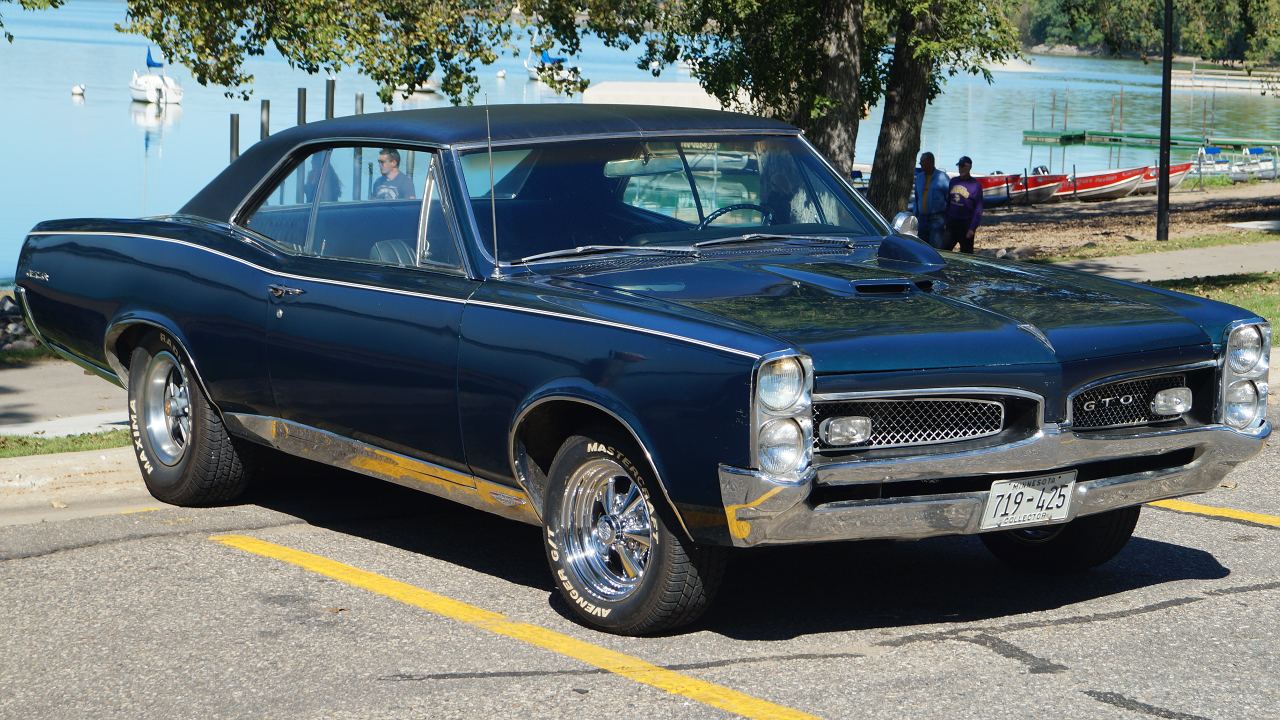
The first GTO was not a clean-sheet car. It was an option group on the Tempest and LeMans that bundled the 389-cid V8 with supporting hardware. The package cost an additional $295, a relatively modest premium for the level of performance it delivered. Buyers got the big engine along with dual exhaust, firmer suspension tuning, and visual cues like hood scoops that, in the earliest form, were non-functional but signaled intent.
Contrary to the later myth that the GTO was conceived purely as a straight line monster, its inception has been described as an “illegal corporate rebellion,” a calculated bending of rules rather than a simple horsepower grab. One retrospective notes that the GTO package bundled the 389 with upgrades that made the car more capable overall, even if the marketing focus quickly centered on quarter-mile bragging rights.
Marketing a loophole as Gran Turismo Omologato
With the mechanical formula in place, Pontiac still needed a name that could sell the idea. The team chose “Gran Turismo Omologato,” a direct lift from European racing terminology that translated to a grand touring car homologated for competition. The badge itself was audacious for a Detroit midsize coupe and helped frame the car as more sophisticated than a simple drag strip special.
Internal storytellers later likened the group behind the project to a kind of internal resistance, a small band inside Pontiac that pushed back against corporate caution. One detailed history describes this period as The Rebel Alliance and explains how “How the GTO Came” together depended on that exploited loophole and a willingness to risk corporate disapproval.
Hiding the project from GM’s top brass
Even as the option package moved forward, Pontiac leadership knew that open discussion at the corporate level could kill it. Accounts from inside the division describe a deliberate effort to keep the GTO out of sight until it was too late for General Motors to reverse course. Pete Estes, identified as Pontiac’s general manager, is remembered for putting his career on the line by shielding the GTO from GM top brass. He treated the project almost like a skunkworks effort, letting it gain momentum with dealers and customers before the corporation fully grasped what was happening.
Other accounts note that when GM leadership finally understood that the engine cap had been sidestepped, they considered shutting the program down. One summary describes how, once GM fully understood, there was serious talk of ending the GTO. According to that same account, Estes kept the GTO away from GM top brass until the car had already reached the market and begun to prove itself, which made it far harder to cancel.
Pre-selling the rebellion
The risk did not stop at hiding the car. Pontiac leaders also tried to insulate the project by lining up demand before GM could intervene. A later retelling explains that John DeLorean wanted a major dealer figure, identified as Bridge, to commit to selling 5,000 units of the GTO so the car could be effectively pre-sold before GM found out. The logic was straightforward: if Pontiac could show that dealers already had thousands of firm orders, it would be politically difficult for corporate management to cancel the program without alienating its own retail network.
That target of 5,000 units became a recurring benchmark inside Pontiac. Another account of the era notes that some in GM upper management ridiculed John DeLorean’s idea and predicted that the GTO would never even reach 5,000 units. That skepticism only sharpened the sense that the project was an unauthorized gamble.
From 5,000 to 32,000 units in a single year
The market response quickly overwhelmed those cautious expectations. Once the GTO reached dealer lots, younger buyers in particular gravitated to the combination of midsize body, big engine, and relatively low price. A later analysis points out that Pontiac originally expected to sell around 5,000 cars, but the strategy of packaging the big engine as an option proved far more successful. In the first model year, sales climbed to over 32,000 units, more than six times the internal benchmark.
That kind of volume made the GTO impossible to treat as a minor experiment. It turned the car into a profit center and gave Pontiac new leverage inside General Motors. Once the GTO proved that a midsize car with a large displacement V8 could sell in the tens of thousands, the corporate logic behind the original 330 cubic inch cap began to look outdated.
The GTO as a template for the muscle car era
The original workaround did more than create one successful model. It effectively set the template for the muscle car formula that would define American performance through the late 1960s. A midsize platform with a big engine, sold at a price that younger buyers could reach, became the standard pattern that rivals would follow.
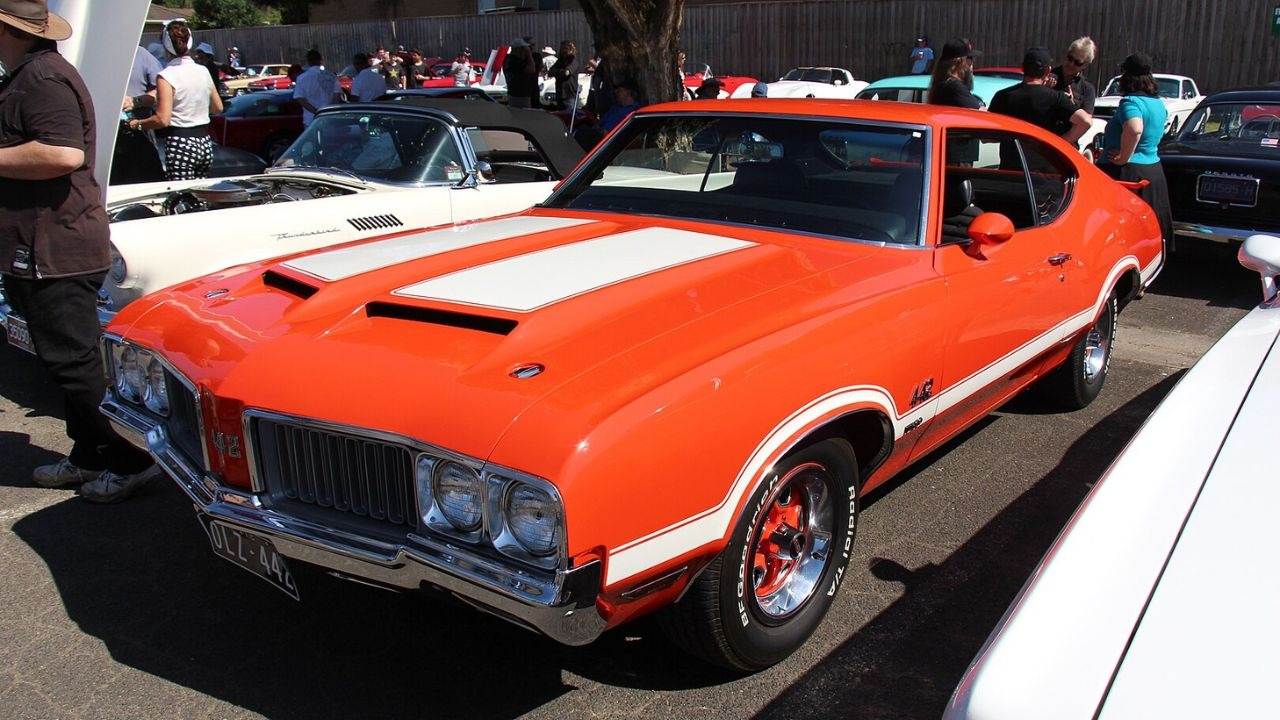
Later histories describe the GTO as a car that disregarded GM’s own policy limiting the A-body line to a maximum engine displacement of 330 cubic inches, instead dropping in a V8 of roughly 5.4 liters. That breach of policy, once proven profitable, encouraged other divisions and competitors to push their own limits. Models like the Chevrolet Chevelle SS, Oldsmobile 442, and Plymouth Road Runner all followed the same basic power in a midsize shell pattern that the GTO had validated.
Rule-bending as part of Pontiac’s identity
The GTO’s origin also fit a broader pattern inside Pontiac. The division had spent the late 1950s and early 1960s cultivating a performance-oriented image, with an emphasis on power and handling that distinguished it from more conservative GM brands. One historical overview of the brand explains that Pontiac positioned itself in terms of power and handling, and that the GTO was a natural extension of that strategy within the constraints of corporate policy described by Pontiac GTO history.
Another account of the internal rulebook explains that GM required vehicles to have roughly 10 pounds of vehicle weight per cubic inch of engine displacement, a ratio intended to keep performance in check. Once engineers realized that this displacement limit referred only to base engines, they had a clear path to slip the 389-cid into the Tempest as an option. That kind of rule reading and selective compliance became part of Pontiac folklore, and the GTO turned it into a signature move.
From a rebellious option to a full model line
As the GTO gained traction, Pontiac gradually shifted it from a quiet option group into a headline nameplate. The car that had started as a workaround became a central part of Pontiac’s marketing, featured prominently in advertising and showroom displays. The success of the package also encouraged continuous upgrades, with later years adding more power, better braking, and styling that leaned harder into the performance image.
Enthusiast accounts often point out that the GTO’s early years were defined by raw acceleration, but they also emphasize that the car offered a more complete package than some rivals. Suspension tuning, steering, and brakes received attention alongside the engine, and the Gran Turismo Omologato name signaled an attempt to blend American straight-line performance with a more European grand touring flavor.
Corporate pressure, changing rules, and eventual decline
As the 1960s turned into the 1970s, the environment that had allowed the GTO to flourish began to change. Insurance premiums on high-performance cars rose sharply, public concern about safety and fuel consumption increased, and regulators introduced stricter emissions and fuel economy standards. By the early 1970s, those pressures were reshaping the entire muscle car segment.
One later overview of the car’s evolution notes that by 1973, stricter emissions and fuel economy rules led to a clear decline in the GTO’s performance, with the 400 V8 becoming the main engine choice as the lineup moved away from its original brute force character. The car that had once ignored internal displacement caps now found itself constrained by external regulation and changing market priorities.
More from Fast Lane Only