
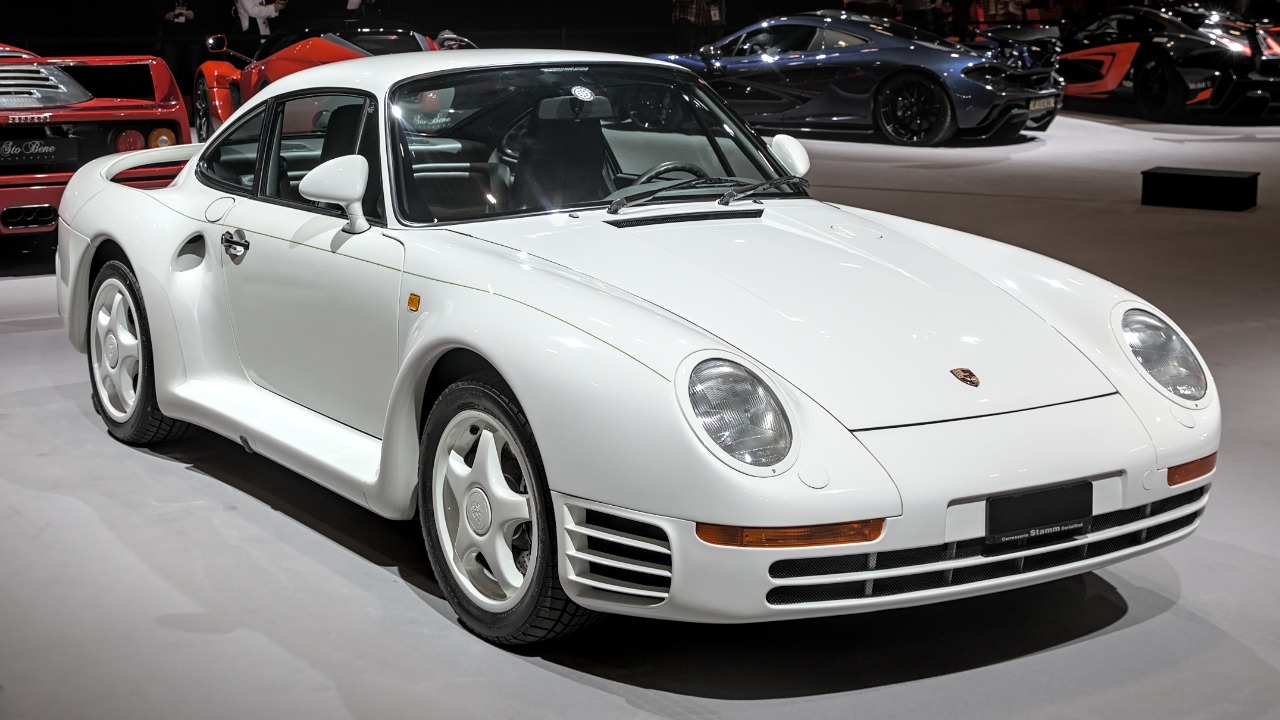
In the mid-1980s, a low, wide coupe from Stuttgart appeared that seemed to have slipped through a wormhole from a decade ahead, its swollen arches and intricate aero hiding a level of computing power and chassis trickery that road cars simply did not have. The Porsche 959 did not just nudge the supercar game forward, it detonated the rulebook and reset expectations for what a fast car could do in the real world. Four decades later, I still see it as the moment when motorsport engineering, digital control and everyday usability finally met in one audacious package.
To understand why the 959 stunned everyone from rival engineers to bedroom poster collectors, you have to look past the familiar 911 silhouette and into the way Porsche treated it as a rolling laboratory. From its twin-turbo flat-six and adaptive all-wheel drive to its composite body and rally-bred suspension, the car became a technology pool that fed generations of performance machines and helped define the modern idea of an “everyday” supercar.
The radical brief behind Porsche’s first true supercar
When I trace the 959 story back to its roots, what jumps out is how deliberately Porsche set out to build something more than a faster 911. The company framed the project as a supercar that could dominate on track and rally stages yet still idle in city traffic, a dual mission that demanded a clean-sheet approach to aerodynamics, drivetrain and electronics. In period, even seasoned observers described it as a car that looked like it had jetted in from the future, a reaction that reflected how far it leapt beyond the analog exotics of the day from Italy and Britain.
That ambition is why the 959 is often described as the first true Porsche supercar, a machine that took the familiar rear-engined layout and layered on a level of sophistication that had previously been reserved for prototypes. Contemporary retrospectives point out that the first thing you notice is how the wildness associated with earlier Exotic Car projects was tamed and smoothed into something cohesive and usable, which is exactly what made the 959 so shocking. It was not just fast, it was civilized, and that combination set the tone for the brand’s later flagships.
A body from racing and aviation, not the showroom
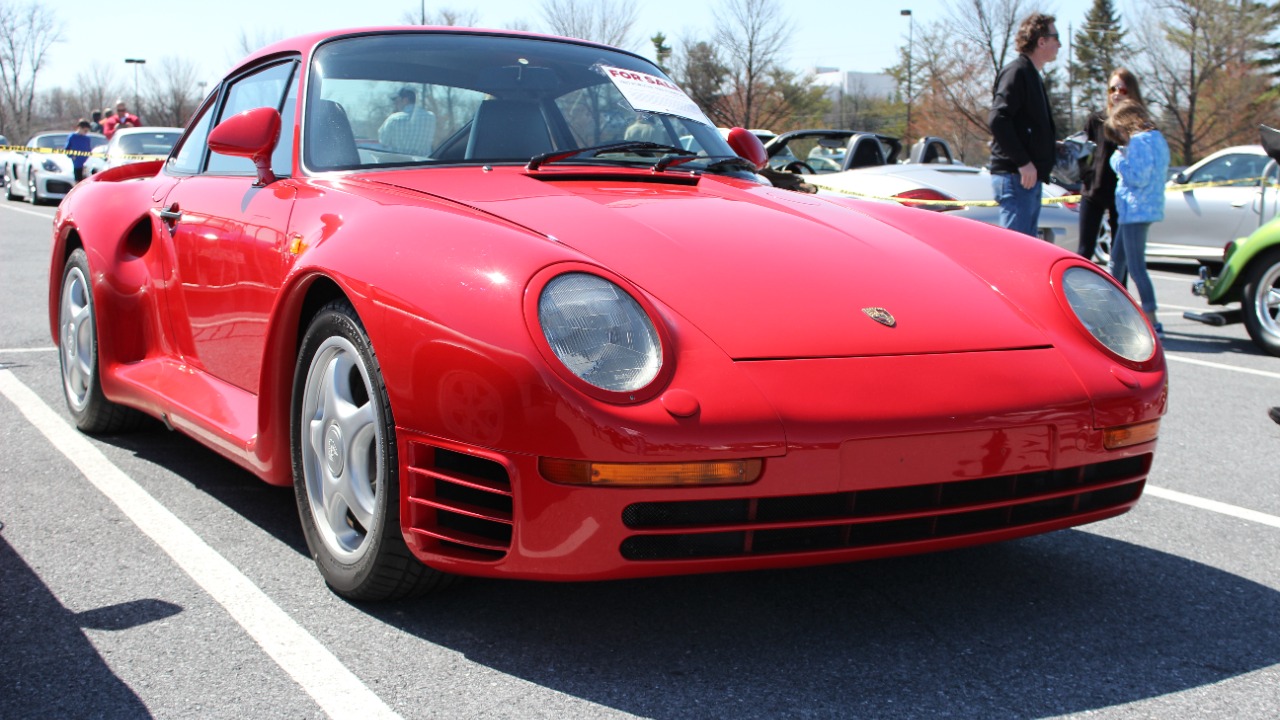
Look closely at a 959 and you can see how little of its outer skin is shared with a standard 911, and that is by design. Porsche treated the body as an engineering tool, sculpting the arches, tail and underbody to generate stability at speeds that would have made a contemporary 930 Turbo feel nervous. To achieve that, the engineers borrowed heavily from motorsport and aircraft practice, turning the car into a showcase for composite materials and airflow management rather than simple sheet metal.
The body design incorporated technology from racing car and aircraft design, with the outer skin made of Kevlar and glass-fibre reinforced plastic to save weight and improve rigidity. Underneath, Porsche used a mix of steel and aluminum, along with carefully tuned aero devices, to keep the car planted at very high speeds without resorting to crude wings. That blend of materials and shapes was radical for a road car at the time and previewed the way carbon and composites would become standard fare on later supercars.
The twin-turbo flat-six and its digital brain
For all the visual drama, the real revolution sat behind the rear axle. Porsche developed a six-cylinder biturbo flat engine that combined racing-derived hardware with road-car manners, a balance that had eluded earlier turbocharged 911s. The goal was to deliver huge power without the on-off, all-or-nothing surge that had made the 930 both thrilling and intimidating, and the solution was a carefully staged boost strategy managed by electronics that were cutting edge for the era.
Factory material describes the heart of the car as a six-cylinder biturbo flat engine that served as the centerpiece of a highly complex car, with its power delivery shaped by sensors and control units rather than purely mechanical wastegates. Period road tests highlighted how this setup produced a custard-smooth and relatively lag-free 444 HP, with the 959 capable of 0 to 60 in roughly three and a half seconds. That combination of turbocharged muscle and digital finesse was unheard of in a production car and set a template for the high-boost, high-control engines that followed.
All-wheel drive that thought for the driver
What really separated the 959 from its contemporaries, in my view, was not just how hard it could accelerate but how calmly it deployed that performance in all conditions. Instead of relying on rear-wheel drive bravado, Porsche built an intelligent all-wheel drive system that constantly adjusted torque split to keep the car composed on wet roads, gravel and even snow. This was not a crude off-road setup, it was a motorsport-grade control system tuned for supercar speeds.
To create a rugged, lightweight drivetrain that could maintain traction at all times, Porsche engineered a multi-plate clutch and electronically controlled center differential that varied power delivery between the axles based on sensors and driver inputs. The result was a car that could put its power down on loose surfaces in rally trim and then feel secure and predictable on the autobahn, a dual personality that justified its reputation as a technology platform for many following generations. That same philosophy of adaptive all-wheel drive would later filter into more accessible models, changing how performance brands thought about traction and safety.
From Group B dream to ultra-rare road icon
The 959’s competition ambitions are a big part of why it feels so special even now. Porsche conceived it in the context of Group B rallying, where manufacturers were free to experiment with wild power outputs, exotic materials and advanced drivetrains as long as they built a small batch of road-going homologation cars. That motorsport-first mindset explains why the production version feels so over-engineered for everyday use, with systems and components that would have been more at home on a race car than a grand tourer.
Historical accounts describe the 959 as a technology pool for many following Porsche generations, a supercar whose innovations in engine management, suspension and aerodynamics were deliberately designed to trickle down. That motorsport DNA also shaped its scarcity. The company built only 292 examples of the production model in the late 1980s, with a handful more completed later, which means every surviving car is both a museum piece and a functioning test bed from a very specific moment in racing history.
Why the 959 still feels like a future car at 40
Four decades on, the 959 has not faded into quaint nostalgia, and that longevity is telling. Enthusiasts and engineers still point to it as a benchmark because so many of its core ideas have become standard practice, from adaptive all-wheel drive and composite bodywork to electronically managed turbocharging. When I look at modern hypercars with their configurable driving modes and data-rich control systems, I see a direct line back to the way Porsche approached this car as a holistic piece of engineering rather than just a big engine in a pretty shell.
That is why it feels fitting that The Porsche 959 Turns 40 This Year And It is Still The Most Advanced Car Ever Built in the eyes of some collectors, a claim that speaks less to raw numbers and more to the car’s conceptual leap. Factory storytelling reinforces this, describing how the 959 was a car that pushed so far ahead that its all-wheel capability and electronic sophistication were later adopted by many other supercar manufacturers, a testament captured in Porsche’s own historical reflections. In that sense, the 959 is less a relic and more a living blueprint for how to blend speed, intelligence and usability in a single, unforgettable machine.
The legacy written into every modern supercar
When I line the 959 up mentally against today’s performance cars, what stands out is how thoroughly it anticipated the priorities of the 21st century. It was not obsessed solely with top speed or lap times, it was engineered to be stable, safe and approachable at the limit, with electronics quietly working in the background. That philosophy has become the default for modern supercars, which routinely use computers to flatten out the rough edges of huge power outputs and make them accessible to drivers who are not racing professionals.
Contemporary analyses describe how The Porsche 959 stands as a Triumph of Engineering Excellence and Motorsport Dominance, arguing that it forever changed the automotive landscape by proving that extreme performance and everyday usability could coexist. Factory retrospectives echo that sentiment, noting that the 959 was a car whose innovations were later adopted by many other supercar manufacturers, a point underlined in Share and In the brand’s own storytelling. For me, that is the real tech leap that stunned the world: not just the gadgets and numbers, but the realization that the fastest car in the room could also be the smartest and, in its own way, the most humane.

Leave a Reply