
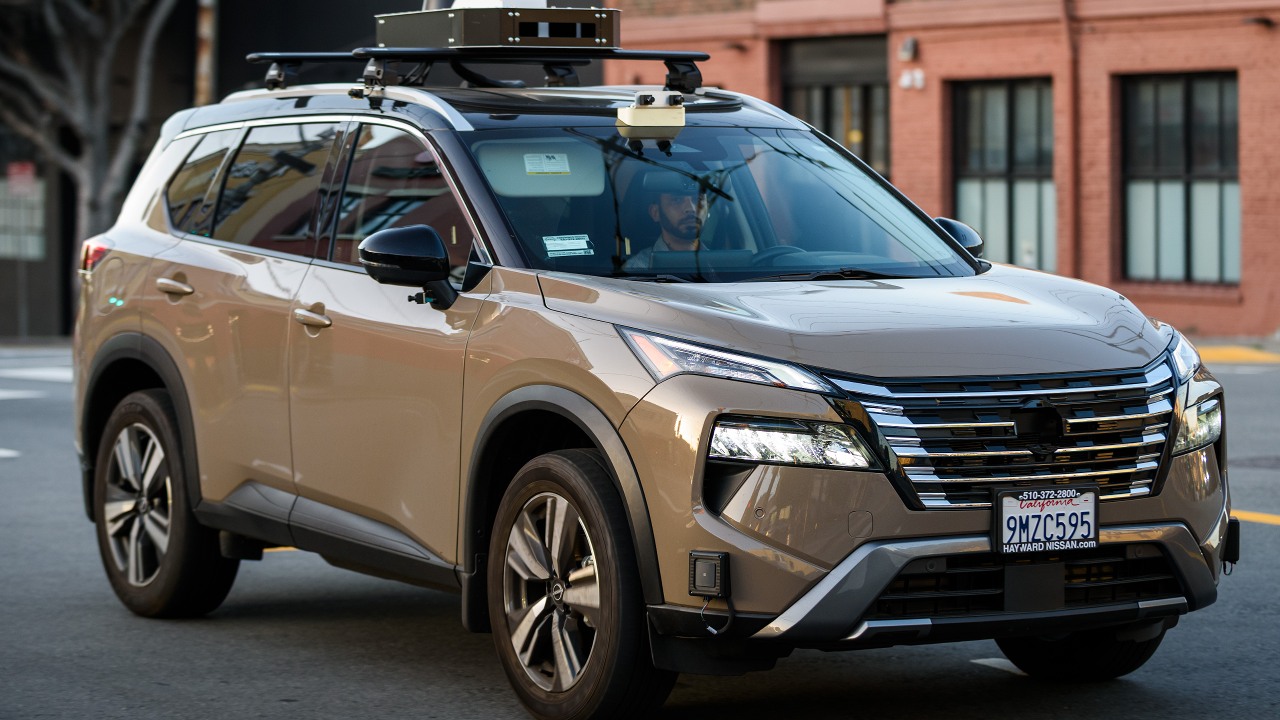
Nissan has quietly turned its most ordinary product into its most critical lifeline. The Rogue, long treated as a dependable family crossover, is now the centerpiece of a restructuring effort that stretches from dealer showrooms to global factories. The company is betting that electrified versions of this unassuming SUV can stabilize its finances, simplify its lineup, and restore credibility in the United States and beyond.
That shift means the Rogue is no longer just a volume play, it is the template for how Nissan intends to build, power, and sell its cars in the second half of the decade. From new hybrid technology to a sweeping manufacturing overhaul, the model is being asked to carry far more weight than a single SUV usually does.
The Rogue’s outsized role in Nissan’s U.S. survival
Inside Nissan, the Rogue has moved from important to existential. It is already one of the company’s best-selling vehicles in the United States, described as the brand’s “bread and butter” because it anchors mainstream pricing and keeps factories running at scale. Guidance for the 2026 model year frames the Rogue as a crucial bridge between outgoing inventory, which is being cleared with aggressive discounts, and a more electrified lineup that must still appeal to cost-conscious families.
That dependence is not theoretical. Nissan dealers in the United States are pressing for higher throughput after a period in which profits “vanish” when they are pushed to hit ambitious volume targets with heavy discounting. Retail executives have warned that they need more vehicles that can sell in higher numbers without eroding margins, and the Rogue is at the center of those conversations. When dealers complain that they are forced to chase bonuses with thin-profit cars, it is the core crossover segment, led by the Rogue, that must deliver a healthier balance between incentives and transaction prices.
From The Arc to Re:Nissan, a strategy written around one SUV
Nissan’s corporate plans make clear that the Rogue is embedded in its turnaround math. Under the Arc business plan, the company is targeting an additional 1,000,000 units of sales compared with fiscal year 2023 and an operating profit margin of more than 6 percent. Those goals are tied to a promise of product “value” and competitiveness, which in practice means leaning on high-volume models like the Rogue to generate both scale and pricing power in North America.
Alongside its first half financial results for fiscal 2025, Nissan provided a Re:Nissan Update that underscored how much of the recovery depends on simplifying the vehicle lineup and cutting parts complexity. The company highlighted “significant reductions in parts complexity” as a pillar of its plan, a shift that aligns directly with the Rogue’s evolution into a global platform shared with the X-Trail in Europe and other markets. By converging hardware, powertrains, and manufacturing processes around a few core models, Nissan is effectively writing its restructuring strategy around the success of this SUV.
Hybrid urgency and the Rogue e-Power pivot
The most urgent piece of Nissan’s survival plan is its scramble to catch up in hybrids in the United States, and again the Rogue sits at the center. Reporting on the company’s electrification roadmap notes that Nissan “desperately needs hybrids in the U.S.” and is accelerating the launch of the Rogue e-Power to fill that gap. The e-Power system, which uses a gasoline engine as a generator for an electric drive motor, is already familiar in other markets and is being pulled forward to give American dealers a credible alternative to rival hybrid crossovers.
This is not just about technology bragging rights. Nissan’s U.S. lineup has leaned heavily on conventional gasoline engines and a small number of battery electric vehicles, leaving a wide middle ground where competitors have built strong hybrid portfolios. By fast-tracking the Rogue e-Power, the company is trying to plug that hole with a model that already commands strong name recognition. The move is framed internally as a way to stabilize U.S. sales volumes, support the Arc plan’s million-unit ambition, and give dealers a product that can command better margins than deeply discounted outgoing stock.
Rogue Hybrid and PHEV: manufacturing as a survival tool
Nissan’s new plug-in hybrid strategy, anchored by the Rogue, is as much about factories as it is about fuel economy. The company has unveiled its first plug-in hybrid for the brand, a Rogue Hybrid that marks a shift in manufacturing strategy aimed at simplifying the vehicle lineup and standardizing components. Internal planning documents describe a clear path to reduce complexity, with the Rogue Hybrid serving as a test case for how electrified powertrains can be integrated into existing production lines without ballooning costs.
The 2026 Rogue plug-in hybrid, previewed as a close relative of the Mitsubishi Outlander PHEV, illustrates how Nissan intends to leverage alliances and shared architectures to stretch limited development budgets. Commentators have noted that the 2026 Rogue PHEV is “proof that imitation” can be a pragmatic strategy, with the SUV borrowing heavily from a partner’s proven plug-in system while wearing Nissan styling and branding. That approach dovetails with the company’s manufacturing shift, which emphasizes common platforms, shared parts, and fewer unique variants as it tries to rebuild profitability.
Radical redesign, new leadership, and the long game
The Rogue’s importance is set to grow further with a radical redesign planned for the 2027 model year. Reporting on the next generation describes it as a completely new design for the Rogue, sold as the X-Trail in many markets outside North America, including Europe. The model is characterized as Nissan’s most crucial SUV globally, with expectations that the redesign will integrate e-Power and plug-in hybrid options more deeply into the architecture rather than treating them as add-ons. That global convergence is central to the company’s effort to cut parts complexity and align its product strategy across regions.
Leadership changes at Nissan reinforce how seriously the company is taking this pivot. The new CEO, Ivan Espinosa, has been portrayed as a “car guy” with big plans for a turnaround, focused on product credibility and a more disciplined relationship with partners. His agenda aligns with the Arc and Re:Nissan frameworks, which both lean heavily on a smaller number of globally relevant models. In that context, the Rogue and X-Trail family is not just another crossover, it is the canvas on which Espinosa’s turnaround will be judged, from hybrid adoption rates to dealer profitability.
More from Fast Lane Only




Leave a Reply