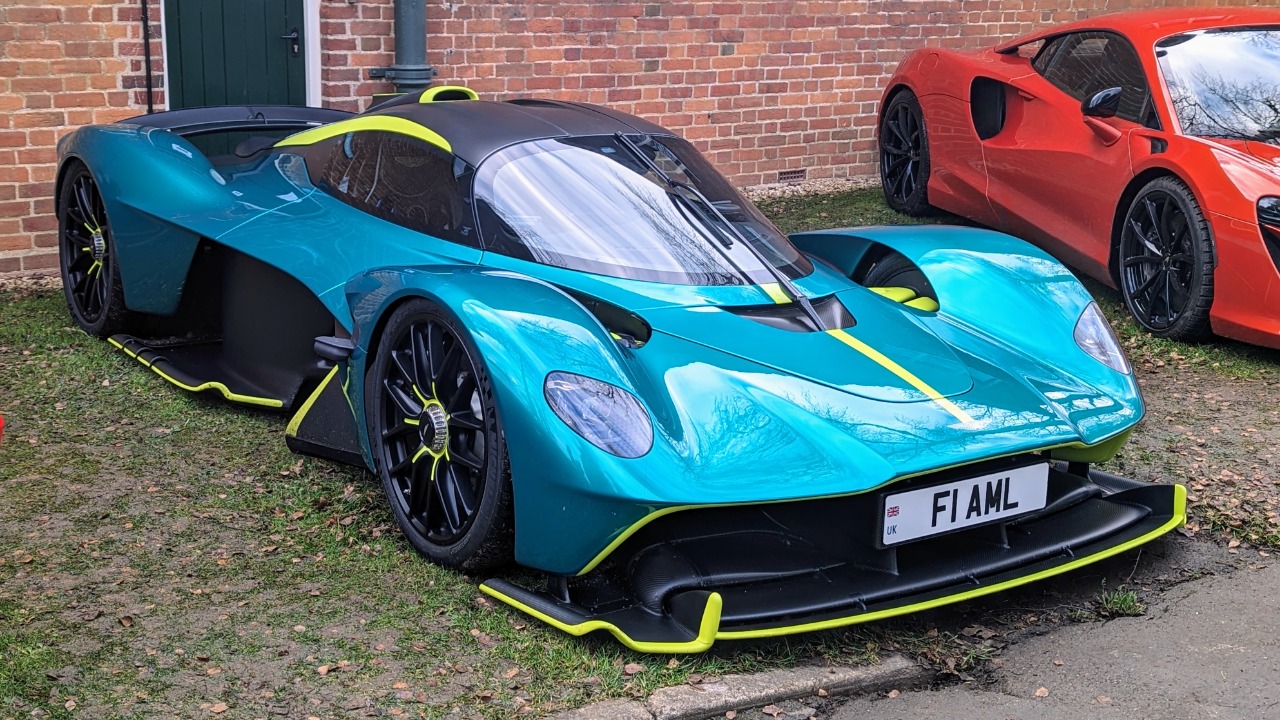
The Aston Martin Valkyrie did not simply nudge supercar design forward, it detonated the old rulebook by dragging Formula 1 thinking straight onto public roads. Instead of chasing marginal gains in power or top speed, it treated the entire car as a racing prototype that just happened to wear a number plate, from its carbon structure to its F1-style driving position. In doing so, it turned the idea of a “road car” into something closer to a street-legal race program.
When I look at the Valkyrie, I see less a traditional flagship and more a rolling experiment in how far motorsport technology can be pushed outside the paddock. Its F1-inspired aerodynamics, extreme packaging and obsessive weight saving do not merely echo racing, they transplant race engineering logic into every visible surface and hidden component. That is what makes it feel like a clean break from the supercars that came before it.
The F1 partnership that rewrote the brief
The starting point for the Valkyrie’s revolution was not a styling sketch, it was a technical collaboration built around Formula 1 know-how. The project was conceived as a hyper-car that would apply genuine F1 thinking to a road-going machine, with the engineering brief shaped by the same pursuit of lap time that governs a grand prix chassis. The result is a car that treats downforce, weight and packaging with the same seriousness as a race team chasing tenths.
That intent is clear in the way The Aston Martin Valkyrie is described as a hyper-car developed in close cooperation with top-tier motorsport expertise, with only 150 units to be produced to keep it as focused as a competition program. Rather than borrowing a few cosmetic cues, the car imports Formula 1 Tech for Roads in its core layout, its aerodynamics and its hybrid powertrain strategy. That limited production run underlines how much it behaves like a race-derived special rather than a mass-produced halo model.
A body shaped by air, not by fashion
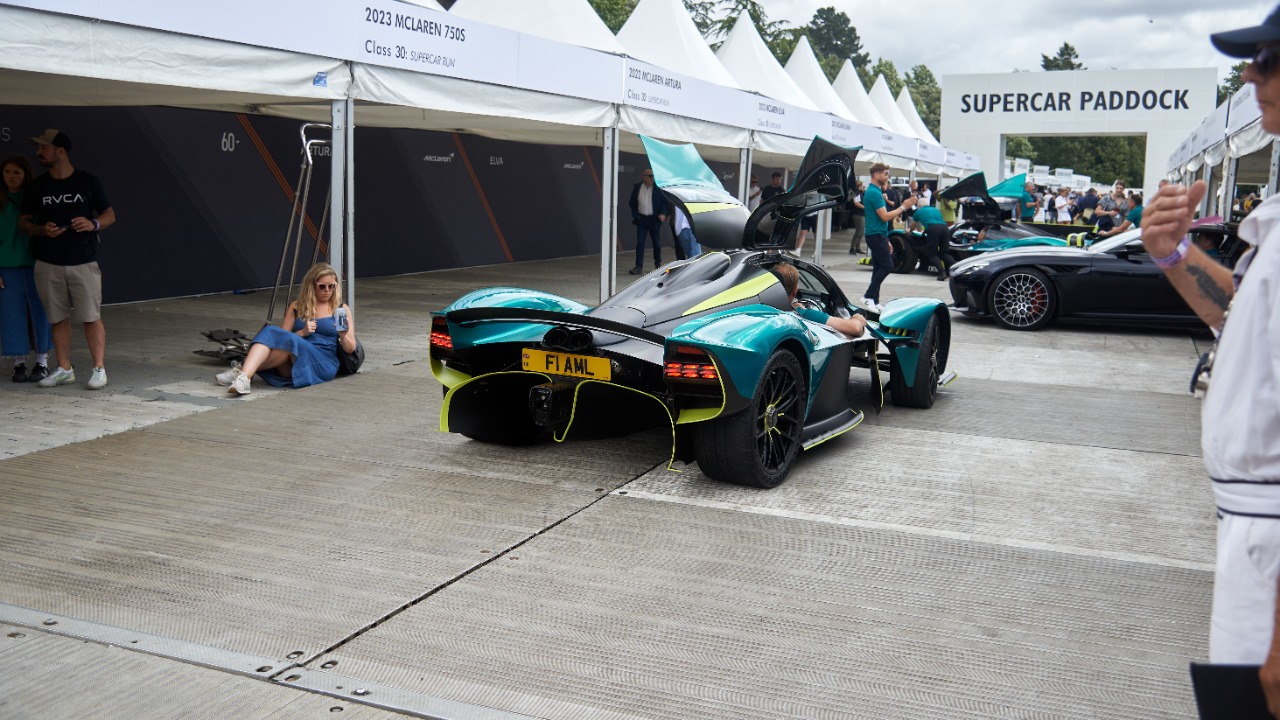
What strikes me most about the Valkyrie’s exterior is how little it cares about conventional beauty and how completely it is dictated by airflow. The car looks almost skeletal, with huge cutouts and tunnels that make it appear as if the body has been hollowed out around the mechanical core. Instead of a smooth, sculpted shell, you get a series of surfaces that seem to have been carved by wind tunnel smoke rather than a designer’s pen.
That approach is spelled out in the official description of the Aston Martin Valkyrie Coupe, which is a Two-door Coupe body style built around a Full Carbon fibre structure with Aluminium Inserts and a Carbon fibre body that is tuned for extreme downforce and stability under brutal acceleration when changing direction horizontally. The Design of the track-only variant, highlighted with its radical Exterior features, a vast rear wing and a large rear diffuser, shows how far the engineers pushed the aero package when they were freed from road-car compromises, as seen in images of The Valkyrie at the Geneva International Motor Show with a clear Rear view of the Valkyrie’s underbody tunnels and sculpted diffuser surfaces that look more like a prototype racer than a showroom model track-only variant.
A structure with zero steel and maximum intent
Underneath that aero-obsessed skin, the Valkyrie’s structure takes the F1 mindset to an extreme that even most hypercars do not attempt. Instead of mixing materials for cost or comfort, the car is built around a carbon tub that treats every gram as an enemy. The goal is not just lightness for its own sake, but the kind of stiffness and weight distribution that lets the suspension and aero work with race-car precision.
That is why there is not a single steel component in the structure, which is 100 per cent carbon fibre, a fact that instantly separates it from the usual blend of metals and composites in other exotics and helps explain why its magnesium alloy wheels weigh less than some performance brake discs, sharpening every input and response There. When I think about that level of structural purity, it feels closer to a Formula 1 monocoque than to the mixed-material shells of even the most advanced road cars, and it sets the stage for the kind of agility and feedback that drivers usually only experience on a grid.
The cockpit that puts you in a single-seater mindset
Climb into the Valkyrie and the F1 inspiration becomes even more literal. You do not so much sit in it as strap yourself into a carbon cell, with your feet raised and your body reclined in a way that feels far removed from the usual supercar driving position. The ergonomics are dictated by physics and packaging, not by the desire to make entry and exit graceful.
To enter, you step onto the seat and then slide in and adopt a reclined feet-up position just like in a modern F1 race car, a process that makes clear this is a machine designed around performance first and politeness second Jul. I find that detail telling, because it shows how the designers were willing to sacrifice everyday ease for the sake of replicating the control and connection of a single-seater, right down to the way your legs stretch out toward the pedals and your shoulders lock into the seat under braking and cornering loads.
F1 aerodynamics and handling, translated for the street
The Valkyrie’s most radical achievement, in my view, is how it translates F1-style aerodynamics and chassis tuning into something that can operate on real roads. Instead of relying on a big rear wing alone, the car uses a complex network of underbody tunnels and diffusers to generate vast downforce without the drag penalty of a traditional supercar spoiler. That allows it to stay planted at speeds and in corners that would unsettle even the most capable rivals.
The secret to the Aston Martin Valkyrie’s stability is the way its aero package and chassis work together to deliver balanced and extremely confident handling, with Formula 1 Technology adapted for the Street so the car can exploit its grip without feeling nervous or unpredictable on less-than-perfect surfaces Aston Martin Valkyrie Brings True Formula. Earlier development work described how Aston Martin designers stripped things back to the bare essentials, celebrating the engineering and using both low- and high-speed airflow in With the underfloor and bodywork to find new ways of generating downforce that would satisfy both track demands and road regulations With the. That combination of race-derived aero and carefully tuned compliance is what lets the Valkyrie feel like a prototype that just happens to cope with speed bumps.
A powertrain that sounds like a grand prix grid
Of course, none of this would matter if the Valkyrie did not deliver the kind of power and drama that its looks promise. Its hybrid powertrain is designed not only for headline numbers but for a soundtrack and response that evoke a modern F1 car, with a naturally aspirated engine that revs to stratospheric levels and an electric system that fills in torque and sharpens throttle response. The result is a car that feels alive from idle to redline, with every input met by an instant, visceral reaction.
That character is captured in descriptions of the car as a Symphony of For performance, with technologies developed for the track feeding a 1000HP Revolution that turns every straight into a launch and every tunnel into an echo chamber for its high-revving combustion engine and electric assist working in concert Valkyrie Unveiled. When I think about how that powertrain is integrated into the carbon structure and aero package, it feels less like a big engine dropped into a pretty shell and more like a complete system, tuned so that every surge of acceleration works with the downforce and chassis balance rather than overwhelming them.
Why the Valkyrie reset the supercar conversation
Put together, these choices explain why the Valkyrie did more than add another fast car to the market, it shifted what we expect from the top tier of performance machines. By treating the road car as an extension of a race program, it normalized ideas like a full carbon tub with no steel, a feet-up driving position and aero tunnels you can see daylight through. Those are not incremental tweaks, they are philosophical changes in how a road-going flagship can be conceived.
For me, the lasting impact of the Valkyrie is how it made other brands rethink their own halo projects, proving that customers would embrace something closer to a street-legal prototype than a softened grand tourer. From the Feb mindset behind Formula 1 Tech for Roads to the way Aug reporting framed the Aston Martin Valkyrie Brings True Formula, Technology and Street thinking together in one package, the car stands as a marker of how far motorsport ideas can travel when a company is willing to follow them to their logical extreme Formula. In that sense, the Valkyrie did not just break supercar norms, it quietly set a new template for what the next generation of hypercars will dare to be.