The Monte Carlo Landau 454 sits at the crossroads of luxury coupe styling and big block bravado, and its brief production window has turned it into one of Chevrolet’s most intriguing early‑1970s experiments. I want to pin down exactly which years Chevrolet actually built Monte Carlos with the 454 and Landau flavor, then look at how collectors are valuing those cars today compared with other Monte Carlo variants.
To do that, I will start with the better documented Monte Carlo SS 454 years, trace how the 454 big block itself rose and faded, and then narrow in on when a Landau‑trimmed Monte Carlo could realistically be ordered with that engine. From there, I will turn to current price data and recent market commentary to show what enthusiasts are paying now for big block Monte Carlos, and how that stacks up against other personal luxury coupes of the era.
First‑gen Monte Carlo: setting the stage for a big‑block Landau
The first‑generation Chevrolet Monte Carlo arrived as a personal luxury coupe that still had one foot in the muscle car world, which is why the 454 big block found a home under its long hood so quickly. The basic formula was a rear‑wheel‑drive two‑door with upscale trim and a long wheelbase, but Chevrolet left enough room in the engine bay and the option sheet for serious performance, a combination that would later make any 454‑equipped Monte Carlo, Landau or not, a standout among early 1970s coupes.
Reporting on the early cars notes that the Chevrolet Monte Carlo was part of a broader push by Chevrolet into the “personal luxury” space, a segment that grew through the early 1970s and was still evolving by the time the 1974 Chevrolet Monte Carlo arrived as part of the second generation. Coverage of that later model credits the 1974 Chevrolet Monte Carlo with opening a new market for Chevrolet and ties its origins back to planning work that began in September 1969 under John DeLorean, which helps explain why the first‑gen cars were engineered with both comfort and performance in mind. That context is crucial, because it shows why Chevrolet was willing to pair a plush coupe body with a 454 big block in the first place, and why a Landau‑style Monte Carlo with that engine fits the brand’s strategy rather than feeling like an oddball one‑off.
The 454 big block: why it mattered in a Monte Carlo
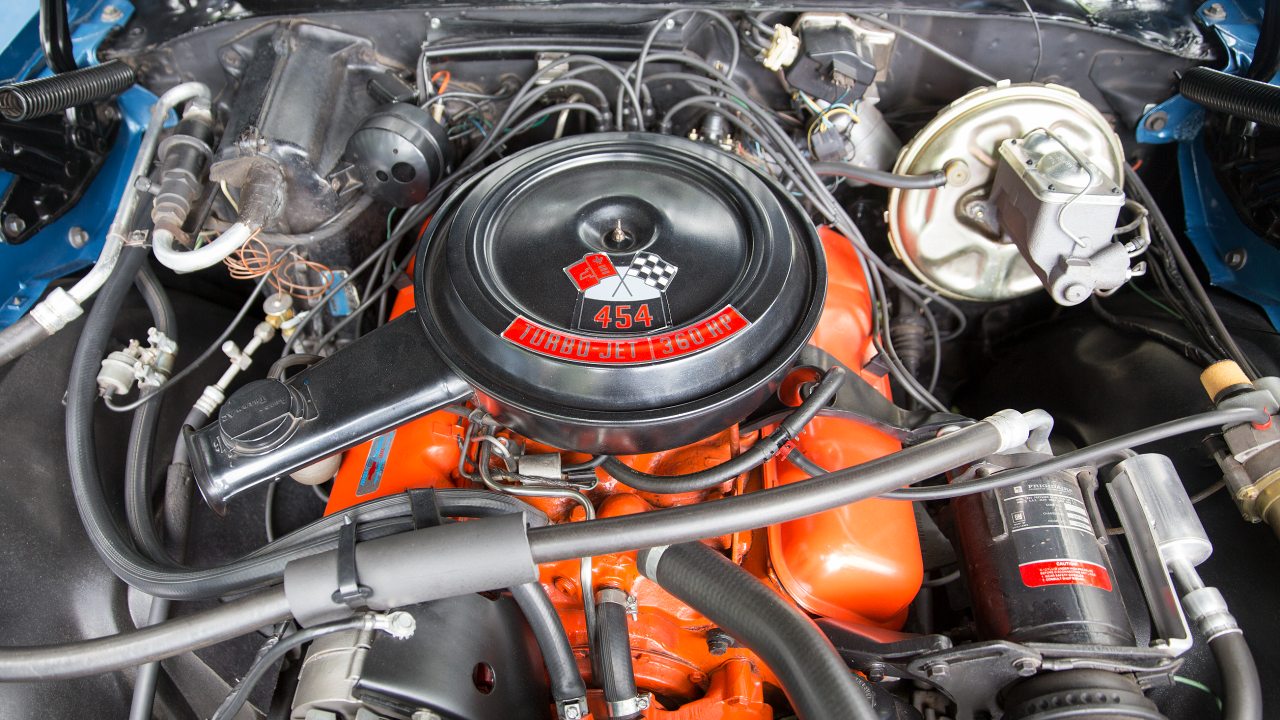
To understand the appeal of any Monte Carlo Landau 454, I have to start with the engine itself, because the Chevrolet 454 big block was already a legend in its own right. Historical coverage of the engine describes the 454 as a high‑displacement evolution of Chevrolet’s big block family, and notes in its History that, to some observers, the Chevrolet 454 was the right engine at the wrong time, arriving just as emissions rules and insurance pressures were starting to squeeze traditional muscle cars. That tension between raw power and changing regulations is exactly what makes a luxury coupe with a 454 so compelling today.
By the time the Monte Carlo was using it, the 454 had already proven itself in other Chevrolet performance models, and the engine’s reputation carried over into the personal luxury space. The same historical account notes that the 1970 versions of the 454 were especially strong performers before emissions control measures began to cut output, which means early Monte Carlo 454 cars captured the engine near its peak. When collectors talk about a Monte Carlo Landau 454 today, they are not just talking about a trim package, they are talking about a car built around one of Chevrolet’s most storied big blocks, a point that helps explain why values for documented 454 cars have climbed even as other large coupes from the period remain relatively affordable.
1970 Monte Carlo SS 454: the benchmark big‑block package
The clearest anchor point for any discussion of a Monte Carlo Landau 454 is the 1970 Chevrolet Monte Carlo SS 454, which set the template for pairing the body style with Chevrolet’s largest big block. Contemporary and retrospective coverage describes the 1970 Chevrolet Monte Carlo SS 454 as a powerful blend of luxury and performance, often calling it a muscle‑luxury hybrid that could deliver serious straight‑line speed while still offering the comfort expected of a personal coupe. One enthusiast discussion of the early cars, for example, highlights how the 1970 Chevrolet Monte Carlo SS 454 was a powerful statement of that hybrid concept, underscoring how unusual it was to see such a large engine in a car marketed for style and comfort.
More detailed write‑ups on the 1970 model emphasize that The SS package was only available for a short window, which has helped make surviving cars rare and desirable. A sales listing for a 1970 Chevrolet Monte Carlo SS 454 notes that The SS combined impressive performance with a high level of luxury, and stresses that the SS configuration was only offered briefly, which in turn makes it a very rare car today. That rarity is important when thinking about any Landau‑equipped 454 Monte Carlo, because it shows that Chevrolet never treated the 454 as a volume engine in this platform. Instead, the company used it sparingly, which means any Monte Carlo that combines a 454 with a distinctive roof treatment or trim package is likely to be a low‑production, high‑interest car in the modern collector market.
1971 Monte Carlo SS 454 and the end of the factory SS 454 era
The 1971 Chevrolet Monte Carlo SS 454 carried the big block torch for only one more model year, and that short run is central to understanding how narrow the window was for any Monte Carlo Landau 454 built with factory backing. Coverage of the 1971 Chevrolet Monte Carlo SS 454 explains that Chevrolet discontinued the Monte Carlo SS 454 package after the 1971 model year, which means the official SS 454 era lasted just two years. That decision effectively capped the number of factory‑built Monte Carlo 454 cars and pushed later big block cars, including any Landau‑trimmed examples, into even more niche territory.
The same reporting underscores that the 1971 Chevrolet Monte Carlo SS 454 still delivered serious performance and refinement, even as the broader market was starting to shift away from high‑displacement engines. When Chevrolet pulled the plug on the Monte Carlo SS 454 after 1971, it was responding to the same pressures that were reshaping the rest of its lineup, from emissions rules to insurance costs. For collectors, that means any Monte Carlo that combines the 454 with a special trim like a Landau roof has to be understood against a backdrop where Chevrolet was already retreating from big block options, which is one reason those cars are so closely scrutinized today for documentation and originality.
Landau styling and the Monte Carlo’s move upmarket
Even as the SS 454 package disappeared, Chevrolet was leaning harder into the Monte Carlo’s luxury identity, and that is where Landau styling comes into play. A Landau treatment typically meant a vinyl roof, extra brightwork, and sometimes unique badging, all of which pushed the Monte Carlo further into the personal luxury space that Chevrolet was cultivating. By the time the second‑generation 1974 Chevrolet Monte Carlo arrived, coverage of that model was already describing it as part of a new market for Chevrolet, one that emphasized comfort, style, and upscale features over outright performance.
Reporting from KEYSVILLE, Ga. on the 1974 Chevrolet Monte Carlo notes that Glenn Widner saw that car as part of the second generation of Chevrolet’s personal luxury coupes, and ties its development back to planning work that began in September 1969 by John DeLorean. That lineage helps explain why Landau‑style trims became more prominent as the Monte Carlo evolved. The car was always meant to be more than a muscle machine, and the Landau look fit neatly into Chevrolet’s strategy of offering a stylish, semi‑formal coupe that could be dressed up with vinyl roofs and extra trim. When a 454 engine appears in that context, it is almost a throwback to the car’s earlier SS 454 days, which is why any Monte Carlo Landau 454 stands out so sharply against the broader production run.
Pinpointing the years: when a Monte Carlo Landau 454 was possible
Because Chevrolet officially ended the Monte Carlo SS 454 package after 1971, the window for a factory‑built Monte Carlo that combines a Landau‑style presentation with a 454 is narrow and requires careful parsing of the available evidence. The documented SS 454 cars are clearly 1970 and 1971, and those models are well supported by valuation data and enthusiast reporting. A valuation guide for the 1970 Chevrolet Monte Carlo SS 454, for example, treats that configuration as a distinct model and provides specific pricing for it, which confirms that Chevrolet recognized the SS 454 as a separate package rather than a simple engine option.
After 1971, Chevrolet’s own reporting and enthusiast histories indicate that the Monte Carlo SS 454 package was discontinued, and there is no verified evidence in the provided sources that a factory SS 454 or equivalent big block performance package continued into 1972 or beyond. Unverified based on available sources are any claims that Chevrolet offered a regular‑production Monte Carlo Landau 454 as a cataloged combination in later years. What the sources do support is a broader shift toward luxury‑oriented trims, including Landau‑style treatments, while the 454 itself was being phased out or detuned in response to emissions and market pressures. That means the most defensible answer, based on the reporting at hand, is that the core years for a factory Monte Carlo 454 are 1970 and 1971, and any Landau‑equipped 454 cars would either be special‑order anomalies or later modifications rather than mainstream production runs.
Market values today: what a Monte Carlo 454 commands
Even without a clearly documented mass‑production Monte Carlo Landau 454, the market for big block Monte Carlos gives a strong indication of what such a car would be worth today. A valuation tool focused on the 1970 Chevrolet Monte Carlo SS 454 notes that Typically, you can expect to pay around $37,000 for a 1970 Chevrolet Monte Carlo SS 454 in good condition with average specification. That same guide reports that the highest sale price recorded over the last three years was $74,800, which shows how far top‑flight examples can climb when they have strong documentation and desirable options.
Those figures provide a useful benchmark for thinking about a hypothetical or very rare Monte Carlo Landau 454. If a standard 1970 Chevrolet Monte Carlo SS 454 in good condition is typically a $37,000 car, and the very best examples can approach or exceed the $74,800 mark, then a verified Landau‑trimmed 454 with unique styling cues would likely sit at the upper end of that range or beyond. Enthusiast coverage of the 1970‑1971 Chevy Monte Carlo SS 454 also notes that these cars remain relatively attainable compared with some other big block muscle machines, with one recent analysis framing them as Legendary Big Block Muscle For around $35K, which aligns closely with the valuation guide’s typical figure. That convergence suggests the market has settled on a clear baseline for big block Monte Carlos, and any Landau‑equipped 454 would be judged against that backdrop.
How the Monte Carlo 454 stacks up against other big‑block coupes
To understand whether Monte Carlo 454 prices are likely to keep rising, I find it helpful to compare them with other big block personal coupes from the same era. Enthusiast discussions that pit the Monte Carlo against rivals often bring up cars like the Pontiac Grand Am with the 455 V8, which offered a similar blend of comfort and performance. One conversation from May 31, 2024, for example, highlights a 1973 Pontiac Grand Am with the 455 V8 and notes that the post drew 1.1K reactions, 95 comments, and 89 shares, with Jason Minier and others weighing in, a reminder that interest in these big‑engine coupes is not limited to Chevrolet loyalists.
When I compare the Monte Carlo SS 454 to something like a Grand Prix or a Pontiac Grand Am 455, the Chevrolet tends to benefit from its clearer performance branding and the cachet of the 454 itself. The historical treatment of the Chevrolet 454 big block underscores its status as one of the standout engines of its time, which gives any car carrying it an extra layer of desirability. At the same time, coverage of the 1974 Chevrolet Monte Carlo’s role in opening a new market for Chevrolet shows that the brand successfully repositioned the Monte Carlo as a style‑forward luxury coupe, which can sometimes temper values for later, small‑block cars. In that context, a Monte Carlo Landau 454, if documented, would sit at the intersection of two strong collector currents: big block performance and personal luxury styling, a combination that tends to support higher prices relative to more common small‑block or six‑cylinder trims.
Collector appeal and what to look for in a Monte Carlo 454
For collectors chasing the spirit of a Monte Carlo Landau 454, the practical path usually runs through the better documented SS 454 cars and carefully optioned luxury trims. The 1970 and 1971 Chevrolet Monte Carlo SS 454 models are the most straightforward targets, since their configurations are well recorded and supported by valuation data. A detailed sales description of a 1970 Chevrolet Monte Carlo SS 454, for instance, emphasizes that The SS was only available for a short time and that the car represents a perfect blend of impressive performance and luxury, which is exactly the balance many buyers are seeking today.
When evaluating any Monte Carlo that claims to be a Landau 454, I would prioritize documentation that ties the car back to its original build, including factory records, period photos, or dealer paperwork. Given that Chevrolet officially discontinued the Monte Carlo SS 454 package after the 1971 model year, and that later Monte Carlo coverage focuses more on luxury and market positioning than on big block performance, any post‑1971 Landau‑style Monte Carlo with a 454 should be treated as Unverified based on available sources until proven otherwise. In the current market, well‑documented 1970 and 1971 Chevrolet Monte Carlo SS 454 cars already command strong money, with typical values around $37,000 and top sales reaching $74,800, and a verified Landau‑trimmed 454 would likely sit at or above those benchmarks, reflecting both its mechanical pedigree and its place in Chevrolet’s evolving personal luxury story.