
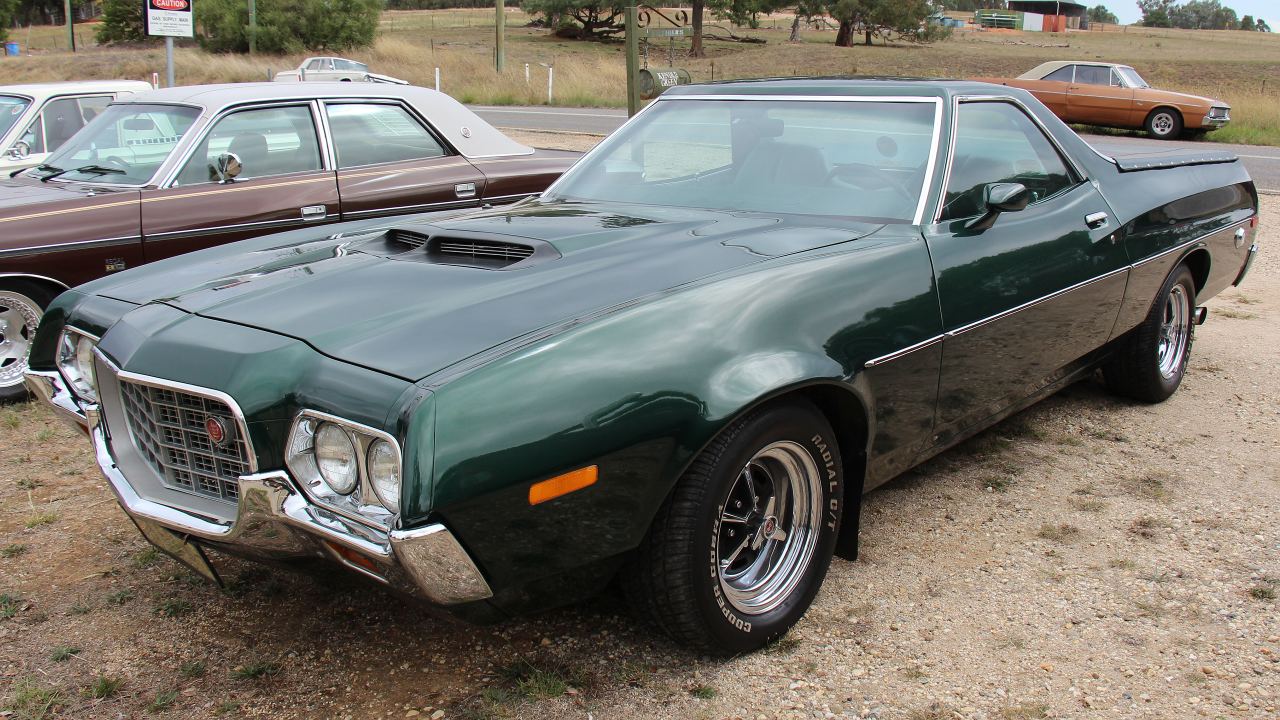
The Ranchero GT 351 sits at the intersection of muscle car swagger and pickup practicality, and its brief production run has turned it into one of the most closely watched corners of the classic Ford market. Collectors now track specific years, engines, and trim codes with the same intensity usually reserved for big-block fastbacks, because the right Ranchero GT 351 can command serious money while lesser-spec trucks still trade as affordable drivers.
To understand which years really delivered the GT 351 formula and what those vehicles are worth today, I need to trace the Ranchero’s evolution from its fifth-generation performance peak into the later, more comfort-focused GTs, then line that history up against current valuation tools, auction listings, and enthusiast chatter. Only by pairing that production story with hard price data can I separate nostalgia from actual market value.
How the Ranchero evolved into a GT performance hauler
The Ranchero did not start life as a muscle machine. It began as a car-based pickup that blended passenger-car comfort with light-duty utility, and only gradually moved toward the performance image that would support a GT 351 variant. By the time the model reached its fifth generation, the styling and chassis had grown closer to contemporary intermediates, which opened the door for serious V8 power and sport-oriented trim packages that went far beyond basic work-truck duty.
Reporting on the model’s history describes the Fifth Generation as the moment when the Ranchero fully embraced this dual identity, with a 351 CI V8 Cleveland engine powering a 1970 example and turning the car-based pickup into something that could credibly share showroom space with muscle coupes. That same overview notes how the Ford Ranchero borrowed heavily from contemporary performance models, which set the stage for the GT badge to mean more than just stripes and badges.
The specific years Ford built the Ranchero GT 351
When enthusiasts talk about the “Ranchero GT 351,” they are usually zeroing in on a narrow window when the GT trim and the 351 cubic inch V8 combined to create a true performance hauler. Evidence from period-focused reporting points to the 1970 and 1971 model years as the core of this story, with those trucks representing a high point in both styling and power. A detailed feature on the Ford Ranchero GT notes that the 1970 to 1971 Ford Ranchero GT 351 marked one of the high points of the model, tying the GT package directly to the 351 m engine and emphasizing how that combination was engineered to look good and perform on the street.
That same historical arc is reinforced by broader generational coverage, which highlights how the Fifth Generation 1970 to 1971 Ranchero could be ordered with a 351 Cleveland, confirming that those years paired the GT image with serious small-block power. Later GT-badged Rancheros existed, but the sources consistently single out 1970 and 1971 as the moment when the GT 351 formula was most clearly defined, which is why collectors treat those two years as the canonical “Ranchero GT 351” production run.
Why the 351 Cleveland matters under a Ranchero GT hood
The engine choice is central to the GT 351’s appeal, because the 351 Cleveland gave the Ranchero a performance heart that matched its aggressive styling. In period, this V8 was known for its high-flow cylinder heads and rev-happy character, traits that made it a favorite among muscle car buyers who wanted something more sophisticated than a basic workhorse engine. When that powerplant landed in a GT-badged pickup, it turned the Ranchero into a credible alternative to intermediate coupes that shared the same drivetrain.
Historical coverage of the Cleveland notes that a 351 CI V8 Cleveland engine powers a fifth generation 1970 Ranchero, underlining how closely the truck followed contemporary performance trends. Broader engine references place the 351 within Ford’s small block family alongside displacements like 302, and describe how these engines were offered in both Carbureted and EFI forms over time, with a key design change arriving In 1974 when a boss was added on the front of the block. That timeline helps explain why the early 1970 to 1971 GT 351 trucks, which predate those later revisions, are seen as purer expressions of the original performance intent.
How the GT 351 compared with other Ranchero trims
Even in period, the GT 351 sat above more basic Ranchero trims that shared the same body but not the same performance focus. A standard Ranchero from 1970 or 1971 could be ordered with milder engines and simpler trim, which kept prices down and made sense for buyers who prioritized utility over speed. The GT 351, by contrast, layered on visual cues, upgraded suspension, and the 351 V8, creating a package that was more about image and performance than pure work duty.
Modern valuation tools reflect that hierarchy. A pricing guide for the 1970 Ford Ranchero base model, framed under Common Questions that start with How much a given year is worth, shows that even non-GT trucks can command solid money in good condition. A similar tool for the 1971 Ford Ranchero notes that Typically, you can expect to pay around $20,000 for a 1971 Ford Ranchero in good condition with average spec, which sets a baseline. Against that backdrop, a genuine GT 351 with its more desirable drivetrain and trim can reasonably be expected to sit above those averages, especially when documentation and originality are strong.
What a 1970–1971 Ranchero GT 351 is worth today
Pricing a 1970 or 1971 Ranchero GT 351 today means starting with those base-model benchmarks and then adding premiums for the GT package, the 351 engine, and overall condition. With a 1971 Ranchero in average spec already pegged around $20,000 in good condition, a well-kept GT 351 example can climb significantly higher, particularly if it retains its original drivetrain and factory-correct details. The market tends to reward documented performance options, and the GT 351’s reputation as a high point in the lineup gives it extra leverage.
Valuation tools for the 1970 Ford Ranchero and 1971 Ford Ranchero provide the starting point, while a feature on the Ford Ranchero GT describes the 1970 to 1971 Ford Ranchero GT 351 as a high point that collectors now recognize. That same piece, dated Oct 14, 2025, presents Fast Facts that underline how the GT 351 was engineered to look good and perform on the street, which helps explain why buyers are willing to pay a premium over standard trucks. Exact dollar figures for GT 351 sales vary by condition and originality, but the consistent message across these sources is that the market treats them as the most valuable fifth-generation Rancheros.
Later GT-badged Rancheros and how they differ in value
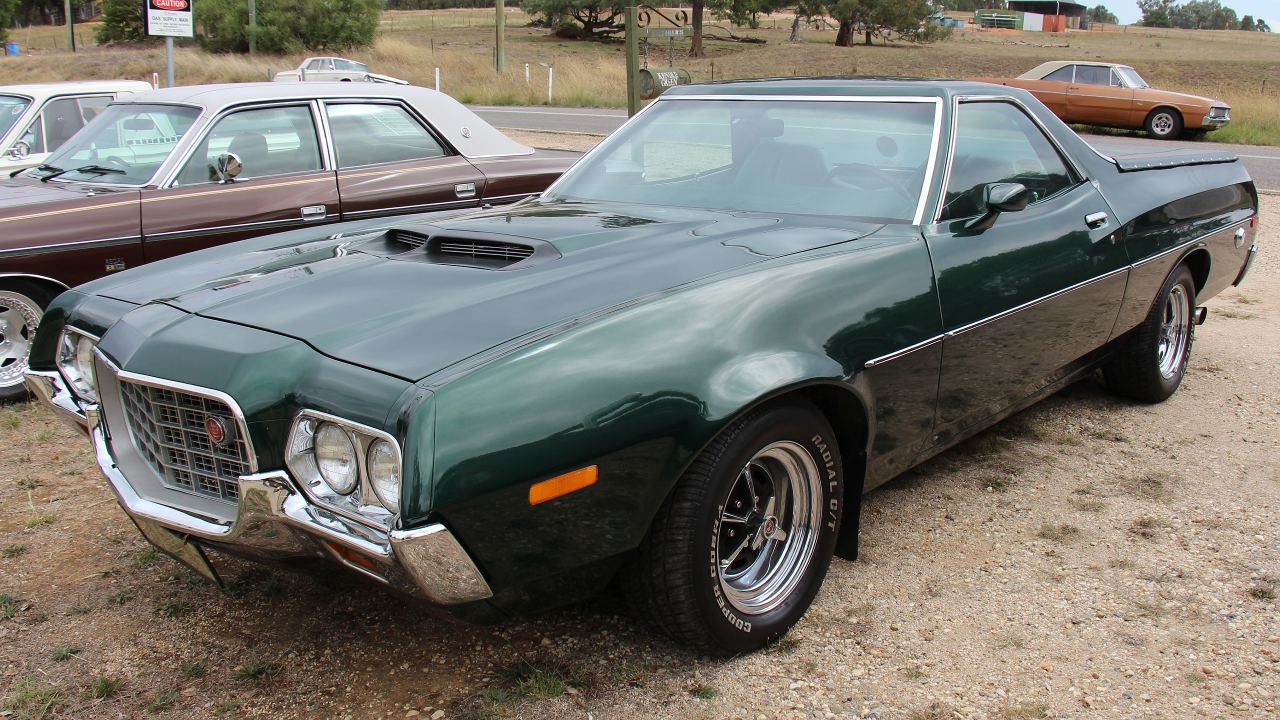
The GT badge did not disappear after 1971, but later GT Rancheros occupied a different niche, with more emphasis on styling and comfort than outright performance. By the mid 1970s and into the late 1970s, tightening emissions rules and changing buyer tastes meant that even GT models were often softer in character than their early 1970s predecessors. As a result, collectors tend to view these later GTs as interesting period pieces rather than the pinnacle of Ranchero performance.
Evidence of this shift appears in enthusiast discussions about a 1977 GT, where a forum thread dated Jun 29, 2010 features a user identified as 72GTVA Administrator Staff Member offering an opinion on value. In that exchange, the poster begins with the word Based on pictures and description, and suggests that a 1977 GT might struggle to break $7,000, which is well below the benchmarks for early 1970s trucks in good condition. A separate reference to the Ford Ranchero GT Seventh generation, covering 1977 to 1979 with Assembly Lorain, Ohio, United States, reinforces that these later trucks belong to a different era. Together, those sources show that while the GT name persisted, the market does not value late 1970s GTs at the same level as the 1970 to 1971 GT 351 models.
Real-world sale examples that show GT 351 demand
Beyond guidebook values, individual sale listings and enthusiast posts help illustrate how much buyers are actually willing to pay for GT 351 trucks. When a well-presented example appears, it tends to generate strong interest, especially if the seller can document a correct 351 engine and original GT equipment. These real-world cases also reveal how modifications, restorations, and regional demand can push prices up or down relative to published averages.
A social media post dated Oct 4, 2024 highlights a 1970 Ford Ranchero GT with a rebuilt 351ci Cleveland V8 engine, describing the car in the middle of the image as a 1970-1971 Ford Ranchero GT. The commentary notes that it was a high-performance version of the Ranchero, and goes on to say that the very best examples can sell for over $100,000. While that figure represents the top of the market rather than an everyday transaction, it aligns with the idea that rare, correctly restored GT 351s can command multiples of the values attached to standard trucks. At the other end of the spectrum, a Reddit thread from May 2, 2024 about a ’73 Ranchero includes a comment that begins with Well it is a GT, so that makes it more desirable, showing that even outside the 1970 to 1971 window, the GT badge still nudges values upward compared with base models.
How 1972–1973 GTs and other engines stack up
Once the 1970 to 1971 GT 351 trucks set the template, later early 1970s Rancheros had to live in their shadow. The 1972 and 1973 GTs carried forward the styling and some of the performance image, but they were shaped by tightening emissions rules and shifting priorities. As a result, collectors often treat them as more affordable entry points into the GT world rather than direct peers to the original GT 351s.
Valuation tools for the 1972 Ford Ranchero GT frame pricing under a Common Questions section that starts with How much a 1972 Ford Ranchero GT is worth, and note that values can vary greatly depending on condition and specification. That variability reflects the fact that some 1972 GTs were ordered with stronger engines and options, while others were more modestly equipped. When those trucks are compared with the 1970 to 1971 GT 351s, the earlier models usually command a premium, but the 1972 to 1973 GTs still benefit from the GT name and can be attractive buys for enthusiasts who want the look without paying top-tier money.
Where GT 351 values sit in the broader Ranchero market
To understand how the GT 351 fits into the wider Ranchero landscape, it helps to look at asking prices for non-GT trucks across multiple generations. Listings for earlier models show that even work-oriented Rancheros can bring respectable money when they are clean and rust free, which sets a floor under the market. Against that backdrop, the GT 351’s combination of rarity and performance gives it room to sit at the top of the price range.
Current classifieds for the Ford Ranchero include a 1966 example listed at $ 22,498 with 1,866 miles showing on the ad, and the site notes that You have viewed 30 of 105 results, with prices that can max out around $69,900. Those figures illustrate how strong the best non-GT trucks can be. When I set those numbers alongside the guidebook estimate that a 1971 Ranchero in good condition with average spec is around $20,000, and then factor in the documented premiums for GT 351 trucks and the occasional six-figure outlier mentioned in enthusiast posts, the pattern is clear. The 1970 to 1971 Ranchero GT 351 occupies the upper tier of the Ranchero market, with values that can rival or exceed the most desirable earlier models when condition, originality, and documentation all line up.

Leave a Reply