American muscle cars ruled the streets in the ’60s and ’70s, but they weren’t without competition. Around the world, carmakers were putting together their own performance machines, some of which took direct aim at the muscle car market. These international challengers brought different approaches—lighter weight, more precise handling, and sometimes unexpected powertrains. Here’s a list of 10 international cars that made muscle fans sit up and take notice, offering a different flavor of speed and attitude on their own terms.
Jaguar E-Type Series 1 (1961-1968)

The Jaguar E-Type combined sleek style with impressive performance, powered by a 3.8-liter inline-six producing around 265 horsepower. Its lightweight monocoque chassis and independent suspension gave it handling well beyond most American muscle cars of the era.
The E-Type wasn’t just fast in a straight line—it excelled on corners, with a smooth, refined interior featuring wood-rimmed steering wheels and leather seats. It showed muscle could come with a touch of European sophistication and agility.
Ford Capri RS2600 (1970-1973)

Though made by Ford, the Capri was designed in Europe to compete with muscle cars in a smaller, lighter package. The RS2600 came with a 2.6-liter inline-six producing 150 horsepower, which might seem modest but delivered strong performance thanks to its lightweight body.
Its sporty interior offered bucket seats and a simple dashboard focused on driving. The Capri balanced power and handling, challenging muscle cars on twisty roads rather than just straight-line speed.
Datsun 240Z (1969-1973)

The 240Z was a game changer from Japan, packing a 2.4-liter inline-six with 151 horsepower into a lightweight coupe that weighed just over 2,300 pounds. It had a 5-speed manual transmission and independent rear suspension, making it nimble and quick.
Inside, it had a driver-focused cockpit with clear gauges and comfortable seats. The 240Z offered strong performance and handling at a much more accessible price point than many muscle cars, shaking up the market.
BMW 2002 tii (1971-1974)

BMW’s 2002 tii combined a 2.0-liter inline-four with fuel injection to make 130 horsepower. The lightweight chassis, precise steering, and independent suspension gave it sharp handling, making it competitive with heavier muscle cars on back roads.
The interior was functional but comfortable, with sport seats and a simple gauge layout. The 2002 tii proved that handling and balance could be just as important as raw power.
Alfa Romeo GTV 1750 (1967-1971)

The GTV 1750 featured a 1.8-liter twin-cam inline-four engine producing 132 horsepower, coupled with a lightweight chassis and rear-wheel drive. It was quick for its size, with sharp steering and a nimble feel that contrasted muscle cars’ bulk.
Inside, it offered a sporty yet elegant design with leather-trimmed seats and a wood-rimmed steering wheel. The GTV showed European sports cars could offer a spirited alternative to muscle’s brute force.
Lancia Fulvia HF (1963-1976)

The Fulvia HF used a 1.6-liter V4 engine with around 115 horsepower and lightweight construction. It was more about agility and finesse than outright power, with front-wheel drive and excellent road manners.
Its interior was minimal but driver-oriented, emphasizing function over flash. The Fulvia proved that precision engineering could challenge muscle cars on twisty roads rather than drag strips.
Toyota 2000GT (1967-1970)
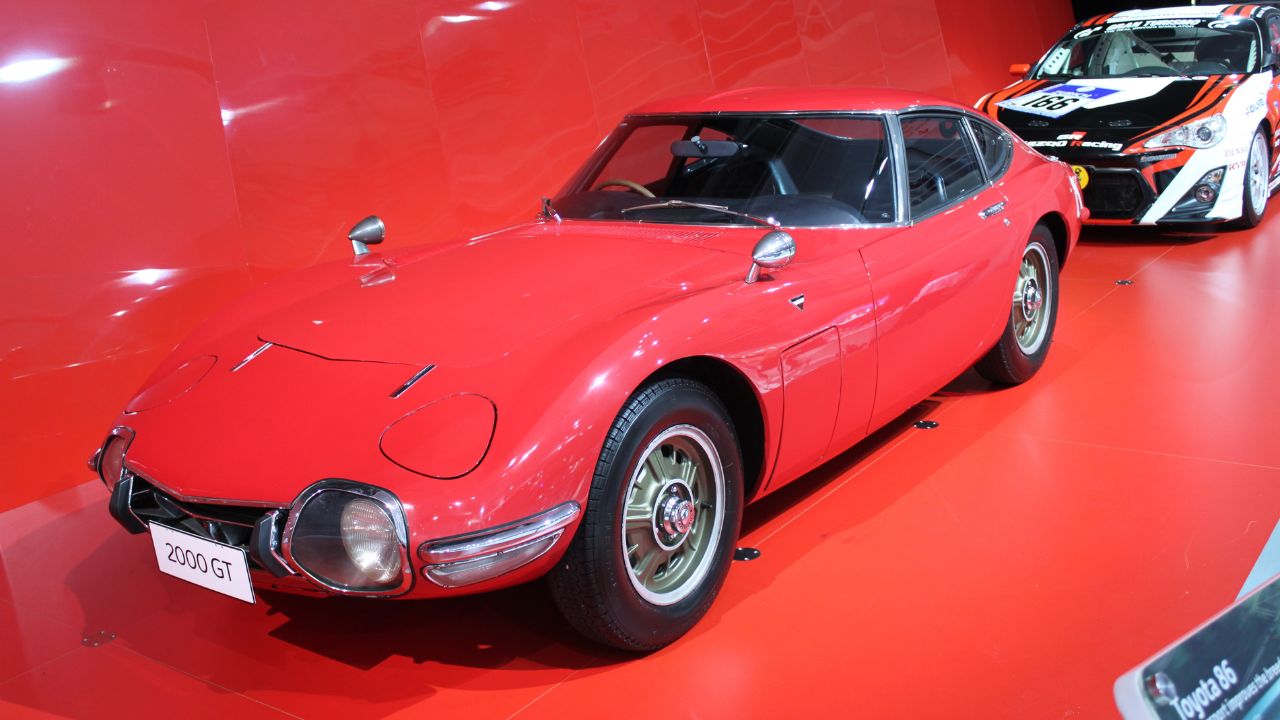
The 2000GT packed a 2.0-liter inline-six producing about 150 horsepower, backed by a 5-speed manual and independent suspension. Its lightweight body and balanced chassis made it competitive with many muscle cars in terms of handling and speed.
Inside, the 2000GT had a stylish cockpit with wood accents and leather upholstery. Although made in limited numbers, it’s an example of Japanese performance reaching for international attention.
Mercedes-Benz 280SL Pagoda (1967-1971)

The 280SL offered a 2.8-liter inline-six producing 170 horsepower, wrapped in a stylish and slightly understated coupe or convertible body. Its smooth power delivery and refined suspension made it comfortable yet capable on the road.
The interior emphasized luxury, with leather seats and classic wood trim, showing that performance didn’t have to come at the cost of refinement. The 280SL was a grand tourer with muscle car competitiveness.
Renault Alpine A110 (1962-1977)

The Alpine A110 was a lightweight, mid-engined sports car powered by a 1.3- to 1.6-liter inline-four ranging from 95 to 140 horsepower, depending on the version. It relied on agility and nimble handling rather than brute force.
Inside, it was Spartan but functional, built for driving focus. The Alpine’s rally heritage and light chassis made it a serious competitor in a different arena from American muscle, emphasizing driver skill.
Ford Escort RS1600 (1970-1975)
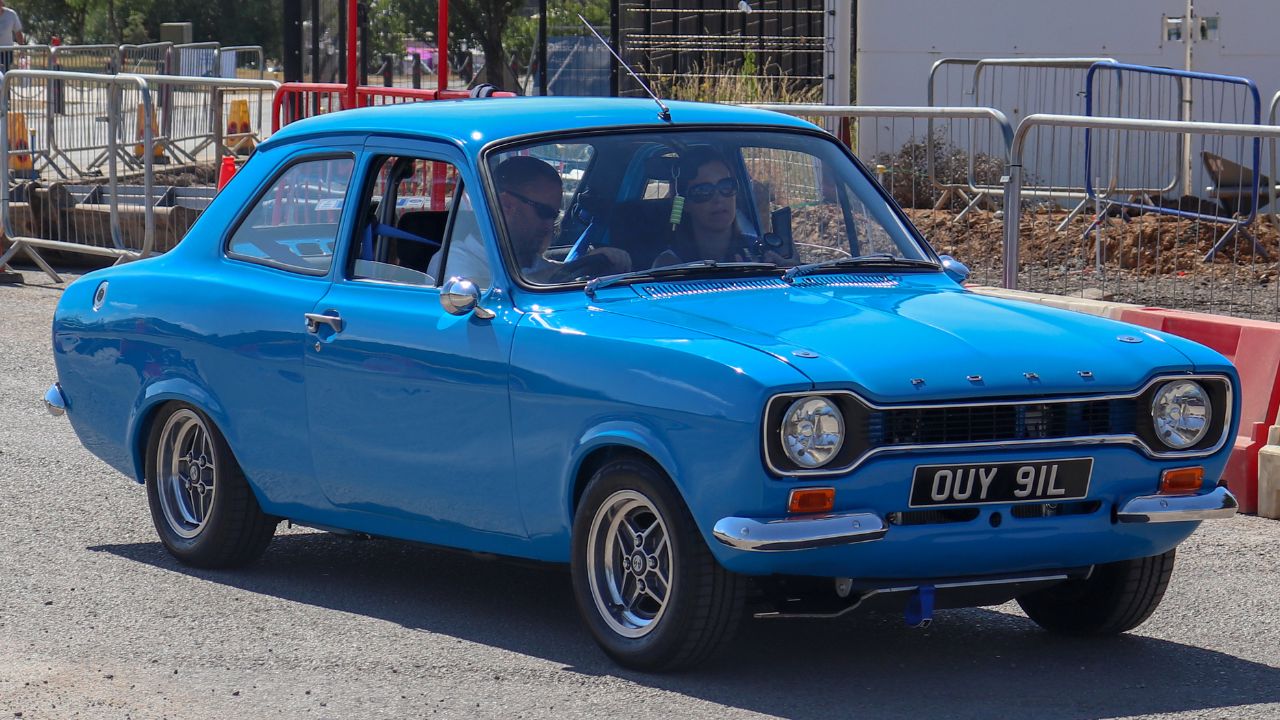
The RS1600 came with a 1.6-liter Cosworth-tuned inline-four producing 120 horsepower, paired with a lightweight body and front-engine, rear-wheel-drive layout. It was a rally-inspired car with excellent handling and responsiveness.
The interior was simple but focused, featuring supportive bucket seats and clear instrumentation. The Escort RS1600 challenged muscle cars by proving performance could come from smaller displacement and sharp dynamics rather than just size and power.
Like Fast Lane Only’s content? Be sure to follow us.
Here’s more from us:
*Created with AI assistance and editor review.