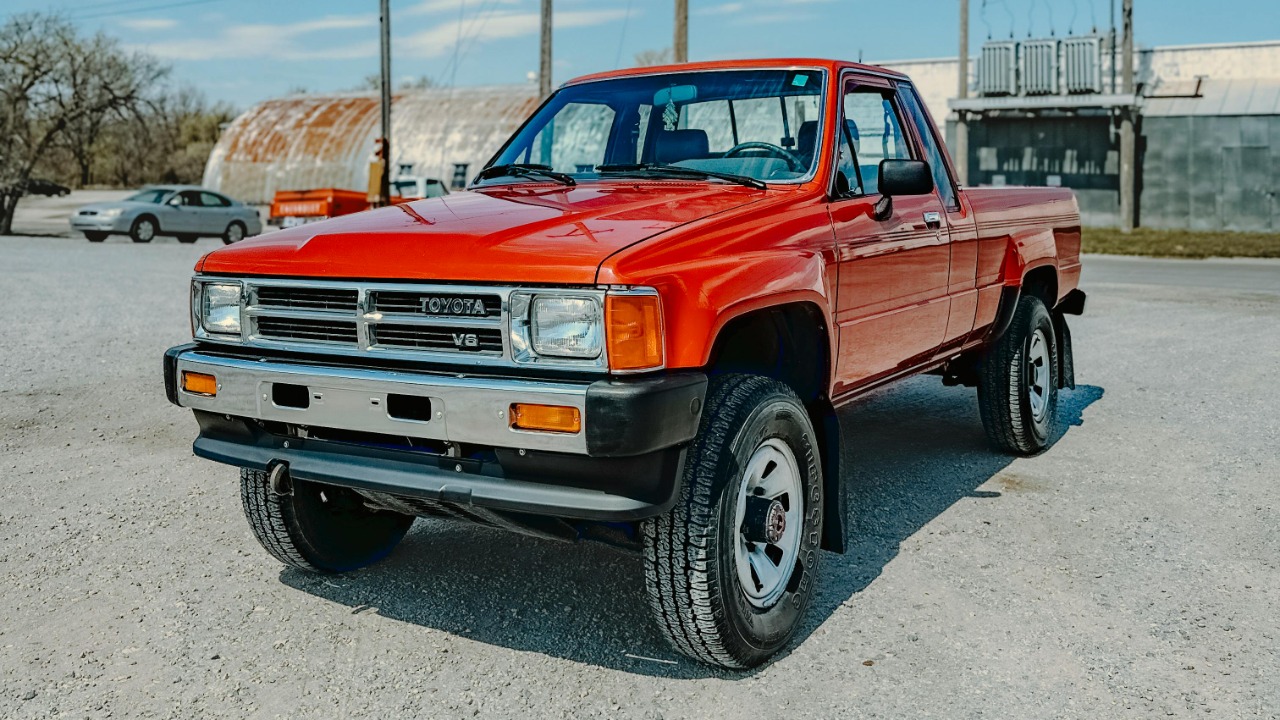
Toyota’s fuel-injected 22RE four cylinder earned a reputation in pickups as an engine that seemed to run forever, even when owners treated maintenance as an afterthought. Designed as a 2.4-liter workhorse, it transformed Toyota pickups into long-lasting trucks that often outlived rust, interiors, and their original owners. That quiet durability is why enthusiasts still speak of the 22RE as the engine that never quits, decades after production ended.
Today, in an era defined by turbochargers and complex electronics, the 22RE looks almost archaic on paper. Yet its mix of simple engineering, conservative tuning, and overbuilt components keeps used Toyota pickups in daily service and on remote trails. Owners frequently report odometers exceeding hundreds of thousands of miles, and specialist builders rebuild and upgrade these engines as long-term platforms rather than disposable components.
From work truck afterthought to cult favorite
The 22RE story begins with a straightforward specification sheet: a 2.4-liter inline four cylinder gasoline engine produced by Toyota starting in the early 1980s for light duty vehicles. Reporting on history of the unit describes it as part of a family of engines that balanced quality, efficiency, and longevity rather than headline power. A related overview of History of the engine traces how this modest 2.4-liter design evolved into a symbol of Toyota’s approach to durability, particularly in pickups and 4×4 models that had to survive harsh use with little mechanical sympathy.
In the United States, the 22RE became closely associated with the compact Toyota pickup and 4Runner, where its manageable size and fuel economy suited work fleets and recreational buyers alike. The Toyota 22RE is a 2.4 L engine with 2,366 cc displacement, produced by Toyota Motor Corporation from the early 1980s to the mid-1990s. Another enthusiast oriented guide explains that Toyota used the 22RE 2.4 four cylinder as the standard engine in trucks and 4Runners from 1985 to 1995, a decade of production that cemented its presence on North American roads.
Why the 22RE keeps running when others give up
The 22RE’s longevity results from conservative engineering that prioritizes durability over peak performance. A technical breakdown from Nov on why the Engine So Reliable highlights its cast iron block, aluminum head, and relatively low specific power as ingredients that keep internal stresses modest. The same analysis points to a simple fuel injection system, sturdy timing chain, and a recommended service interval for key components that can extend to 60,000 miles or 5 years, all of which reduce the chances of catastrophic failure in everyday use.
Cooling and lubrication are equally central to the engine’s reputation for endurance. A related Nov section on why the 22RE Engine is dependable notes that its water pump, radiator capacity, and coolant routing support reliable temperature control, with one passage explaining how the design contributes to reliable even under sustained load. Owners who follow basic maintenance, such as oil changes and timing chain service, often see the 22RE outlast the truck’s bodywork. Guides note the engine was engineered to endure extreme conditions with minimal attention.
Myth, million mile legends, and real world abuse
Stories about the 22RE’s toughness have taken on a life of their own, blending documented endurance with folklore. A widely shared video clip describes how an example of the related 22R engine reportedly ran without oil for 400 miles in a brutal test in the 1980s, presenting the engine as so overbuilt that it could survive conditions that would destroy most competitors. A social media post recounts a 22R engine reportedly reaching a million miles without rebuilding, highlighting that Toyota designed it for durability rather than performance flair.
Even enthusiasts who caution against taking every anecdote literally still point to the engine’s real world track record. A separate Jul post notes that There is no way this is possible when recounting a 1990 story in which Toyota engineers supposedly drained all the oil from their 22RE and kept driving, then explains that this story is mostly an urban legend even as it reinforces the perception that drivers can trust their life with such an engine. Owners on enthusiast forums echo the same theme in less dramatic terms, with one Apr discussion of a Toyota pickup on Reddit arguing that the truck is basic, easy to fix, and very reliable, and that a mechanic who dismisses the 22RE as junk is probably not a great choice for this kind of vehicle.
Why old Toyota pickups with 22RE still matter
The cultural status of the 22RE rests not only on durability but also on how it shaped expectations for compact pickups. A profile of the engine’s place in American car culture calls it one of the most bulletproof engines ever built and notes that American the Toyota 22R and its fuel injected 22RE sibling are legendary, a sentiment captured in a Jun short video that praises the American the Toyota four cylinder as the most reliable 4 cylinder in America. An overview of Toyota’s reliability cites the 22RE engine as an example, noting it was produced from 1981 to 1995 and that its conservative design philosophy continues to influence buyer perceptions of the brand.
More from Fast Lane Only