
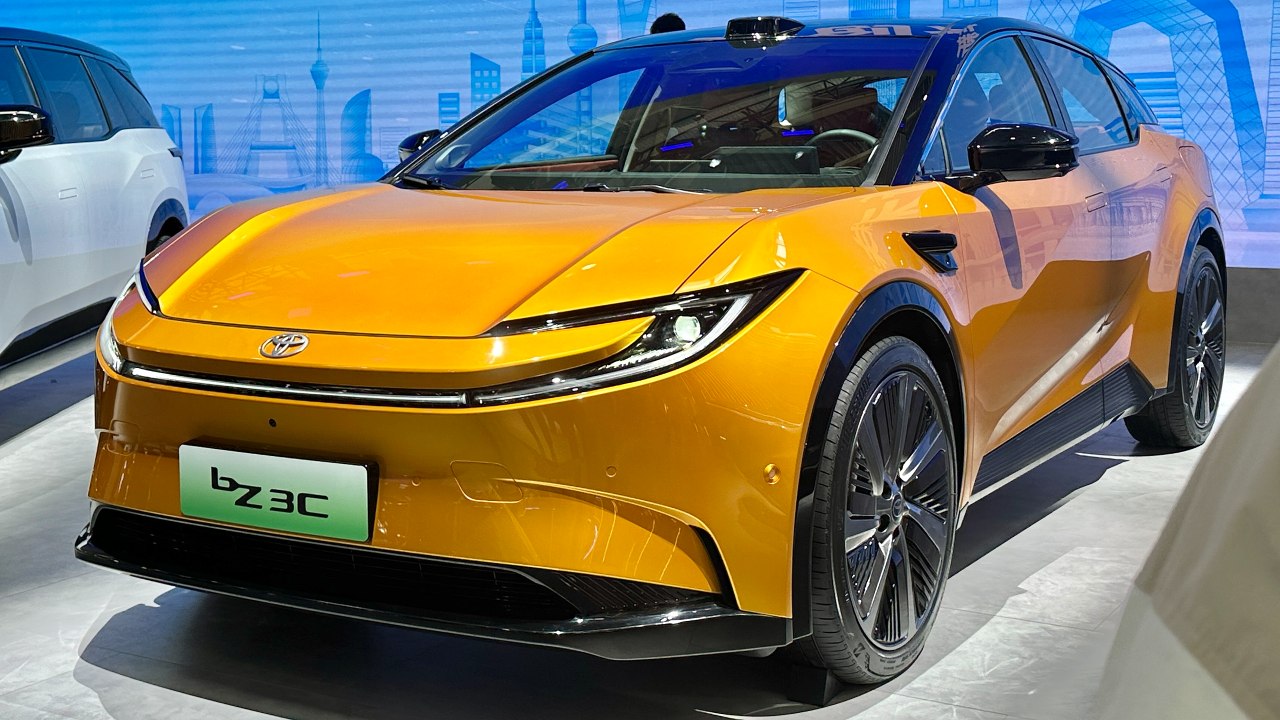
As climate change drives harsher storms and longer heat waves, the idea of a car quietly keeping the lights on at home is moving from novelty to necessity. Toyota is now testing electric vehicles as whole‑home backup power during blackouts, treating parked Battery Electric Vehicles as mobile batteries that can feed electricity back into houses and the wider grid. The effort signals a strategic shift for a company long associated with hybrids, positioning its next generation of EVs as critical infrastructure as much as personal transport.
I see this experiment as part of a broader race to redefine what an electric car is for. Instead of being a one‑way consumer of power, Toyota is betting that its vehicles can stabilize stressed grids, support neighborhoods through outages, and even rival traditional backup generators. The stakes are high, not only for drivers who want resilience, but for utilities and regulators trying to manage a rapidly electrifying economy.
From driveway to lifeline: inside Toyota’s blackout trials
The current tests center on using Toyota electric vehicles to run an entire home when the grid goes dark, a concept that has been technically possible for years but rarely deployed at scale. In these pilots, a bidirectional charger connects the vehicle to a home’s electrical panel so that stored energy in the car’s battery can be sent back out to power appliances, heating and cooling, and critical medical devices. Reporting on the program describes Toyota evaluating how this setup performs during brutal blackouts, with engineers tracking how long a single charge can sustain typical household loads and how seamlessly the system switches on when utility power fails.
What makes this moment different is that Toyota is not treating backup power as a niche add‑on, but as a core promise of its emerging EV lineup. The company has already framed its electric models as a “must‑have resource during emergency situations,” arguing that the ability to keep a home running when the grid is down is “a win‑win for drivers” and the environment. In a news release, Toyota even compared the combined potential of the United States fleet of about four million electric vehicles to the output of 40 nuclear power reactors, underscoring how much latent capacity is sitting idle in garages and parking lots during a typical day.
How bidirectional charging turns cars into power plants
At the heart of Toyota’s strategy is bidirectional charging, the ability for electricity to flow both into and out of a vehicle battery. In its Vehicle to Grid Program with Oncor Energy Demonstrates Benefits of Bidirectional BEV Charging, Toyota has been testing how Battery Electric Vehicle hardware and software can respond to grid signals, charge when electricity is abundant, and discharge when demand spikes. That work builds on a pilot that the company said began in 2022, which is now studying how EVs can stabilize the grid during peak demand, provide backup power, and support a more sustainable energy system.
Technically, this involves more than simply plugging a car into a wall. The charger must safely invert the battery’s direct current into grid‑compatible alternating current, coordinate with home electrical panels, and communicate with utilities so that power is not pushed onto lines that crews believe are de‑energized. Toyota’s experience with the Uchi Kyuden System, a residential battery product that uses electrified vehicle battery technology and Toyota’s battery control, gives it a head start on managing these flows at household scale. By adapting that expertise to vehicles like the 2026 Toyota bZ Battery Electric Vehicle, which is marketed explicitly as a BEV, the company is trying to ensure that its cars can serve as both transportation and resilient storage.
From generators to EVs: a changing backup power playbook
For decades, the default response to blackout anxiety has been a fossil‑fuel generator humming away in the backyard. Municipal guidance on emergency power now acknowledges that this model is starting to shift, noting that Recently, electric vehicles have emerged as a new source of backup power for homes. Instead of installing a standalone battery system or relying solely on gasoline or diesel generators, homeowners can use vehicle‑to‑load or vehicle‑to‑home systems that draw from the car they already own. In practice, that means a single investment in an EV can cover both daily commuting and rare but high‑stakes outages.
Toyota is leaning into this comparison, arguing that the large batteries in its EVs actually make them incredibly valuable in emergencies. The company’s outreach emphasizes that drivers can charge when rates are low, then use that stored energy to avoid running noisy, emissions‑heavy generators during storms or heat waves. In its collaboration with Oncor Energy, Toyota has highlighted how coordinated discharging from a fleet of vehicles could help shave peak demand, reducing the need for utilities to fire up expensive peaker plants. That framing positions EVs not as a burden on the grid, but as flexible assets that can be dispatched when power is scarce.
A long road to this “new” idea
Although the blackout trials feel timely, Toyota’s interest in using vehicle batteries for home and grid support is not new. The Uchi Kyuden System, introduced several years ago, was explicitly designed to provide residential backup power using technology derived from electrified vehicles, including Toyota’s battery control systems. Around the same period, the company showcased how its electric cars could power a home during blackouts, presenting the concept as a way to maintain essential services in emergencies rather than as a futuristic gimmick. Those early efforts laid the technical and regulatory groundwork for the more ambitious pilots now underway.
More recently, Toyota has expanded a pilot program that enables vehicles to supply backup power, with Story Highlights noting that the project started in 2022 and has grown alongside the broader U.S. EV market. Some four million U.S. electric vehicles now represent a vast, distributed storage network that can be tapped if the right hardware and policies are in place. Analysts tracking Future Projections for Electric Vehicle Manufacturers Solid, State Batteries have also pointed to Toyota’s work on next‑generation cells, which could further increase energy density and durability. If those solid state batteries move from lab to showroom, the same car that powers a commute could one day keep a home running for longer stretches without compromising battery health.
What it means for Toyota’s EV push and for drivers
These backup power trials arrive as Toyota tries to close the gap with rivals on fully electric models. Reviews of the 2026 Toyota bZ describe it as new, improved, and finally competitive, a sign that the company is moving beyond its comfort zone with hybrids like The Prius. By integrating bidirectional capability into vehicles that are already being refreshed for performance and range, Toyota is attempting to differentiate on resilience rather than just acceleration or charging speed. In my view, that is a savvy move in a market where many EVs feel interchangeable on paper but few can credibly promise to keep a refrigerator cold through a multi‑day outage.
For drivers, the appeal is straightforward. A Toyota Battery Electric Vehicle that can feed power back into a home offers insurance against increasingly volatile weather and grid stress, without requiring a separate battery wall or generator. The company’s messaging, amplified by commentators such as Mike Taylor and analysts like Anis who have highlighted how Toyota is stepping into a new role for electric vehicles, frames this as a shared benefit for households and utilities. If the pilots with partners such as Oncor Energy Demonstrates Benefits of Bidirectional BEV Charging continue to show that EVs can support the grid during high demand while protecting homes during blackouts, the parked car in the driveway may soon be seen less as a dormant asset and more as a quiet, essential part of the power system.
More from Fast Lane Only

Leave a Reply