
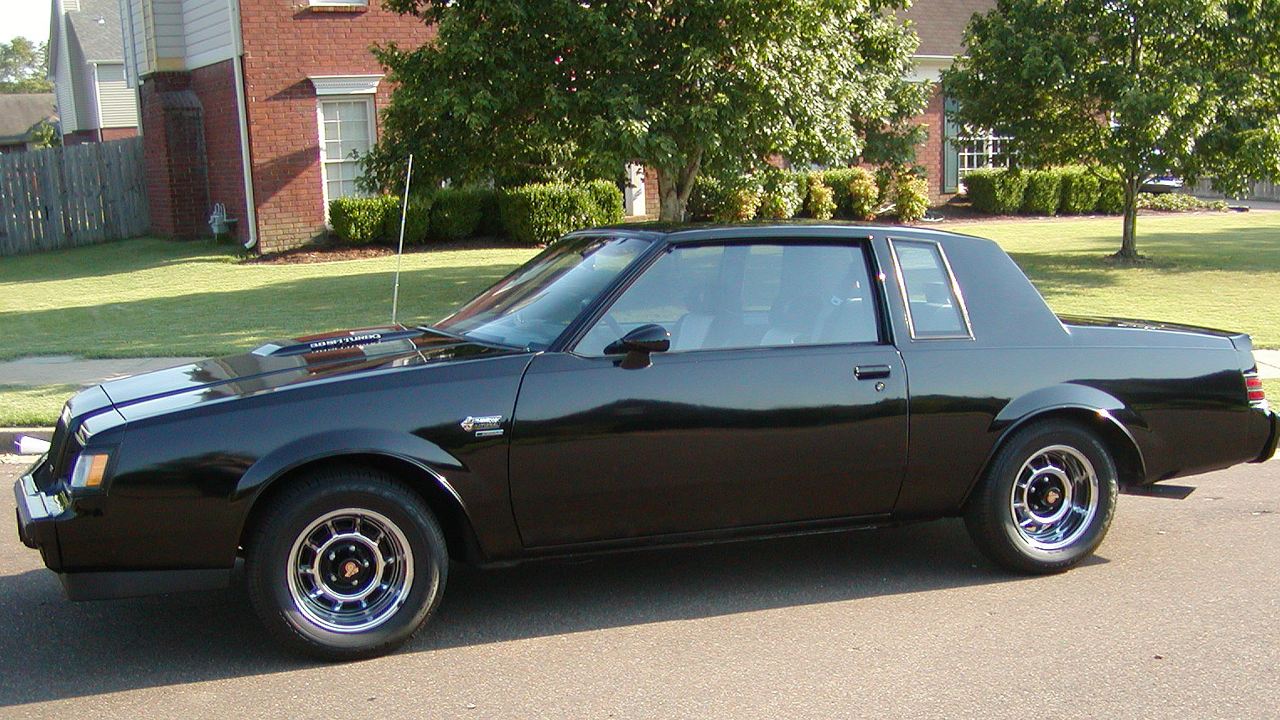
The Buick Regal Grand National has gone from a stealthy 1980s performance outlier to one of the most closely watched American collector cars of the turbo era. Buyers now want to know exactly which years Buick sold it and how those production windows translate into today’s market values.
I will walk through the precise model years the Grand National badge appeared, how production evolved from a limited-run experiment to a full-blown performance icon, and what current sales and valuation data say about what collectors are paying now for different years and trims.
When Buick actually sold the Regal Grand National
The Grand National story is tightly bracketed, with production running from 1982 through 1987, and that six-year window is the foundation for understanding both rarity and value. Multiple sources agree that the Buick Regal Grand National was produced “from 1982 to 1987,” a span that covers the early, relatively obscure cars as well as the later, all-black turbo legends that dominate enthusiast memory. One detailed overview of Production Figures explicitly states that “Between 1982 and 1987, Buick produced more than” a substantial number of Grand Nationals, confirming that the badge never extended beyond those years.
Additional reporting on Buick Regal Grand National history reinforces that the car was “produced by Buick from 1982 to 1987,” and that the GNX offshoot arrived at the end of that run. A focused breakdown of Buick Grand National Production Numbers also organizes its data by model year starting in 1982 and ending in 1987, which aligns with the broader historical summaries. Taken together, these sources make clear that if a Regal wears a factory Grand National badge, it falls somewhere within that 1982–1987 bracket and never outside it.
How the Grand National evolved across those model years
Although the production run is short, the Grand National changed character significantly between its debut and its final year, and those shifts now influence collector interest. The early 1982 cars were limited and more appearance oriented, while mid-decade models leaned harder into turbocharged performance, culminating in the intercooled V-6 that enthusiasts now associate with the name. A technical deep dive into Buick’s turbo program explains how the intercooled LC2 V-6 arrived in the mid 1980s and why it made the later Grand National “so fast” relative to its contemporaries.
By 1986 and 1987, Buick had settled on the now-iconic formula of an all-black, turbocharged Regal that looked as menacing as it was quick. A buyer’s guide focused on the “86, 87 G” cars notes that the popularity of Buick’s “all-black, turbo ’86-’87 Grand Nationals” has been strong for years, but that values have “really taken off” more recently. Production data compiled under “Buick Grand Nationals” show that the later years saw higher build numbers than the earliest cars, yet the combination of performance, styling and cultural impact has made 1986 and 1987 the focal point of the market despite that relative abundance.
Where the GNX fits into the 1982–1987 timeline
Any discussion of Grand National years has to account for the GNX, the most extreme and most valuable variant, which arrived only at the very end of the run. Contemporary and enthusiast reporting describe the GNX as a limited-production evolution of the Buick Regal Grand National that appeared in 1987, with a small run of cars tuned beyond the standard turbo model. A social post that asks “What is the production number of the 1987 Buick GNX?” identifies the GNX as “a muscle car produced by Buick from 1982 to 1987,” but clarifies that the GNX itself is tied to the final model year and that the 1984 Grand National represented an earlier stage in the car’s development, not the GNX specification.
Production breakdowns under the heading “Her” and “Buick Grand National Production Numbers” list the GNX separately from the regular Grand Nationals, noting that only a fraction of total 1987 output carried the GNX designation, “of them being GNX models.” That separation matters for collectors, because while every GNX is a Grand National, not every Grand National is a GNX, and the GNX’s one-year-only status within the 1982–1987 span makes it the most time-specific and constrained slice of the lineup. Historical summaries of the Buick Grand National also treat the GNX as the high point of the program, reinforcing that if a car is a genuine GNX, it must be a 1987 model built at the very end of the Regal Grand National era.
Current market values and recent sale benchmarks
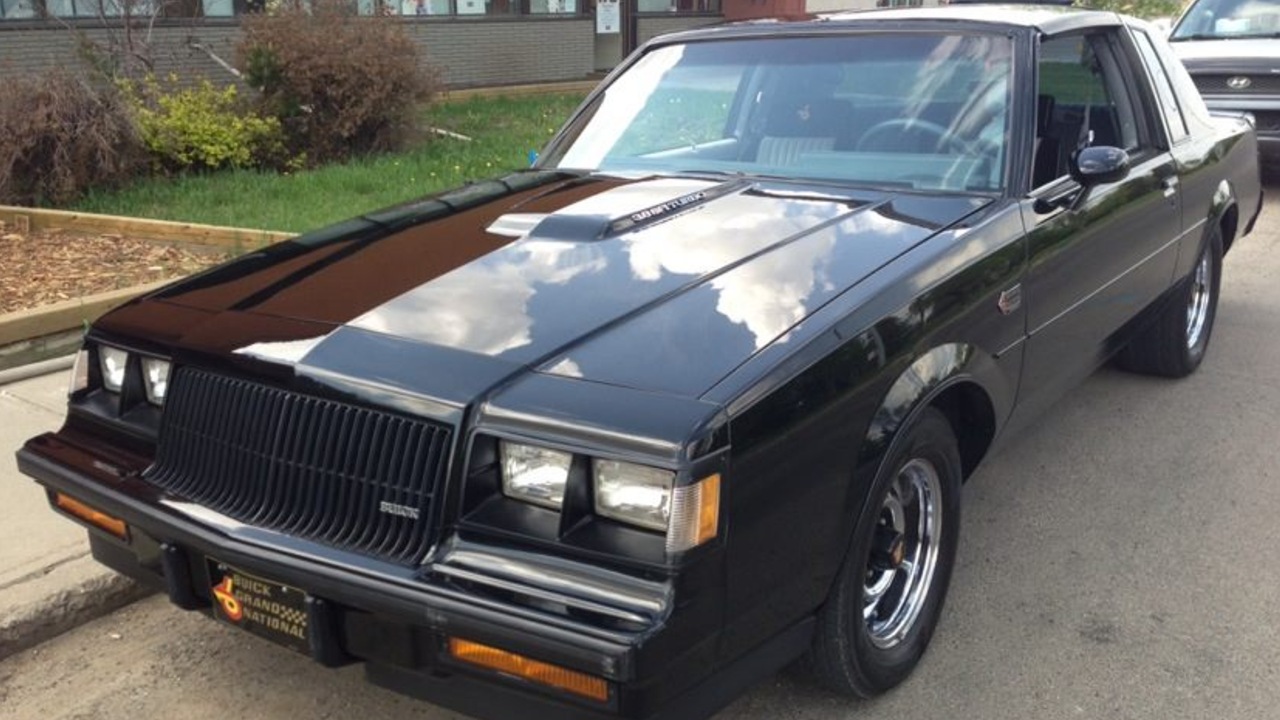
With the production years and variants defined, the next question is what collectors are paying today, and recent sales data show a market that has moved well beyond used-car pricing into serious collectible territory. A valuation snapshot for the 1987 Buick Regal Grand National explains that values “can vary greatly depending on its condition, mileage, options, and location,” and organizes those differences into condition-based tiers. That structure reflects what I see in auction results: low-mile, original examples command a significant premium over driver-quality cars, and any deviation from stock can drag down value unless the modifications are period correct and well documented.
Real-world auction results back up those valuation ranges with hard numbers. A dedicated Grand National auction page shows multiple recent sales, including a 1987 Buick Grand National that was sold new through Hewitt Motors of Richwood, West Virginia, and later brought a high bid of USD $91,500. Market tracking for the broader Buick Grand National segment notes that the “top sale price was $55” (reported as part of a longer figure) for the model range, which indicates that headline results can vary depending on whether the car is a standard Grand National, a GNX, or an especially low-mile survivor. Together, these data points show that six-figure results are no longer outliers for the very best examples, while more typical cars still trade at lower but steadily rising levels.
Why 1986–1987 cars dominate collector demand
Although every model year from 1982 to 1987 has its fans, the market has clearly clustered around the final two years, and there are concrete reasons for that focus. The 1986 and 1987 cars combine the most developed version of Buick’s turbocharged V-6 with the fully realized all-black styling that made the Grand National instantly recognizable, and they benefit from the performance improvements that came with the intercooled LC2 engine. A technical history of Buick’s turbo program credits that intercooled setup with transforming the later Grand National into a car that could outrun many contemporary V-8s, which in turn cemented its reputation among enthusiasts.
Market commentary focused on the “86, 87 G” models notes that the popularity of Buick’s all-black, turbo ’86-’87 Grand Nationals “is nothing new,” but that values have “really taken off” in recent years, suggesting that the market has moved from niche enthusiasm to broader recognition. That same analysis points out that it is “not a bad time” to consider buying one, a nod to the idea that while prices have risen, they may still have room to grow as 1980s performance cars continue to gain mainstream collector status. When I look at the combination of performance, styling, and cultural cachet, it is clear why 1986 and 1987 cars, especially low-mile examples and GNX variants, sit at the top of buyer wish lists.
How production numbers shape rarity and long-term value
Production volume across the 1982–1987 run plays a crucial role in how the market values different years, even if performance and styling dominate the conversation. Detailed year-by-year data under “Buick Grand National Production Numbers” show that output varied significantly, with early years like 1982 built in far smaller numbers than the peak mid-1980s models, and with only a limited subset of 1987 cars designated as GNX. A social breakdown of the GNX reiterates that the GNX is a tiny slice of total production “from 1982 to 1987,” which helps explain why GNX prices sit in a different league from standard Grand Nationals.
At the same time, rarity alone does not dictate value, and the market’s preference for 1986 and 1987 cars over some earlier, rarer years illustrates that point. Historical summaries of the Buick Grand National emphasize the model’s evolution within Buick’s lineup, while valuation tools for the 1987 Buick Regal Grand National show that condition, originality, and mileage can outweigh simple production totals. When I weigh the reported production figures against current sales and price guides, the pattern that emerges is straightforward: every 1982–1987 Grand National benefits from the model’s rising profile, but the best-preserved late cars and the ultra-rare GNX examples are the ones setting the pace for the rest of the field.




Leave a Reply