
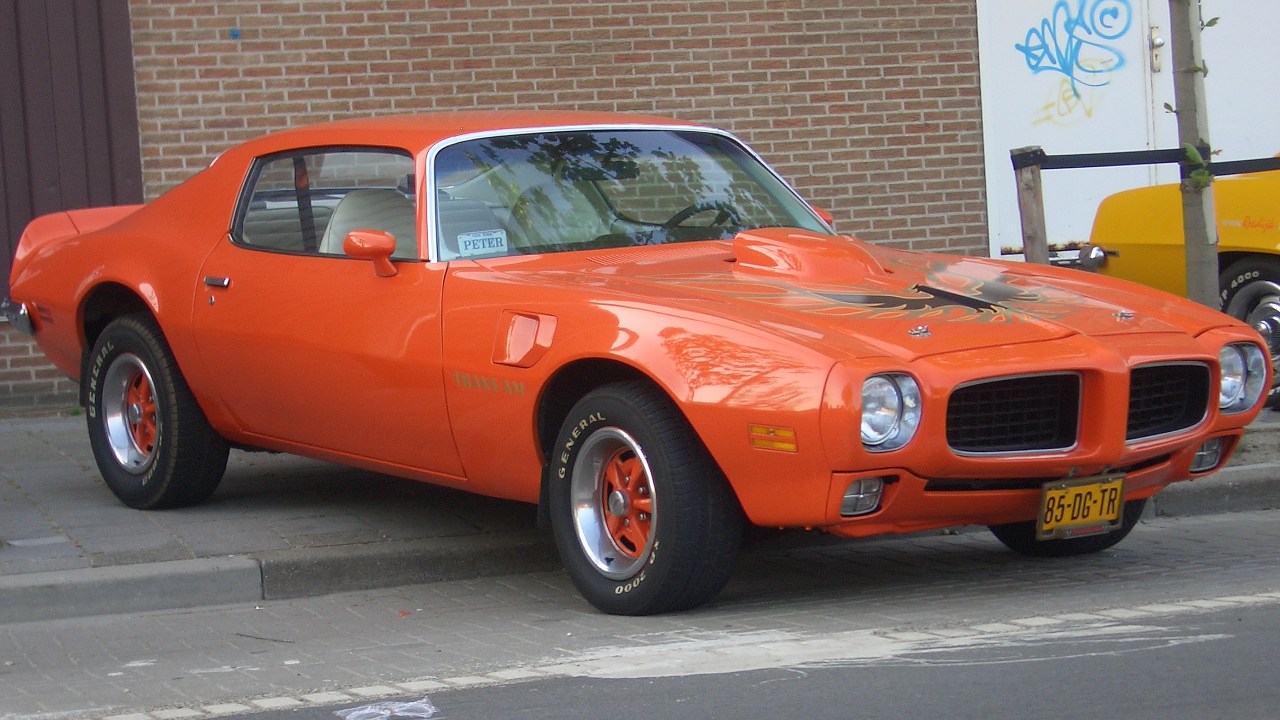
The 1970 Pontiac Firebird Trans Am marked the moment Pontiac’s pony car stopped chasing the pack and started dictating the rules. With a new platform, a purpose-built engine lineup, and race-bred intent, it shifted from stylish offshoot of the Firebird to a focused performance machine that could stand beside the era’s most serious muscle.
By the time the second-generation Firebird arrived, Pontiac had refined its formula into something sharper, more cohesive, and far more competition minded. The 1970 Trans Am was no longer just a stripe-and-spoiler package, it was a tightly engineered response to road racing regulations and a statement that General Motors’ performance brand was ready to get genuinely serious about speed and handling.
From first-generation flair to second-generation focus
The original Firebird had given Pontiac an entry into the pony car race, but it leaned heavily on shared architecture and styling flourishes rather than a singular performance mission. With the 1970 redesign, the Pontiac Firebird stepped into its second generation with a cleaner shape, a lower stance, and a more integrated approach to performance that treated the Trans Am as the sharp end of the lineup rather than a cosmetic option. Reporting on the model’s evolution notes that the 1970 Pontiac Firebird marked the beginning of this new chapter and reinforced Pontiac’s role as General Motors’ performance brand, a shift that set the stage for a more serious Trans Am.
That change in attitude was visible in the way Pontiac separated the Firebird range into distinct personalities. The standard cars and the Firebird Formula catered to buyers who wanted style and V8 power without the full race-car persona, while the Trans Am became the homologation-minded flagship. Walkaround coverage of a 1970 Pontiac Firebird in Auburn Massachusetts, hosted by Steve at Highane Classics, underscores how even non-Trans Am models benefited from the new platform’s proportions and chassis tuning, but it was the Trans Am that pushed those fundamentals to their limit. The second-generation structure, shared in broad terms with the contemporary Chevrolet Camaro, arrived partway through the model year, which is why some enthusiasts still refer to these early cars as “1970 1/2” models, a reminder that the redesign was substantial enough to feel like a midyear revolution.
Homologation pressure and the “1970 1/2” turning point
The real catalyst for the Trans Am’s transformation was not just styling, it was racing. To qualify for the SCCA Trans Am Series, Detroit manufacturers had to build road-going versions of their race cars, which forced Pontiac to think of the Trans Am as a tool for competition rather than a mere appearance package. Coverage of the 1970 1/2 Pontiac Trans Am makes clear that this requirement pushed Pontiac to engineer a car that could survive and succeed in the same arena as factory-backed rivals, with the showroom model serving as the legal bridge between racetrack and street.
This homologation pressure arrived in a broader context of American road racing. The SCCA had initially worried that the Trans Am Series might be overwhelmed by factory spending, yet by 1970 the championship had become one of its showcase categories. Retrospectives on the 50 Years Ago Trans Am They era describe how the sedan series evolved into a fiercely contested battleground, and Pontiac’s decision to field a serious Trans Am was a direct response to that environment. The midyear launch of the second-generation F-body platform, mirrored on the Chevrolet Camaro side where the 1970 model reached assembly plants in February and led some to call it a “1970 1/2” model, only heightened the sense that Pontiac was resetting the board in the middle of the game to gain an edge.
Design that finally matched the name
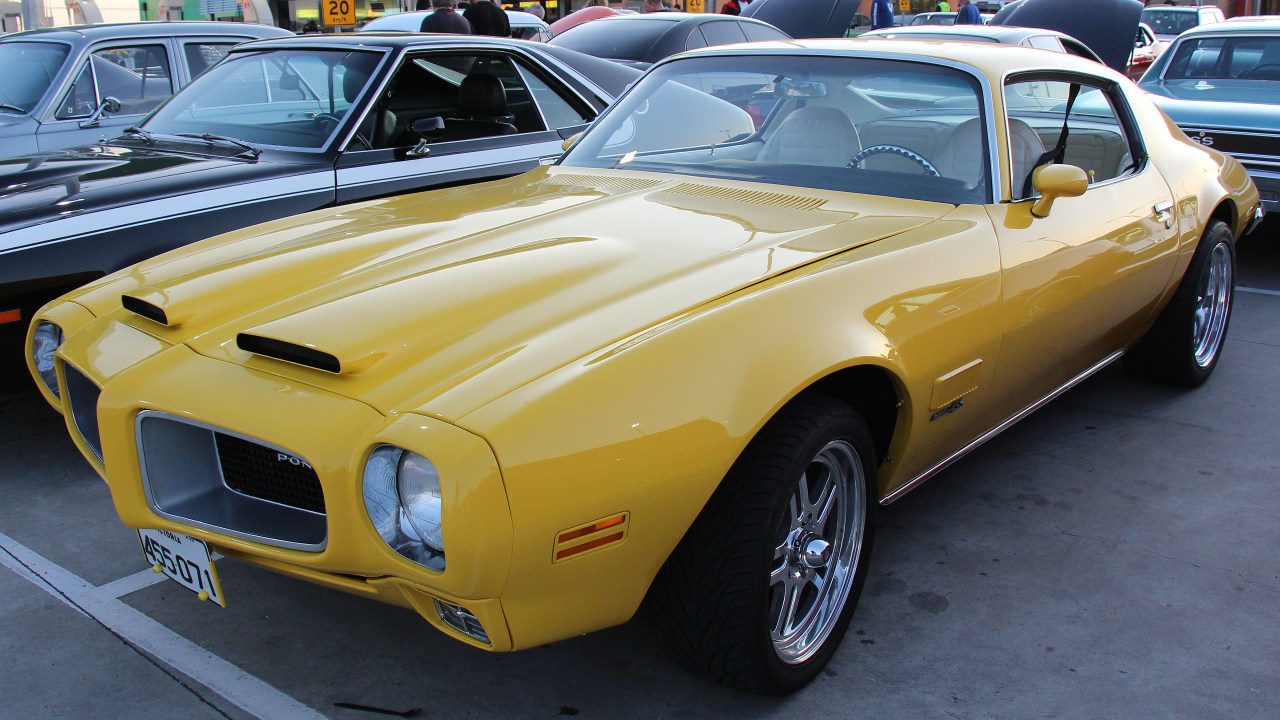
For the Trans Am to live up to its racing-inspired badge, Pontiac had to give it a visual identity that was more than stripes and decals. The 1970 car delivered that with a long, low nose, integrated front spoiler, and a rear deck spoiler that worked with the body’s flowing lines rather than fighting them. Analysis of the 1970 Pontiac Firebird’s styling highlights how the second-generation shape was more aerodynamic and cohesive than the first, and the Trans Am’s specific add-ons turned that sleek base into something that looked ready for a grid spot the moment it rolled off the transporter.
Behind those lines was deliberate planning. Pontiac’s product planners approved a set of unique cues for the Trans Am, and designer Bill Porter oversaw the details that made the car instantly recognizable. Reporting on the 1970 Pontiac Trans Am’s proportions and power credits Bill Porter with guiding elements such as the bold graphics, the functional shaker scoop pushing through the hood, and the balance between aggressive stance and usable visibility. The result was a car whose appearance finally matched the promise of its name, a machine that looked as serious as the SCCA rules that had helped shape it.
Powertrain and chassis: from brute force to balanced muscle
Under the skin, the 1970 Pontiac Trans Am moved away from simple straight-line bravado and toward a more rounded performance package. Contemporary accounts of the 1970 Pontiac Firebird Trans Am describe a car that combined a high output V8 with suspension tuning aimed at real cornering capability, not just boulevard cruising. Pontiac engineers used the new platform’s wider track and lower center of gravity to create a Trans Am that could change direction with confidence, a necessity for any car aspiring to compete in a series built around road courses rather than drag strips.
The engine choices reflected the same philosophy. While Pontiac had long been associated with big torque, the 1970 Trans Am’s powerplants were tuned to deliver strong midrange and sustained pull suitable for sustained high-speed work. Reporting on the model notes that the Trans Am’s V8s were capable of far more than their conservative official ratings, with some references to as much as 500 horsepower in race-prepared form, a figure that underscores how much latent potential Pontiac built into the package. Later Trans Am models, such as the turbocharged 1980 example often cited as one of the nicest handling American performance cars of its time, show how this emphasis on chassis sophistication and balanced power delivery became a defining trait of the badge rather than a one-year experiment.
Legacy: how the 1970 Trans Am reset expectations
By committing to a race-bred second-generation car, Pontiac changed what buyers expected from a Trans Am. The 1970 model’s blend of proportion, power, and handling set a template that later iterations would refine rather than reinvent, and it did so in a market crowded with strong rivals. The fact that Pontiac accepted lower sales volume in exchange for a more focused product, with period reporting noting that production of the 1970 Trans Am settled at a relatively modest figure, shows how far the division was willing to go to protect the car’s identity as a serious performance tool instead of a mass-market trim level.
The broader Firebird family benefited from that decision. Coverage of the 1970 Pontiac Firebird as a Muscle Car Evolution emphasizes how the second-generation redesign elevated the entire line, but it was the Trans Am that carried the burden of proving Pontiac’s performance credentials on track and on the street. Even walkaround features of a 1970 Pontiac Firebird in Auburn Massachusetts, hosted by Steve at Highane Classics, tend to measure the base and Formula models against the standard set by the Trans Am, a sign of how thoroughly the 1970 car redefined the hierarchy. In the decades since, from naturally aspirated seventies cars to later turbocharged Trans Am variants that continued to showcase American chassis tuning, the 1970 model has stood as the inflection point when Pontiac’s pony car stopped playing catch-up and finally became the serious contender its name had always implied.



Leave a Reply