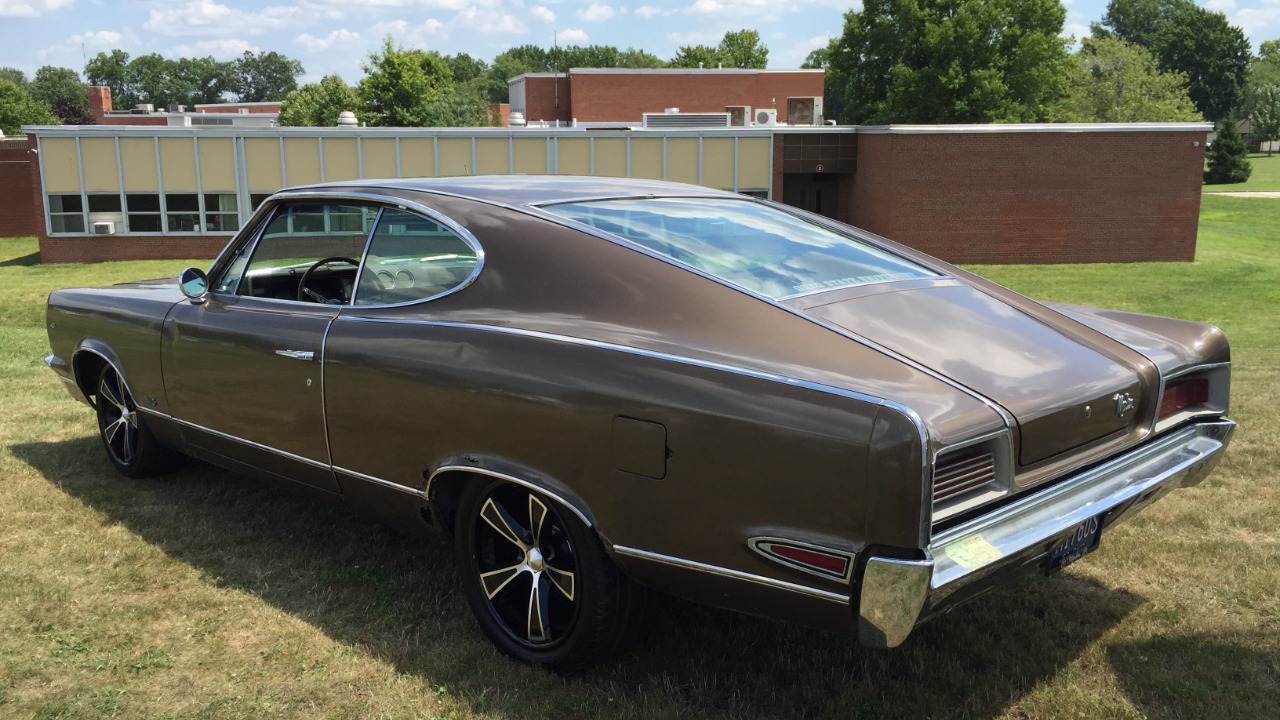
The AMC Marlin 343 occupies that sweet spot in car history where family practicality met fastback drama and a brand with a chip on its shoulder decided to swing for the fences. The question is not only when American Motors bolted the 343 into its swoopy coupe, but also what that experiment in “sensible spectacle” is worth in today’s collector market. I went digging through period context and current valuation data to trace when the Marlin 343 arrived, how it fit into AMC’s strategy, and what you can expect to pay if you want one in your garage now.
From “Sensible Spectaculars” to fastback ambition
American Motors did not wake up one morning and randomly invent the Marlin 343; it first had to convince itself that a dramatic fastback could still be a practical car. The company billed the original Marlin as part of its own line of “Sensible Spectaculars,” a marketing phrase that tried to reconcile a family-friendly interior with a roofline that looked like it had escaped from a concept-car studio. In that context, the Launch of the Marlin was less about chasing pure muscle and more about giving American Motors a halo car that still fit the company’s reputation for thrift and practicality.
That tension between spectacle and sense is what makes the later 343-powered cars so interesting. The same American Motors that had spent years selling economy-minded compacts suddenly had a big fastback called the Marlin, pitched as a stylish alternative to the usual Detroit suspects. The marketing language around the Marlin, including the way American Motors framed the car as a member of its “Sensible Spectaculars” family, shows how the company tried to have it both ways: a dramatic profile for the driveway, and a conscience-calming story for the checkbook, all wrapped in the distinctive shape of the Marlin.
How the Marlin evolved before the 343 arrived
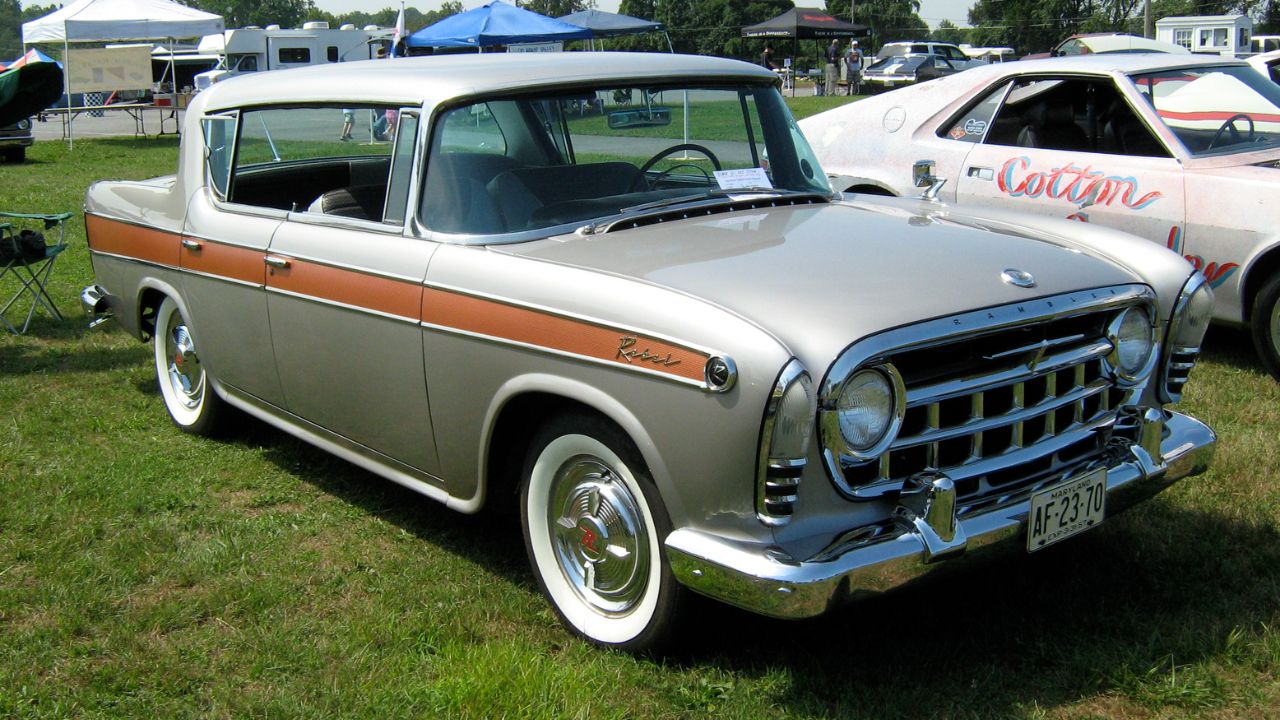
Before the 343 V8 ever rumbled under its hood, the Marlin had already gone through a personality crisis or two. The first version, sold as the Rambler Marlin, leaned heavily on the company’s compact roots, which meant the styling did most of the talking while the mechanicals stayed relatively conservative. That early Rambler Marlin was still part of the same “Sensible Spectaculars” idea, but it had not yet grown into the larger, more assertive car that would eventually host the 343, and it carried the Rambler name to remind buyers that this was still the sensible side of American Motors.
As the market shifted toward bigger and bolder personal coupes, AMC had to stretch the Marlin’s legs. The second and final generation AMC Marlin arrived in 1967, Based on the Ambassador and Rebel chassis, and that move up in size set the stage for a more serious engine lineup. By the time the 343 came into play, the Marlin had grown from quirky compact fastback to a full-size contender trying to elbow its way into the sport and muscle car conversation, even if American Motors still insisted on calling it a family car.
The 343 V8: AMC’s not-so-secret weapon
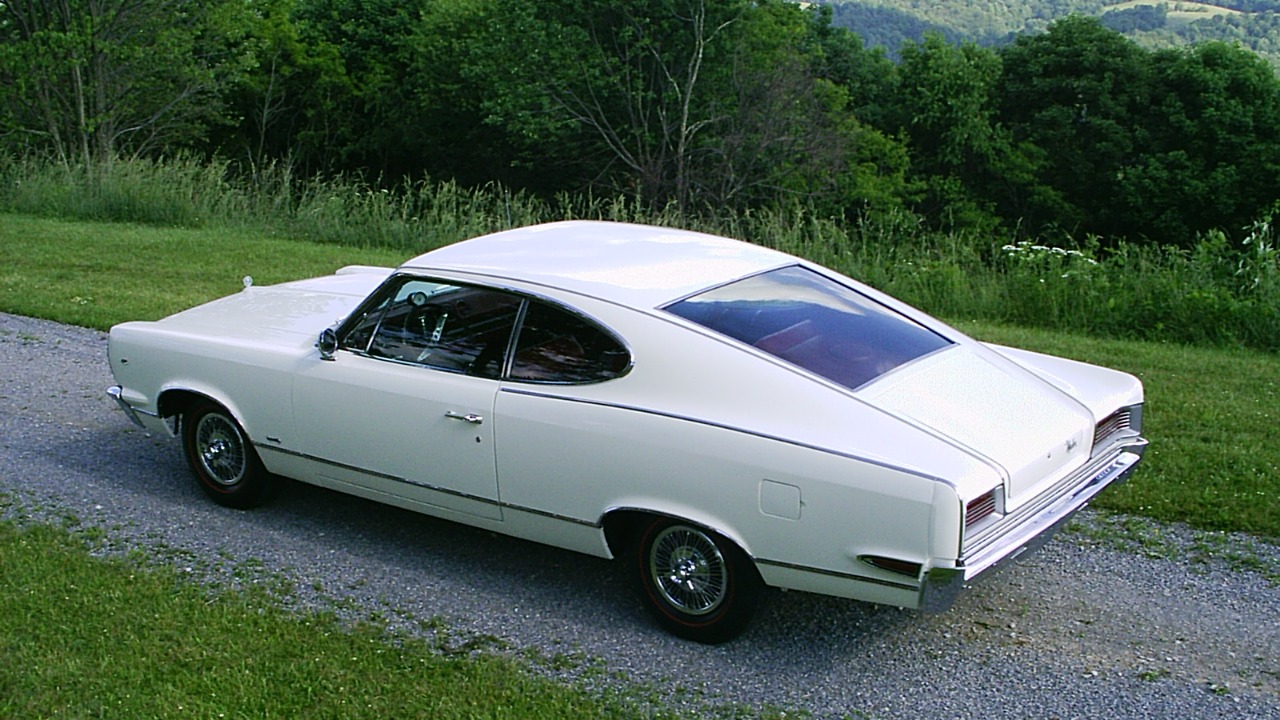
When AMC created the 343, it was not just filling a gap in the brochure, it was arming the Marlin with a proper mid-range V8 that could stand up to the era’s expectations. The 343 cu in (5.6 L) engine used a bore and stroke of 4.08 in × 3.28 in, which translates to 103.6 mm × 83.3 mm, figures that show AMC was serious about building a modern V8 rather than recycling old hardware. Those exact dimensions, 343, 5.6, 4.08, 3.28, 103.6 m, and 83.3 m, are not just trivia for spec-sheet obsessives, they are the mechanical DNA that helped the Marlin step beyond its economy-car ancestry and into the realm of genuine performance potential, as laid out in the AMC V8 engine family.
In the Marlin, that 343 gave buyers a way to enjoy the car’s fastback styling without feeling like they had settled for a purely cosmetic upgrade. The engine sat in the middle of AMC’s V8 lineup, above the smaller-displacement options but below the biggest bruisers, which suited the Marlin’s split personality as both family transport and style statement. For collectors today, the presence of a 343 under the hood signals that the car is more than just a pretty roofline, it is a snapshot of the moment when American Motors decided its “Sensible Spectaculars” deserved a bit more bite to go with the visual bark.
When the Marlin 343 actually hit the road
So when did AMC finally bolt the 343 into the Marlin and send it out to terrorize the interstate on-ramps? The key moment is that second generation, when the AMC Marlin moved onto the Ambassador and Rebel underpinnings and gained the size and stance to justify a stronger engine. The second and final generation arrived in 1967, and that is the era when the 343 became part of the Marlin story, turning the car from a stylish outlier into a legitimate player in the mid-size sport and muscle car field.
By the time that 1967 American Motors Marlin rolled into showrooms, the company had lined up a menu of V8s that included the 343, giving buyers a chance to match the car’s dramatic profile with performance that would not embarrass them at a stoplight. The Marlin was still not a pure muscle car, and contemporary observers were quick to point out that it straddled categories rather than dominating any single one, but the availability of the 343 meant that a well-optioned example could hold its own. That timing, with the 343 arriving in the Marlin’s final generation, is part of what makes these cars such intriguing collectibles now: they represent AMC’s last, best shot at turning its “Sensible Spectaculars” philosophy into something that could actually hustle.
What early Marlins cost then and now
To understand what a Marlin 343 is worth today, it helps to look at how the earlier Rambler Marlin has aged in the market. Typically, you can expect to pay around $12,200 for a 1965 Rambler Marlin in good condition with average spec, a figure that shows how the first-generation cars have settled into a sweet spot between affordability and nostalgia. That number, spelled out as $12,200, comes from current valuation data for the Typically equipped Rambler Marlin, and it gives us a baseline for how the market treats the model before the 343 enters the picture.
Of course, not every Rambler Marlin is a modestly priced driveway curiosity. The highest selling price of a 1965 Rambler Marlin at auction over the last three years was $124,200, a reminder that rare configurations, meticulous restorations, or particularly desirable options can send values into a different stratosphere. That exact figure, $124,200, is tied to the top recorded sale for a Rambler Marlin, and it shows that even the earlier, non-343 cars can command serious money when the right combination of condition and history comes together. For anyone eyeing a later 343-powered example, those numbers are a useful warning that the market knows how to reward the special ones.
How 1966 and 1967 Marlins stack up in today’s market
Once the Marlin dropped the Rambler badge and moved into its later years, values began to reflect both the car’s increased size and its more serious mechanical options. The 1966 American Motors Marlin sits at an interesting crossroads, still carrying some of the earlier car’s character while edging closer to the full-size persona that would define the 1967 model. Current pricing guides answer the question “How much is a 1966 American Motors Marlin worth?” by emphasizing that condition, mileage, and options drive a wide range of outcomes, but they also provide a clear benchmark for what a typical example in good condition with average spec can bring, as outlined in the valuation for the How American Motors Marlin.
By 1967, the American Motors Marlin had fully embraced its role as a larger, more assertive fastback, and the market treats it accordingly. The value of a 1967 American Motors Marlin can vary greatly depending on its condition, mileage, options, and history, but the same pricing data notes what a typical car in good condition with average spec is likely to command. That guidance for the American Motors Marlin helps frame expectations for 343-equipped examples, which often sit toward the more desirable end of the spectrum thanks to their stronger engine and final-year status. In other words, if you are shopping for a Marlin 343, do not expect to pay base-model money for a car that represents the high-water mark of the line.
Why the Marlin 343 still matters to collectors
For all the spreadsheets and spec sheets, the appeal of the Marlin 343 comes down to character. This is a car that tried to be a fastback family hauler and a mid-size sport contender at the same time, and that inherent contradiction is exactly what makes it charming today. The way American Motors wrapped its “Sensible Spectaculars” philosophy around a big, dramatic roofline and then backed it up with a 343 cu in V8 gives the car a narrative that is richer than a simple muscle machine, and collectors tend to reward stories as much as they reward horsepower.
On the market side, the spread between a typical $12,200 Rambler Marlin and a $124,200 auction outlier shows how much room there is for the right car to surprise everyone, and the later 343-powered models sit in a particularly interesting niche. They benefit from the mechanical credibility of the 343’s 5.6 L, 4.08 in × 3.28 in architecture, the visual drama of the final-generation fastback, and the relative rarity of a model that never sold in huge numbers. For buyers willing to embrace a car that was never quite a pure muscle bruiser and never just a sensible family coupe, the Marlin 343 offers a blend of history, style, and value that still feels slightly underappreciated, which is exactly where savvy enthusiasts like to shop.