
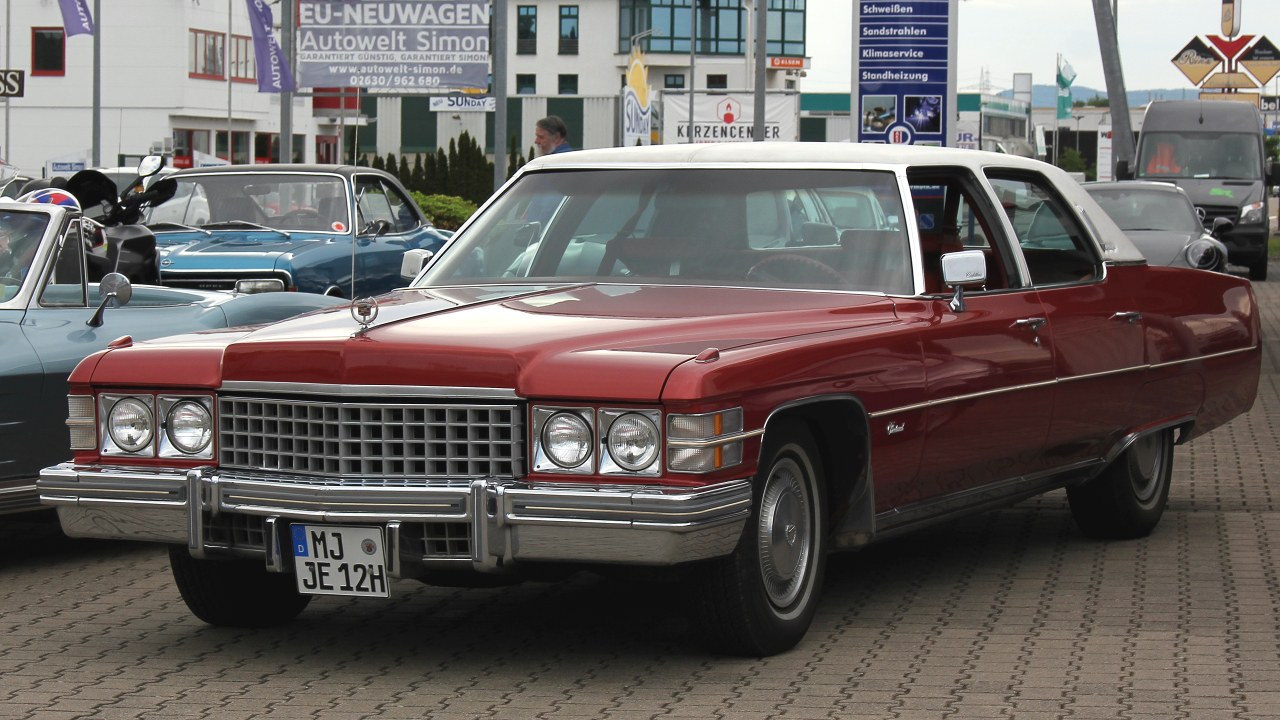
The Cadillac Fleetwood Brougham has become one of the defining American luxury sedans of the late twentieth century, but the story of when a two-door “coupe” version existed is far murkier than the name suggests. Collectors today often use the phrase loosely, yet the documented production history points to a very specific four-door lineage and a separate, later “Brougham” badge. To understand what enthusiasts really mean when they talk about a Fleetwood Brougham Coupe, I need to separate verified facts from unverified assumptions and then look at what these cars, in all their related forms, are actually worth now.
Instead of a neatly labeled coupe model, the record shows a long evolution of Cadillac Fleetwood luxury sedans that eventually spawned the Fleetwood Brougham and then the standalone Brougham. That history, combined with current pricing data and auction results, gives a clearer picture of how the market values these big-body Cadillacs today, even if the exact “Fleetwood Brougham Coupe” nameplate is unverified based on available sources.
How the Fleetwood name evolved into the Fleetwood Brougham
The starting point for any discussion of a Fleetwood Brougham Coupe has to be the broader Fleetwood line, because the sources trace a continuous luxury story rather than a discrete two-door offshoot. The Cadillac Fleetwood is documented as a full-size luxury vehicle built by Cadillac in America from 1947, with the name attached to some of the brand’s most formal sedans and limousines over the decades. That long run, described simply as “from 1947,” shows how deeply embedded the Fleetwood badge was in Cadillac’s hierarchy and helps explain why later trim names like Fleetwood Brougham carried so much prestige for buyers who wanted the top of the line.
Within that context, the Fleetwood Brougham appears as a specific, high-spec variant rather than a separate body style. The reporting notes that the Fleetwood Brougham name was eventually shortened, which confirms that it began as a compound designation tied to the established Fleetwood series. When I look at that evolution, I see a clear pattern: Cadillac used the Fleetwood label to signal size and status, then layered “Brougham” on top to indicate an even more luxurious specification, but the sources do not identify a distinct Fleetwood Brougham Coupe model or any separate production window for such a car. Any reference to a coupe version is therefore unverified based on available sources and likely reflects enthusiast shorthand rather than an official factory designation.
From Fleetwood Brougham to simply “Brougham”
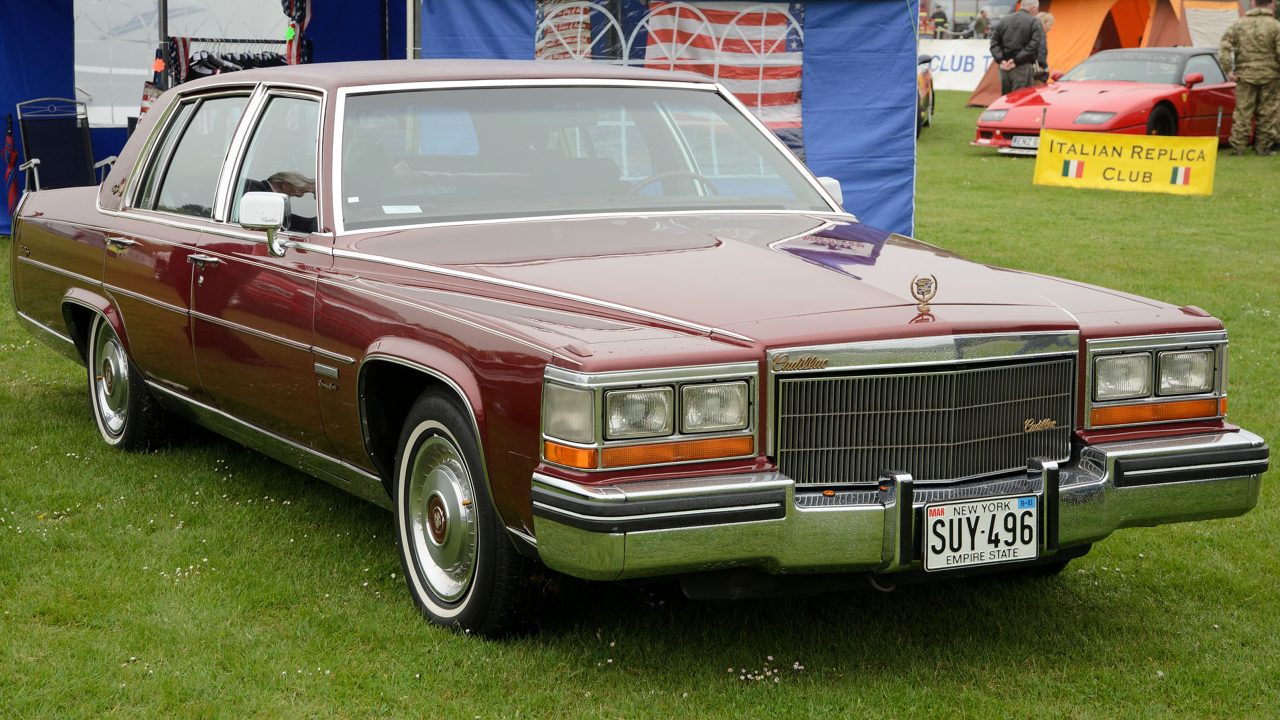
The clearest, date-specific milestone in this lineage arrives in the late 1980s, when Cadillac simplified its naming strategy. The reporting states that, in 1987, the Fleetwood Brougham name was shortened to simply Brougham, and that production continued through 1992 with only minor updates. That detail matters for two reasons. First, it confirms that Fleetwood Brougham was an active, recognized trim before 1987. Second, it shows that after 1987 the car that carried the luxury torch did so under the shorter Brougham badge, which is the name most collectors now use for the late-1980s and early-1990s cars.
For anyone trying to pin down when a Fleetwood Brougham Coupe might have been “released,” this timeline creates a hard boundary. The documented shift in 1987 from Fleetwood Brougham to Brougham, with production running through 1992, leaves no room in the sources for a separate, officially named Fleetwood Brougham Coupe in that period. Instead, what I see is a single, continuous luxury sedan line that changed badges but not its basic mission. References to a coupe are therefore best understood as informal descriptions of body styles in the broader Cadillac family, not as a verified, standalone model that debuted in a specific year.
What the valuation tools say about 1980s Fleetwood Brougham values
Even without a confirmed coupe variant, the market for 1980s Fleetwood Brougham sedans is well documented, and that is where the “what they are worth now” question becomes concrete. A dedicated valuation entry for the 1985 Cadillac Fleetwood Brougham shows how price guides track these cars by model year and trim, treating the 1985 Fleetwood Brougham as a benchmark for mid-1980s full-size Cadillac luxury. That same valuation resource notes that past sales include a “Sold” listing of $37,800 for a 1992 Cadillac Brougham Base in North America, recorded on Nov 7, 2025 by GAA Classic Cars, alongside another figure of $12,840 for a 1987 Cadillac Brougham.
Those two numbers, $37,800 and $12,840, illustrate the spread between a very strong result for a later Brougham and a more typical sale for an earlier example. They also underscore how the market tends to group the late Fleetwood Brougham and early Brougham years together when assessing value, since the 1987 to 1992 cars share the same basic platform and luxury positioning. When I look at these figures in the context of a 1985 Fleetwood Brougham valuation page, it is clear that collectors and insurers treat the mid-1980s Fleetwood Brougham sedans as part of the same broader family that includes the later Brougham, even if the exact “coupe” label is not recognized in the data.
Current asking prices for Fleetwood Brougham in the classifieds
Price guides tell one part of the story, but live listings show what sellers are actually asking for Fleetwood Brougham cars today. One set of classified data lists “Cadillac Fleetwood Brougham Pricing” with three key benchmarks: Low $4,700, Average $19,905, and High $40,995. Those figures, presented alongside fields like “Make” and “Cadillac,” give a snapshot of how the marketplace values these cars across a range of conditions, from driver-quality examples at the low end to very clean or restored cars at the top.
A related set of listings focused on “Cadillac Fleetwood Brougham American Classic Pricing” shows a slightly different spread, with Low $4,700, Average $17,899, and High $40,995. The identical Low and High numbers, paired with a somewhat lower Average, suggest that the American classic subset may include more driver-grade cars, pulling the midpoint down while leaving the extremes intact. Together, these two datasets indicate that a typical Fleetwood Brougham sedan sits in the mid-to-high teens or around $20,000, with the very best examples pushing toward the $40,995 ceiling. None of these listings, however, carve out a separate category for a Fleetwood Brougham Coupe, which reinforces the conclusion that such a model is unverified based on available sources and not tracked independently in mainstream pricing tools.
How the Brougham market behaves for the 1987–1992 cars
To understand the upper end of the value spectrum for this family of cars, I look at how the later Brougham models, built after the 1987 name change, perform at auction. Market data for the Cadillac Brougham, covering model years 1987 to 1992, answers a key question directly: “What is the top sale price of a Cadillac Brougham?” The response is precise, stating that the highest recorded sale was $70,000. That single figure, $70,000, sets a clear benchmark for what the very best examples of these big-body Cadillacs can command when condition, originality, and perhaps special options align.
When I compare that $70,000 top sale to the $37,800 result for a 1992 Cadillac Brougham Base and the $12,840 sale for a 1987 Cadillac Brougham, a tiered market emerges. The majority of cars trade well below the record, but the ceiling is high enough to reward exceptional preservation or restoration. This pattern is consistent with the broader Fleetwood Brougham pricing bands that run from $4,700 at the Low end to $40,995 at the High end. It also reinforces the idea that collectors and analysts treat the Fleetwood Brougham and later Brougham as a continuous luxury lineage, even if the exact “Fleetwood Brougham Coupe” nameplate does not appear in the verified record.
Why enthusiasts still chase these big Cadillacs
Beyond the numbers, part of the appeal of any Fleetwood Brougham or Brougham is the driving experience and the sense of durability that owners report. One period-focused account of a 1985 Cadillac Fleetwood Brougham d’Elegance recalls how a similar vintage Seville accumulated 140,000 miles with no major issues, a detail that speaks to the robustness of Cadillac’s engineering in that era. That reference to 140,000 miles, tied to a car from the same general family of large, front-engine luxury sedans, helps explain why buyers today are still willing to invest in these vehicles as usable classics rather than fragile museum pieces.
When I put that anecdotal durability alongside the structured pricing data, a coherent picture forms. The Cadillac Fleetwood Brougham, and the later Brougham that followed it from 1987 through 1992, occupy a niche where comfort, nostalgia, and perceived longevity intersect. Entry-level buyers can find running cars around the $4,700 Low mark, more serious enthusiasts gravitate toward the $17,899 to $19,905 Average range, and top-tier collectors chase the $40,995 High listings or even the occasional $70,000 record sale. Within that ecosystem, the idea of a Fleetwood Brougham Coupe functions more as a romantic shorthand than a documented model release, and based on the available sources, any specific claim about when such a coupe was introduced remains unverified.


Leave a Reply