

Concept cars are dreams on wheels—bold, impractical, and often too wild for production. These ten examples pushed boundaries far beyond what their manufacturers ultimately delivered, leaving us with visions of a future that never quite arrived.
1970 Lancia Stratos Zero

The Lancia Stratos Zero looked like it landed from another galaxy. Designed by Marcello Gandini at Bertone for the 1970 Turin Motor Show, it stood just 33 inches tall with a wedge-shaped body and no doors—entry was via a flip-up windshield. Powered by a 1.6L Lancia Fulvia V4 with ~115 hp, it prioritized style over speed.
Its futuristic dashboard featured glowing instruments, a precursor to modern digital displays, though rear visibility was nearly nonexistent. The production Lancia Stratos (1973–1978) became a rally icon with its Ferrari V6, but the Zero was an uncompromising design masterpiece.
1956 Buick Centurion

Unveiled at the 1956 GM Motorama, the Buick Centurion was pure sci-fi fantasy. Its fiberglass body, transparent bubble top, and sweeping rear fins made it resemble a rolling spacecraft. A 325 hp V8 powered it, but the real spectacle was inside.
The Centurion featured a pioneering television camera feeding a dashboard screen—essentially an early rearview camera—alongside other advanced displays. Its red-and-white interior evoked the Googie architecture of 1950s diners. Production Buicks of the era, like the Roadmaster, stuck to chrome-heavy convention, leaving the Centurion’s futuristic vision unrealized.
2008 BMW M1 Hommage

Debuting in 2008 at the Concorso d’Eleganza Villa d’Este, the BMW M1 Hommage paid tribute to the Giorgetto Giugiaro-designed M1 (1978–1981). Its razor-sharp lines blended retro cues with futuristic flair, showcasing BMW’s design prowess without production intent.
Lacking a functional powertrain, it sparked rumors of a V10 or hybrid setup, though none materialized. The driver-focused cockpit was sleek and minimal, echoing the original M1’s ethos. In contrast, 2010s BMW M cars like the M3 and M5 grew heavier and less lithe, missing the Hommage’s scalpel-like proportions.
2004 Chrysler ME Four-Twelve

The 2004 Chrysler ME Four-Twelve was a jaw-dropping supercar prototype that flexed Chrysler’s ambition. Its mid-mounted, AMG-sourced 6.0L V12 with four turbochargers delivered 850 hp, with a claimed 0–60 time of 2.9 seconds and a top speed of 248 mph.
The interior featured carbon fiber, aluminum, and suede—no trace of Chrysler’s typical plastic wood trim. Despite its production-ready appearance, it remained a prototype, likely sidelined by the 2008 financial crisis. Chrysler’s actual 2000s lineup, including the Pacifica and Sebring, felt mundane by comparison.
1995 Ford GT90
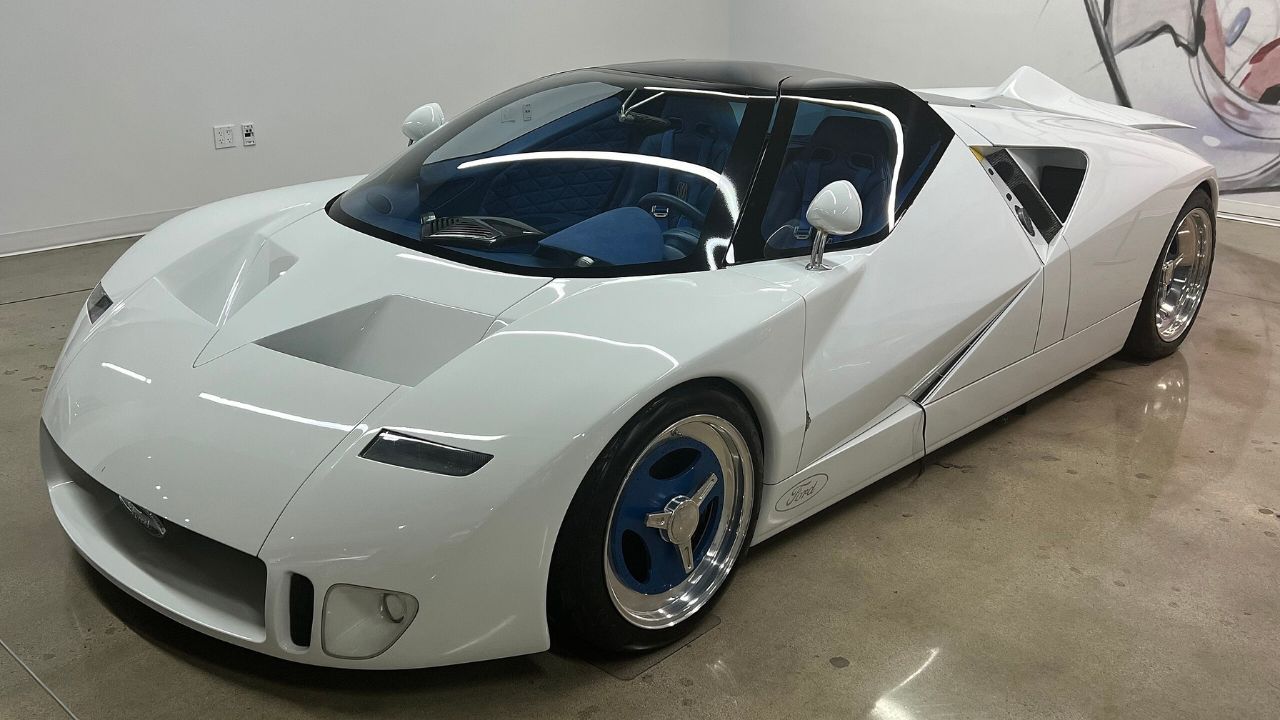
The 1995 Ford GT90 was a study in sharp angles and extreme performance. Its quad-turbo 6.0L V12, derived from Ford’s modular V8, produced ~720 hp with a claimed (but unverified) top speed of 250 mph. Pop-up spoilers and a jagged design gave it an otherworldly edge.
The cabin, with deep bucket seats and digital displays, resembled a fighter jet cockpit. Billed as a spiritual successor to the GT40, it outshone the 2005 Ford GT, which, while impressive with 550 hp, was far less radical in design and ambition.
1988 Pontiac Banshee IV

The 1988 Pontiac Banshee IV previewed styling cues for the 1993–2002 Firebird but pushed the envelope further with its sleek fiberglass body and aerodynamic curves. Powered by a 5.7L V8, it promised performance wrapped in a futuristic package.
Inside, it boasted digital instruments, a yoke-style steering wheel, and wraparound seats for a driver-centric experience. The production Firebird adopted some of its styling but diluted the drama with conventional interiors and less daring aesthetics.
1971 Maserati Boomerang

The Maserati Boomerang, unveiled as a concept in 1971 and shown as a drivable prototype in 1972, was a geometric marvel by Giorgetto Giugiaro. Built on a Maserati Bora chassis with a 4.7L V8 (310 hp), its ruler-straight lines and angular aesthetic were pure spectacle.
A glass canopy and a steering hub housing all controls defined its impractical but iconic interior. Production Maseratis like the Bora and Quattroporte were elegant but lacked the Boomerang’s fearless design, which remains a high-water mark for bold concepts.
1989 Nissan Figaro Concept

The Nissan Figaro debuted as a retro-styled concept at the 1989 Tokyo Motor Show, part of Nissan’s Pike Factory series. Its sleek, nostalgic design hinted at a premium mini roadster with a refined cabin, setting it apart from typical compacts.
It featured a 1.0L turbocharged inline-4, though claims of a mild hybrid assist remain unconfirmed. The production Figaro (1991, limited to 20,000 units) retained the retro charm but used simpler materials and a modest 76 hp engine, falling short of the concept’s upscale ambition.
1983 Lincoln Quicksilver

Designed by Ghia, the 1983 Lincoln Quicksilver was a mid-engined anomaly for a brand known for sedans. Powered by a 2.8L V6 from the Ford Capri, its low, wide fastback body broke from Lincoln’s conservative mold.
The interior emphasized luxury with tufted leather, tailored for a sportier, more compact feel than Lincoln’s boxy production models like the Town Car. The Quicksilver’s radical design hinted at a sporty future Lincoln never embraced.
2002 Cadillac Cien

The 2002 Cadillac Cien, revealed at the Detroit Auto Show, was a striking supercar concept with a 7.5L Northstar V12 producing ~750 hp. Its carbon fiber construction and angular design screamed exotic performance.
The low-slung cabin used premium materials far beyond Cadillac’s production offerings. Fully functional but never produced, likely due to GM’s financial constraints, the Cien outshone Cadillac’s early 2000s lineup, which struggled to match Lexus’s refinement.
Like Fast Lane Only’s content? Be sure to follow us.
Here’s more from us:
*Created with AI assistance and editor review.


Leave a Reply