
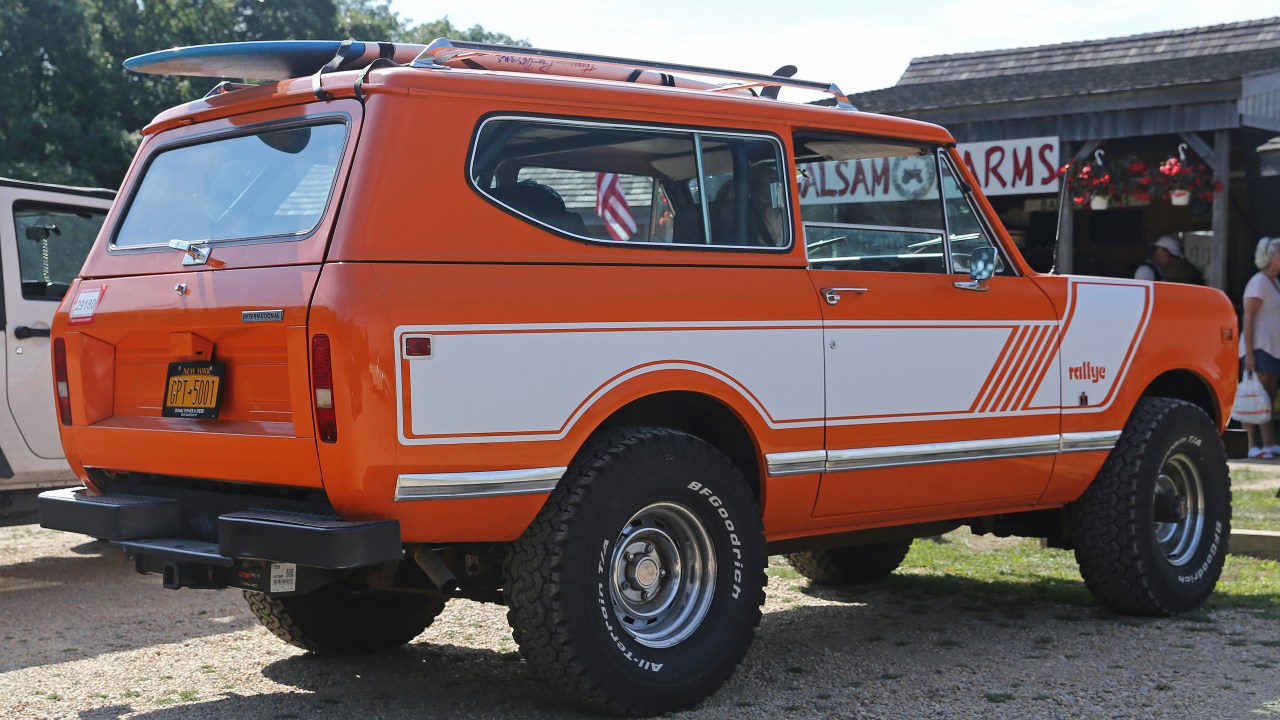
The International Scout carved out a loyal following by pairing simple engineering with real off-road ability, and the Scout II Rallye package distilled that formula into one of the most distinctive 4x4s of the late 1970s. Today, that mix of period graphics, V8 power and honest utility is driving serious collector interest, with prices that now rival or exceed many better known SUVs from the same era.
To understand why the Scout II Rallye has become such a hot ticket, I need to trace how International Harvester evolved the basic International Scout into a more refined second generation, then look closely at how the Rallye option changed the truck’s character and how the market now values those changes.
From farm fields to 4×4 icon: how the Scout II set the stage
The International Scout began life as a straightforward off-road vehicle built by International Harvester from 1960, aimed squarely at work and recreation rather than style. That first generation was intentionally simple, with flat body panels and minimal curves so repairs were easy and cheap, a design philosophy that carried through the early years and helped the trucks survive hard use on and off the road. One detailed account notes that glass was kept flat and panel curves were kept minimal to keep things as simple as possible, a choice that made sense for a company better known for tractors than family SUVs and that still defines the Scout’s visual toughness today.
By the time the International Harvester Scout II arrived for the 1970s, the market had shifted and the truck had to compete more directly with rivals like the Chevy Blazer. A comprehensive history of the Classic International Scout’s 2nd Generation explains that International Harvester was looking to keep pace with the Chevy K5 Blazer, so the Scout II gained more comfort, better road manners and a broader range of engines while still retaining its off-road focus. That same history, dated Oct 10, 2024, describes the Classic International Scout’s second act as a more refined but still rugged machine, and it is within this context that the later Rallye package would emerge as a way to give the Scout II a sportier, more youth-oriented identity.
How the Rallye package transformed the Scout II
When International Harvester introduced the Rallye package on the Scout II, the company was not creating a new model so much as sharpening an existing one for buyers who wanted something that looked and felt more aggressive. Reporting on the Classic International Scout’s second generation notes that the Rallye Package (1976–1980) added bold exterior striping and cosmetic upgrades that immediately set these trucks apart in traffic and on the trail. Under the skin, the same coverage points to available performance hardware, including a powerful 345ci V8, that gave the Rallye versions the muscle to match their graphics and helped cement their reputation among enthusiasts.
Those changes mattered because they turned a utilitarian 4×4 into something closer to a factory sport truck at a time when the SUV market was still taking shape. The Oct 10, 2024 history of the International Scout emphasizes that the International Scout was already an iconic piece of automotive off-road history, and the Rallye package built on that foundation by adding personality without sacrificing capability. That combination of visual drama, V8 power and genuine trail readiness is a key reason the Rallye Package (1976–1980) is described as especially collectible among Scout enthusiasts today, and it explains why surviving examples are now tracked closely in auction data and private sales.
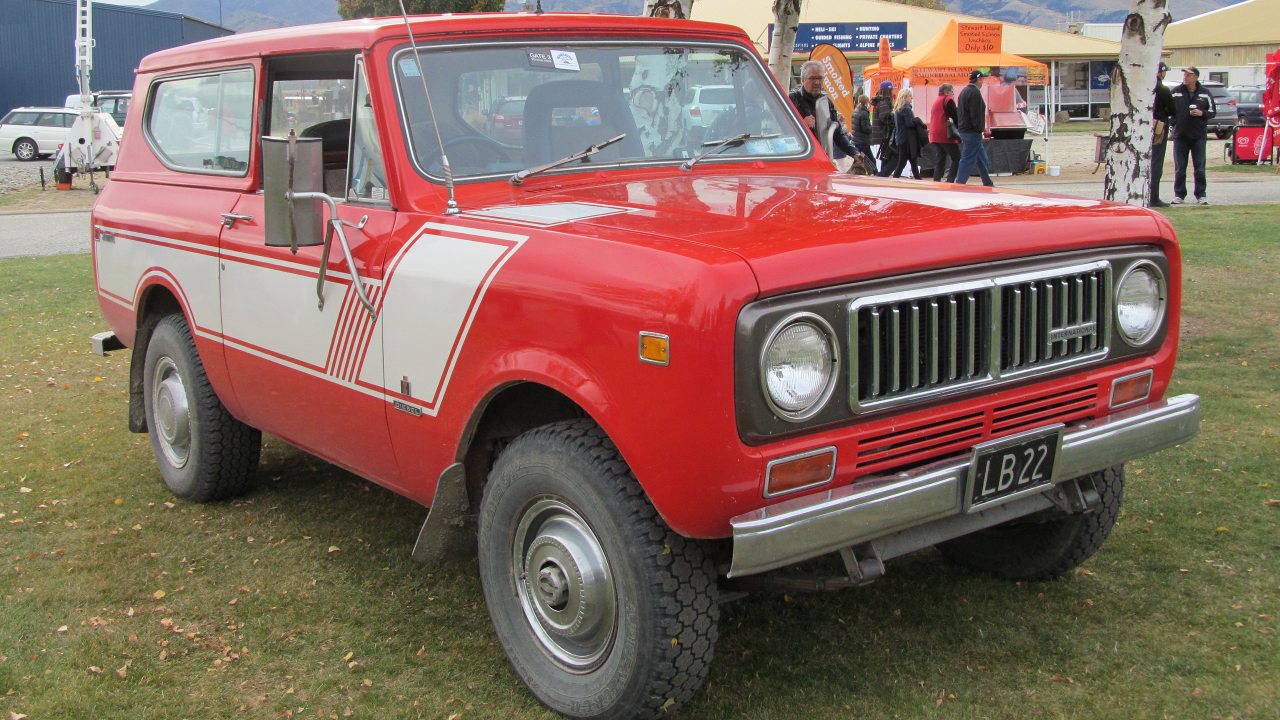
Engines, drivetrains and what makes a real Rallye
Because the Scout II was offered with multiple engines and driveline configurations, understanding what sits under the hood is essential when evaluating any claimed Rallye. Period-correct trucks could be ordered with four, six or eight cylinder engines, but the Rallye package is most closely associated with the larger V8s, particularly the 345ci unit highlighted in the Classic International Scout history as a powerful option. For buyers trying to verify what they are looking at today, specialist guidance suggests starting with the engine itself, with one frequently cited technical reference advising owners to check on the right side of the engine towards the front to identify an IH V8.
Beyond the engine, the Rallye’s authenticity rests on a mix of cosmetic and mechanical clues. Factory striping patterns, correct badging and period wheels are part of the picture, but so are the transmission and axle choices that were commonly paired with the package, such as a 4-speed manual behind a V8 as described in period coverage of a 1976 Scout II pickup with a V8 and 4-speed transmission. Because International Harvester built the Scout II in relatively high numbers, there are literally thousands of Scouts on (and off) the road, as a long-running collector profile from Jul 5, 2005 notes, which means there are also many trucks that have been repainted or modified to resemble Rallyes. That abundance makes documentation, drivetrain verification and careful inspection even more important for anyone paying a premium for a claimed International Harvester Scout II Rallye.
What the market says: Rallye values in context
Values for the International Harvester Scout II have climbed sharply as collectors have rediscovered vintage SUVs, and the Rallye versions sit near the top of that curve. A detailed pricing overview framed around the question of how much an International Harvester Scout II is worth notes that The International Harvester Scout II prices are high, with The SUV commanding strong money in both private listings and dealer inventories. That same analysis points out that buyers can find them on eBay, but the days of cheap, rust-free trucks are largely gone, especially for well-optioned examples that combine desirable engines with original cosmetic packages.
Market tracking data focused specifically on the International Harvester Scout II (1971 to 1980) reinforces that picture by compiling auction and private sale results into a benchmark for the model. Within that dataset, the International Harvester Scout II is broken out by body style and engine, and the section that addresses What was the most expensive International Harvester Scout II ever sold underscores how far top-tier examples have come. When I look at a dedicated listing for a 1978 International Harvester Scout II Rallye, the valuation summary states, “What’s it Worth? There are 30 comps for this 1978 International Harvester Scout II Rallye indicating a price range from $24,900 – $77,044,” a spread that captures everything from driver-quality trucks to fully restored showpieces and gives a concrete sense of how much the Rallye name can add.
Rallye premiums and where prices may go next
The broader Scout market provides useful context for understanding why Rallye trucks now command such a premium. A long-view collector profile from Jul 5, 2005 once pegged typical Scout values in the $2,500 to $10,000 range, reflecting a time when these were still seen as used trucks rather than blue-chip collectibles. By contrast, a more recent valuation snapshot from Apr 24, 2021 that set out to explain what an International Harvester Scout II costs highlighted individual sales like a soft top 1978 International Harvester Scout II listed on Hemmings.com for $249,000, a figure that would have seemed unthinkable when Scouts were still cheap trail rigs. That same 2021 overview, introduced with the line “Let’s take a closer look at this SUV,” framed the Scout II’s rise as part of a broader surge in interest in vintage 4x4s and included a Brief History of International Harvester to show how a workhorse brand ended up in the spotlight.
More recent commentary on Classic International Scout values argues that the trend is still upward, especially for high quality builds. An Oct 15, 2024 analysis of Classic International Scout restomods notes that Prices for well-restored models have already been trending upward, with basic restorations regularly fetching between specific five figure ranges and more extensively upgraded trucks going higher. That same piece suggests that as the market for vintage SUVs matures, the Scout’s status alongside icons like the Wagoneer will help its value rise, particularly for rare or visually distinctive variants such as the Rallye Package (1976–1980). When I combine that outlook with the concrete $24,900 to $77,044 range documented for a 1978 International Harvester Scout II Rallye and the evidence that The International Harvester Scout II prices are high across the board, the pattern is clear: originality, documentation and specification are already driving significant premiums, and the Rallye name is likely to remain one of the most valuable badges in the Scout world.

Leave a Reply