
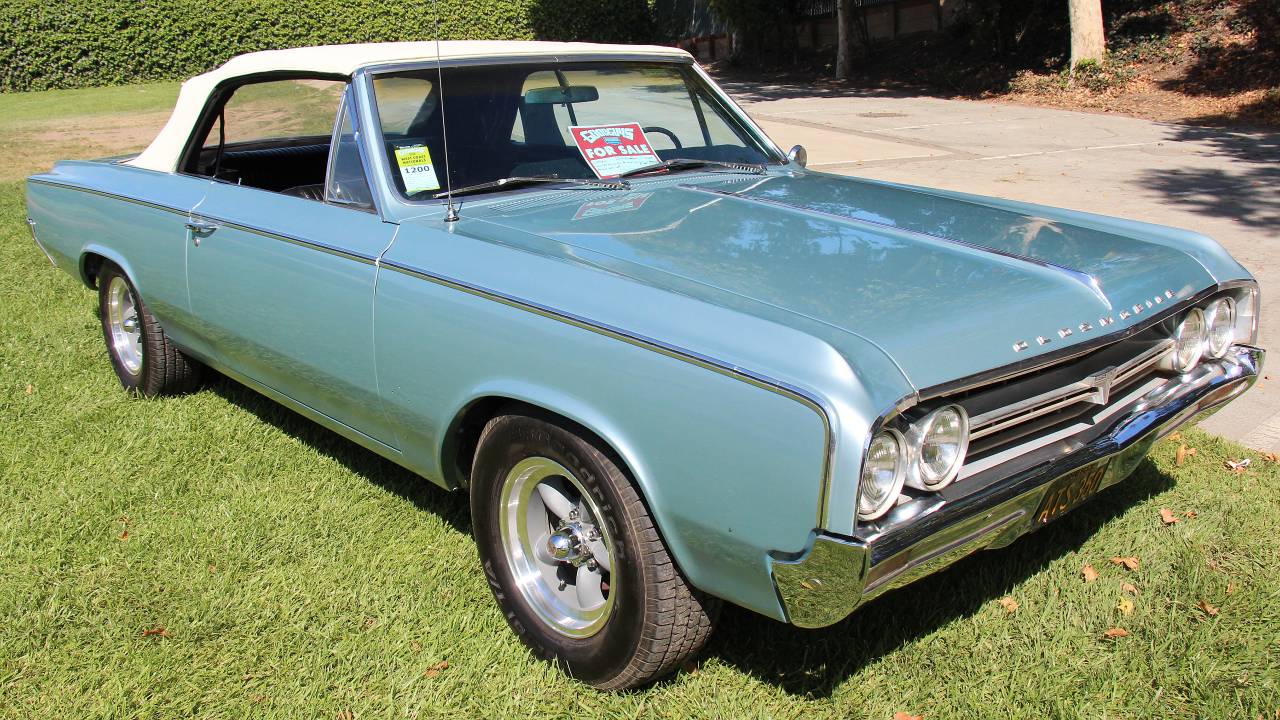
The Oldsmobile Cutlass 4-4-2 L69 sits at the intersection of rarity and peak muscle car development, a one-year configuration that still sparks debate among collectors about how much performance and provenance are really worth. Built in limited numbers and overshadowed for years by more famous rivals, it has quietly become one of the most closely watched Oldsmobile variants in today’s classic market.
To understand when Oldsmobile built the Cutlass 4-4-2 L69, and why values now stretch from driver-grade money to serious investment territory, I need to trace how the option was configured in period, how few survive, and what recent sales and price guides reveal about what buyers are actually paying.
How the 4-4-2 evolved into the L69 Tri-Carb package
Oldsmobile’s 4-4-2 story starts as a response to the mid‑sixties horsepower race, when the division turned the Cutlass into a serious performance contender rather than a mild intermediate. The 4-4-2 name itself, later written simply as 442, became shorthand for a package that combined a big V8, uprated suspension, and a more aggressive image, and it was offered on the F‑85 and Cutlass lines rather than as a standalone model at first. By the time the L69 arrived, Oldsmobile had already learned that buyers wanted more than badges, they wanted genuine performance that could stand next to the best from other GM divisions.
In 1966, the 4-4-2 remained an option on the F‑85 and Cutlass lines, identified internally by the code L‑78, and that year Lansing added a new three‑carburetor performance package that enthusiasts now know as the L69. Reporting on a period Cutlass 4-4-2 L69 convertible notes that this triple‑carb setup was a step above the standard 4‑barrel L‑78 option, and it carried an extra cost on top of the base 4-4-2 package. The same coverage explains that the 4-4-2 option itself was coded differently on the F‑85 and Cutlass lines, with the L‑78 designation tied to the broader package while the L69 label singled out the three‑carburetor engine. That distinction is crucial today, because it means not every 4-4-2 from that year carries the same performance pedigree.
When Oldsmobile actually built the Cutlass 4-4-2 L69
The L69 Tri‑Carb configuration was a one‑year phenomenon, concentrated in the 1966 model run, which is why collectors treat it as a “unicorn” within the broader 4-4-2 family. Contemporary analysis of a 1966 Oldsmobile 4-4-2 with the six‑barrel setup underscores that this multi‑carb layout was a one‑year‑only surprise, and that Oldsmobile had been “caught off guard” by the muscle car surge before promoting the 4-4-2 to full model status later. The L69 therefore represents Oldsmobile’s most aggressive factory response before the car’s identity shifted from option package to dedicated model.
Individual ownership histories help pin down how these cars moved through showrooms during that single model year. One documented 1966 Olds 442 L69 Tri-Carb with 24,000 original miles was ordered in Evansville, Indiana in Feb 1966 and arrived at O Daniel-Raines Oldsmobile March 14, 1966, a timeline that illustrates how the L69 package was being delivered to regional dealers while the model year was in full swing. That car then stayed with its original owner until the owner passed in 2003, which shows how some L69 examples led quiet lives far from the spotlight that surrounded more heavily publicized muscle cars. Based on the available sources, production totals for the L69 option itself remain unverified, but the one‑year window and sparse surviving examples in detailed reports support its reputation as a very low‑volume configuration.
What made the L69 Tri-Carb 4-4-2 different
What separates the L69 from a standard 4-4-2 is not just an extra carburetor or two, but a complete performance package that pushed Oldsmobile engineering to the edge of what the division was willing to sell over the counter. A documented 1966 Oldsmobile 442, restored in 2006, carries the rare L69 360-hp tri‑carb intake system paired with a 4‑speed manual transmission, a combination that underscores how the package was aimed squarely at enthusiasts who wanted both straight‑line speed and driver involvement. The 360-hp rating, tied to the triple‑carb setup, put the L69 in direct conversation with the hottest offerings from Pontiac and Chevrolet, even if Oldsmobile’s marketing remained more understated.
Period coverage of a Cutlass 4-4-2 L69 convertible helps flesh out the rest of the package, describing how the L69 sat on the same basic chassis as other Cutlass models but layered in heavy‑duty suspension components, specific gearing, and the distinctive triple‑carb intake. In that reporting, the 4-4-2 option is tied to the L‑78 code, while the L69 is treated as a further upgrade that cost extra on top of the base package. The same account notes that the 4-4-2 option was available on both the F‑85 and Cutlass lines, which means the L69 could be ordered in several body styles, including coupes and convertibles, although the exact breakdown by body type is unverified based on available sources.
How many survive and how collectors view them now

The combination of a single model year, a performance‑oriented buyer base, and the hard use many muscle cars endured means that surviving L69 cars are rare, and well‑documented examples are rarer still. The 24,000‑mile 1966 Olds 442 L69 Tri-Carb that stayed with one owner from its delivery at Daniel-Raines Oldsmobile March 14, 1966 until 2003 is a case study in how original‑owner cars can survive with minimal modifications, preserving factory details that restorers and judges now scrutinize. Another enthusiast example, the 1966 Oldsmobile 442 restored in 2006 with its 360-hp tri‑carb intake and 4‑speed, shows the other path: a high‑quality restoration that aims to return the car to as‑built specification while still allowing it to be driven and enjoyed.
Modern commentary on a one‑year‑only six‑barrel 1966 Oldsmobile 4-4-2 reinforces how collectors now frame these cars: as “too rare to pass” opportunities when they surface, especially if mileage is low and documentation is strong. That coverage notes that Oldsmobile was again reacting to market pressure when it created the one‑year six‑barrel configuration, which adds a layer of historical significance for buyers who value context as much as raw performance. Exact survival numbers for L69‑equipped cars are unverified based on available sources, but the tone of recent reporting and the attention given to individual examples suggest that each documented car carries outsized weight in the community.
What a 1966 Cutlass 4-4-2 L69 sells for today
Values for 1966 4-4-2s have climbed into territory that would have seemed unlikely when these cars were just used intermediates, and the L69 sits at the top of that curve. A recent pricing analysis of a 1966 Olds 4-4-2 Tri-Power Coupe Used Prices table lists a Concours Condition value of $72,800 for a top‑flight example, a figure that reflects both the desirability of the triple‑carb setup and the premium that show‑quality restorations command. That same pricing breakdown makes clear that lesser conditions trade for significantly less, which means the spread between a driver and a show car can be wide even within the same model year and configuration.
Broader market data for the Oldsmobile 442 line, covering 1964 to 1987, shows an average price of $61,495, which places the best 1966 Tri‑Carb cars comfortably above the model‑line mean. A dedicated 1966 Oldsmobile 442 market page tracks individual sales and invites enthusiasts to Follow Market for updates, underscoring how actively these cars trade and how closely buyers watch price movements. While those aggregated figures do not always separate L69 cars from other 1966 4-4-2s, the combination of the $72,800 Concours benchmark and the higher‑than‑average model‑line pricing supports the view that a documented L69, especially with original drivetrain and paperwork, can command a substantial premium over a standard 4‑barrel car.
How rarity and documentation shape future values
Looking ahead, I see the L69’s value trajectory tied less to raw horsepower and more to its status as a one‑year, well‑documented performance option within a respected nameplate. The narrative around the six‑barrel 1966 Oldsmobile 4-4-2 as a “unicorn” and “too rare to pass” opportunity shows how scarcity and story combine to elevate certain cars above their spec sheets. When that narrative is backed by verifiable history, such as the Evansville, Indiana 1966 Olds 442 L69 Tri-Carb ordered in Feb 1966 and delivered March 14, 1966, buyers are effectively paying for provenance as much as for metal.
At the same time, the broader Oldsmobile 442 market, with its $61,495 average price, provides a floor that helps insulate well‑kept cars from dramatic swings, even if overall muscle car demand cools. The existence of a dedicated 1966 Oldsmobile 442 tracking page, where enthusiasts are NOT FOLLOWING or can choose to Follow Market, signals that data‑driven buyers are watching these cars as closely as they would any other collectible asset. Unverified based on available sources are precise forecasts for future appreciation, but the combination of one‑year production, documented high‑end sales like the $72,800 Concours benchmark, and growing attention to individual survivor stories suggests that the Cutlass 4-4-2 L69 is likely to remain one of the most closely scrutinized Oldsmobile variants in the years ahead.




Leave a Reply