
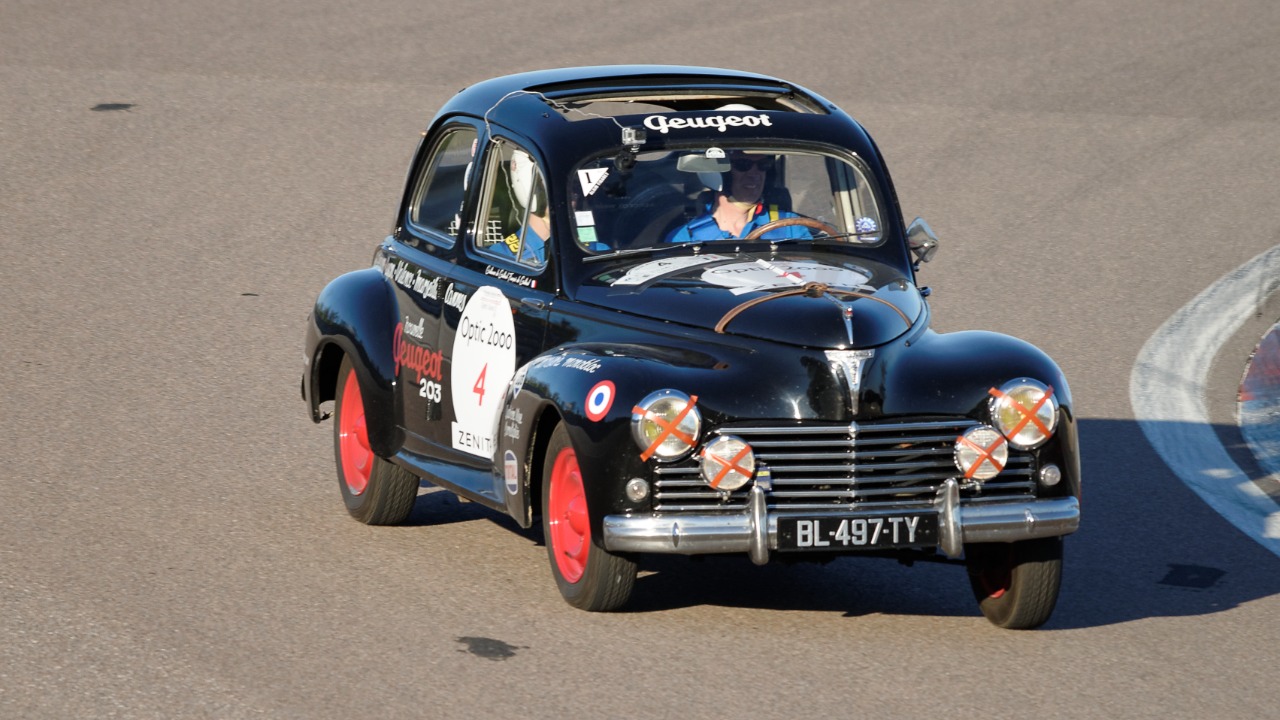
You notice it the first time you see one in traffic: a compact, slightly humped silhouette that looks like it has already survived a lifetime of hard work and is ready for more. The 1954 Peugeot 203 did not shout for attention, yet it quietly built a reputation for getting you home, no matter how rough the road or how long the journey. To understand why that trust still lingers around the 203 today, you have to look at how it was engineered, how it was used, and how it refused to disappear even when newer metal arrived.
If you are drawn to cars that earn their status rather than inherit it, the 203 is a case study in staying power. From its conservative production run to its “indestructible” mechanicals and its surprisingly broad model range, the car shows you how dependability can be designed in, then proven in daily use over decades.
The quiet backbone of postwar Peugeot
When you look at the 203 in context, you see a company betting its future on a single, solid idea. Peugeot introduced the model as its first truly modern postwar car, then refused to rush it off the stage just because something newer appeared. Contemporary accounts note that Peugeot was not in the habit of pushing an “old” model aside the moment a successor arrived, and the 203 remained in production alongside the 403. That decision only made sense because buyers trusted the car, and because the basic package still felt relevant even as the 1950s moved on.
Part of that staying power came from the body itself. From 1948 to 1960 the 203’s shape essentially stayed the same, a rounded, almost beetleback profile that you can still recognize instantly in period photos. Enthusiasts point out that the 1949 Peugeot 203 Sedan already carried the look that would define the line for more than a decade. For you as a driver, that continuity meant parts compatibility, predictable maintenance, and a car that never felt like an orphaned design.
Engineering a car you could not kill
Under the skin, the 203 was more advanced than its modest appearance suggested, and that is where its dependability really took root. It was the first Peugeot with a self-supporting body and a modern four cylinder engine with an overhead camshaft, a layout that gave you a lighter, stiffer shell and a powerplant that could work hard without constant attention. Auction notes on surviving cars stress that this combination of monocoque construction and overhead cam technology was considered a technical marvel at the time, and that it directly contributed to the model’s reliability.
Owners and historians often talk about the 203’s “indestructible” engine, and that is not just nostalgia talking. One detailed retrospective describes how the 203’s powerplant, carefully developed and then left largely unchanged, became the heart of the car’s legend. The writer argues that what really made the 203’s reputation was this durable mechanical core, which allowed some drivers to realistically imagine spending a lifetime with the same car. That sense of mechanical security, captured in accounts of the 203, is exactly what you feel when you talk to long term owners today.
From Paris Salon polish to bush‑basher grit
If you had wandered into the October 1954 Paris Salon, you would have seen Peugeot presenting the full breadth of its 203 range. Period material shows that this was Peugeot’s line up of its 203 car range for that show, with an estate car, a convertible and a saloon all sharing the same basic platform. The display underlined how the company saw the 203 as a complete family of vehicles rather than a single model, and it gave you options whether you wanted a workhorse wagon, a practical four door or something more glamorous. That versatility is captured in surviving images of the Paris Salon stand.
Yet the same car that posed under the lights in Paris also earned a reputation far from any showroom. Writers who followed the 203 into rougher territory describe how it became a “bush basher”, a car you could drive hard on broken roads without fear. They note that They had a very strong reputation based on their reliability, with many cars kept in service in the Palestinian Authority areas long after they might have been retired elsewhere. That kind of use is the harshest possible test of a car’s durability, and the 203’s survival in those conditions tells you more than any brochure ever could.
A shape that stayed, and a sedan that worked
One reason you still recognize a 203 instantly is that Peugeot barely touched the basic body over its production life. Enthusiast groups emphasize that from 1948 to 1960 the body essentially remained the same, a decision that locked in the car’s identity and simplified repairs. When you look at photos of a 1949 Peugeot 203 Sedan, you are effectively looking at the same profile you would have seen in a 1954 showroom. For owners, that meant body panels, glass and trim were easier to source and swap, which only reinforced the car’s reputation as something you could keep on the road indefinitely.
The sedan in particular became the default choice for families and small businesses that needed one car to do everything. Accounts of the 1949 Peugeot 203 Sedan describe it as a significant model in Peugeot’s postwar lineup, praised for its modern design and practical interior. When you drove one, you were buying into a package that had already proven itself and that the factory clearly intended to support for years. That continuity, backed by the same rugged mechanicals found in later cars like the 1957 203 C highlighted in auction listings, is a big part of why the 203 stayed dependable in everyday use.
The Cabriolet that proved durability could be desirable
Dependable does not have to mean dull, and the 203 Cabriolet is your best proof. The open top version took the same sturdy underpinnings and wrapped them in a more elegant body, turning a workmanlike car into something you might choose for pleasure drives. Enthusiast write ups of the 1953 Peugeot 203 Cabriolet stress how its proportions and detailing have continued to captivate generations of car lovers, even as the underlying engineering remains pure 203.
Another group focused on classic convertibles goes further, arguing that the 1953 Peugeot 203 Cabriolet has cemented its place as one of the most desirable cars of its era, a true collector’s item precisely because it blends rarity with the model’s hard earned toughness. They describe how limited production and careful craftsmanship turned the Cabriolet into a car that enthusiasts now chase, while still benefiting from the same robust engine and chassis that kept sedans and estates in service for decades. When you see the 203 Cabriolet framed that way, you realize that dependability was not just a practical virtue, it was part of the car’s long term appeal.
More from Fast Lane Only

Leave a Reply