
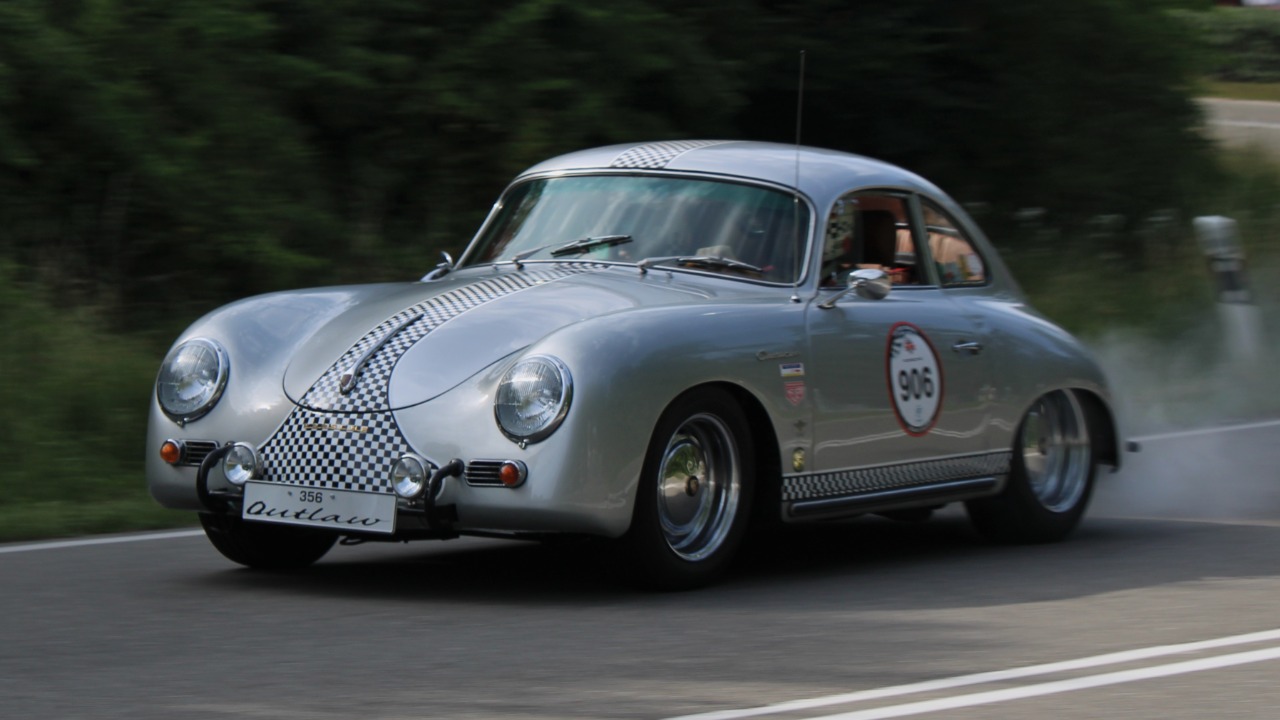
The 1958 Porsche 356A did not reinvent the sports car so much as polish it to a near-perfect sheen. By that model year, you were looking at a machine that kept the original 356 spirit intact while quietly transforming how a compact German coupe or roadster could ride, handle, and even coddle its driver. If you care about how a legend matures, rather than how it is born, this is the moment when Porsche refined the formula.
Instead of chasing headline-grabbing power, the 1958 range focused on details that you feel from behind the wheel: a more sophisticated chassis, more usable body styles, and a cabin that finally acknowledged comfort. That is why collectors and drivers still gravitate to these cars, from the last Speedsters to the new Convertible D, as the point where the early 356 idea reached full maturity.
The 356 story up to the A: from raw prototype to polished sports car
To understand why the 1958 Porsche 356A matters, you first need to see where the 356 line started. Early coupés and cabriolets built through 1955 were simple, almost austere machines, recognizable by split or bent windscreens and a body that still looked close to its postwar roots. As the years went on, the basic 356 shape evolved with a curved windshield and cleaner detailing, but the core idea remained a light, rear engined sports car that prized agility over brute force.
By the time the 356A arrived, Porsche had learned how to keep that character while smoothing off the rough edges. The A series introduced a more modern chassis and running gear, and period guides describe it as More powerful and than its predecessors, with production running until September 1959. You were no longer buying an experimental sports car; you were buying a fully realized product that still felt intimate and mechanical, but now had the polish to be driven every day.
How the 1958 356A sharpened the driving experience
Under the skin, the 1958 cars benefited from incremental but meaningful engineering changes that you notice the moment you turn the wheel. Earlier in the A’s life, Porsche shifted to 15 inch wheels with a wider tread to take advantage of newer tire technology, a move that improved grip and stability without spoiling the car’s delicacy. That change, introduced on the A and carried through the 1956 to 1958 1600 Coupé, helped define the way a mid period 356A feels on a twisting road, more planted yet still eager.
The engines followed the same philosophy of careful evolution. In the 1600 Cabriolet by Reutter, for example, the flat four was enlarged to 1,582 cubic centimeters, with higher compression bringing extra horsepower without sacrificing reliability. Contemporary descriptions of the A range emphasize that these cars were tuned for balance rather than outright speed, a theme echoed in coverage of the later B Roadster, which was praised as the first truly comfortable 356 m focused on comfort rather than performance. You feel that same shift beginning in the 1958 A models, where drivability starts to matter as much as lap times.
Speedster to Convertible D: when purity met comfort
Nowhere is that transition clearer than in the open cars that bookend 1958. The 356A Speedster had already become a cult object by then, with its low, wraparound windshield, minimalist interior, and fully retractable hood that sat low on the body. Period descriptions of The Speedster highlight how its streamlined, sporty design and sparse equipment helped cement its status as a 356 icon, a car you bought because you were willing to trade comfort for connection.
By 1958, however, Porsche recognized that not every buyer wanted to live with such extremes. That year marked the End of the D, as the Speedster was discontinued due to declining demand and Replaced by a more civilized open car. The Convertible D kept the basic Speedster silhouette but added a taller windshield, roll up windows, and better weather protection, a shift that is underlined by accounts of how Porsche presented the 356 A Convertible D as a successor that was much more comfortable. Bodies for this new model were built by Drauz, using a fabric hood with a larger rear window, and contemporary commentary notes that Porsche needed to both replace their venerable Speedster and secure a second, still reliable source of production, which is why the work went to Karosseriewerke Drauz KG.
Design details that quietly changed everything
When you look closely at a 1958 356A, the refinement shows up in the details that casual observers miss. The T2 body style, introduced shortly before, is easiest to spot by its exhaust pipes exiting through the rear bumper overriders, a small change that cleaned up the tail visually while integrating the mechanicals more neatly. Contemporary technical notes on the Frankfurt Motor Show 356 A 1600 S explain how Porsche AG used that update to refine exhaust routing and other underbody details, and later guides point out that Only minor cosmetic changes were made beyond those functional tweaks.
Inside and out, the A generation also started to embrace a more upscale feel without losing its simplicity. The Convertible D, for instance, added better seats and weather equipment while keeping the low cowl and compact proportions that made the Speedster so appealing. Even scale replicas capture that mix of delicacy and substance, as shown by the 1:8 model of a 1958 Speedster that emphasizes the car’s clean surfacing and purposeful stance. When you compare these touches with the earlier, more utilitarian cars documented in broader 356 guides, you can see how 1958 sits at the crossroads between spartan sports car and refined grand tourer.
From cult favorite to blue chip: how values reflect refinement
The market has been quick to recognize how special these late A cars are. A 1958 356A Speedster, for example, has become one of the most coveted variants, with its combination of purity and late series improvements driving intense demand. That appetite was on full display when a Porsche 356A Speedster sold at Gooding & Company over Pebble Beach weekend for $583,000, a result that signaled just how far values had climbed for the right car in the right specification.
Broader valuation tools back up that sense of scarcity and desirability. Guides tracking the 1958 356A show how condition, originality, and body style can swing prices dramatically, while also noting that the value of a 1958 Porsche 356A can vary greatly depending on its condition, mileage, options, and history and that Porsche 356A values Typically reflect strong demand for cars in good condition with average spec. Even enthusiast videos of a 1958 Porsche 356A 1600 Super Super Scoost underline how collectors talk about these cars today, as classic open top sports cars that are as desirable and expensive as their reputations suggest.
More from Fast Lane Only

Leave a Reply