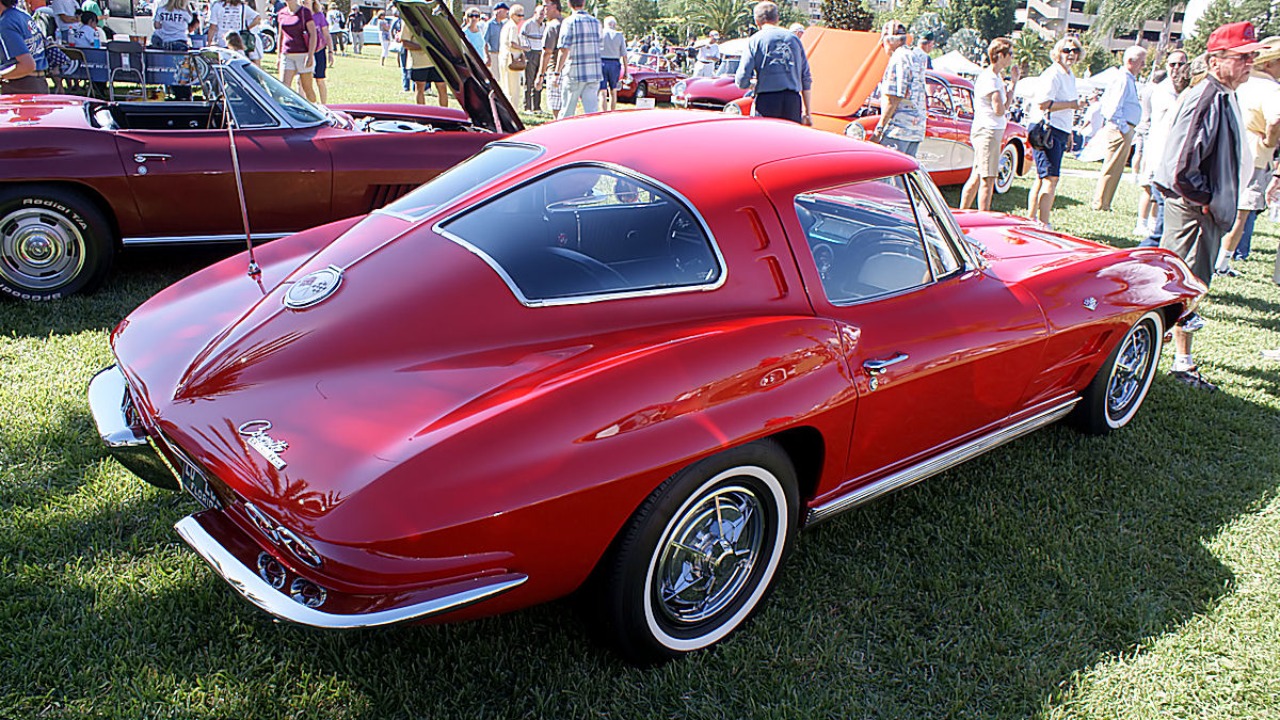
The 1963 Chevrolet Corvette arrived as a sharp break from the soft curves of the 1950s, and nothing signaled that shift more dramatically than the strip of fiberglass that cut its rear glass in two. That single styling flourish, the split rear window, lasted only one model year yet turned the second-generation Corvette into one of the most recognizable American cars ever built. The story of how it appeared, disappeared and then became a blue-chip collectible is a study in how design, engineering and hindsight collide.
The spine that started a fight
The split window did not start on a drawing board in Detroit but in a photograph of a prewar coupe that caught a General Motors designer’s eye. As recounted in a detailed history of the Sting Ray’s origins, a GM stylist saw an unusual car, one of maybe 10 ever built before World War II, with a strong center ridge that visually divided the rear glass and declared, “This is what I want.” That inspiration fed directly into the midyear Corvette program and the emerging Sting Ray shape, with its sharp beltline and fastback roofline that carried a raised spine from the windshield to the tail.
Bill Mitchell, the powerful design chief behind the Sting Ray, wanted that spine uninterrupted, which meant the rear glass had to be split to keep the roofline clean. The result was a dramatic, almost marine form that some historians describe as having a “Marine Life Styling Influence,” a fastback that looked like it had been carved by water as much as by air. The center bar that created the split window was not a mere trim piece but a structural and visual extension of that backbone, running from the roof to the rear deck and turning the coupe into sculpture on wheels.
Inside GM, however, the spine triggered a battle. Engineers complained that the divided rear glass compromised visibility and made the car harder to see out of in traffic and on the track. That conflict between styling and function would define the split window’s short life and long legend.
From showroom controversy to one-year wonder
When the 1963 model year arrived, the Corvette entered its second generation, often referred to as C2, with a completely new chassis and body. The new Sting Ray coupe sat low and wide, with hidden headlights and crisp fender peaks that made the previous generation look instantly dated. Enthusiasts with “octane in their blood,” as one period-minded account puts it, saw the car as low, mean and unmistakably modern, especially when ordered with a fuel-injected small-block that produced an, at the time, then unheard of 360 horsepower.
The split rear glass, however, divided opinion as sharply as it divided the view. Some buyers loved the futuristic look and the sense that the car was more concept than production. Others complained about the obstructed rearward sightline and the difficulty of cleaning and servicing two panes of curved glass. A short video aimed at new enthusiasts explains that one of the most iconic parts of a 63 Corvette is the split window, which is simply a fiberglass piece and two windows that transformed an ordinary fastback into something unmistakable.
Within GM, the critics gained the upper hand. After a single year of production, the split rear window design was shelved in favor of a single backlight for 1964, turning the 1963 coupe into a one-year wonder. Later histories describe the split window as one of those notorious and beloved asterisks in automotive history, a feature that looked sensational yet never quite worked for day-to-day use.
“The mistake that built a legend”
Among Corvette faithful, the split window’s brief run only deepened its mystique. A widely shared enthusiast story refers to the 1963 Corvette Split Window as “the mistake that built a legend” and recalls a car bought new in 63, black on black, 340 hp, 4 speed, 4:11 gears and metallic output sintered brakes. That particular car was stolen in Los Angeles in 1966, a reminder that even in period these coupes were desirable enough to disappear into the shadows.
The same account stresses that Bill Mitchell wanted that spine down the middle of the car, and that he fought to keep it even as others argued for a clearer view out the back. In that telling, the split window became a symbol of design stubbornness, the moment when a styling chief insisted that a sports car should look like nothing else on the road, even if it meant asking owners to live with a compromise.
Short-form videos and social clips today often repeat the same refrain. They frame the split window as the element that turned a rear view into an argument and built the icon everyone now recognizes at a glance. The tension between aesthetics and practicality, once an internal GM dispute, has become part of the car’s folklore.
Rarity, value and the collector’s verdict
Rarity has done the rest. All 1963 Corvette coupes left the factory with segmented rear glass, and because the feature vanished the following year, the cars occupy a singular place in the model’s long run. Modern explainers aimed at younger fans ask why the C2 split window Corvette is so rare and answer that the design was dropped mainly because owners and engineers wanted better visibility, even though the original look appeared more dramatic and futuristic.
More from Fast Lane Only